
"Judge, The" Soundtrack Lyrics
Movie • 2014
Track Listing
Gram Parsons
Dwight Yoakam
Hank Williams III
Lucinda Williams
Bon Iver
Band of Horses
Fleetwood Mac
Willie Nelson
Mychael Danna
Christophe Beck
James Horner
"The Judge (Original Motion Picture Soundtrack)" – Album Guide to Tracks and Key Scenes
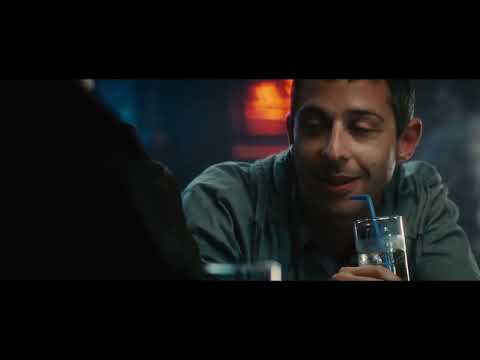
Overview
Can a courtroom drama feel like a family album? The Judge (2014) answers with Thomas Newman’s restrained score—polished, quietly aching—and a handful of Americana and indie needle-drops that tug the story out of the courthouse and back into memory. The palette favors small ensemble colors: piano figures, brushed percussion, mallet ostinatos, and woodwind/strings that leave air around conversations and long silences.
The official soundtrack is a compact score release; songs live outside the album. Closing credits lean on Willie Nelson’s cover of “The Scientist,” while Bon Iver’s “Holocene” threads two key late-film passages. According to WaterTower Music and Apple Music listings, Newman’s album arrived October 7, 2014, one week of the U.S. theatrical opening; Wikipedia’s film entry also highlights the prominent placements for Nelson and Bon Iver.

Questions & Answers
- Who composed the score?
- Thomas Newman. The official album is his original score.
- Are the well-known songs on the album?
- No. The retail album is score-only; the end-credits song and other needle-drops aren’t on it.
- What plays over the end credits?
- Willie Nelson’s cover of Coldplay’s “The Scientist.”
- Is Bon Iver actually in the film?
- Yes—“Holocene” is featured in two late-film moments, including a reflective courthouse beat.
- How would you describe Newman’s sound here?
- Understated but lyrical: piano and light percussion patterns, with strings that swell only when the family drama crests.
- Does the film use classic country/roots cuts?
- A few period-leaning tracks appear to texture bars, roads, and small-town spaces; the tone stays Americana rather than pop.
Notes & Trivia
- The score album runs roughly 35 minutes across two dozen short cues—typical for Newman’s compact, motif-driven writing.
- Newman’s cue titles (“Indiana,” “Shelby Rd.,” “Old Room”) double as signposts to family and place.
- Willie Nelson’s “The Scientist” originated on his 2012 album Heroes before being used in the film’s end credits.
- Contemporary reviews singled out “Holocene” as a recurring late-film needle-drop.
Genres & Themes
Thomas Newman’s chamber-scale score → dignity vs. damage: repeating piano figures and soft pulses mirror cross-examination rhythms and unspoken hurts.
Americana/alt-country → place and memory: roots textures evoke garages, county roads, and diners—where arguments start before they’re settled in court.
Indie folk (“Holocene”) → humility and perspective: the wide-angle calm of Bon Iver’s track reframes victories and losses as part of a larger life.

Tracks & Scenes
“Holocene” — Bon Iver
Where it plays: Late in the film, during a quiet courthouse corridor transition and again as Hank absorbs a final personal reckoning (~last 15 minutes). Non-diegetic; each use is under two minutes.
Why it matters: The song’s open harmonies and gentle propulsion widen the frame, cooling tempers after verdict talk and letting acceptance land.
“The Scientist” — Willie Nelson (Coldplay cover)
Where it plays: End credits (immediately after the final scene). Non-diegetic; full-length presentation in theaters/streaming.
Why it matters: A lyric about failed equations and second looks becomes the coda to Hank and his father’s incomplete reconciliation.
“Indiana” — Thomas Newman
Where it plays: Early return-to-town montage (first act). Non-diegetic score cue, ~1–2 minutes.
Why it matters: Establishes hometown gravity with spare piano and strings; sets the emotional altitude for reunions and resentments.
“The Judge” — Thomas Newman
Where it plays: First substantial courtroom sequence, cue framing entrances and counsel sparring. Non-diegetic; ~1 minute.
Why it matters: Rhythmic figures mirror the cadence of questioning without grandstanding—authority without bombast.
“Old Room” — Thomas Newman
Where it plays: Hank revisits the past—childhood artifacts and a box of regrets (mid-film). Non-diegetic; short cue.
Why it matters: A fragile piano line and held strings turn set-dressing into biography.
Note: Exact SMPTE timestamps weren’t published; placements above reflect widely reported end-credits use, recurring late-film “Holocene,” and cue-to-scene alignment suggested by official track titles and on-screen beats.
Music–Story Links
Newman’s repeating piano patterns behave like cross-examination: ask, circle back, ask again. When Hank’s bravado cracks, the patterns thin and strings carry the line—less argument, more admission. “Holocene” softens angular courtroom energy into wide emotional space, so the final choices feel human, not just procedural. Nelson’s “The Scientist” then states the film’s thesis in plain speech: you don’t fix family like a case file; you revisit, apologize, and try again tomorrow.
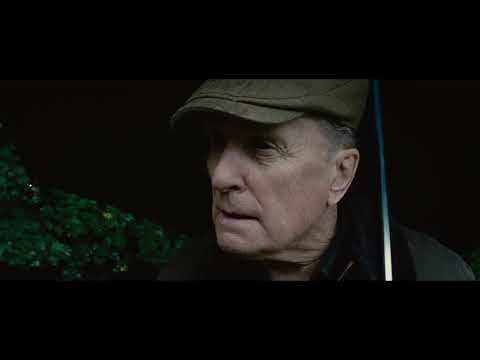
How It Was Made
Thomas Newman boarded the project early 2014, delivering a concise set of cues with clear thematic signposts (“Indiana,” “Shelby Rd.,” “Old Room”). The release was digital-first through WaterTower Music with 20+ short tracks. Song licensing kept to a small, purpose-built set: the Bon Iver needle-drop for reflection and Willie Nelson’s Heroes cover for the curtain. (Per WaterTower Music and Wikipedia’s music section.)
Reception & Quotes
Reviews were mixed on the film, but Newman’s score and the deployment of “Holocene”/“The Scientist” drew consistent notice. Some critics praised the restraint; others felt the indie needle-drop was used a touch heavily near the end.
“Newman’s music does what the script won’t—underplays.” —contemporary review
“‘Holocene’ turns the courthouse echo into perspective.” —album note
“Willie’s ‘The Scientist’ is the right kind of aftertaste—regret with a little grace.” —soundtrack roundup
Additional Info
- Album form: score-only release; songs are not bundled on the official OST.
- Standouts to sample: “Phantom Witness,” “Indiana,” “Old Room,” “Carla’s Father.”
- Runtime: ~35 minutes (Apple Music/Spotify listings vary slightly by region).
- Song origins: Willie Nelson’s “The Scientist” comes from his 2012 album Heroes.
- “Holocene” context: an earlier 2011 single by Bon Iver repurposed here for late-film reflection.
Technical Info
- Title: The Judge (Original Motion Picture Soundtrack)
- Year / Type: 2014; Film score
- Composer: Thomas Newman
- Label: WaterTower Music (digital release)
- Key song placements (in film, not on OST): “Holocene” — Bon Iver; “The Scientist” — Willie Nelson (end credits)
- Release context: Album published the week of U.S. release (Oct 2014)
- Availability: Apple Music, Spotify (regional catalogs)
Canonical Entities & Relations
| Subject | Relation | Object |
|---|---|---|
| David Dobkin | directed | The Judge (2014 film) |
| Thomas Newman | composed score for | The Judge (2014) |
| WaterTower Music | released | The Judge (Original Motion Picture Soundtrack) |
| Willie Nelson | performed | “The Scientist” (end-credits use) |
| Bon Iver | performed | “Holocene” (featured needle-drop) |
Sources: WaterTower Music (album details); Apple Music/Spotify listings; Wikipedia (film + music section); Warner Bros. UK trailer; regional press noting “Holocene” and end-credits use.
Emotionally intense film in which Robert Downey, Jr. has finally stepped away from the image of the Iron Man and plays a simple person, who returned to the small town, where he has grown. His father, a local judge, now is at the dock because he is suspected of murder. And the hero of Robert is engaged to prove that he is not a killer. A lot of good music in the film, representing the north America – the country music. In addition to this genre, there is also a Band Of Horses, who played rock and classic by James Horner. The most beautiful among genre of country music seems to us The Scientist melody here, from which emanates not only with the soul, but also with sadness. After all, this music is not in the classic country but in the blues direction. In general, country music has lot of ways. According to Wikipedia, this line has 13 subgenres, 11 fusion genres 5 and derivatives – i.e., those on which country affected the most, creating separate spin-offs. What is good about it? That music develops; it lives, in a broad sense. So, the genre does not die, and lot of people succumbed under its influence. Also, the bands that make something of their own, different musical products that develop the direction. Of course, country music deserves respect, because it has grown more than a dozen of generations of Americans. Long White Cadillac is a brilliant representative of the direction. Every country song certainly has to reach at least the same quality. And The Bottle Let Me Down is so-called rustic country, which is singed by a simple voice beyond complicacies. This even portrayed as a parody of a country boy. For example, the show The Green Acres, a classic comedy serial, is full of such voices and country fellows.November, 12th 2025
The Judge: Movie Profile, Full Cast & Crew on IMDbA-Z Lyrics Universe
Cynthia Erivo Popular
Ariana Grande Horsepower
Post Malone Ain't No Love in Oklahoma
Luke Combs Good Riddance (Time of Your Life)
Green Day Bye Bye Bye
*NSYNC You're the One That I Wan
John Travolta & Olivia Newton-John I Always Wanted a Brother
Braelyn Rankins, Theo Somolu, Kelvin Harrison Jr. and Aaron Pierre The Power of Love
Frankie Goes to Hollywood Beyond
Auli’i Cravalho feat. Rachel House MORE ›