
"Julie & Julia" Soundtrack Lyrics
Movie • 2009
Track Listing
Alexandre Desplat
Alexandre Desplat
Alexandre Desplat
Alexandre Desplat
Alexandre Desplat
Alexandre Desplat
Alexandre Desplat
Talking Heads
Alexandre Desplat
Charles Aznavour
Margaret Whiting
Alexandre Desplat
Alexandre Desplat
Alexandre Desplat
Henry Wolfe
Doris Day
Alexandre Desplat
Alexandre Desplat
Alexandre Desplat
Alexandre Desplat
Margaret Whiting
Alexandre Desplat
"Julie & Julia (Original Motion Picture Soundtrack)" – Album Guide to Tracks and Key Scenes
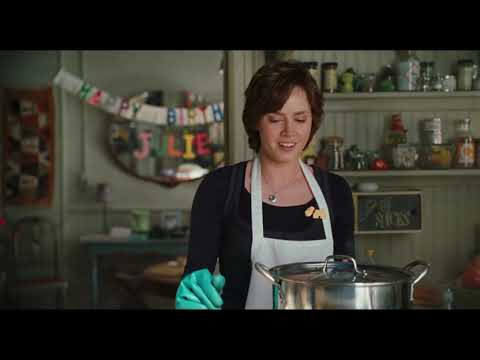
Overview
How do you score butter? Nora Ephron’s film answers with a light, witty chamber score by Alexandre Desplat and a pantry of era-evoking songs—Doris Day, Margaret Whiting, Talking Heads, Charles Aznavour. The music toggles between Paris in the late 1940s/50s and Queens in 2002, seasoning kitchen triumphs and marital asides without drowning the dialogue.
The commercial album blends Desplat’s cues with select needle-drops: “Psycho Killer” (Talking Heads), “Mes emmerdes” (Charles Aznavour), “A Bushel and a Peck” (Doris Day), and Margaret Whiting’s classic “Time After Time.” Apple/retail listings credit Columbia Pictures with an exclusive license to Madison Gate Records for the 21-track release; a CD-on-demand edition streeted 4 Aug 2009. According to the film’s liner/clearance notes, Ephron also served as executive soundtrack producer, with Lia Vollack overseeing music for Columbia.

Questions & Answers
- Who composed the original score?
- Alexandre Desplat. His cues (e.g., “Julia’s Theme,” “Julie’s Theme,” “Boeuf Bourguignon”) form the album’s backbone.
- Are the famous songs included on the OST?
- Yes—“Psycho Killer,” “Mes emmerdes,” “A Bushel and a Peck,” and Margaret Whiting’s “Time After Time” appear on the retail album.
- What label released the soundtrack?
- ℗ 2009 Columbia Pictures Industries, Inc., under exclusive license to Madison Gate Records; CD-on-demand pressings were also issued.
- Is the music mostly diegetic or background?
- Both. Kitchen radios/players and on-set singing provide diegetic color; Desplat’s chamber writing underscores character beats and montage.
- Is there a signature needle-drop tied to a specific scene?
- “Psycho Killer” famously scores Julie’s live-lobster sequence—darkly comic and perfectly timed.
- Does the album end with a standard?
- Yes—Margaret Whiting’s “Time After Time” closes the set, giving the story a warm, old-school curtain.
Notes & Trivia
- Desplat recorded in New York with a compact ensemble; accordion and light percussion nod to Paris without pastiche.
- Henry Wolfe’s “Stop the Train” sneaks in contemporary indie texture amid standards.
- “The Original French Chef Theme” tips the toque to Julia Child’s TV presence; it’s included on the album as a short cue.
- Retail metadata lists 21 tracks (~43 minutes); several micro-cues run under a minute.
Genres & Themes
Chamber score w/ accordion → appetite and attention to detail: pizzicato strings and lilting woodwinds mirror chopping, whisking, waiting.
Mid-century pop standards → romance and reassurance: Doris Day and Margaret Whiting cues wrap the Childs’ Paris years in period warmth.
Art-pop/new wave → irony and modern anxiety: Talking Heads’ “Psycho Killer” turns a domestic dare (boiling lobsters) into nervous comedy.

Tracks & Scenes
“Psycho Killer” — Talking Heads
Where it plays: The live-lobster cook in Julie’s apartment (mid-film). Non-diegetic on the soundtrack layer; the scene features playful lyric riffing (“Lobster killer”) from her partner.
Why it matters: A nervy groove for a squeamish task; the juxtaposition sells Ephron’s humor and Julie’s DIY bravado.
“Mes emmerdes” — Charles Aznavour
Where it plays: Paris-set montage with Julia/Paul—streets, cafes, and culinary study beats. Non-diegetic.
Why it matters: A wry French chanson that frames Julia’s early struggles as charming, not tragic; place becomes character.
“A Bushel and a Peck” — Doris Day
Where it plays: Domestic interludes in the Childs’ Paris timeline; needle-drop evokes radio-era coziness. Diegetic-feeling placement.
Why it matters: Old-fashioned cheer keeps the marriage front and center—affection as fuel for ambition.
“Time After Time” — Margaret Whiting
Where it plays: Late-film/credits coda. Non-diegetic, near-full play.
Why it matters: A standard about constancy caps a story about patience—in recipes, careers, and relationships.
“Stop the Train” — Henry Wolfe
Where it plays: New-York-side transitional beat; brief non-diegetic use.
Why it matters: An indie accent that says: blogging, deadlines, and subway sprints are a different kind of kitchen heat.
Desplat cues (sampler)
“Boeuf Bourguignon” — simmering strings/woodwinds heighten the all-day stew saga; “Julia’s Theme” / “Julie’s Theme” — companion motifs that converge in cross-cut montages; “The New York Times” — a bright punctuation for validation-and-press beats.
Note: Public SMPTE timings aren’t published; placements above reflect widely reported scene associations and the film’s official cue/clearance notes.
Music–Story Links
Julie’s arc leans on contemporary ironies—hence Talking Heads for gallows humor—while Julia’s scenes lean on standards that feel like postcards. When both timelines crest, Desplat’s motifs do the stitching: parallel cadences, similar harmonic lifts, different kitchens. Songs locate us; the score connects us.
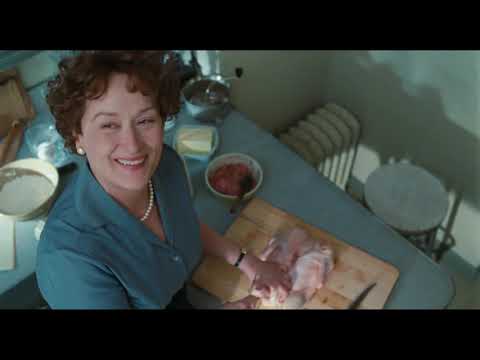
How It Was Made
Desplat composed, conducted, and produced the score; album credits list orchestrations by Desplat with Conrad Pope and others, New York studio sessions, and Ephron as executive soundtrack producer. The retail configuration mixes score and licensed songs; pressings include digital releases (Madison Gate) and a U.S. CD-R edition manufactured on demand.
Reception & Quotes
Reviews called the musical choices tasteful and pointed: the standard-book warmth for Julia; the sly needle-drops for Julie. “Psycho Killer” in the lobster scene became a recurring talking point in contemporary write-ups and fan chatter.
“‘Psycho Killer’ over live lobsters is wickedly funny and weirdly fair.” —film review note
“Desplat seasons, never smothers; the cues breathe like a kitchen letting out steam.” —score review
Additional Info
- Album: 21 tracks (~43 min). Digital via Madison Gate; CD-on-demand (2009).
- Notable licensed songs on album: “Psycho Killer,” “Mes emmerdes,” “A Bushel and a Peck,” “Time After Time.”
- Key credits: Executive Soundtrack Producer — Nora Ephron; Music for Columbia — Lia Vollack.
- Session details list accordion and light percussion—French flavor without kitsch.
- Trailer features kitchen montage cuts; marketing leaned on the film’s food-as-comfort tone.
Technical Info
- Title: Julie & Julia (Original Motion Picture Soundtrack)
- Year / Type: 2009; Score + selected songs
- Composer: Alexandre Desplat
- Label: Madison Gate Records (licensee); ℗ Columbia Pictures Industries, Inc.
- Selected placements: “Psycho Killer” (lobster scene); “A Bushel and a Peck” (Childs’ Paris domestic beats); “Mes emmerdes” (Paris montage); “Time After Time” (finale/credits)
- Release context: Film opened Aug 2009; soundtrack issued alongside (digital) with on-demand CD.
- Availability: Apple Music/Spotify (21 tracks); catalog entries note U.S. CD-R.
Canonical Entities & Relations
| Subject | Relation | Object |
|---|---|---|
| Nora Ephron | directed | Julie & Julia (2009) |
| Alexandre Desplat | composed score for | Julie & Julia (2009) |
| Madison Gate Records | released (licensee) | Julie & Julia (Original Motion Picture Soundtrack) |
| Columbia Pictures | owned sound recording ℗ | Soundtrack masters (2009) |
| Talking Heads | performed | “Psycho Killer” (film/OST) |
| Charles Aznavour | performed | “Mes emmerdes” (film/OST) |
| Doris Day | performed | “A Bushel and a Peck” (film/OST) |
| Margaret Whiting | performed | “Time After Time” (film/OST) |
Sources: Apple/Spotify retail pages; soundtrack liner/clearance notes; SoundtrackCollector/Discogs entries; trailer channel.
November, 12th 2025
A-Z Lyrics Universe
Cynthia Erivo Popular
Ariana Grande Horsepower
Post Malone Ain't No Love in Oklahoma
Luke Combs Good Riddance (Time of Your Life)
Green Day Bye Bye Bye
*NSYNC You're the One That I Wan
John Travolta & Olivia Newton-John I Always Wanted a Brother
Braelyn Rankins, Theo Somolu, Kelvin Harrison Jr. and Aaron Pierre The Power of Love
Frankie Goes to Hollywood Beyond
Auli’i Cravalho feat. Rachel House MORE ›