
"Jupiter Ascending" Soundtrack Lyrics
Movie • 2015
Track Listing
"Jupiter Ascending (Original Motion Picture Soundtrack)" – Album Guide to Tracks and Key Scenes
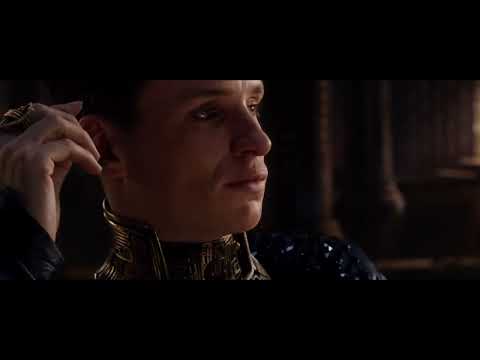
Overview
What if the music came first and the edit chased it? The Wachowskis asked Michael Giacchino to write large symphonic suites before principal photography, then cut sequences to those ideas. The resulting score is unapologetically big: four multi-movement “Jupiter Ascending” concert pieces, then set-piece cues that push chase, court intrigue, and space-opera ritual.
The retail album (23 tracks, ~103 minutes) is a Giacchino showcase—no pop singles, just orchestra and choir. According to the label’s listing, disc one opens with the four-movement suite and establishes the harmonic DNA; later titles (“The House of Abrasax,” “The Shadow Chase,” “A Wedding Darker,” “Abdicate This!”) line up almost one-to-one with story beats. The choir is London Voices; sessions and mixing spanned Abbey Road and Fox’s Newman Scoring Stage.

Questions & Answers
- Who composed the score?
- Michael Giacchino; it’s a full orchestra/choir score with no featured pop songs.
- When was the soundtrack released, and by whom?
- Early February 2015, via WaterTower Music (digital and CD configurations).
- Is it true the music was written before the film was shot?
- Yes—Giacchino wrote and recorded suites first; many sequences were later cut to those cues.
- Where was it recorded?
- Primarily in London (Abbey Road) with London Voices; additional work at the Newman Scoring Stage (20th Century Fox).
- How is the album structured?
- Four “Jupiter Ascending” movements, then narrative cues named for plot beats (Abrasax, chases, wedding, climax).
- Any non-score music in the movie?
- A small amount of source music is credited on the film side, but it’s not on the official OST.
Notes & Trivia
- The opening four-movement suite plays like a concert piece; the film then quotes and reshapes its motifs.
- Three conductors are credited across sessions: Ludwig Wicki, Robert Ziegler, and Tim Simonec.
- London Voices (Ben Parry, Terry Edwards) provide the choral heft; the album booklet lists a large UK/L.A. player roster.
- Giacchino’s cue titles carry wry puns—“Regenex Is People!” telegraphs the reveal without spoilers if you don’t look too hard.
Genres & Themes
Neo-romantic symphonic writing → dynasty & destiny: long-line themes, counter-melodies in horns/strings, choir for imperial weight.
Rhythmic ostinatos + hybrid percussion → kinetic spectacle: chase cues hammer low brass and toms to sell anti-grav dogfights and city-scale destruction.
Choral color → ritual and myth: vowel pads and syllabic hits frame the Abrasax court and “chosen” iconography.
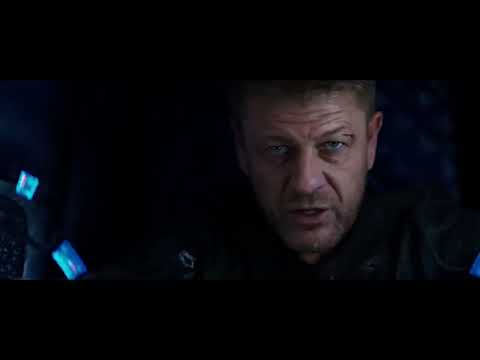
Tracks & Scenes
“Jupiter Ascending — 1st–4th Movements” — Michael Giacchino
Where it plays: Album openers; fragments recur as thematic pillars throughout the film (non-diegetic).
Why it matters: The story’s harmonic atlas—royal lineage motif, pursuit cells, and a rising-third hero idea used as Jupiter’s anchor.
“The Shadow Chase” — Michael Giacchino
Where it plays: The early Chicago set-piece with hover-boots threading through collapsing high-rises (non-diegetic).
Why it matters: Lockstep ostinatos + cymbal swells mirror vertical movement; brass answers mimic sirens and falling debris.
“The Titus Clipper” — Michael Giacchino
Where it plays: Approach and tour of Titus’s luxury star-yacht; courtly dialogue aboard (non-diegetic).
Why it matters: Polished strings and harp arpeggios sell aristocratic charm that later curdles.
“A Wedding Darker” — Michael Giacchino
Where it plays: The Orous ceremony sequence; pomp turning to peril (non-diegetic).
Why it matters: Processional chords with choir suggest pageant; sudden metric pivots flag the trap.
“Regenex Is People!” — Michael Giacchino
Where it plays: The laboratory reveal and moral stakes (non-diegetic).
Why it matters: Low-register choir and organ-like pads turn exposition into dread.
“Abdicate This!” — Michael Giacchino
Where it plays: Refinery-complex climax; structural collapse and final confrontation (non-diegetic).
Why it matters: Brass antiphony and relentless percussion read as machinery failing in real time.
“Commitment” — Michael Giacchino
Where it plays: Epilogue beats back on Earth; post-ordeal quiet (non-diegetic).
Why it matters: Returns to the central love/identity motif, minus pageantry—resolution without coronation.
Note: Public SMPTE stamps aren’t published; placements align with cue titles, album order, and widely discussed set pieces.
Music–Story Links
The Abrasax theme is imperial by design—choral weight and harmonic gravity for a family that treats planets like deeds. Jupiter’s motif starts tender and scales up under pressure, telling you where her agency kicks in long before contracts do. Chases borrow from the suite’s motor rhythms, so the film feels cut from music rather than merely scored to it.
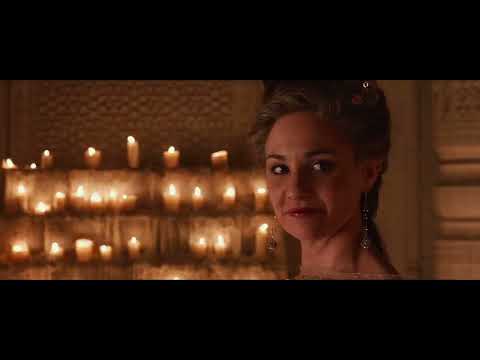
How It Was Made
Giacchino wrote/recorded substantial music before a final cut existed, then adapted it to picture—rare in modern studio features. Sessions used London players and London Voices, with additional sessions in Los Angeles. The official booklet credits Ludwig Wicki, Robert Ziegler, and Tim Simonec on the podium and confirms Abbey Road and the Newman Scoring Stage as recording/mix homes.
Reception & Quotes
The film divided audiences; the score drew steady praise for ambition and craft, often singled out as the production’s clearest triumph.
“Giacchino writes a space-opera symphony and lets the film borrow its spine.” —score review
“Chase writing with a sense of architecture, not just speed.” —album note
Additional Info
- Album length: 23 cues (~1:43). Digital Feb 2015; two-disc configurations circulated in various territories.
- Label credit: WaterTower Music (as licensee for Warner Bros.).
- Chorus: London Voices (chorus masters Ben Parry, Terry Edwards).
- Score credits list extensive UK strings/winds/brass personnel and a separate Hollywood Studio Symphony roster.
- A few brief source pieces are credited in the film but are not part of the OST program.
Technical Info
- Title: Jupiter Ascending (Original Motion Picture Soundtrack)
- Year / Type: 2015; Symphonic score
- Composer: Michael Giacchino
- Chorus: London Voices
- Conductors: Ludwig Wicki; Robert Ziegler; Tim Simonec
- Recording / Mix: Abbey Road Studios (London); Newman Scoring Stage (20th Century Fox)
- Label: WaterTower Music (Warner Bros. Entertainment Inc. licensee)
- Selected notable placements: “The Shadow Chase” (Chicago chase); “The Titus Clipper” (star-yacht); “A Wedding Darker” (ceremony); “Abdicate This!” (refinery climax); “Commitment” (epilogue)
Canonical Entities & Relations
| Subject | Relation | Object |
|---|---|---|
| Lana & Lilly Wachowski | directed | Jupiter Ascending (2015 film) |
| Michael Giacchino | composed and produced | Original Motion Picture Soundtrack |
| London Voices | performed | choral parts on the score |
| WaterTower Music | released | OST (digital/CD, 2015) |
| Abbey Road Studios | hosted | recording/mix sessions |
| Newman Scoring Stage | hosted | recording/mix sessions |
Sources: WaterTower Music (album page); Apple/Spotify retail metadata; OST booklet credits; interviews/coverage noting the “music-first” workflow; trailer channel for figures.
Andy and Lana Wachowski are creators of the legendary "The Matrix ", therefore, it was impossible to expect from them something not fantastically enchanting. The movie was postponed for 9 months – they literally ran out of time to "bear" the fruit of their labor and imagination. The first analogy that comes to mind – a kind of cosmic "Cinderella", presented by a charming heroine of Mila Kunis. Such an interpretation of a girl who has been no more than a closet-cleaning person for all her life, and then discovers that she is suited for an active participation in the intergalactic games. Her company is certainly not a fairy godmother, but a man-wolf, played by charming Channing Tatum. Evil tongues say that the image was not disclosed, and that the creators, in all probability, have decided to limit the canonical character with super attractiveness, rather than show his rich inner world. A kind of cosmic tale enriched by appropriate music: completely instrumental compositions, probably intended to avoid distracting the viewer from what is happening with the deep meaning of texts. The composer for the film was Michael Giacchino, a talented musician, who greatly felt the spirit of the motion picture. Action is opened with work 1st Movement, which is a key in the selection. Spectacular story ends with a melody named 4th Movement, which is not weaker than the first by its impressiveness. We would like to highlight particularly the bonus track Flying Dinosaur Fight With Guts, which was not included in the list of songs in the film, but perfectly reflected the atmosphere. In the end, summarizing the most positive emotions, the music can be described as spectacular, strong, and creating the right mood.November, 12th 2025
A-Z Lyrics Universe
Cynthia Erivo Popular
Ariana Grande Horsepower
Post Malone Ain't No Love in Oklahoma
Luke Combs Good Riddance (Time of Your Life)
Green Day Bye Bye Bye
*NSYNC You're the One That I Wan
John Travolta & Olivia Newton-John I Always Wanted a Brother
Braelyn Rankins, Theo Somolu, Kelvin Harrison Jr. and Aaron Pierre The Power of Love
Frankie Goes to Hollywood Beyond
Auli’i Cravalho feat. Rachel House MORE ›