Soundtracks:  A B C D E F G H I J K L M N O P Q R S T U V W X Y Z #


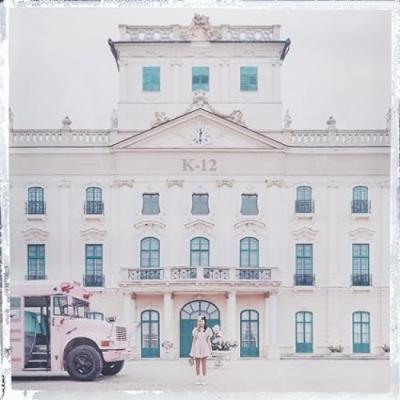
K-12 Album Cover

"K-12" Soundtrack Lyrics

Movie • 2019

Track Listing


"K–12 (The Film) — Original Motion Picture Soundtrack" – Album Guide to Tracks and Key Scenes

K–12 2019 official trailer thumbnail with Melanie Martinez in pastel classroom aesthetic
K–12 — film trailer still, 2019

Overview

Is a school musical still a soundtrack if every class is a song? K–12 answers by blurring the line between pop album and feature film. The 2019 project pairs Melanie Martinez’s second studio record with a 92-minute narrative, letting each track play as a stylized set-piece that advances the plot inside a sinister pastel boarding school. The sound leans alternative/dark pop with candy-sweet timbres masking sharp teeth—hooks that go down easy while lyrics bite at power, body image, and consent.

Functionally, the soundtrack is the film’s spine: thirteen original songs in album order, staged as diegetic or semi-diegetic numbers that push characters from bus ride to liberation. Production is tight and modern—programmed drums, rubbery bass, toy-box synths—yet each cue is blocked like theatre. That staging makes K–12 distinct among pop-film tie-ins: the album isn’t background; it is the scene.

K–12 overview still — Cry Baby and classmates in pastel uniforms inside the school hall
K–12 — album–film hybrid: overview still

Questions & Answers

Is the film’s song order identical to the album?
Yes. The movie stages all thirteen album tracks in sequence, with dialogue bridging each number.
Are the songs mostly diegetic?
Many play as performed or lip-synced within the world (onstage, in class, in hallways), while others tilt semi-diegetic—heard by audience and characters but treated as stylized inner monologue.
Who produced the core sound?
Michael Keenan handles most production; Kinetics & One Love contribute on “Drama Club.”
What’s the runtime and release context?
Approximately 92 minutes; the film accompanied the album’s September 2019 release with a limited one-day theatrical event and wide digital availability after.
Where was it filmed and who co-directed?
Shot primarily in Hungary; Alissa Torvinen co-directed alongside Melanie Martinez.
Is there an official trailer song?
Yes—promotional materials prominently tease “Show & Tell.”
Album vs. film: are any songs missing or added?
The thirteen studio tracks are all represented; incidental underscore appears between songs but the narrative hinges on the album cuts.

Notes & Trivia

  • The film functions as thirteen connected music videos with narrative interludes—an album-length musical.
  • The one-day theatrical run placed the title among the day’s domestic top grossers, unusual for a music-film hybrid.
  • Track lengths in the film closely mirror the studio versions; edits mainly serve choreography and transitions.
  • Costume, hair, and classroom set pieces signal grade-to-grade time jumps; watch Angelita’s hair to track progression.
  • A Deluxe edition later bundled the film on DVD with the album; multiple vinyl colorways followed.

Genres & Themes

Alternative/Dark Pop → Power & Surveillance: toy-box tones and children’s-rhymes cadence sugarcoat lyrics about authority, pills, and principal-level control. The sweetness clashes with subject matter on purpose.

Indie-leaning electro & hip-hop inflections → Rebellion & agency: skittering percussion and rubbery bass give “fight back” momentum; choruses often flip from victimhood to resistance.

Music-box strings & lullaby motifs → Vulnerability & body image: “Strawberry Shortcake” and “Orange Juice” turn nursery tropes into commentary on objectification and eating disorders.

K–12 genre palette — pastel visuals against dark-pop themes, classroom stage with marionette imagery
Genres meet visuals: pastel surfaces, barbed themes

Tracks & Scenes

Time marks are approximate within the 1:32:00 film; most cues run near their studio lengths. “Diegetic” notes whether characters perform or interact with the music on screen.

“Wheels on the Bus” — Melanie Martinez
Scene: Opening commute (~00:01:00–00:04:40). Cry Baby endures taunts while a sugar-pink school bus barreling downhill turns uncanny. She and Angelita reveal telekinetic abilities to save everyone. Diegetic/semi-diegetic blend—lip-sync and dance inside the bus.
Why it matters: Establishes powers, tone, and the film’s rulebook: nursery lilt weaponized against bullying.

“Class Fight” — Melanie Martinez
Scene: Early classroom and recess (~00:04:50–00:07:40). A jealous rival confronts Cry Baby; braids become a literal chokehold before authority intervenes. Semi-diegetic with choreographed cutaways.
Why it matters: Locks the school pecking order and paints conflict in cartoon-bright violence without losing empathy.

“The Principal” — Melanie Martinez
Scene: Administrative offices (~00:07:45–00:10:40). Cry Baby discovers student sedation and plots retaliation against the corrupt head. Mostly performance-styled montage through corridors and the principal’s lair.
Why it matters: Names the antagonist; satirizes institutional abuse.

“Show & Tell” — Melanie Martinez
Scene: Auditorium marionette act (~00:10:40–00:14:15). Cry Baby performs as a literal doll on strings before classmates and staff. Diegetic stage number.
Why it matters: Fame/consent metaphor—audience consumption vs. personal boundaries; also the song teased in the official trailer.

“Nurse’s Office” — Melanie Martinez
Scene: Sick bay shenanigans (~00:14:15–00:17:40). The infirmary becomes a pastel clinic where illness is weaponized to skip class and dodge surveillance. Diegetic with on-set choreography.
Why it matters: Pokes at medical gatekeeping and pharmaceutical control.

“Drama Club” — Melanie Martinez
Scene: Theater rehearsal (~00:17:45–00:21:30). Backstage politics boil; the number struts through prop rooms and fly systems. Diegetic, with performance inside the school play framework.
Why it matters: Calls out performative allyship and toxic expectations; notable as a track produced with Kinetics & One Love.

“Strawberry Shortcake” — Melanie Martinez
Scene: Hallways & mirrored dressing spaces (~00:21:30–00:24:55). Visual gags with frosting-pink prosthetics and mannequins underline objectification. Stylized semi-diegetic montage.
Why it matters: Body-image commentary framed like a confection that stains.

“Lunchbox Friends” — Melanie Martinez
Scene: Cafeteria politics (~00:24:55–00:28:20). Cliques trade favors; friendships are transactional around trays and tables. Diegetic group number.
Why it matters: Dissects shallow alliances; establishes who stands with Cry Baby for real.

“Orange Juice” — Melanie Martinez
Scene: Bathroom & mirror confessional (~00:28:20–00:31:50). A classmate’s bulimia is addressed head-on, with visual metaphors (overflowing juice, warped mirrors). Semi-diegetic inner monologue staged physically.
Why it matters: The film’s most delicate topic handled with non-shaming clarity.

“Detention” — Melanie Martinez
Scene: After-hours classroom (~00:31:50–00:35:40). Desks become choreography props; authority watches from cameras. Diegetic dance-driven set-piece.
Why it matters: Escalates surveillance motif; students regroup and scheme.

“Teacher’s Pet” — Melanie Martinez
Scene: Lab & classroom scandal (~00:35:40–00:39:40). A predatory teacher’s grooming is exposed through staged lessons and anatomical diagrams. Semi-diegetic with pointed visual satire.
Why it matters: Confronts abuse dynamics and complicity within institutions.

“High School Sweethearts” — Melanie Martinez
Scene: Courtyard vows (~00:39:40–00:43:00). A love-code is recited like rules on a chalkboard; choreography softens into genuine intimacy. Semi-diegetic duet feel.
Why it matters: Offers respite and models consent-first connection.

“Recess” — Melanie Martinez
Scene: Liberation finale & exit (~00:43:00–00:46:40). The student body resists, bubbles rise, and the school’s grip breaks. Large-scale ensemble with magical realism, then credits.
Why it matters: Payoff to the rebellion arc—self-preservation reframed as power.

Trailer spotlight: “Show & Tell” scores key beats of the official trailer; cue choice primes the puppet/agency theme.

Music–Story Links

  • Power vs. autonomy: “The Principal” pairs lyrical accusations with shots of pills and passcards—music cues cut to surveillance monitors to emphasize control.
  • Body politics: “Strawberry Shortcake” and “Orange Juice” mirror each other—one external gaze, one internal struggle—bridged by wardrobe and mirror motifs.
  • Public performance vs. personhood: “Show & Tell” literalizes strings; its reprise images echo during “Detention” security-cam angles.
  • Collective action: The ensemble swing of “Recess” reprises melodic fragments from earlier numbers, musically unifying disparate cliques into one exit beat.
K–12 narrative-music linkage — marionette strings motif and surveillance monitors
Recurring motifs: strings, cameras, candy colors

How It Was Made

Martinez conceived, wrote, and co-directed the feature; Alissa Torvinen co-directed. Filming took place in Hungary, with Budapest and historical estates doubling as the school. The album recording (2015–2017) was produced largely by Michael Keenan, with a key contribution from Kinetics & One Love on “Drama Club.” Editing, color, and choreography were designed to keep each track performable inside the story—music first, story fused to it.

Reception & Quotes

Reaction split along two lines: fans and several outlets praised the concept-album-as-film ambition and visual cohesion; others argued the plot is a thin thread between excellent set-pieces. As one reviewer put it, the project “works really well as a companion to the album.” Another highlighted how it lands as “a fairytale about the lives we lead long after leaving school.”

“A highly stylized, compelling and creative film… I can certainly see this becoming a cult classic.” Sound Bite Reviews
“A spellbinding film about breaking free from society.” io9/Gizmodo
“Well-produced… and surprisingly witty at times.” The Knockturnal
“Tackles serious societal and feminist issues while maintaining an upbeat atmosphere.” In Their Own League

Availability: The album is widely available via Atlantic; the film version streams on the artist’s official channels and appears in Deluxe physical editions.

Additional Info

  • One-day theatrical rollout preceded digital drop; strong event turnout for a music-film hybrid.
  • Multiple physical variants exist: CD+DVD, vinyl colorways (retail exclusives), later reissues.
  • Choreography integrates props (desks, strings, food trays) to keep numbers diegetic to school spaces.
  • Trailer marketing emphasized “Show & Tell” and visual world-building over plot spoilers.
  • Album press framed the sound as a blend of low-key hip-hop, soulful pop, and indie-electro; critics often add “dark pop”/“art pop.”

Technical Info

  • Title: K–12 (The Film) — Original Motion Picture Soundtrack
  • Year: 2019
  • Type: Studio album integrated with feature film (musical art film)
  • Composers/Artist: Melanie Martinez; primary production by Michael Keenan; “Drama Club” with Kinetics & One Love
  • Label: Atlantic Records
  • Film credits (select): Written & directed by Melanie Martinez (co-dir. Alissa Torvinen); runtime ~92 minutes; principal photography in Hungary
  • Release: Album & film launched September 2019; limited theatrical event then digital
  • Selected notable placements: All thirteen tracks are narrative set-pieces; trailer spotlight on “Show & Tell”
  • Editions: Standard digital; Deluxe CD+DVD; multiple vinyl variants; later bundles
  • Trailer Video ID: xMJNm24n4Ok

Canonical Entities & Relations

SubjectRelationObject
Melanie MartinezmusicBy / performsK–12 songs (album & film)
Michael KeenanproducesK–12 (majority of tracks)
Kinetics & One Loveproduce/co-write“Drama Club”
Alissa Torvinenco-directsK–12 (film)
Atlantic RecordsreleasesK–12 album / film package
Little Ugly ProductionsproducesK–12 (film)

Sources: Atlantic Records; AllMusic; MusicBrainz; Wikipedia (album & film); io9/Gizmodo; Alternative Press; The Knockturnal; Sound Bite Reviews; Discogs; Official trailer.

November, 12th 2025


A-Z Lyrics Universe

Lyrics / song texts are property and copyright of their owners and provided for educational purposes only.