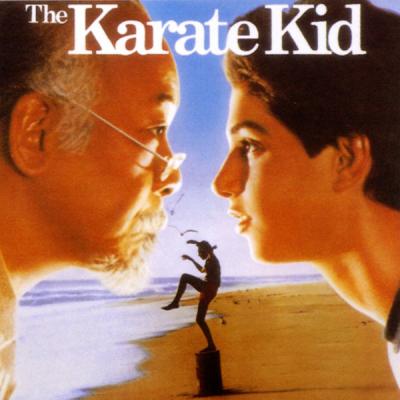
"Karate Kid" Soundtrack Lyrics
Movie • 1999
Track Listing
Survivor
Broken Edge
Commuter
Paul Davis
Shandi
Baxter Robertson
St. Regis
Gang of Four
Joe Esposito
"The Karate Kid (Original Motion Picture Soundtrack) — 1999 CD Reissue" – Album Guide to Tracks and Key Scenes
Overview
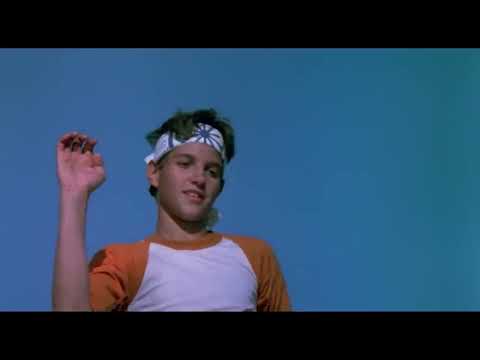
Can a soundtrack be both underdog pump-up and sun-baked teen melancholy? The Karate Kid pulls it off. The film (1984) blends Bill Conti’s orchestral score with a lean set of radio-ready songs—power pop, new wave, early-’80s synth, even beach-party pastiche—that track Daniel LaRusso’s move from Reseda outsider to All Valley contender. The 1999 CD reissue gathers the core songs into a tidy package after years of scattered formats.
Functionally, the compilation is a memory machine: the tournament montage punch (“You’re the Best”), the U.S. breakthrough of Bananarama’s “Cruel Summer” (used on screen but omitted from the original LP), and scene-specific cuts like “(Bop Bop) On the Beach” and “Feel the Night.” It’s a snapshot of how 1984 needle-drops and Conti’s themes interlock—pop cues coloring place and vibe, score carrying training, resolve, and the crane-kick catharsis.
Questions & Answers
- Is there a Karate Kid movie from 1999?
- No—the movie is from 1984. “1999” refers to a widely circulated CD reissue of the 1984 soundtrack.
- What’s on the 1999 CD versus the original 1984 album?
- It mirrors the 10-track 1984 song album (Survivor, Joe Esposito, Gang of Four, etc.); it still excludes “Cruel Summer,” which was in the film but not on the album.
- Who composed the score?
- Bill Conti. His orchestral writing (with pan-flute solos by Gheorghe Zamfir) underpins training, mentorship, and the final bout.
- What’s the film runtime for placement context?
- About 126–127 minutes. Timestamps below reference common home releases; encodes vary slightly.
- Which song plays during the tournament montage?
- “You’re the Best” by Joe Esposito. It scores Daniel’s climb through the All Valley bracket.
- Which needle-drop most people recall outside the tournament?
- Bananarama’s “Cruel Summer,” underscoring Daniel’s early isolation and heat-haze trek.
- Label history?
- Originally Casablanca (1984). A PolyGram/Karussell reissue landed in 1999; later digital issues followed.
Notes & Trivia
- “You’re the Best” was reportedly written for Rocky III before landing here.
- “Cruel Summer” hit U.S. Top 10 after its placement—yet it’s not on the original album.
- Conti’s score features pan-flute solos by Gheorghe Zamfir, giving the training cues a distinctive timbre.
- Varèse Sarabande later issued all four original-film scores in a limited 4-CD box.
- The 1999 CD brought the ’84 compilation back into print ahead of the widespread digital era.
Genres & Themes
Power-pop & synth-rock → Triumph under pressure: big choruses (“You’re the Best,” “The Moment of Truth”) fuel montage logic—effort, setback, resolve, payoff.
New wave & post-punk sheen → California outsider vibe: Bananarama’s “Cruel Summer” and Gang of Four’s “Desire” tint Reseda heat and social friction.
Beach-party pastiche → Teen ritual spaces: “(Bop Bop) On the Beach” maps the party scene where rivalries flare.
Orchestral score with folk timbres → Mentor myth & discipline: Conti’s strings, brass, and pan-flute carve space for Miyagi’s philosophy and Daniel’s technique.
Tracks & Scenes
Timestamps are approximate for the 126–127-minute cut; diegetic = heard by characters on screen.
“Cruel Summer” — Bananarama
Where it plays: ~00:18:30–00:20:40. Daniel bikes alone through sun-bleached streets and the school yard; heat shimmer and low spirits match the synth pulse (non-diegetic).
Why it matters: Locates his isolation and the Reseda-vs-Encino divide in one needle-drop; the song later became a U.S. hit off the film’s visibility.
“(Bop Bop) On the Beach” — The Flirts & Jan & Dean
Where it plays: ~00:08:20–00:10:00. The beach party where Daniel meets Ali; Johnny arrives, tempers spike, and the first fight breaks out (source-like/diegetic at the party, then mixed forward).
Why it matters: Cheery surf gloss undercuts the brewing feud, sharpening the shock when fists fly.
“Feel the Night” — Baxter Robertson
Where it plays: ~01:05:30–01:08:10. Date-night montage at Golf N’ Stuff—go-karts, photo booth, quiet smiles (non-diegetic).
Why it matters: Gives the film its tender exhale between bruises and drills; it’s the memory many fans associate with the arcade/date visuals.
“You’re the Best” — Joe Esposito
Where it plays: ~01:49:30–01:52:30. Tournament montage—Daniel advances through brackets; quick cuts lock to the chorus; Kreese barks orders from the sidelines (non-diegetic).
Why it matters: The franchise’s defining sports-montage song; muscle, cheese, and sincerity in perfect ’84 ratio.
“The Moment of Truth” — Survivor
Where it plays: End credits, ~02:03:30–credits. After the crane-kick victory and freeze-frame, this rolls over the crowd exhale (non-diegetic).
Why it matters: A thematic bookend—Conti co-writes the tune, linking band single and score authorship.
“Desire” — Gang of Four
Where it plays: Mid-film interstitial (~00:46:00–00:47:00). Brief, angular burst over transition cuts (non-diegetic).
Why it matters: Injects post-punk edge that keeps the teen world from feeling too glossy.
“Young Hearts” — Commuter
Where it plays: Early social montage (~00:23:30–00:24:20). School and hangout beats as Daniel tries (and fails) to fit (non-diegetic).
Why it matters: Bridges plot beats without heavy dialogue, leaving space for looks and awkward pauses.
Not on the original album but in the film: “Cruel Summer” (Bananarama). Also brief diegetic bits and source cues surface at parties and the arcade.
Music–Story Links
- Outsider to contender: “Cruel Summer” isolates Daniel; “You’re the Best” verifies earned skill. Same kid, different frame—music marks the turn.
- Public vs. private selves: “Feel the Night” lets Daniel/Ali breathe off the battlefield, so the next clash stings more.
- Authority & aggression: the harsh snap of Gang of Four cues mirrors Cobra Kai’s win-at-all-costs ethos.
How It Was Made
Bill Conti composed and conducted the score, with orchestration by Jack Eskew and featured pan-flute solos by Gheorghe Zamfir. The original 1984 song album arrived via Casablanca Records; a later CD reissue appeared in 1999 under PolyGram/Karussell. A limited 4-CD box from Varèse Sarabande subsequently compiled Conti’s scores for the original four films.
Reception & Quotes
Contemporary and retrospective coverage consistently singles out the montage song and the deft blend of pop with score. According to major film guides, the soundtrack’s cues became inseparable from the film’s set-pieces.
“Utterly predictable and wholly of its time, but warm, sincere, and difficult to resist.” Rotten Tomatoes consensus
“An exciting, sweet-tempered, heart-warming story.” Roger Ebert
Availability: The 1999 CD reissue and later digital releases keep the compilation accessible; Conti’s score appears on specialty-label issues.
Additional Info
- “You’re the Best” (music by Conti, lyrics by Allee Willis) became the franchise’s montage shorthand.
- “Cruel Summer” surged on U.S. charts after the film; its omission from the LP/CD remains a common fan gripe.
- Recording/production credits on several songs tie back to pop hit-makers of the era (e.g., Jolley & Swain for Bananarama).
- Reissue metadata sometimes lists different rights holders due to catalog reshuffles in the late ’90s/’00s.
- The film’s arena sequences lock edits to chorus hits—classic sports-montage timing many later movies imitated.
Technical Info
- Title: The Karate Kid (Original Motion Picture Soundtrack) — 1999 CD Reissue
- Film Year: 1984 (feature)
- Album Year: 1999 reissue (original album 1984)
- Type: Various-artists song compilation (score by Bill Conti)
- Composer (score): Bill Conti; featured pan-flute solos by Gheorghe Zamfir
- Key songs: “You’re the Best” (Joe Esposito); “The Moment of Truth” (Survivor); “Feel the Night” (Baxter Robertson); “(Bop Bop) On the Beach” (The Flirts & Jan & Dean); “Cruel Summer” (in film only)
- Labels: Casablanca (1984 original); PolyGram/Karussell (1999 CD reissue)
- Runtime (film): ~126–127 minutes
- Availability: CD/digital for the songs; specialty label releases for Conti’s score.
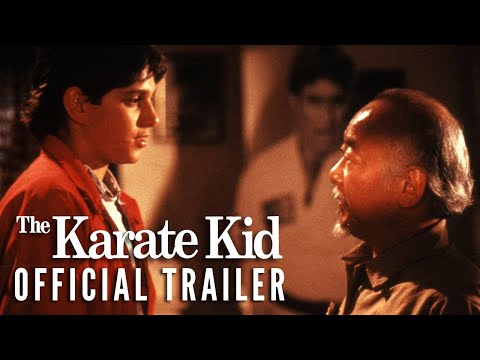
- Trailer Video ID: r_8Rw16uscg
Canonical Entities & Relations
| Subject | Relation | Object |
|---|---|---|
| Bill Conti | composed score for | The Karate Kid (1984) |
| Gheorghe Zamfir | performed pan-flute on | The Karate Kid score |
| Casablanca Records | released | 1984 original soundtrack album |
| PolyGram / Karussell | reissued | soundtrack on CD (1999) |
| Joe Esposito | performed | “You’re the Best” |
| Survivor | performed | “The Moment of Truth” |
| Bananarama | performed (film only) | “Cruel Summer” |
Sources: AllMusic (1999 CD reissue); Wikipedia (film, soundtrack, and song pages); IMDb Soundtracks; Apple Music listing; Rotten Tomatoes; RogerEbert.com; Varèse Sarabande notes.
November, 12th 2025
A-Z Lyrics Universe
Cynthia Erivo Popular
Ariana Grande Horsepower
Post Malone Ain't No Love in Oklahoma
Luke Combs Good Riddance (Time of Your Life)
Green Day Bye Bye Bye
*NSYNC You're the One That I Wan
John Travolta & Olivia Newton-John I Always Wanted a Brother
Braelyn Rankins, Theo Somolu, Kelvin Harrison Jr. and Aaron Pierre The Power of Love
Frankie Goes to Hollywood Beyond
Auli’i Cravalho feat. Rachel House MORE ›