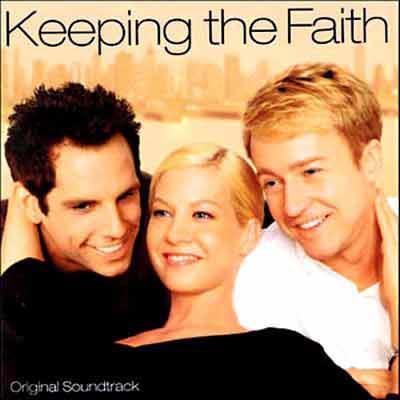
"Keeping The Faith" Soundtrack Lyrics
Movie • 2000
Track Listing
Tom Waits
Peter Salett
Travis Pickle
Elliott Smith
Peter Salett
Elmer Bernstein
Elmer Bernstein
Elmer Bernstein
Elmer Bernstein
Elmer Bernstein
Elmer Bernstein
Elmer Bernstein
Elmer Bernstein
Elmer Bernstein
Elmer Bernstein
Wild Cherry
Cheryl Lynn
"Keeping the Faith (Original Motion Picture Soundtrack)" – Album Guide to Tracks and Key Scenes
Overview
Can a rom-com about a priest, a rabbi, and their childhood friend balance pop needle-drops with an old-school jazz score? Keeping the Faith (2000) tries both. The album blends singer-songwriter cuts (Tom Waits, Elliott Smith, Peter Salett) with brief bursts of classic disco/soft-rock, while Elmer Bernstein’s light-jazz score threads the interludes. The song album came out on Hollywood Records alongside the film.
The music’s job is simple and effective: set New York mood, ease between faith/romance conversations, then spike the comedy with diegetic karaoke and dance-floor cues. The result feels like a mixtape stitched to a small-combo score—modern cuts for character interiority, Bernstein’s cues for glide and wit. (As noted by Filmtracks’ review, the finished film often leans on songs where the composed main title would have played.)
Questions & Answers
- Who composed the score?
- Elmer Bernstein, writing a light, small-ensemble jazz score.
- Is there an official soundtrack album?
- Yes. A Hollywood Records compilation mixes songs and short score cues.
- Which artists headline the album?
- Tom Waits, Peter Salett, Elliott Smith—plus quick hits like Cheryl Lynn and Wild Cherry.
- Is there a karaoke scene in the film?
- Yes. “Ready to Take a Chance Again” becomes a diegetic karaoke bit performed on-screen.
- Does the album include Bernstein’s full score?
- No. It samples select cues between the songs.
- Runtime context for timestamps below?
- About 2h10m in common home releases; cue times below are approximate.
Notes & Trivia
- Hollywood Records released the soundtrack in April 2000; the disc pairs VA songs with a handful of Elmer Bernstein cues.
- Bernstein’s jazzy “Main Title” was reportedly swapped out by a song in the finished cut.
- Edward Norton sings “Ready to Take a Chance Again” on-screen as a karaoke gag; the song appears in multiple forms during the film.
- Peter Salett’s “Heart of Mine” became the film’s signature love-song moment and a minor fan favorite.
Genres & Themes
Singer-songwriter & indie folk → Vulnerability and doubt: Elliott Smith’s “Pitseleh” and Peter Salett’s cuts underscore private reflection and second thoughts.
Disco & soft-rock standards → Social spaces and levity: Cheryl Lynn’s “Got to Be Real,” Barry Manilow’s “Ready to Take a Chance Again,” and Wild Cherry’s “Play That Funky Music” mark parties, karaoke, and comic releases.
Light jazz score → Urban warmth & interfaith friendship: Bernstein’s small-combo cues smooth transitions and keep dialogue scenes buoyant.
Tracks & Scenes
Timestamps are approximate; diegetic = acknowledged on screen.
“Please Call Me Baby” — Tom Waits
Where it plays: Early New York montage (~00:03–00:05). Sidewalk glances and reunions set the triangle in motion. Non-diegetic.
Why it matters: Sets a wistful, grown-up tone from the jump.
“Heart of Mine” — Peter Salett
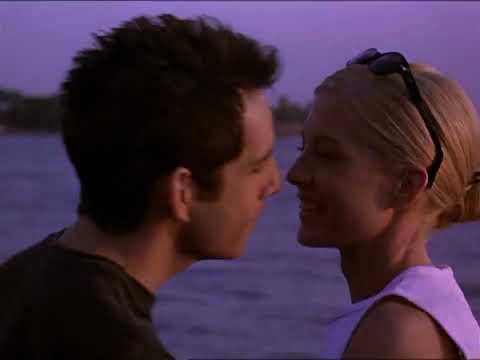
Where it plays: Falling-for-Anna montage (~00:35). City dates, small smiles, confessional close-ups. Non-diegetic.
Why it matters: The film’s soft center; its refrain mirrors the characters’ risk calculus.
“Pitseleh” — Elliott Smith
Where it plays: Post-complication introspection (~01:15). Quiet apartment and streetlamp shots. Non-diegetic.
Why it matters: A fragile breath between decisions; it deepens the stakes without speeches.
“Ready to Take a Chance Again” — Barry Manilow / (Karaoke performances)
Where it plays: Karaoke bar sequence (~00:48) and reprises later. Diegetic (sung on mic).
Why it matters: Comic release that flips into sincerity—risk, faith, and second chances, literally sung.
“Got to Be Real” — Cheryl Lynn
Where it plays: Party/celebration beat (~00:52). Dance floor cuts and crowd interplay. Source-style diegetic.
Why it matters: Marks a social high before the next emotional turn.
“Play That Funky Music (snippet)” — Wild Cherry
Where it plays: Brief bar gag (~01:40). Diegetic, under a quick comic exchange.
Why it matters: A wink of funk used as a punch-line button.
Score highlights — Elmer Bernstein
Where it plays: “Main Title” (album, not used in film), “The Three,” “Church and Temple,” “It’s Love,” among others, appear between dialogue scenes throughout. Non-diegetic.
Why it matters: Small-band jazz glues the film together—warmth, glide, and urbane humor.
Trailer cues: Marketing leaned on upbeat excerpts; the theatrical trailer is ID ChxAHMYryZg.
Music–Story Links
- Vow vs. longing: Intimate singer-songwriter tracks play when characters drop their public roles; the quieter the arrangement, the sharper the conflict feels.
- Community vs. solitude: Dance-floor/source cues signify belonging; when the mix collapses back to score, we’re alone with a choice.
- Humor as bridge: Karaoke turns a rom-com bit into a thematic statement—risking embarrassment to “take a chance again.”
How It Was Made
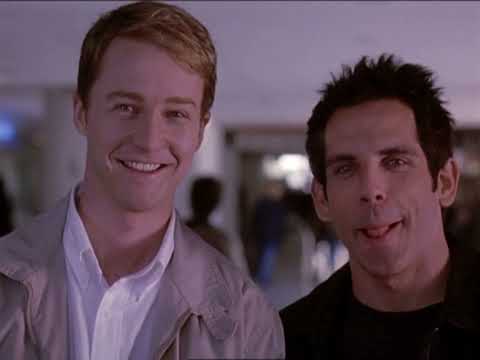
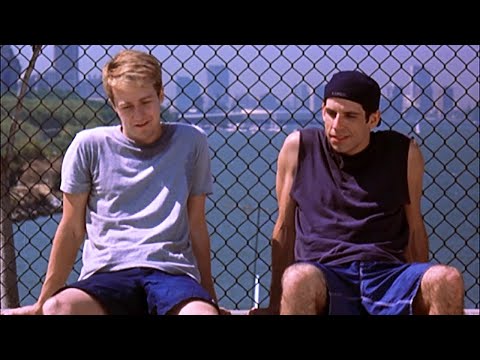
Edward Norton directs and stars alongside Ben Stiller and Jenna Elfman; Touchstone/Spyglass released the film in April 2000. Elmer Bernstein’s assignment brings his late-career jazz touch to a modern NYC romance, while the studio album curates a balanced blend of songs and short score cues. (Soundtrack.Net lists Bernstein as composer and confirms a Hollywood Records CD.)
Reception & Quotes
Reviews singled out the easy NYC warmth and the charming use of needle-drops beside a veteran’s score.
“Bernstein’s light jazz glides between scenes—urbane, unhurried.” Filmtracks review summary
“The karaoke gag lands because the song choice is thematically perfect.” fan soundtrack notes
Availability: The song/score compilation is out via Hollywood Records; individual tracks stream widely. Several cues (including “Heart of Mine”) circulate in official artist uploads.
Additional Info
- Album sequencing opens with Tom Waits, then leans on Peter Salett/Elliott Smith before slipping into short Bernstein cues.
- Some markets list a Japan CD edition (AVCW-13030) with identical core program.
- Expect extremely short snippets for certain classics (e.g., “Play That Funky Music”)—they’re scene gags, not full plays.
- Fan playlists mirror the album and add non-album cues heard in the film.
- The film’s chapter list (“The Music Store,” “Friends and Lovers,” etc.) is a helpful map for where songs tend to land.
Technical Info
- Title: Keeping the Faith (Original Motion Picture Soundtrack)
- Year: 2000
- Type: Various-artists + select score cues
- Composer (score): Elmer Bernstein
- Label: Hollywood Records (CD release)
- Notable placements: “Please Call Me Baby” (Tom Waits); “Heart of Mine” (Peter Salett); “Pitseleh” (Elliott Smith); “Ready to Take a Chance Again” (Barry Manilow/karaoke); “Got to Be Real” (Cheryl Lynn); “Play That Funky Music” (Wild Cherry, snippet)
- Trailer Video ID: ChxAHMYryZg
Canonical Entities & Relations
| Subject | Relation | Object |
|---|---|---|
| Elmer Bernstein | composed score for | Keeping the Faith (2000) |
| Hollywood Records | released | Keeping the Faith soundtrack CD |
| Tom Waits | performed | “Please Call Me Baby” |
| Peter Salett | performed | “Heart of Mine”; “The Way Things Used to Be” |
| Elliott Smith | performed | “Pitseleh” |
| Barry Manilow | performed | “Ready to Take a Chance Again” |
| Edward Norton | performs (on-screen) | “Ready to Take a Chance Again” (karaoke) |
Sources: Soundtrack.Net (album/composer); Hollywood Records retail listings; Discogs (edition details); Filmtracks (score context & usage notes); SoundtrackINFO and MovieMusic (track list/cue names); RingoStrack (on-screen song uses).
November, 12th 2025
A-Z Lyrics Universe
Cynthia Erivo Popular
Ariana Grande Horsepower
Post Malone Ain't No Love in Oklahoma
Luke Combs Good Riddance (Time of Your Life)
Green Day Bye Bye Bye
*NSYNC You're the One That I Wan
John Travolta & Olivia Newton-John I Always Wanted a Brother
Braelyn Rankins, Theo Somolu, Kelvin Harrison Jr. and Aaron Pierre The Power of Love
Frankie Goes to Hollywood Beyond
Auli’i Cravalho feat. Rachel House MORE ›