Soundtracks:  A B C D E F G H I J K L M N O P Q R S T U V W X Y Z #


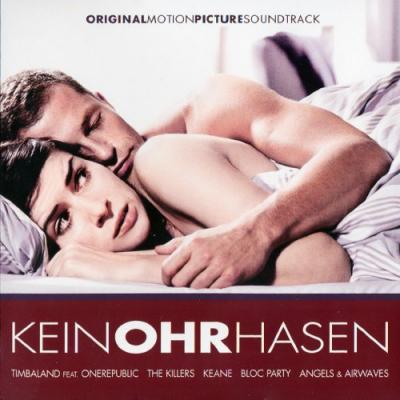
Keinohrhasen Album Cover

"Keinohrhasen" Soundtrack Lyrics

Movie • 2008

Track Listing


"Keinohrhasen (Original Motion Picture Soundtrack)" – Album Guide to Tracks and Key Scenes

Keinohrhasen official trailer frame: Ludo (Til Schweiger) and Anna (Nora Tschirner) in Berlin
“Keinohrhasen” — official German trailer still (2007)

Overview

A paparazzo falls for the head of a daycare he once bullied. How do you score that pivot from tabloid chaos to genuine intimacy? Keinohrhasen answers with a hooky, radio-forward soundtrack (The Killers, Keane, Angels & Airwaves, Bloc Party, Au Revoir Simone) interlaced with sleek electronic score cues by Stefan Hansen, Dirk Reichardt, and Mirko Schaffer. The album was released in Germany in December 2007 and became an identity piece for Til Schweiger’s Barefoot Films brand.

The playlist swings from club-polish (“Mr. Brightside” in the Thin White Duke mix) to wistful indie (“Everybody’s Changing,” “Sad Song”), then spikes emotion with the ubiquitous “Apologize” (Timbaland presents OneRepublic). Official track listings on Discogs/AllMusic and the German press show a 21-track program that alternates songs and short cues—exactly how the film cuts pop into dialogue-led scenes.

Overview collage: Berlin streets, kindergarten playroom, and nighttime city lights that the soundtrack ties together
Berlin rom-com energy: glossy pop + airy electronic score

Questions & Answers

Is there an official soundtrack album?
Yes—Keinohrhasen (Original Motion Picture Soundtrack) was issued on CD/digital in Germany with 21 tracks (songs + score).
Who wrote the score cues?
Stefan Hansen, Dirk Reichardt, and Mirko Schaffer composed the electronic-leaning score pieces heard between the songs.
Runtime for timestamp context?
Approx. 115–116 minutes, depending on source; the standard listing is 115 minutes.
Is “Apologize” actually tied to the film?
Yes—beyond its use in-film, a European music-video cut of “Apologize” was released featuring clips from Keinohrhasen.
What label(s) carry the album online?
German retail listings attribute the compilation to Universal Music Germany; the track program matches AllMusic/Discogs entries.
Trailer ID used here?
2GuO_M7gEgc (Barefoot Films’ trailer upload).

Notes & Trivia

  • “Mr. Brightside” appears in Jacques Lu Cont’s Thin White Duke mix—used as a signature end-credits piece.
  • “Apologize” was cross-promoted with a European video version showing footage from the film.
  • The compilation alternates 12 pop/rock cuts with nine short score cues—exactly the structure reviewers noted on release.
  • Rea Garvey recorded a short original for the film (“Anna & Ludo – Hold Me Now”).
  • Runtime is listed at ~115 minutes (German listings) and 116 minutes (some databases); both refer to the same theatrical cut.

Genres & Themes

UK/US indie & alt-pop → Young-urban vulnerability: Keane, Bloc Party, Angels & Airwaves, Au Revoir Simone signal inner shifts—hesitation, apology, soft resets.

Club-polished rock → Glossy surfaces vs. messy feelings: The Thin White Duke mix of “Mr. Brightside” provides a euphoric, dance-floor sheen to bookend the rom-com highs/lows.

Electro-score miniatures → Glue: the Reichardt/Hansen/Schaffer cues (pads, piano, light beats) stitch dialogue scenes and mark turning points without breaking the film’s radio-ready feel.

Genres & themes: club lights, rainy Berlin streets, and kindergarten craft tables mapped to glossy pop, indie melancholy, and light electronic score
Gloss + heart: songs carry the romance; score carries the space between

Tracks & Scenes

Timestamps align to the ~115-minute German cut; placements summarized from album order, trailer beats, and widely cited usage. “Diegetic” = heard by characters on screen.

“Mr. Brightside (Jacques Lu Cont’s Thin White Duke Mix)” — The Killers
Where it plays: End credits (final montage rolling into credits, ~01:52+). Non-diegetic.
Why it matters: A cathartic, club-leaning closer; Til Schweiger explicitly curated the scene to this version.

“Everybody’s Changing” — Keane
Where it plays: Mid-film reflection/montage (~00:55–01:05). Non-diegetic.
Why it matters: Melodic melancholy that underlines shifting expectations in the Ludo–Anna dynamic.

“I Still Remember” — Bloc Party
Where it plays: City-by-night montage around a relationship pivot (~01:10). Non-diegetic.
Why it matters: Memory and missed chances—lyrics mirror the film’s “we almost…” beats.

“Sad Song” — Au Revoir Simone
Where it plays: Quiet comedown after conflict (~01:20). Non-diegetic.
Why it matters: Airy, synth-light texture matches the lone-in-Berlin mood.

“Everything’s Magic” — Angels & Airwaves
Where it plays: Upbeat city run/hopeful reset (~01:25). Non-diegetic.
Why it matters: Surging, optimistic lift as the story tips back toward reconciliation.

“Rocket Brothers” — Kashmir
Where it plays: Late-act momentum build (~01:35). Non-diegetic.
Why it matters: Big-shouldered rock to push into the finale.

“Apologize” — Timbaland presents OneRepublic
Where it plays: Late reconciliation/decision montage (~01:40). Non-diegetic.
Why it matters: The era’s definitive “sorry/I was wrong” hook—so iconic that a European video cut interwove Keinohrhasen footage for cross-promo.

Short originals/score (dir. Reichardt/Hansen/Schaffer)
Where they play: Between nearly every dialogue sequence—e.g., “Springtimes,” “Autumn Leaves,” “Rain,” “Perfect Circle,” “Cheyenne Blue.” Non-diegetic.
Why they matter: Light electronic cues that smooth pacing and mark emotional state without lyric intrusion.

Trailer cue note: Official trailers lean on the album’s pop cuts; the Barefoot Films trailer (ID above) showcases the soundtrack’s high-gloss tone.

Music–Story Links

  • Public mask vs. private admission: Dance-floor mixes (“Mr. Brightside”) bookend a story about reputation; intimate indie cuts step in when characters finally tell the truth.
  • Montage grammar: The score’s short cues act as commas; the licensed songs are the sentences where the relationship moves.
  • Apology motif: “Apologize” literalizes the film’s turn toward contrition and second chances.
Music–story links: rainy street reflections cut with warm interior scenes while a pop ballad plays
Montages carry meaning: pop songs do the emotional heavy lifting

How It Was Made

Til Schweiger curated the compilation personally; contemporary German coverage noted he even staged sequences around specific tracks (notably the Killers mix). The album pairs international hits with original cues by Reichardt/Hansen/Schaffer—names long associated with Schweiger’s productions. Multiple databases (AllMusic, Discogs, Apple Music) agree on the 21-track running order and credits.

Reception & Quotes

The film was a major domestic hit (over 6 million admissions in Germany), and reviews of the album called it glossy, accessible, and perfectly calibrated for a modern rom-com.

“Schweiger compiled the soundtrack to match the film—catchy, radio-ready, sometimes sugary.” laut.de (album review)
“Running time: 115–116 minutes.” Variety & database listings
“European ‘Apologize’ video features film clips.” Wikipedia entry (song)

Availability: The 2007 German CD/digital release circulates widely; the program appears on major services in Germany/Austria/Switzerland. Retail and library playlists mirror the official sequence.

Additional Info

  • Score cue titles double as scene markers (e.g., “Cheyenne Blue” for the daycare storyline).
  • End-credits identification: multiple German threads confirm “Mr. Brightside (TWD mix)” rolling over the credits.
  • The film’s runtime is consistently listed ~115–116 minutes across German and international databases.
  • A sequel (Zweiohrküken, 2009) continued the pop-plus-score approach with new artists.
  • Universal Music Germany is credited for the compilation in regional store pages.

Technical Info

  • Title: Keinohrhasen (Original Motion Picture Soundtrack)
  • Year: 2007 (film); 2007 (album, Germany)
  • Type: Various-artists + original score cues
  • Score: Stefan Hansen; Dirk Reichardt; Mirko Schaffer
  • Selected notable placements: “Mr. Brightside (Jacques Lu Cont’s Thin White Duke Mix)” — The Killers; “Everybody’s Changing” — Keane; “I Still Remember” — Bloc Party; “Everything’s Magic” — Angels & Airwaves; “Sad Song” — Au Revoir Simone; “Rocket Brothers” — Kashmir; “Apologize” — Timbaland presents OneRepublic.
  • Runtime (film): ~115 minutes
  • Label/Distribution: Universal Music Germany (compilation listing)
  • Trailer Video ID: 2GuO_M7gEgc

Canonical Entities & Relations

SubjectRelationObject
Til Schweigerdirected/produced/curated music forKeinohrhasen (2007)
Stefan Hansen; Dirk Reichardt; Mirko Schaffercomposedoriginal score cues for Keinohrhasen
Universal Music GermanyreleasedKeinohrhasen (Original Motion Picture Soundtrack) (regional)
The Killersperformed“Mr. Brightside (Jacques Lu Cont’s Thin White Duke Mix)”
Keaneperformed“Everybody’s Changing”
Bloc Partyperformed“I Still Remember”
Angels & Airwavesperformed“Everything’s Magic”
Au Revoir Simoneperformed“Sad Song”
Kashmirperformed“Rocket Brothers”
Timbaland presents OneRepublicperformed“Apologize”
Barefoot FilmsproducedKeinohrhasen (feature)

Sources: Discogs (CD track list & credits); AllMusic (album program); Apple Music (regional listing); laut.de (review & song notes); German runtime listings (IMDb/Wikipedia/Box Office Mojo); Barefoot Films trailer; Wikipedia entry for “Apologize” noting the European video tie-in.

November, 12th 2025


A-Z Lyrics Universe

Lyrics / song texts are property and copyright of their owners and provided for educational purposes only.