Soundtracks:  A B C D E F G H I J K L M N O P Q R S T U V W X Y Z #


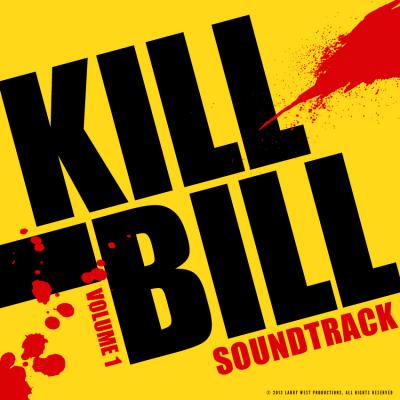
Kill Bill Album Cover

"Kill Bill" Soundtrack Lyrics

Movie • 2003

Track Listing


"Kill Bill Vol. 1 (Original Soundtrack)" – Album Guide to Tracks and Key Scenes

Kill Bill Vol. 1 trailer frame with The Bride in yellow tracksuit unsheathing the katana
Official trailer still, 2003

Overview

What happens when a mixtape becomes a film’s nervous system? Kill Bill: Vol. 1 answers with needle-drops that function like chapter headings and character tells. The album is a crate-digging tour—Ennio-adjacent spaghetti-western cues, 70s soul, Japanese kayōkyoku, surf/garage—stitched into a revenge saga so tightly that a whistle or a bassline can move plot.

Released in 2003 and steered musically by RZA with Quentin Tarantino, the soundtrack reads like a DJ set with sharp dynamics: lull (“Bang Bang”) → jab (Quincy Jones’ “Ironside” sting) → swagger (Hotei’s “Battle Without Honor or Humanity”) → elegy (Zamfir’s “The Lonely Shepherd”). Critics at the time underscored how these tracks stand on their own while supercharging the imagery.

Kill Bill Vol. 1 trailer frame: O-Ren Ishii’s motorcade and neon Tokyo skyline
Tokyo neon, musical muscle.

Questions & Answers

Is there an official album?
Yes, Kill Bill Vol. 1 (Original Soundtrack) released September 23, 2003 on Maverick/Warner; it charted on Billboard’s Top 200 and topped the soundtrack chart.
Who handled the music direction?
RZA served as primary compiler/producer/orchestrator alongside Tarantino, shaping source cues and original stings.
Are all film cues on the album?
No. Several memorable placements—e.g., Frank Mills’ “Music Box Dancer,” Morricone’s “From Man to Man”—are used in the film but omitted from the retail album.
What’s the song with the whistling nurse?
Bernard Herrmann’s “Twisted Nerve” theme—whistled by Elle Driver during the hospital corridor scene.
What plays when O-Ren enters the House of Blue Leaves?
Tomoyasu Hotei’s “Battle Without Honor or Humanity.”
End-credits theme?
“The Lonely Shepherd,” performed by Gheorghe Zamfir, composed by James Last.

Notes & Trivia

  • The album interleaves dialogue with songs (“Queen of the Crime Council,” “You’re My Wicked Life”) to preserve film rhythm on record.
  • “Ironside” is used as a sting motif whenever The Bride locks onto a Viper target—short, startling, unmistakable.
  • “The Grand Duel (Parte Prima)” underscores a key beat in the O-Ren anime chapter; a classic spaghetti-western cue repurposed for yakuza tragedy.
  • The 5.6.7.8’s perform live in-scene at the House of Blue Leaves (“Woo Hoo,” plus additional numbers not all on the album).

Genres & Themes

  • Spaghetti-western orchestral → codes honor, duels, and fatalism (“The Grand Duel,” Morricone-school textures).
  • Blaxploitation funk & soul → street-level momentum; transitional swagger (“Run Fay Run,” Isaac Hayes).
  • Japanese garage & enka → location and identity; club-scene electricity (the 5.6.7.8’s) vs. mournful resolve (Meiko Kaji’s “The Flower of Carnage”).
  • Vintage TV/film cues → meta-cinema signals; aural citations that frame scenes (“Green Hornet,” “Twisted Nerve”).
Kill Bill Vol. 1 trailer collage: House of Blue Leaves stage, samurai silhouettes, flashing neon
Styles as storytelling—each cue a blade.

Tracks & Scenes

Timestamps are approximate and can vary by edition/stream.

"Bang Bang (My Baby Shot Me Down)" — Nancy Sinatra
Scene: Opening credits (~00:02). After the black-and-white chapel prologue, Sinatra’s tremolo guitar and vocal ride over titles; non-diegetic.
Why it matters: Sets the film’s memory-scar tone; the lyric’s “wedding day” line mirrors the massacre we just glimpsed.

"Ironside" (excerpt) — Quincy Jones
Scene: Vernita Green’s doorway face-off (~00:09). A staccato sting hits as The Bride and Vernita lock eyes; non-diegetic accent.
Why it matters: A sonic siren announcing vendetta—Tarantino’s recurring “target acquired” tag.

"Music Box Dancer" — Frank Mills (not on album)
Scene: The Bride pulls up outside Vernita’s suburban house (~00:08). Non-diegetic, bright piano cutting against the violence to come.
Why it matters: Suburban calm vs. imminent chaos—the contrast is the joke and the dread.

"Twisted Nerve" — Bernard Herrmann
Scene: Elle Driver’s hospital corridor approach (~00:18). Diegetic-feeling whistle over non-diegetic cue; the camera tracks her in nurse whites toward The Bride’s room.
Why it matters: Innocent whistle turned menace; a masterclass in tension from minimal means.

"Green Hornet" — Al Hirt
Scene: Tokyo transit and bike run (~00:55–01:00). Non-diegetic brass and snare as The Bride threads neon traffic toward the House of Blue Leaves.
Why it matters: Vintage TV heroism recontextualized—swagger for a lone avenger.

"Woo Hoo" — The 5.6.7.8’s
Scene: Live onstage at the House of Blue Leaves (~01:03). Diegetic band performance while Yakuza VIPs settle in and The Bride scopes the room.
Why it matters: Location texture; the chant-hook becomes a pressure valve before the floor turns into a battlefield.

"Battle Without Honor or Humanity" — Tomoyasu Hotei
Scene: O-Ren Ishii’s entrance (~01:06). Non-diegetic power-riff as she and her entourage stride down the hallway into the club.
Why it matters: Pure dominance cue; instantly iconic character framing.

"Don’t Let Me Be Misunderstood / Esmeralda Suite" — Santa Esmeralda feat. Leroy Gómez
Scene: Garden duel (~01:32). Non-diegetic Latin-disco suite during the swordfight’s early swells; fades to wintry quiet before the final exchange.
Why it matters: Dramatic irony—pleading lyric over ritual violence; the crowded arrangement amplifies then relinquishes momentum.

"The Grand Duel (Parte Prima)" — Luis Bacalov
Scene: O-Ren backstory anime (early/mid-film). Non-diegetic; mournful western strings re-score a yakuza origin as operatic tragedy.
Why it matters: Transplants spaghetti-western fatalism into a Japanese crime saga—cross-genre grammar that defines the film.

"The Flower of Carnage (Shura no Hana)" — Meiko Kaji
Scene: Post-duel aftermath and credits roll-in (~01:37). Non-diegetic torch song with enka bite.
Why it matters: A soulful coda tying the film to 1970s Japanese revenge cinema.

"The Lonely Shepherd" — Gheorghe Zamfir (comp. James Last)
Scene: End credits. Non-diegetic pan-flute lament that lets the adrenaline settle while the ledger of debts remains open.
Why it matters: Elegy over triumph; it keeps the saga unfinished by design.

Trailer & promo note: “From Man to Man” (Morricone) and other cues surfaced in marketing; several are not on the retail album.

Music–Story Links

  • Each Viper encounter is punctuated by “Ironside”—a recurring alarm that binds otherwise disparate chapters.
  • Club diegetics (the 5.6.7.8’s) ground the location; once Hotei’s cue hits, the scene shifts from social space to arena.
  • Western motifs (“Grand Duel,” “Lonely Shepherd”) recast a Japanese revenge path as mythic duel culture—The Bride as gunslinger with a katana.
  • “Bang Bang” and “Flower of Carnage” bookend mood: innocence curdled at start, stoic mourning at finish.
Kill Bill Vol. 1 trailer frame: snowy garden duel stance with blades drawn
Steel, snow, and a needle-drop that breathes.

How It Was Made

Compilation and additional cues by RZA, with Tarantino digging deep into film-music archives and international pop. Licensing pulls from 1960s–2000s sources—TV themes, Euro-western scores, Japanese pop, blaxploitation instrumentals—sequenced with short original stings to glue scenes. Several on-screen tracks were cleared for the film but left off the album to keep flow and rights manageable.

Reception & Quotes

Contemporary coverage praised the crate-digging POV and scene synergy.

“An eclectic crash course in cool… songs that often exceed even the coolness of the scenes they score.” — Pitchfork
“RZA’s curation turns references into propulsion.” — album-review summary

Additional Info

  • Not on album but in film: “Music Box Dancer,” “From Man to Man,” “Truck Turner Theme,” “I’m Blue.”
  • The 5.6.7.8’s appear on camera; “Woo Hoo” later charted in the UK after ads and the film’s exposure.
  • Album editions include brief SFX tracks (“Flip Sting,” “Sword Swings”)—a nod to the film’s tactile sound design.
  • The label combo on release: A Band Apart/Maverick/Warner Bros.

Technical Info

  • Title: Kill Bill Vol. 1 (Original Soundtrack)
  • Year: 2003
  • Type: Film soundtrack (various artists + original stings)
  • Compiled/produced by: RZA; Quentin Tarantino; Lawrence Bender
  • Label: Maverick Records / Warner Bros. (with A Band Apart)
  • Signature placements: “Bang Bang,” “Twisted Nerve,” “Green Hornet,” “Battle Without Honor or Humanity,” “Don’t Let Me Be Misunderstood,” “The Flower of Carnage,” “The Lonely Shepherd.”
  • Release context: Film opened October 2003; album released September 23, 2003.
  • Availability: Streaming on major DSPs; multiple physical formats (CD, vinyl) exist.

Canonical Entities & Relations

SubjectRelationObject
Quentin Tarantinowrote & directedKill Bill: Volume 1
RZAcompiled/produced music forKill Bill Vol. 1 (Original Soundtrack)
Maverick Records / Warner Bros.releasedKill Bill Vol. 1 (Original Soundtrack)
Nancy Sinatraperformed“Bang Bang (My Baby Shot Me Down)”
Bernard Herrmanncomposed“Twisted Nerve”
Al Hirtperformed“Green Hornet” theme
Tomoyasu Hoteiperformed“Battle Without Honor or Humanity”
Santa Esmeralda feat. Leroy Gómezperformed“Don’t Let Me Be Misunderstood / Esmeralda Suite”
Meiko Kajiperformed“The Flower of Carnage”
Gheorghe Zamfirperformed“The Lonely Shepherd” (comp. James Last)
The 5.6.7.8’sperformed on-screen atHouse of Blue Leaves

Sources: Wikipedia (album & film entries), Discogs release, ScreenRant scene guide, Tarantino.info music list, Pitchfork review, IMDb Soundtracks.

Please name at least one person who is unaware of the existence of this film. Kill Bill by Quentin Tarantino. Two parts of it have brought slightly over USD 333 million, which is 5.5 times bigger than its budget. Despite there being 20+ songs in the collection to this movie, only half has lyrics like Queen Of The Crime Council or You're My Wicked Life. By the way, these two are performed by people amongst the list of the actors – Lucy Lui and Julie Dreyfus, the first one, and David Carradine, Julie Dreyfus with Uma Thurman – the second. You have definitely heard the David Carradine’s death: he died of self-asphyxia while he was pleasuring himself under a huge portion of drugs in some low-grade hotel in Bangkok, Thailand in 2009. Even men’s glances wrote about the best life example of this man to every other man – look, they told, how you have to live – aged 72, still having attraction to topics of intimacy & pleasure. He had 5 wives, several partners, many children, and along with it, he drank, smoked, abused drugs and had a really strong interest to everything called ‘life’. Well, people die, and all actors are people. Though not all people are actors. Which is good, because we may watch to this spectacular movie with the best actors and people. The original shooting was so long (4 hours approximately) that it has been decided to split it into two halves, releasing them with a solid distance. It was the same thing as Matrix 2 and 3, which were shot as one, and Keanu Reeves presumably got paid as if for one movie, so he was deceived like this. That Certain Female is a nice country song with absolutely unpretentious lyrics, and it was used as a nice contrast to the killing scene. In fact, almost every scene of this long movie is about killing with a huge blood bath. Nice…

November, 12th 2025


A-Z Lyrics Universe

Lyrics / song texts are property and copyright of their owners and provided for educational purposes only.