Soundtracks:  A B C D E F G H I J K L M N O P Q R S T U V W X Y Z #


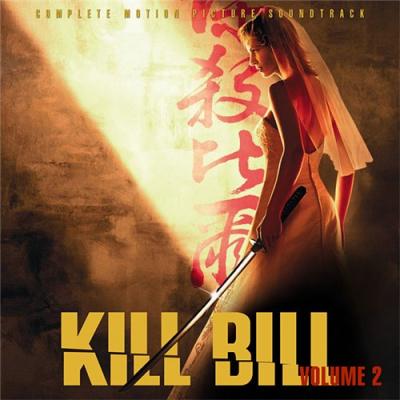
Kill Bill: Volume 2 Album Cover

"Kill Bill: Volume 2" Soundtrack Lyrics

Movie • 2004

Track Listing


"Kill Bill Vol. 2 (Original Soundtrack)" – Album Guide to Tracks and Key Scenes

Kill Bill: Volume 2 trailer still — The Bride framed against desert light with Morricone textures
Official trailer still, 2004

Overview

How do you follow a wall-to-wall banger like Vol. 1? By slowing the pulse and letting the dust speak. Kill Bill: Volume 2 swaps club heat for desert heat: Ennio Morricone’s mournful brass, flamenco shadows, outlaw-country vinyl crackle, and skeletal cues that leave space for confession. Where Vol. 1 strutted, Vol. 2 stares—closer, longer.

The album arrived April 2004 with a “mix-tape plus score” design: classic Morricone cuts (“Il Tramonto,” “L’Arena”), Shivaree’s lullaby-noir “Goodnight Moon,” Malcolm McLaren’s hypnotic “About Her,” Charlie Feathers’ rockabilly ache, Chingón’s fiery “Malagueña Salerosa,” and short dialogue setups. According to the film’s own archive guide, several key cues live only in the film (strip-club source, Pai Mei training beds) while the retail album keeps the flow tight.

Trailer frame: Budd’s trailer at dusk, the soundtrack leaning western and weary
Vol. 2 plays like a dusty requiem with sharp knives.

Questions & Answers

Is there an official album?
Yes. Kill Bill Vol. 2 (Original Soundtrack) released April 13, 2004 on Maverick/Warner and charted on Billboard’s Top 200 and the Soundtracks chart.
Who handled the score and music direction?
Robert Rodriguez orchestrated/underscored alongside RZA’s foundations; Quentin Tarantino produced and curated the compilation.
Why does Vol. 2 feel so different from Vol. 1?
It leans character-first and mournful: more Morricone, fewer breakbeats. The music favors long tension and aftermath over pure propulsion.
What’s the end-credits song everyone asks about?
“Malagueña Salerosa” by Chingón rolls over the cast credits; “Goodnight Moon” by Shivaree follows in the black-and-white card crawl.
Are all on-screen cues on the retail album?
No. Several memorable placements—“Dies Irae,” “A Fistful of Dollars (Version 2),” “Sunny Road to Salina,” training-bed cues—are film-only.
Does Vol. 2 reuse Vol. 1 material?
Motivic grammar carries over (spaghetti-western elegy, needle-drop irony), but most cues and placements are distinct to Vol. 2’s chapters.

Notes & Trivia

  • Rodriguez famously scored for a symbolic $1; Tarantino “repaid” by directing a Sin City scene for the same fee.
  • “About Her” reframes The Zombies’ “She’s Not There” via Malcolm McLaren—haunting Beatrix’s walk to Bill.
  • “L’Arena” times The Bride’s rebirth from the coffin; that shovel rhythm feels like dirt landing—then stops.
  • Several training-montage beds (Isaac Hayes’ “Three Tough Guys,” “Invincible Pole Fighter”) are film-only—an intentional split between screen grammar and album flow.

Genres & Themes

  • Spaghetti-western orchestral → fate, memory, and codes of honor (“Il Tramonto,” “L’Arena,” “A Silhouette of Doom”).
  • Rockabilly & outlaw country → Budd’s fallen-cowboy vibe (“Can’t Hardly Stand It,” “A Satisfied Mind”).
  • Flamenco & cante jondo → desire, grief, desert heat (“Tu Mirá,” “Malagueña Salerosa”).
  • Avant-pop collage → dissociation and resolve (“About Her” remixes nostalgia into a goodbye.)
Trailer collage: chapel flashback and desert roads, anchored by Morricone cues
Western grammar meets family reckoning.

Tracks & Scenes

Timestamps are approximate and may shift slightly across editions/streams.

"A Silhouette of Doom" — Ennio Morricone
Scene: Opening stretch (~00:02). Non-diegetic, elegiac tension over The Bride’s desert drive and chapter setup.
Why it matters: Announces Vol. 2’s slower, fatalistic tempo; menace without hurry.

"Il Tramonto" — Ennio Morricone
Scene: Two Pines flashback outside the chapel (~00:12). Non-diegetic strings as Beatrix wanders into Bill’s orbit.
Why it matters: Western romance curdles into prelude-to-massacre—beauty before the break.

"Dies Irae" — Nora Orlandi (film-only)
Scene: Bill and Budd talk outside the trailer (~00:24). Non-diegetic giallo chill beneath brotherly contempt.
Why it matters: Signals that Budd’s decline and Bill’s judgment are two sides of the same code.

"Ay Qué Caray" — Marilú Esmeralda Aguiluz (film-only)
Scene: Strip-club ambiance where Budd works (~00:20). Diegetic source on the floor as his humiliation plays out.
Why it matters: Sets Budd’s fallen-cowboy milieu; no mystique, just mop water.

"A Satisfied Mind" — Johnny Cash
Scene: Budd’s trailer, needle on vinyl (~00:33). Diegetic; he lets the tune run until paranoia clicks the switch.
Why it matters: Regret as lifestyle. The lyric reads like Budd’s confession.

"A Fistful of Dollars (Version 2)" — Ennio Morricone (film-only)
Scene: After Budd ambushes The Bride (~00:36). Non-diegetic sting right before the coffin plan locks in.
Why it matters: Classic duel grammar, but the “gunfight” is a shovel.

"Il Mercenario (Ripresa)" — Ennio Morricone
Scene: Budd hammers the coffin shut (~00:44). Non-diegetic, ritualistic.
Why it matters: Turns brutality into liturgy; you feel every nail.

"L’Arena" — Ennio Morricone
Scene: The Bride escapes the grave (~00:56). Non-diegetic; momentum builds in waves as the coffin cracks and earth moves.
Why it matters: A resurrection cue—earnest, ecstatic, terrifying.

"The Chase" — Alan Reeves, Phil Steele & Philip Brigham
Scene: Elle Driver speeds toward Budd’s trailer (~01:08). Non-diegetic desert motor; the camera drinks in heat shimmer.
Why it matters: Long highway lines = inevitability; the showdown is already decided.

"Can’t Hardly Stand It" — Charlie Feathers
Scene: Bound in Budd’s trailer (~00:39). Diegetic-then-cut; the Bride’s focus sharpens as the rockabilly lilt sours.
Why it matters: Budd’s “good old days” fantasy dissolves the second survival mode kicks in.

"I giorni dell’ira" — Riz Ortolani (film-only)
Scene: A mid-air kick in the cramped trailer fight (~01:16). Non-diegetic flash of spaghetti-western bravura.
Why it matters: Grindhouse flourish in a room too small for it—hence the fun.

"Tu Mirá" (Edit) — Lole y Manuel
Scene: The Bride drives to Esteban Vihaio (~01:20). Non-diegetic flamenco turns the road into a vow.
Why it matters: Desire and dread braided together—perfect prelude to the last address.

"Summertime Killer" — Luis Bacalov
Scene: Entering Bill’s hacienda (~01:27). Non-diegetic, sly and sun-baked.
Why it matters: A swaggering walk-up that still leaves room for doubt.

"About Her" — Malcolm McLaren
Scene: After Shogun Assassin with B.B., before the final talk (~01:31). Non-diegetic sample-collage that floats Beatrix into confrontation.
Why it matters: Past and present collapse; the sample (“She’s Not There”) reframes identity and denial.

"The Demise of Barbara and the Return of Joe" — Ennio Morricone (film-only)
Scene: Bill’s final five steps (~01:37). Non-diegetic elegy as the code finishes him.
Why it matters: A death scored like a legend, not a victory.

"Malagueña Salerosa" — Chingón
Scene: Cast credits (~01:39). Non-diegetic, full-blooded release.
Why it matters: The story exhales; the guitar still burns.

"Goodnight Moon" — Shivaree
Scene: Final black-and-white credit cards (~01:41). Non-diegetic, lullaby after thunder.
Why it matters: A haunted tuck-in—mother and warrior reconciled.

Trailer note: Promotional cuts leaned on Morricone flourishes (e.g., “Il Triello”) not on the retail album.

Music–Story Links

  • Western cues recast Beatrix as a gunslinger without a gun: “Il Tramonto” gilds the lie of calm; “L’Arena” crowns the rebirth.
  • Country/rockabilly in Budd-world = decay; pull the needle and the fantasy ends.
  • Flamenco (“Tu Mirá,” “Malagueña Salerosa”) = desire sharpened into resolve; love and violence sit in the same chord.
  • McLaren’s “About Her” collapses nostalgia into clarity—no more running from the truth of who she is to Bill and to herself.
Trailer shot: Beatrix and Bill in lamplight, a quiet motif hanging between them
Quiet music, loud consequences.

How It Was Made

Robert Rodriguez built new orchestral textures over RZA’s electronic foundation, preserving the series’ hybrid identity. Tarantino’s crate-digging extended deep into Italian westerns and Spanish flamenco; several source tracks were cleared for film use but held back from the album to keep the listen compact. One fun footnote: Rodriguez reportedly took the composing gig for a ceremonial $1, with Tarantino later “repaying” in Sin City.

Reception & Quotes

Critics pegged Vol. 2 as moodier, more elegiac, with standouts like “L’Arena” and “Goodnight Moon.” Two snapshots:

“Somber where Vol. 1 swaggers… Morricone pieces do the heavy lifting—and it works.” — Pitchfork
“By the end, the music makes the showdown feel inevitable rather than flashy.” — review summary

Additional Info

  • End-credit order: “Malagueña Salerosa” (cast) ➝ “Goodnight Moon” (final cards) ➝ hidden RZA instrumental tag on some editions.
  • Several fan-favorite film-only cues: “Dies Irae,” “Sunny Road to Salina,” “Invincible Pole Fighter” training bed.
  • “About Her” folds in The Zombies’ “She’s Not There” sample to reframe Beatrix/Bill.
  • Rodriguez’s short stings (“Budd Twang,” “Calling the Hateful Bitch”) tie dialogue and action beats.

Technical Info

  • Title: Kill Bill Vol. 2 (Original Soundtrack)
  • Year: 2004
  • Type: Film soundtrack (various artists + original cues)
  • Producers/Curators: Quentin Tarantino; Robert Rodriguez; RZA
  • Label: Maverick Records / Warner Music Group Soundtracks
  • Signature placements: “A Silhouette of Doom,” “L’Arena,” “About Her,” “Tu Mirá,” “Summertime Killer,” “Malagueña Salerosa,” “Goodnight Moon.”
  • Release context: Film opened April 2004; album released April 13, 2004 (U.S.).
  • Availability: Streaming on major DSPs; CD/vinyl pressings and later reissues circulate.

Canonical Entities & Relations

SubjectRelationObject
Quentin Tarantinowrote & directedKill Bill: Volume 2
Robert Rodriguezorchestrated & composed cues forKill Bill: Volume 2
RZAcontributed score foundations toKill Bill: Volume 2
Maverick / WMG SoundtracksreleasedKill Bill Vol. 2 (Original Soundtrack)
Ennio Morriconecomposed“Il Tramonto”, “L’Arena”, “A Silhouette of Doom”
Malcolm McLarencreated“About Her” (with samples)
Shivareeperformed“Goodnight Moon”
Chingónperformed“Malagueña Salerosa”
Lole y Manuelperformed“Tu Mirá”
Alan Reeves / Phil Steele / Philip Brighamcomposed“The Chase”

Sources: Wikipedia (film & album entries); The Quentin Tarantino Archives (music/scene placements); Discogs (album credits); Pitchfork (album review); SoundtrackINFO (end-credit song ID).

November, 12th 2025


A-Z Lyrics Universe

Lyrics / song texts are property and copyright of their owners and provided for educational purposes only.