Soundtracks:  A B C D E F G H I J K L M N O P Q R S T U V W X Y Z #


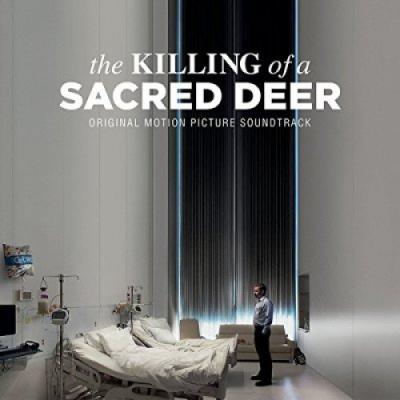
Killing of a Sacred Deer Album Cover

"Killing of a Sacred Deer" Soundtrack Lyrics

Movie • 2017

Track Listing


"The Killing of a Sacred Deer (Original Motion Picture Soundtrack)" – Album Guide to Tracks and Key Scenes

The Killing of a Sacred Deer official trailer frame: sterile hospital corridor and a distant figure
Official trailer still, 2017

Overview

What does dread sound like when it refuses to hurry? This soundtrack answers with austere classical works (Schubert, Bach, Gubaidulina), glacial modern textures, and a few disarmingly “ordinary” songs delivered at knife-edge calm. Instead of a conventional theme, the film leans on ritual: chorales and sacred pieces that feel older than the characters’ choices, and a wheezing, uncanny accordion that seems to breathe for the rooms.

The commercial album (Milan Records) collects the film’s classical selections, Janne Rättyä’s forbidding accordion cues, and two vocal moments tied to the family’s teenage daughter—including a fragile cover of “Burn.” According to the label notes, the emphasis is on tension by subtraction: small ensembles, long-held tones, and choral massed sound that lands like a verdict rather than comfort.

Trailer frame: a family seated at a spotless dining table while the audio feels like a held breath
Music that observes, then indicts.

Questions & Answers

Is there an official album?
Yes. The Killing of a Sacred Deer (Original Motion Picture Soundtrack) was released in 2017 by Milan Records (digital and physical).
Is there original score?
There’s no traditional orchestral score; the film uses pre-existing classical works plus new accordion cues performed by Janne Rättyä.
What piece opens the film?
Schubert’s Stabat Mater in F minor, opening chorus—sacred lament as curtain-raiser.
What closes the film in the diner?
Bach’s St. John Passion, opening chorus. The oratorio’s collective plea undercuts the scene’s brittle silence.
Who sings “Burn” in the film/album?
Raffey Cassidy performs “Burn”; the album also includes Ellie Goulding’s “How Long Will I Love You.”
Which contemporary composer features most prominently?
Sofia Gubaidulina, represented by the fierce fourth movement of Rejoice! for violin and cello.

Notes & Trivia

  • Opening and closing cues are both sacred choral works; the symmetry frames the story as ritual rather than coincidence.
  • Janne Rättyä’s accordion (“De Profundis” and related miniatures) gives the soundtrack its strangest texture—human, breathy, and inhumanly steady.
  • Raffey Cassidy’s on-screen vocal moments double as character beats; the OST preserves one as a studio-clean take.
  • The album is credited to Various Artists; Milan Records handled the release.

Genres & Themes

  • Sacred choral (Schubert, Bach) → judgment, inevitability, and community witnessing private guilt.
  • 20th-century spiritual modernism (Gubaidulina) → rigor and ecstasy; devotion reframed as pressure.
  • Extended-technique solo (accordion) → mechanical breath that makes rooms feel sentient.
  • Fragile pop → innocence with edges; when the teen voice arrives, it hurts more for being plain.
Trailer collage: surgical lights, suburban interiors, and a slow pan toward a motionless teenager
Form follows fate: liturgy, then penalty.

Tracks & Scenes

Timestamps are approximate and may shift slightly across editions/streams.

“Stabat Mater, D 383: I. Jesus Christus schwebt am Kreuzel” — Franz Schubert (chorus & orchestra)
Where it plays: Opening over surgical imagery (~00:01). Non-diegetic; the camera stays clinical as the music mourns.
Why it matters: Announces sacred stakes before we meet the family; sorrow precedes plot.

“Rejoice! Sonata for Violin & Cello — IV” — Sofia Gubaidulina
Where it plays: Early domestic unease (~00:10–00:15). Non-diegetic tremors while friendships tighten into obligation.
Why it matters: Religious fervor rendered as tension; devotion curdles into debt.

“De Profundis” — Janne Rättyä (accordion)
Where it plays: Hallway walks and hospital interstices (~00:25; reprises). Non-diegetic, almost diegetic in feel—the bellows sit like breathing in the mix.
Why it matters: Gives the film its “living building” sound; emotion without melody.

“Carol of the Bells” — Traditional (choral arrangement)
Where it plays: A bright interior undercuts by dread (mid-film montage). Non-diegetic holiday sheen against medical puzzles.
Why it matters: Cheer as dissonance; the arrangement’s insistence feels accusatory here.

“Burn” — Raffey Cassidy (from Ellie Goulding)
Where it plays: Teen-room and car-ride fragments (~00:40). Diegetic performance snags on the story’s moral knots.
Why it matters: A pop anthem turns fragile in this voice; desire and danger share a line.

“How Long Will I Love You” — Ellie Goulding
Where it plays: Brief needle-drop around private vows (var. placements). Non-diegetic/ambient.
Why it matters: Sentiment placed beside bargaining; affection reduced to a transaction.

“St. John Passion: I. Herr, unser Herrscher” — J. S. Bach
Where it plays: Final diner tableau into credits (~02:00). Non-diegetic chorus that refuses catharsis.
Why it matters: The community sings while the family refuses to speak—collective judgment over private survival.

Music–Story Links

  • Sacred bookends (Stabat MaterSt. John Passion) frame the plot as penance, not coincidence.
  • Accordion cues function like an impersonal respirator: every corridor choice sounds monitored.
  • Teen-voiced pop (“Burn”) collapses the adult moral frame—innocence becomes complicity by proximity.
Trailer shot: a family frozen in a diner booth, while a choral wall seems to press in
When the chorus arrives, no one is innocent.

How It Was Made

Yorgos Lanthimos and team curated existing works rather than commissioning a conventional score. The album, issued by Milan Records, foregrounds Schubert, Bach, and Gubaidulina alongside Rättyä’s new accordion recordings. The vocal tracks tied to Kim (Raffey Cassidy) were recorded to serve both story and album flow—pop artifacts turned character studies.

Reception & Quotes

Critics consistently noted how the sacred selections change the film’s temperature—cool images, fervent music.

“Strangest of all is the musical topping and tailing… Schubert at the start, Bach at the end.” — The New Yorker
“A tense affair of classical pieces and terrifyingly intimate accordion.” — label summary

Additional Info

  • Album: Various Artists; Milan Records (digital 2017; physical followed).
  • Key composers on album: J. S. Bach; Franz Schubert; Sofia Gubaidulina; plus Janne Rättyä (accordion performances).
  • Vocal features: Raffey Cassidy “Burn”; Ellie Goulding “How Long Will I Love You.”
  • Opening/closing sacred works are used intact in the film’s first and last movements.
  • The tracklist on major DSPs runs ~14 tracks (runtime ~45–50 minutes depending on edition).

Technical Info

  • Title: The Killing of a Sacred Deer (Original Motion Picture Soundtrack)
  • Year: 2017
  • Type: Film soundtrack (pre-existing classical works + new performances; no conventional score)
  • Key composers/performers: Franz Schubert; J. S. Bach; Sofia Gubaidulina; Janne Rättyä (accordion); Raffey Cassidy (vocal)
  • Label: Milan Records (Milan Entertainment, Inc.)
  • Signature placements: Schubert Stabat Mater (opening); Gubaidulina Rejoice! IV; Rättyä “De Profundis” (recurring); Bach St. John Passion (finale); Raffey Cassidy “Burn.”
  • Release context: U.S. release October 2017; album issued alongside theatrical rollout.

Canonical Entities & Relations

SubjectRelationObject
Yorgos Lanthimoswrote & directedThe Killing of a Sacred Deer (2017)
Milan RecordsreleasedThe Killing of a Sacred Deer (Original Motion Picture Soundtrack)
Franz SchubertcomposedStabat Mater, D 383 (opening cue)
Johann Sebastian BachcomposedSt. John Passion opening chorus (final cue)
Sofia GubaidulinacomposedRejoice! Sonata for Violin & Cello (IV)
Janne Rättyäperformedaccordion cues incl. “De Profundis”
Raffey Cassidyperformed“Burn” (cover) on OST / in-film

Sources: Milan Records album page; Apple/Spotify listings; Film Music Reporter (track/composer overview and release dates); The New Yorker (opening/ending cue identification).

‘My kids won’t be seeing this movie’ tells Nicole Kidman to the press about the film. And we fully understand her mother’s feelings – shooting in such a terrible movie is a hard undertaking while watching it is not less hard test for a person with a normal mental state. The film with plenty of horrific tiny details tells the story of a boy that seems to have some supernatural abilities. He curses the family of a surgeon who wasn’t able to save a boy’s dad on the surgical table 3 years ago. The curse is as follows: the surgeon’s (Colin Farrell) family will suffer through the loss of normal health of their children – first, their legs will not walk, then they’ll refuse food, and then, at the final stage, they will have the bleeding from their eyes before imminent death. It can only be stopped by a surgeon himself by choosing which one from the family to kill violently – according to a boy’s hellish desire. Nothing moves the boy from his adamant way of revenge until the surgeon takes a gun and chooses blindly to kill one member. It turns out to be the boy, his son. After that, his daughter gets well. The music has been selected to underline the gloomy way of the narration: Johann Sebastian Bachis represented by ‘Herr, unser Herrscher’, Franz Peter Schubert in Michel Corboz’s’s understanding is presented with ‘Jesus Christus schwebt am Kreuze’ and both songs tell in their lyrics about Christ and some of his last moments. The next association to Christ and the faith, in general, comes from ‘Carol of the Bells’ song performed classically by Lachey Arts Choir that do not add nor take from lyrics that usually have the uplifted mood. But somehow in the entourage of this film, this song turns out sullen and hinting on despair raving in the hearts of the main characters. Even Ellie Goulding sound different.

November, 12th 2025

Explore 'The Killing of a Sacred Deer' profiles and read user reviews on Internet Movie Database and Rotten Tomatoes
A-Z Lyrics Universe

Lyrics / song texts are property and copyright of their owners and provided for educational purposes only.