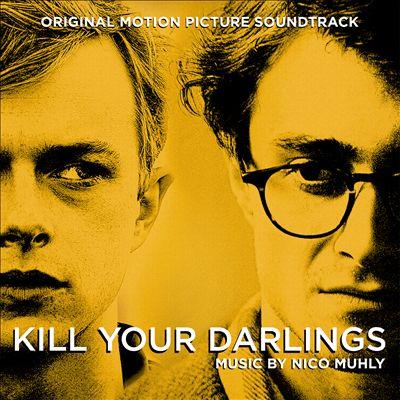
"Kill Your Darlings" Soundtrack Lyrics
Movie • 2013
Track Listing
Anne Shelton, Stanley Black and his Orchestra
Catherine Russell accompanied by Vince Giordano and the Nighthawks
Johannes Brahms
Music Sales Studio Group
Jo Stafford
The Andrews Sisters
Louis Jordan & His Tympany Five
Johannes Brahms (Performed by Idil Biret)
Vince Giordano and the Nighthawks
Catherine Russell accompanied by Vince Giordano and the Nighthawks
TV On The Radio
The Mills Brothers
Joma Music Group
Johannes Brahms (Performed by Idil Biret)
Johannes Brahms
Bloc Party
"Kill Your Darlings (Original Motion Picture Soundtrack)" – Album Guide to Tracks and Key Scenes
Overview
A period drama about the Beats scored like a memory—then jolted with modern electricity. Kill Your Darlings (2013) threads Nico Muhly’s chamber-like score through wartime jazz, salon waltzes, and a few pointed anachronisms, sketching Allen Ginsberg’s first awakenings with music that’s tender, skittish, and occasionally wild.
The retail album collects Muhly’s cues plus select era pieces; in the film, source songs from jukeboxes and bands in smoky rooms do heavy lifting for place and mood. Then comes the break: one or two contemporary placements arrive like a slap to the face, mirroring how the characters’ ideas feel too loud for their time. (RogerEbert.com singled out the midnight-library heist needle-drop for exactly that reason.)
Questions & Answers
- Who composed the score?
- Nico Muhly. His cues—piano, strings, and wary woodwinds—carry Allen’s perspective and the film’s nervous energy.
- Is there an official album?
- Yes. Kill Your Darlings (Original Motion Picture Soundtrack) was issued in 2013; digital listings credit Relativity Music Group. A Nico Muhly score album also circulates on streaming.
- Are all film songs on the album?
- No. The film uses additional vintage sides (and a couple of modern tracks) not all present on the retail compilation.
- Who supervised the music?
- Credits list Randall Poster and Meghan Currier as music supervisors.
- Does the movie use any modern songs?
- Yes. A few anachronistic drops underline youthful transgression—most famously TV on the Radio’s “Wolf Like Me” over a library caper.
- What label released the soundtrack?
- Relativity Music Group handled the 2013 commercial release.
- When did the film open?
- Limited U.S. theatrical release began October 16, 2013 via Sony Pictures Classics.
Notes & Trivia
- The jukebox standard “You Always Hurt the One You Love” is woven into a key bar scene and resonates with the film’s final poem.
- Period dance-band cuts were performed on-screen by Vince Giordano & The Nighthawks to keep the 1940s texture authentic.
- Nico Muhly’s cue names (“Columbia,” “The Murder,” “Allen & Lucien”) read like chapter headings—miniatures rather than long symphonic arcs.
- The soundtrack exists in two forms on DSPs: a “Various Artists” compilation (with songs + score) and a Muhly-only score album.
Genres & Themes
- Wartime jazz & big-band → social swirl, campus nights, and the illusion of normalcy.
- Salon classical (Chopin/Brahms) → old-world polish; the academy’s rules pressing on new ideas.
- Modern indie/alt drops → rupture, libido, rule-breaking (“Wolf Like Me,” indie end-credit selections).
- Minimalist score → Allen’s inner voice: fragile motifs that gather nerve, then falter.
Tracks & Scenes
Timestamps are approximate and may shift slightly by edition/stream.
"Wolf Like Me" — TV on the Radio
Scene: Midnight library break-in (~00:46). Non-diegetic blast as the students pry open the stacks and burn through the aisles; bodies sprint, whispers pop, the camera dances.
Why it matters: An intentional anachronism—feral pulse for a manifesto-in-the-making. (As noted by RogerEbert.com.)
"You Always Hurt the One You Love" — The Mills Brothers
Scene: West End Bar, the morning after the Riverside Park incident (~01:25). Diegetic on jukebox; Allen sits amid shell-shocked faces as the lyric lands like a verdict.
Why it matters: The syrupy croon curdles; the refrain mirrors the film’s final line and Allen’s new resolve.
"On the Sunny Side of the Street" — The Pied Pipers with Jo Stafford
Scene: Early campus montage (~00:12). Diegetic/ambient as freshmen pour into Morningside Heights; optimism paints over loneliness.
Why it matters: Bright big-band against Allen’s private dislocation—classic irony the movie keeps using.
"Gimme Some Skin, My Friend" — The Andrews Sisters
Scene: Dorm-room horseplay and downtown drifting (~00:20). Diegetic radio; the crew learns each other’s rhythms.
Why it matters: Social grease—before the night tilts into obsession.
"The Blue Room" — Catherine Russell & Vince Giordano and The Nighthawks
Scene: Club interlude (~00:34). Diegetic band-on-stage; Lucien’s charisma pulls the room into his orbit while Allen watches.
Why it matters: Period authenticity that also codes class and seduction; the band’s sheen vs. Allen’s ragged nerves.
"Caldonia" — Louis Jordan & His Tympany Five
Scene: Raucous after-hours cutaway (~00:41). Diegetic needle-drop, horns punching through laughter.
Why it matters: The film’s most kinetic vintage placement; joy collides with a gathering storm.
"The Pioneers (M83 Remix)" — Bloc Party
Scene: Late-film coda / credits (region- and cut-dependent). Non-diegetic modern gleam that reframes the period story as present-tense.
Why it matters: A last wink at legacy: the kids’ noise became canon.
"Don’t Look Back Into the Sun" — The Libertines
Scene: Additional modern cue (trailers/alt end use reported). Non-diegetic swagger that fits the film’s “run-at-the-sun” thesis.
Why it matters: Another deliberate time-tear; the authorial “we” talking back to 1944.
Score highlights — Nico Muhly (“Columbia,” “The Murder,” “Allen & Lucien”)
Scene: Throughout—writing binges, the Riverside Park reconstruction, and Allen’s walk to the final poem. Non-diegetic, small ensembles.
Why it matters: The cues don’t solve scenes; they hold space for doubt—exactly the film’s register.
Music–Story Links
- When the Beats-to-be articulate their “New Vision,” a modern track kicks the door in—formally modeling how they felt to their era.
- Jukebox standards act like Greek chorus; the West End Bar needle-drop tells Allen what the poem will.
- Live dance-band numbers glamorize the room around Lucien, then Muhly’s quieter cues return to Allen’s unease—adoration vs. authorship.
How It Was Made
Nico Muhly was tapped early; his writing here favors brief, repeatable motifs that can tuck under dialogue. Music supervision (Randall Poster with Meghan Currier) balances licensed 1940s recordings, period-accurate band performances, and a few modern intrusions. The commercial album arrived in 2013 under Relativity Music Group; a separate Muhly score set is also available.
Reception & Quotes
Critics praised the tonal control and the audacity of mixing eras.
“Krokidas even dares to infuse a little anachronistic music… ‘Wolf Like Me’ during a risky midnight library raid.” — RogerEbert.com
“Jazz haze, bookish strings, then a blast from the future—fits the movie’s thesis.” — review summary
Additional Info
- Score album and compilation both circulate; metadata sometimes lists “Various Artists” for the compilation.
- Vintage repertoire includes Mills Brothers, Jo Stafford/Pied Pipers, Andrews Sisters, plus ballroom waltzes and Brahms/Chopin excerpts.
- Vince Giordano’s band appears on the album credits as performers of several 1940s cues.
- Trailer ID used in figures: aEr8Ogdm-3I.
- U.S. limited release via Sony Pictures Classics: mid-October 2013.
Technical Info
- Title: Kill Your Darlings (Original Motion Picture Soundtrack)
- Year: 2013
- Type: Film soundtrack (score + licensed songs)
- Composer: Nico Muhly
- Music supervision: Randall Poster; Meghan Currier
- Label: Relativity Music Group (digital/streaming release)
- Signature placements: TV on the Radio “Wolf Like Me”; The Mills Brothers “You Always Hurt the One You Love”; Jo Stafford/The Pied Pipers “On the Sunny Side of the Street”; Louis Jordan “Caldonia”; Vince Giordano band features; indie end-credit selections.
- Release context: Sundance premiere (Jan 2013); U.S. theatrical (Oct 16, 2013).
- Availability: Streaming; digital storefronts.
Canonical Entities & Relations
| Subject | Relation | Object |
|---|---|---|
| John Krokidas | wrote & directed | Kill Your Darlings (2013) |
| Austin Bunn | wrote story & co-wrote | Screenplay for Kill Your Darlings |
| Nico Muhly | composed score for | Kill Your Darlings |
| Randall Poster | served as | Music Supervisor |
| Meghan Currier | served as | Music Supervisor |
| Relativity Music Group | released | Kill Your Darlings (Original Motion Picture Soundtrack) |
| Sony Pictures Classics | distributed | Kill Your Darlings (U.S.) |
| TV on the Radio | performed | “Wolf Like Me” (film placement) |
| The Mills Brothers | performed | “You Always Hurt the One You Love” (film placement) |
| Vince Giordano & The Nighthawks | performed | Period club numbers (on-screen/album) |
Sources: RogerEbert.com review; Apple Music/Spotify listings; Metacritic credits; Sony Pictures Classics site; Discogs release notes; Ringo/aggregator song lists.
November, 12th 2025
'Kill Your Darlings' is an American biographical drama film written by Austin Bunn and directed by John Krokidas: Find more info on Wikipedia.org and Internet Movie DatabaseA-Z Lyrics Universe
Cynthia Erivo Popular
Ariana Grande Horsepower
Post Malone Ain't No Love in Oklahoma
Luke Combs Good Riddance (Time of Your Life)
Green Day Bye Bye Bye
*NSYNC You're the One That I Wan
John Travolta & Olivia Newton-John I Always Wanted a Brother
Braelyn Rankins, Theo Somolu, Kelvin Harrison Jr. and Aaron Pierre The Power of Love
Frankie Goes to Hollywood Beyond
Auli’i Cravalho feat. Rachel House MORE ›