Soundtracks:  A B C D E F G H I J K L M N O P Q R S T U V W X Y Z #


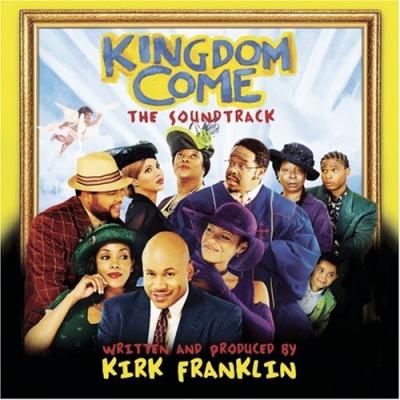
Kingdom Come Album Cover

"Kingdom Come" Soundtrack Lyrics

Movie • 2001

Track Listing


"Kingdom Come (The Soundtrack)" – Album Guide to Tracks and Key Scenes

Kingdom Come (2001) theatrical trailer still with the Slocumb family gathered for the funeral
Kingdom Come (2001) – film trailer imagery, 2001

Overview

What happens when a funeral comedy leans on contemporary gospel instead of pop needle drops? Kingdom Come answers with a warm, church-rooted soundtrack written and produced under the stewardship of Kirk Franklin, then curated to sit alongside Tyler Bates’s original score. The album collects performances from Jill Scott, Deborah Cox, Mary Mary, Shawn Stockman, Trin-i-tee 5:7, Carl Thomas, Az Yet, Kurt Carr & Friends, and others—giving a family dramedy the sonic language of testimony, call-and-response, and Sunday-best uplift.

On screen, the music functions as both balm and mirror. Choir-forward cues and classic hymns frame the Slocumb clan’s bickering with grace and bite; R&B-gospel hybrids carry the film’s gentler reconciliations. The record plays like a service order: processional energy, mid-sermon reflection, and recessional catharsis. According to studio credits and retail listings, the commercial album arrived in early April 2001 on GospoCentric/B-Rite, parallel to the film’s theatrical release.

Trailer frame highlighting family arrivals at the church in Kingdom Come (2001)
Family, church, and music—framed from the start.

Questions & Answers

Is this a gospel album or a film score?
A gospel-driven compilation (original songs produced/written by Kirk Franklin) paired in the film with Tyler Bates’s underscore; the commercial release is the various-artists album.
Who performs the title cut “Kingdom Come”?
Kirk Franklin with Jill Scott; it functions as a thematic opener for the album and promotional materials.
Are any hymns performed by characters on screen?
Yes—“Blessed Assurance, Jesus Is Mine” appears diegetically, aligning with the funeral setting and church scenes.
Which track most clearly bridges R&B and gospel?
“Daddy’s Song” (Carl Thomas with Natalie Wilson & SOP) threads secular vocal styling with a choir-led arrangement.
Is there a cast-led number inside the film?
Yes—“Try Me” exists in a cast version within the movie in addition to Tamar Braxton’s album rendition.
Was a music supervisor credited?
Trade listings credit Derrick L. Wade; some databases list Julia Walker. Documentation varies by source (see Technical/Additional).
Where can I legally hear the album today?
It’s available on major streamers and on out-of-print CD via secondary markets.

Notes & Trivia

  • The album was issued on GospoCentric/B-Rite, labels closely associated with Kirk Franklin’s projects.
  • Shawn Stockman (Boyz II Men) contributes the ballad “Stand,” a straight-faced devotional rather than a pop feature.
  • Two “Try Me” versions exist: a cast performance in-film and Tamar Braxton’s studio version on the album.
  • Classic hymns (“Amazing Grace,” “Just a Closer Walk with Thee”) appear in the film’s church milieu even if not all appear on the retail album.
  • Vocalist Candy West has stated she provided a singing voiceover for a funeral-scene moment.

Genres & Themes

Contemporary Gospel → Communal healing: Choirs, handclaps, and testimony-style leads frame grief as a shared process, not a private spiral.

R&B Balladry → Vulnerability without cynicism: Smooth leads and stacked harmonies let characters voice regret and reconciliation with dignity.

Traditional Hymns → Ritual and memory: Familiar melodies ground the story in Southern Black church tradition—rituals that outlast individual squabbles.

Trailer still with church interior where hymns and choir cues are featured in Kingdom Come (2001)
Hymns and choir cues anchor the film’s church sequences.

Tracks & Scenes

“Kingdom Come” – Kirk Franklin & Jill Scott
Scene: Plays over promotional cuts and functions as a thematic curtain-raiser for the album; bright, mid-tempo groove with choir responses, setting a tone of resilient joy. Non-diegetic in usage tied to marketing/the album flow.
Why it matters: Establishes the spiritual register and Franklin’s producer-as-ringmaster approach that threads the album.

“Daddy’s Song” – Carl Thomas feat. Natalie Wilson & SOP
Scene: Used as a reflective cue around family reckonings; solo R&B tenor against choir swells suggests private grief inside a public ritual. Non-diegetic in the film, album centerpiece.
Why it matters: Bridges R&B intimacy with church call-and-response, matching the film’s mix of confession and community.

“Stand” – Shawn Stockman
Scene: A quiet, near-devotional placement underscoring characters choosing restraint over escalation after sharp exchanges. Non-diegetic mood-setter.
Why it matters: Stockman’s restrained delivery reframes conflict scenes as steps toward surrender and patience.

“Thank You” – Kirk Franklin & Mary Mary
Scene: Celebration-leaning cue over family softening; rhythmic stomp-clap architecture plays like a recessional after tension breaks. Non-diegetic.
Why it matters: Converts narrative release into praise-energy, a tonal pivot from lament to gratitude.

“Thy Will Be Done” – Deborah Cox
Scene: Elegiac montage support; lush strings and gospel cadence accompany acceptance beats following hard conversations. Non-diegetic.
Why it matters: R&B timbre meets devotional lyric, voicing surrender when characters finally let go.

“It’s Alright” – Trin-i-tee 5:7
Scene: Light, buoyant interstitial around domestic regrouping; a tonal breath between heavier scenes. Non-diegetic.
Why it matters: Injects pop-gospel sheen, keeping the film’s rhythm from sinking into monotone grief.

“God’s Got It All in Control” – Kurt Carr & Friends (feat. Tamela Mann)
Scene: Church-adjacent moments where elders steady the room; choir-forward and declarative. Diegetic flavor in spirit, used non-diegetically on album.
Why it matters: Articulates the film’s thesis in plain-spoken gospel language: providence amid mess.

“Every Woman” – Az Yet
Scene: Brief romantic shading for a subplot reconciliation; satin harmonies soften the mood. Non-diegetic.
Why it matters: R&B textures broaden the album beyond sanctuary walls without breaking tone.

“Someday” – Crystal Lewis
Scene: Mid-film reflective undercurrent; CCM-adjacent timbre marking a quieter, cross-genre horizon. Non-diegetic.
Why it matters: Signals that hope is ecumenical—less about style than posture.

Hymn: “Blessed Assurance, Jesus Is Mine” – (diegetic)
Scene: Performed in-church, tied to the funeral’s ritual spine; a character-led hymn that folds the cast into a shared act of remembrance. Diegetic.
Why it matters: Grounds the story in lived Black church practice, not just gospel aesthetics.

“Try Me” – Tamar Braxton & One Nation Crew / Cast Version (in-film)
Scene: Two iterations: a studio cut on the album and a cast-led version used in the movie, connected to service/funeral context. Primarily diegetic in-film for the cast performance.
Why it matters: Shows how a written-for-film song can live twice—once as narrative action, once as radio-ready single.

Trailer music note: Promotional materials leaned on the title track and album cues rather than licensed chart hits, keeping brand continuity between film and soundtrack.

Music–Story Links

When Marguerite polices the family’s conduct, hymnody frames her rigidity as devotion rather than mere control; when younger relatives rebel, R&B-leaning tracks soften the edges so the film can pivot back to forgiveness. Title themes emphasize collective identity (“we” over “I”), which is precisely how the screenplay resolves: through participation in the same ritual space where the songs belong.

Trailer moment of reconciliations underscored by contemporary gospel textures in Kingdom Come (2001)
Contemporary gospel cues turn quarrels toward reconciliation.

How It Was Made

Original songs were written/produced by Kirk Franklin, with guest vocalists recorded under GospoCentric/B-Rite. Composer Tyler Bates provided the dramatic underscore. A designated music supervisor is credited in trade listings, with variation across databases. Liner-note style credits cite courtesy notices for featured artists (e.g., Hidden Beach for Jill Scott; Universal for Shawn Stockman; Columbia for Mary Mary), a common cross-label clearance web for compilation soundtracks.

A notable behind-the-scenes tidbit: vocalist Candy West has publicly stated she supplied singing voiceover for a funeral-scene moment associated with Jada Pinkett Smith’s character—one of several unheralded contributions typical of church-set musicals.

Reception & Quotes

Critical response to the film was mixed, but the music drew steady praise for coherence and warmth. Aggregators record both generous and skeptical notices.

“The pieces are here for a better movie… passably funny moments, but they don’t connect.” Roger Ebert
“Uneven but generally engaging ensemble dramedy.” Variety
“This joyous film… confronts pain, loss and transgression with love, wisdom and forgiveness.” Los Angeles Times (via Metacritic)

Availability note: the album remains streamable and the physical CD circulates second-hand.

Additional Info

  • Release timing: Album streeted in early April 2001, day-and-date with the U.S. theatrical window.
  • Labeling: Packaging credits GospoCentric/B-Rite and producer roles for Kirk Franklin; individual tracks carry “appears courtesy of” notices reflecting cross-label artist rosters.
  • Two supervision attributions: Trade review credits Derrick L. Wade as music supervisor; another database lists Julia Walker. Records conflict; both attributions are documented.
  • Hymns vs. album: Several hymns heard in church sequences do not all appear on the retail track list.
  • Cast performance: “Try Me” has an in-film cast version distinct from the Tamar Braxton/One Nation Crew album cut.
  • Trailer ID: Primary trailer on YouTube uses video id hFkRwTCdrHE.
  • Score credit: Tyler Bates receives original music credit in film listings alongside the song compilation.

Technical Info

  • Title: Kingdom Come (The Soundtrack)
  • Year / Type: 2001 / Various Artists soundtrack (gospel/R&B) accompanying feature film
  • Composers (score): Tyler Bates (film underscore)
  • Songs written/produced by: Kirk Franklin (album material)
  • Music supervision: Documented as Derrick L. Wade in trade reviews; alternate listing: Julia Walker (database)
  • Label: GospoCentric / B-Rite
  • Notable placements: “Kingdom Come,” “Daddy’s Song,” “Stand,” “Thank You,” “Thy Will Be Done,” “It’s Alright,” “God’s Got It All in Control,” “Every Woman,” hymns (“Blessed Assurance,” “Amazing Grace,” “Just a Closer Walk with Thee”)
  • Release context: U.S. theatrical release April 2001 (Fox Searchlight); album issued the same month
  • Availability: Streaming (major platforms); OOP CD via secondary markets

Canonical Entities & Relations

SubjectRelationObject
Film “Kingdom Come” (2001)DistributorFox Searchlight Pictures
Film “Kingdom Come” (2001)Original music byTyler Bates
Album “Kingdom Come (The Soundtrack)”Producer/Writer (songs)Kirk Franklin
AlbumRecord labelGospoCentric / B-Rite
Track “Kingdom Come”Performed byKirk Franklin & Jill Scott
Track “Daddy’s Song”Performed byCarl Thomas feat. Natalie Wilson & SOP
Track “Stand”Performed byShawn Stockman
Track “Thank You”Performed byKirk Franklin & Mary Mary
Hymn “Blessed Assurance”Performed in-film byCast/character within church scene
“Try Me”Performed by (album)Tamar Braxton & One Nation Crew
“Try Me”Performed by (in-film)Cast (distinct version)

Sources: IMDb Soundtracks; Spotify album page; Amazon retail listing; Discogs release/master pages; Variety review (credits); Rottentomatoes/Metacritic summaries; Archive.org item page; Ringostrack cue list; TCM database; official trailer on YouTube; social posts from Candy West referencing voiceover.

November, 12th 2025


A-Z Lyrics Universe

Lyrics / song texts are property and copyright of their owners and provided for educational purposes only.