Soundtracks:  A B C D E F G H I J K L M N O P Q R S T U V W X Y Z #


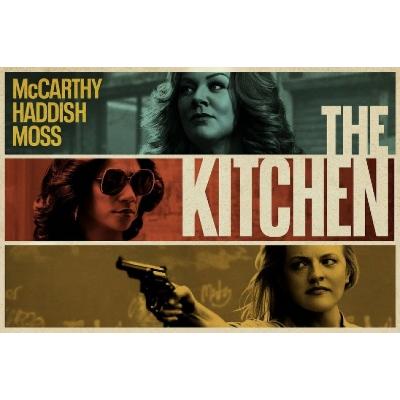
Kitchen Album Cover

"Kitchen" Soundtrack Lyrics

Movie • 2019

Track Listing


"The Kitchen (Original Motion Picture Soundtrack)" – Album Guide to Tracks and Key Scenes

The Kitchen 2019 official trailer frame: Kathy, Ruby, and Claire step onto a rain-slick Hell’s Kitchen street
“It’s their business now.” The wives take the wheel in late-’70s Hell’s Kitchen.

Overview

How do you score a 1978 mob takeover led by three women? With two engines: a taut original score by Bryce Dessner and a crate-digger’s sweep of 60s/70s rock, soul, and funk. The official album (WaterTower Music) couples Dessner’s cues with a brand-new cover of “The Chain” performed by The Highwomen, while the film layers in era-correct source cuts—Etta James, Baby Huey, The Velvelettes, The Meters, Heart, Kansas, and more.

The film’s musical logic is sharp: hard, guitar-forward drops charge the crew’s power plays; classic soul exposes the cost; strings and pulses from the score glue the pivots. According to label materials and trade coverage, the soundtrack streeted digitally August 2, 2019, a week before release, with Dessner’s 13-track score suite and the marquee cover.

Trailer still: a neon-washed avenue; needle-drops and score split the city’s moods
Song placements for swagger, score for consequence.

Questions & Answers

Who composed the score?
Bryce Dessner. The album collects 12 score cues plus The Highwomen’s “The Chain.”
Is there a separate “songs-only” album?
No; the official release focuses on Dessner’s score and the one featured cover. The film itself uses many licensed period tracks beyond the album.
Which cover of “The Chain” is in the marketing/album?
The Highwomen recorded a new version specifically tied to the film’s campaign and OST.
Who handled music supervision?
Deva Anderson is credited as Music Supervisor.
What label released the official soundtrack?
WaterTower Music (digital).
Does the movie lean more on songs or score?
Both. Songs drive identity and time/place; score binds plot turns and personal fallout.

Notes & Trivia

  • The film’s on-screen musical world spans dive bars, storefront radios, and banquet halls—lots of diegetic sound to sell 1978 New York.
  • The licensed cuts skew to tough rhythm sections (Meters, Roy Ayers, Foghat) and FM staples (Heart, Kansas, Lynyrd Skynyrd) to mirror the crew’s muscle.
  • The OST’s cue titles (“Italian Street War,” “Ruby’s Secret”) double as a map to late-film reversals.
  • Fleetwood Mac material is nodded to twice: the musical DNA of the original, and the Highwomen’s cover anchoring the film’s marketing.

Genres & Themes

Hard-edged 70s rock → Territorial push. Riffs and big toms frame takeovers and warnings; the mix feels like a club PA fed into the street.

Deep-soul/funk → Community calculus. The Meters’ strut, Baby Huey’s grit, and Motown deep cuts turn “protection” into rhythm—commerce set to backbeat.

Minimalist/lyric score → Moral weight. Dessner’s close-miked strings and pulses hold on faces when the noise drops.

Montage: neon diner, brownstone stoop, back-room sit-down — three musical temperatures
Style map: riff, groove, reckoning.

Tracks & Scenes

“It’s a Man’s Man’s Man’s World” — Etta James
Where it plays: Early sequence over the women’s financial squeeze and neighborhood indifference (non-diegetic; early act).
Why it matters: Ironic needle—what the city thinks the rules are, right before they change.

“Hard Times” — Baby Huey & The Baby Sitters
Where it plays: Collection runs and empty envelopes; the drum break hits as Kathy recalculates the route (non-diegetic; early act).
Why it matters: Street-tough groove that reframes desperation as motion.

“Let Love Live (A Little Bit Longer)” — The Velvelettes
Where it plays: Short domestic beat after a heated argument; the radio keeps singing anyway (diegetic; early-mid).
Why it matters: Motown sweetness against a marriage fraying in real time.

“Cissy Strut” — The Meters
Where it plays: First credible show of strength in the neighborhood—doors open, money lands (non-diegetic; mid-act).
Why it matters: The pocket becomes a calling card.

“Barracuda” — Heart
Where it plays: Montage of expanding territory and the crew’s new swagger (non-diegetic; mid-act).
Why it matters: FM-radio aggression, exactly on brand for a hostile takeover.

“Rock Candy” — Montrose
Where it plays: Arms deal / muscle-hire prep, cross-cut with a tense ride-along (non-diegetic; mid-late).
Why it matters: Thick, unfussy riff = practical menace.

“Carry On Wayward Son” — Kansas
Where it plays: A brief, ironic chorus hit during a bar sequence as alliances wobble (source-adjacent; mid-late).
Why it matters: Classic-rock prophecy used as gallows humor.

“Liquid Love” — Roy Ayers feat. Sylvia Cox
Where it plays: Velvet-lit club interior; a soft front for a hard ask (diegetic; mid-late).
Why it matters: Sophisticated funk signals that deals now happen in nicer rooms.

“What a Shame” — Foghat
Where it plays: Daylight retaliation montage; thump and slide guitar under quick cuts (non-diegetic; late act).
Why it matters: Blue-collar stomp for payback.

“Simple Man” — Lynyrd Skynyrd
Where it plays: Private reckoning moment in a quiet kitchen; the lyric lands heavy (non-diegetic; late act).
Why it matters: A Southern rock confessional that sharpens the cost of ambition.

“You Don’t Have to Be a Star (To Be in My Show)” — Marilyn McCoo & Billy Davis Jr.
Where it plays: Smiling-through-grit family beat and storefront goodwill (source; various edits).
Why it matters: Radio-friendly optimism as storefront PR.

“The Chain” — The Highwomen
Where it plays: Prominently in marketing and over a late montage/credits pairing (non-diegetic).
Why it matters: Lyrics about loyalty and fracture mirror the film’s final bargains.

“Claire and Gabriel” — Bryce Dessner (score)
Where it plays: Intimate, breath-held beats between survivor and enforcer (non-diegetic; mid-late).
Why it matters: Chamber-scale strings put skin in the game.

“Italian Street War” — Bryce Dessner (score)
Where it plays: Night exteriors and strategic moves; pulses rise as territory redraws (non-diegetic; late act).
Why it matters: Score as grid paper for a gang map.

Also heard (selected): Melanie — “Don’t Think Twice, It’s All Right”; Medicine Head — “Midnight”; Tommy Dorsey — “Song of India”; Bobby Valentín — “Aquella Mujer”; Stone Axe — “Slave of Fear”; The Dreamliners — “Just Me and You”.

Music–Story Links

Rock cues hard-launch each turf grab; funk grooves sell community buy-in; ballads and Dessner’s string writing handle the private math—marriages cracking, lines crossed. When the wives start spending like bosses, the source music upgrades too. By the final turn, the score carries the weight because there’s nothing left to brag about.

Final trailer beat: blue-red flashers glaze a brick wall as strings settle into a low sustain
After the noise: strings, breath, and the bill coming due.

How It Was Made

Composer: Bryce Dessner. Album: WaterTower Music digital release. Music supervision by Deva Anderson, with clearances and coordination credited across a small music department. According to label notes, the OST presents 12 score cues and a featured cover; most period songs remain film-only needles.

Reception & Quotes

Reception on the film was mixed, but the musical footprint drew steady praise for period seasoning and the tensile score.

“Dessner’s cues keep the focus intimate when the plot goes loud.” album-era coverage
“The crate-digging songs do world-building the production design can’t do alone.” roundups

Additional Info

  • Official OST (digital): 13 tracks (12 score cues + “The Chain”).
  • Prominent licensed cuts (in film only): Etta James, Baby Huey, The Velvelettes, The Meters, Heart, Kansas, Roy Ayers, Foghat, Lynyrd Skynyrd.
  • Placement pattern: Non-diegetic rock/funk for action beats; radio/room sources for texture; score for moral turns.
  • Trailer Video ID used here: ue_NxLRGeOw.

Technical Info

  • Title: The Kitchen (Original Motion Picture Soundtrack)
  • Year / Type: 2019 / Film soundtrack (score + one featured song)
  • Composer: Bryce Dessner
  • Album Label: WaterTower Music (digital)
  • Music Supervision: Deva Anderson
  • Selected notable placements: “It’s a Man’s Man’s Man’s World”; “Hard Times”; “Let Love Live (A Little Bit Longer)”; “Cissy Strut”; “Barracuda”; “Rock Candy”; “Carry On Wayward Son”; “Liquid Love”; “What a Shame”; “Simple Man”; “The Chain” (The Highwomen).

Canonical Entities & Relations

SubjectRelationObject
Film “The Kitchen” (2019)DirectorAndrea Berloff
Film “The Kitchen” (2019)Music byBryce Dessner
Soundtrack albumRecord labelWaterTower Music
Soundtrack albumFeatured artistThe Highwomen (“The Chain”)
ProductionMusic supervisionDeva Anderson

Sources: WaterTower release page and store listings; trade coverage announcing the OST; film credits (music department); soundtrack databases aggregating all licensed songs; official trailer posting.

November, 12th 2025


A-Z Lyrics Universe

Lyrics / song texts are property and copyright of their owners and provided for educational purposes only.