
"Kung Fu Panda" Soundtrack Lyrics
Cartoon • 2008
Track Listing
Jack Black / Cee-Lo Green
CeeLo Green
"Kung Fu Panda (Original Motion Picture Soundtrack)" – Album Guide to Tracks and Key Scenes

Overview
How do you score a slapstick hero who earns real myth? By pairing lyrical melody with martial rhythm. The 17-track album Kung Fu Panda (Music from the Motion Picture) blends Chinese instrumental colors with big-screen symphonic writing, co-composed by Hans Zimmer and John Powell and released by Interscope in June 2008. The result feels classic and local at once: bamboo flutes and erhu glide over propulsive strings and tuned percussion.
The film leans almost entirely on original score; the notable song placement is a new “Kung Fu Fighting” cover performed by CeeLo Green with Jack Black for the end credits (regional credits swaps exist). What makes the score distinct is the thematic split: an expansive, emotional Dragon Warrior idea set against Po’s humble, plucky motif—two identities learning to share the same body.

Questions & Answers
- Who composed the score?
- Hans Zimmer and John Powell co-composed; additional music by Henry Jackman and James McKee Smith is credited in materials.
- What label released the album and when?
- Interscope Records issued the 17-track score album on June 3, 2008 (digital/CD).
- Is there a “songs” album?
- No. The feature is score-driven. A single cover of “Kung Fu Fighting” (CeeLo Green feat. Jack Black) appears on the album/end credits.
- Any regional end-credits variants?
- Yes—East Asian editions promoted alternate credits vocals (e.g., Rain/Sam Concepcion) and a Russian edition by Mumiy Troll.
- Where was the score recorded?
- At AIR Studios, London, with Chinese traditional instruments integrated; China National Symphony Orchestra contributors are noted in coverage.
- Signature cues fans reference?
- “Oogway Ascends,” “Tai Lung Escapes,” “Training Po,” “The Bridge,” “Po vs. Tai Lung,” “Dragon Warrior Rises.”
Notes & Trivia
- The album later won the Annie Award for Best Music in an Animated Feature Production.
- Zimmer traveled to China while developing the palette; the score features erhu, dizi, and percussion folded into a Hollywood orchestra.
- Japanese theatrical marketing used Hey! Say! JUMP’s “Your Seed” as a territory theme tie-in; not on the main OST.
- Critics often frame the collaboration as: Zimmer = sweeping destiny theme; Powell = agile, rhythmic character writing.
Genres & Themes
Wuxia-tinted symphonic writing → Destiny & landscape. Long-lined strings and choir colors carry the Valley of Peace and the Dragon Warrior idea.
Chinese timbres (erhu, dizi, gongs) → Heritage & humility. The “small” instruments track Po’s inner life and Master Oogway’s wisdom.
Rhythmic engines & tuned percussion → Training & comedy. Drum cells, woodblocks, and plucked textures punch montages and fight choreography without mickey-mousing every hit.
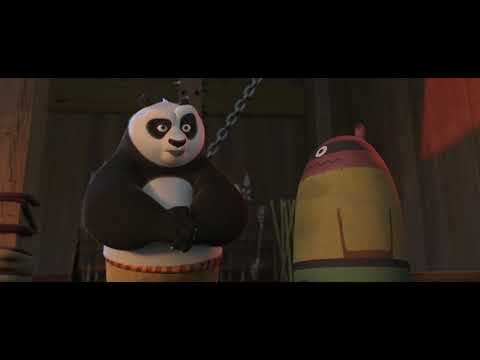
Tracks & Scenes
“Oogway Ascends” — Hans Zimmer & John Powell
Where it plays: Night under the peach tree as Oogway hands Shifu his staff and drifts away in a gust of blossoms (non-diegetic; late act). ~2:03 in album form.
Why it matters: A spare, luminous elegy; erhu and strings give the film its spiritual spine.
“Tai Lung Escapes” — Hans Zimmer & John Powell
Where it plays: Breakout from Chorh-Gom Prison: chained leopard, arrow-bridge chaos, stone collapsing (non-diegetic; early-mid). ~7:05 album.
Why it matters: Percussion and low-brass architecture; menace without noise clutter.
“Training Po” — Hans Zimmer & John Powell
Where it plays: The dumpling-duel montage—Shifu weaponizes snacks; Po’s footwork finally sings (non-diegetic; mid). ~1:28 album.
Why it matters: Comic rhythm becomes competence; motif grows up in real time.
“The Bridge” — Hans Zimmer & John Powell
Where it plays: Furious Five vs. Tai Lung on the rope bridge in the mist; balletic group tactics (non-diegetic; mid-late). ~3:22 album.
Why it matters: Orchestral choreography—counter-rhythms for each fighter, one surge for the villain.
“Po vs. Tai Lung” — Hans Zimmer & John Powell
Where it plays: Final showdown among market stalls; Po discovers the scroll’s joke-that-isn’t and relaxes into himself (non-diegetic; late). ~2:40 album.
Why it matters: The destiny theme resolves as confidence, not power-fantasy.
“Dragon Warrior Rises” — Hans Zimmer & John Powell
Where it plays: Coda and celebration in the Valley; Shifu breathes; the world exhales (non-diegetic; end). ~3:22 album.
Why it matters: Catharsis without schmaltz—melody earns its wings.
End credits: “Kung Fu Fighting” — CeeLo Green feat. Jack Black
Where it plays: End-titles remix drives the hand-painted sequence; alternate territory vocals exist (credits-only). ~2:30 album.
Why it matters: A disco novelty re-forged as curtain-call.
Music–Story Links
Po’s small motif is played with small instruments until he accepts himself—then it earns the orchestra. Villain material stays percussive and grounded; Oogway’s world floats. When comedy spikes, percussion leads; when wisdom lands, melody does the talking. Simple map, strong effect.
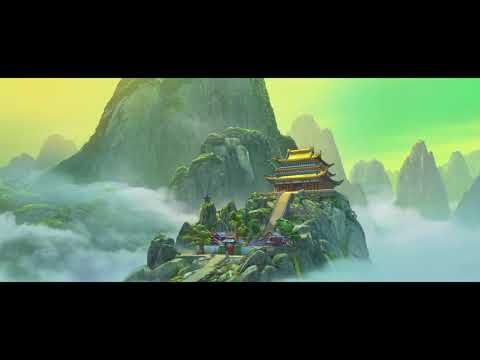
How It Was Made
The score was recorded at AIR Studios with a hybrid ensemble—Hollywood orchestra plus Chinese soloists. Production accounts describe Zimmer’s research trip to China and a conscious split of thematic duties (sweeping destiny theme vs. humble Po line). The album sequencing spotlights set-pieces (“Tai Lung Escapes,” “The Bridge”) and emotional anchors (“Oogway Ascends”).
Reception & Quotes
Reviews singled out the elegance of the collaboration and the cue architecture: big themes, clear rhythms, no sonic bloat.
“A sweet, lush groove that hits comedy and heart without cartooning the music.” album-era review
“Zimmer’s sweep and Powell’s rhythmic wit meet in a score that plays mythic and nimble.” soundtrack critique
Additional Info
- Album length: ≈60 minutes (17 tracks).
- Key cues to sample: “Oogway Ascends,” “Tai Lung Escapes,” “Training Po,” “The Bridge,” “Po vs. Tai Lung,” “Dragon Warrior Rises.”
- Regional notes: Japan marketed Hey! Say! JUMP’s “Your Seed”; some territories swapped end-credit vocals.
- Trailer Video ID used here:
siLm9q4WIjI.
Technical Info
- Title: Kung Fu Panda (Music from the Motion Picture)
- Year / Type: 2008 / Film score (with one cover song)
- Composers: Hans Zimmer; John Powell
- Additional music: Henry Jackman; James McKee Smith
- Recording: AIR Studios, London; Chinese traditional instruments featured
- Label: Interscope Records (UMG)
- Selected notable placements: “Oogway Ascends”; “Tai Lung Escapes”; “Training Po”; “The Bridge”; “Po vs. Tai Lung”; end-credits “Kung Fu Fighting” (CeeLo Green feat. Jack Black)
Canonical Entities & Relations
| Subject | Relation | Object |
|---|---|---|
| Film “Kung Fu Panda” (2008) | Directed by | Mark Osborne; John Stevenson |
| Film | Music by | Hans Zimmer; John Powell |
| Soundtrack album | Record label | Interscope Records |
| Album | Includes (song) | “Kung Fu Fighting” — CeeLo Green feat. Jack Black (end credits) |
| Album | Includes (key cues) | “Oogway Ascends”; “Tai Lung Escapes”; “Training Po”; “The Bridge”; “Po vs. Tai Lung” |
Sources: studio/label listings (album, date, label); soundtrack reviews and credits; Discogs/Apple/Spotify metadata; fan-facing cue breakdowns; official trailer postings.
November, 12th 2025
A-Z Lyrics Universe
Cynthia Erivo Popular
Ariana Grande Horsepower
Post Malone Ain't No Love in Oklahoma
Luke Combs Good Riddance (Time of Your Life)
Green Day Bye Bye Bye
*NSYNC You're the One That I Wan
John Travolta & Olivia Newton-John I Always Wanted a Brother
Braelyn Rankins, Theo Somolu, Kelvin Harrison Jr. and Aaron Pierre The Power of Love
Frankie Goes to Hollywood Beyond
Auli’i Cravalho feat. Rachel House MORE ›