Soundtracks:  A B C D E F G H I J K L M N O P Q R S T U V W X Y Z #


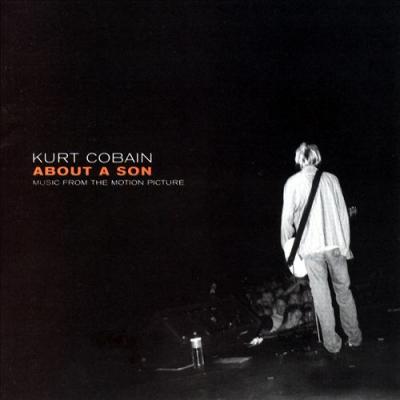
Kurt Cobain: About a Son Album Cover

"Kurt Cobain: About a Son" Soundtrack Lyrics

Movie • 2007

Track Listing


"Kurt Cobain: About a Son — Music From and Inspired by the Film" – Album Guide to Tracks and Key Scenes

About a Son trailer frame: drifting aerial over a grey Washington coastline as Cobain’s voice begins
Places, a voice, and the records that formed him.

Overview

How do you score a portrait made almost entirely of a voice? Kurt Cobain: About a Son answers with restraint: field images of Aberdeen, Olympia, Seattle; Cobain’s taped conversations with journalist Michael Azerrad; and a curated set of songs from artists he loved, threaded with a spare original score by Steve Fisk and Benjamin Gibbard.

The commercial releases split in two: a various-artists album (Music From the Motion Picture) collecting influential tracks—Arlo Guthrie to Bad Brains, Lead Belly to Bowie—and a separate Original Score by Fisk & Gibbard. There’s no Nirvana; the soundtrack intentionally tilts to Cobain’s inputs, not his outputs, while the score binds the diary-like narration to the Pacific Northwest’s weathered spaces.

Trailer still: rain-beaded windshield, downtown lights in soft focus as a minimalist guitar figure enters
Score as connective tissue; record collection as autobiography.

Questions & Answers

What are the official soundtrack releases?
Two: Music From the Motion Picture (various artists) and Original Score by Steve Fisk & Benjamin Gibbard (Barsuk Records).
Are any Nirvana recordings included?
No. By design, the film uses Cobain’s voice with music by artists who shaped him (plus the new score).
Who composed the score?
Steve Fisk and Benjamin Gibbard. The score album runs 14 cues (~1 hour) and expands the film’s interstitial pieces.
What kind of songs appear on the V.A. album?
Punk and post-punk fundamentals (Bad Brains, Big Black, Scratch Acid), college-rock touchstones (R.E.M., Teenage Fanclub), peers (Mudhoney, Mark Lanegan), and older roots (Lead Belly, Arlo Guthrie), along with Bowie’s “The Man Who Sold the World.”
What’s the film’s structure?
Visual essay: locations tied to era, with Cobain narrating childhood, bands, pain, humor. Songs drop in as chapter headings or counterpoint; the score bridges sections.
Trailer ID used for figures?
dL0iAXUatdY.

Notes & Trivia

  • Barsuk’s album page explicitly notes: the soundtrack contains no Nirvana music, only Cobain’s spoken excerpts and the artists who influenced him.
  • Fisk produced Nirvana’s early Blew EP; his presence here ties the score back to Cobain’s scene.
  • The film premiered at TIFF 2006; U.S. theatrical release followed in October 2007; DVD/Blu-ray arrived via Shout! Factory.
  • A separate double-LP issue of the Fisk/Gibbard score followed after the film’s run.

Genres & Themes

Punk & hardcore → Agency and abrasion. Bad Brains, Big Black, Scratch Acid frame anger as momentum rather than spectacle.

Indie/college rock → Private weather. R.E.M., Teenage Fanclub, The Breeders sketch introspection and drift—car-radio solitude.

Roots & pre-punk → Blueprint and conscience. Lead Belly as lineage; Arlo Guthrie as a kid’s first wide-eyed soundtrack.

Minimal score → Memory glue. Fisk/Gibbard cues are quiet hinges: guitar, textures, and small pulses between decades and towns.

Montage: Aberdeen mill stacks, Olympia house show doorway, Seattle skyline at dusk
Aberdeen → Olympia → Seattle, mapped in records and instrumentals.

Tracks & Scenes

“Overture” — Steve Fisk & Benjamin Gibbard
Where it plays: Early passages over empty streets and fog; the film’s tonal thesis. Non-diegetic.
Why it matters: Sets the essay-like pace—space for the voice to breathe.

“Motorcycle Song” — Arlo Guthrie
Where it plays: Childhood recollections and small-town Americana glide by—parking lots, county roads. Non-diegetic.
Why it matters: A kid’s-eye grin before the noise arrives.

“It’s Late” — Queen
Where it plays: Transitional montage of teenage bravado and first bands. Non-diegetic.
Why it matters: Big-room drama against small-town limits.

“Downed” — Cheap Trick
Where it plays: Early band-room anecdotes; photocopied flyers, borrowed amps. Non-diegetic.
Why it matters: Power-pop bones beneath later heaviness.

“Eye Flys” — Melvins
Where it plays: Aberdeen heaviness—mills, river, grey sky—soaked in drone and thrum. Non-diegetic.
Why it matters: The doom-slow gravity that molded his ear.

“Banned in D.C.” — Bad Brains
Where it plays: “Punk rock” chapter: velocity, purpose, a door out. Non-diegetic.
Why it matters: Converts frustration into forward motion.

“Up Around the Bend” — Creedence Clearwater Revival
Where it plays: Two-lane roadshots; logging trucks and horizon lines. Non-diegetic.
Why it matters: Classic-rock sunlight cutting through overcast.

“Kerosene” — Big Black
Where it plays: Monotone suburbia, sharp edges; machine rhythm under confession. Non-diegetic.
Why it matters: Shows how abrasion became a tool, not a flaw.

“Put Some Sugar on It” — Half Japanese
Where it plays: Olympia years: zines, living-room shows, handmade charm. Non-diegetic.
Why it matters: Imperfection as invitation.

“Include Me Out” — Young Marble Giants
Where it plays: Off-hours loneliness and apartments; air between words. Non-diegetic.
Why it matters: Quiet as rebellion.

“Son of a Gun” — The Vaselines
Where it plays: Early-love, early-band sweetness; jokes in the margins. Non-diegetic.
Why it matters: Earnestness Cobain would later re-cover.

“Graveyard” — Butthole Surfers
Where it plays: Tour-story shards and black humor. Non-diegetic.
Why it matters: The absurd sits next to the sacred in this movie.

“Owner’s Lament” — Scratch Acid
Where it plays: Fragmented anger; the camera stares at empty corners. Non-diegetic.
Why it matters: Texture of unease without exposition.

“Iris” — The Breeders
Where it plays: Olympia → Seattle hinge; friends orbiting, scenes cross-pollinating. Non-diegetic.
Why it matters: A lighter touch before the storm.

“Touch Me I’m Sick” — Mudhoney
Where it plays: Sub Pop era snapshots—club doors, posters, alleys. Non-diegetic.
Why it matters: Local scene electricity, bottled.

“The Passenger” — Iggy Pop
Where it plays: Night drives; sodium lights on wet streets. Non-diegetic.
Why it matters: Drifting observer, perfectly on theme.

“Star Sign” — Teenage Fanclub
Where it plays: Success talk vs. ordinary errands; a humane, jangly pause. Non-diegetic.
Why it matters: Fame at arm’s length.

“The Bourgeois Blues” — Lead Belly
Where it plays: Roots sequence; photographs and labor history. Non-diegetic.
Why it matters: Lineage and debt—Cobain’s own covers later paid it back.

“New Orleans Instrumental No. 1” — R.E.M.
Where it plays: Reflection montage; the camera lingers without people. Non-diegetic.
Why it matters: Wordless thinking space amid a talk-driven film.

“The Man Who Sold the World” — David Bowie
Where it plays: Late-film reckoning; identity, masks, doubling. Non-diegetic.
Why it matters: A thematic mirror Cobain later turned into his own folk ghost.

“Museum” — Mark Lanegan
Where it plays: Closing textures over Seattle dusk. Non-diegetic.
Why it matters: A friend’s voice to see us out.

“Indian Summer” — Benjamin Gibbard
Where it plays: End-title coda; guitar and memory. Non-diegetic.
Why it matters: A soft landing after hard truths.

Music–Story Links

The documentary’s grammar is clean: voice for facts and feelings; records for context and coloration; score for the in-between. Punk cuts mark doors opening. College-rock instrumentals let the pictures think. Lead Belly and Bowie bookend heritage and persona. The choices keep the portrait first-person without becoming hagiography.

Final trailer beat: freeway at night, tail-lights smeared; the voice fades, guitars linger
When the words stop, the records keep talking.

How It Was Made

Director AJ Schnack built the film from Azerrad’s interview tapes and new 35mm imagery of places central to Cobain’s life. Barsuk released both the various-artists soundtrack and the Fisk/Gibbard score; the latter later appeared on LP. The IMDb soundtracks page and label notes document the clearances: no Nirvana recordings, but many of Cobain’s touchstones.

Reception & Quotes

Coverage highlighted the choice to avoid biopic clichés—no performance clips, no wall-to-wall Nirvana—and praised the way music curation and score frame the voice.

“A unique view…less about fame than about the person, scored as a slow, lucid drift.” New Yorker capsule
“Due in October; a moving collage built from twenty-five hours of tape.” release-window reporting

Additional Info

  • Premiere & run: TIFF 2006; U.S. theatrical October 2007; DVD/Blu-ray via Shout! Factory.
  • Albums: Various-artists compilation + separate original score.
  • Curatorial stance: Influences only—no Nirvana cuts by design.
  • Trailer Video ID used here: dL0iAXUatdY.

Technical Info

  • Title: Kurt Cobain: About a Son
  • Year / Type: 2007 (U.S. release) / Documentary
  • Score: Steve Fisk & Benjamin Gibbard
  • Albums/Label: Music From the Motion Picture (Various Artists, Barsuk); Original Score (Fisk & Gibbard, Barsuk)
  • Selected notable placements: Bad Brains “Banned in D.C.”; Big Black “Kerosene”; The Vaselines “Son of a Gun”; Mudhoney “Touch Me I’m Sick”; Iggy Pop “The Passenger”; Lead Belly “The Bourgeois Blues”; R.E.M. “New Orleans Instrumental No. 1”; David Bowie “The Man Who Sold the World”

Canonical Entities & Relations

SubjectRelationObject
Film “Kurt Cobain: About a Son” (2006/2007)Directed byAJ Schnack
FilmBased on interviews byMichael Azerrad
FilmScore bySteve Fisk; Benjamin Gibbard
Soundtrack (V.A.)Record labelBarsuk Records
Score albumRecord labelBarsuk Records
CompilationFeaturesArlo Guthrie; Melvins; Bad Brains; CCR; Big Black; Half Japanese; Young Marble Giants; The Vaselines; Butthole Surfers; Scratch Acid; The Breeders; Mudhoney; Iggy Pop; Teenage Fanclub; Lead Belly; R.E.M.; David Bowie; Mark Lanegan; Benjamin Gibbard

Sources: Barsuk Records album pages; Wikipedia film entry (soundtrack list); IMDb Soundtracks; Apple Music / Spotify listings for the score and compilation; contemporary coverage noting the film’s structure and release.

November, 12th 2025


A-Z Lyrics Universe

Lyrics / song texts are property and copyright of their owners and provided for educational purposes only.