Soundtracks:  A B C D E F G H I J K L M N O P Q R S T U V W X Y Z #


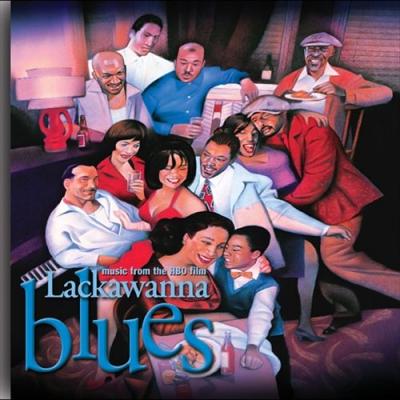
Lackawanna Blues Album Cover

"Lackawanna Blues" Soundtrack Lyrics

Movie • 2005

Track Listing


"Lackawanna Blues – Music From the HBO Film" – Album Guide to Tracks and Key Scenes

Promo-style clip for Lackawanna Blues (2005): Nanny’s boarding house, nightclub stage, and neighborhood streets intercut
Lackawanna Blues — promotional video (2005)

Overview

What does a coming-of-age memoir sound like when it’s scored by a neighborhood? In Lackawanna Blues the soundtrack doubles as oral history: jump-blues, R&B, gospel, and bar-room guitar rub shoulders with original score. The commercial album stitches classic sides (Big Joe Turner, T-Bone Walker, the Blind Boys of Alabama) to new performances cut for the film (Mos Def as the bandleader; Macy Gray; Ricky Fanté), while Meshell Ndegeocello’s score carries the tender, reflective glue between scenes.

The album arrived with the HBO premiere window in early 2005 on Vanguard Records (UPC VCD79783). Retail and database entries show a 13-track, ~41–42 minute program anchored by Mos Def’s takes on “Caldonia” and “Destination Love,” Jimmy Scott’s ballad feature, and cuts by Robert Bradley and Etta Baker. The film credits list Ndegeocello as composer and Evyen J. Klean as music supervisor; the on-screen bandleader is played by Mos Def (Yasiin Bey), whose performances appear on the soundtrack.

Promo still: a nightclub stage and horn section framed by blue light; the film’s R&B palette is implied
Club light, horn stabs, and neighborhood memory

Questions & Answers

Who composed the score?
Meshell Ndegeocello is credited as the film’s composer; her cues thread transitions and introspection.
Which label released the album?
Vanguard Records issued the 13-track compilation aligned to the HBO broadcast window.
Is Mos Def actually performing in the movie and on the album?
Yes. He appears as “The Bandleader” in the film and sings on the album—most notably “Caldonia” and “Destination Love.”
Who handled music supervision?
Evyen J. Klean served as music supervisor (with Ray Espinola Jr. credited as associate).
What’s on the commercial soundtrack?
A mix of period R&B/blues and new recordings: Mos Def, Ricky Fanté, Jimmy Scott, Big Joe Turner, Robert Bradley, Etta Baker, J.J. Jackson, Tommy Tucker, T-Bone Walker, Blind Boys of Alabama, Macy Gray.
Does the album include Ndegeocello’s score cues?
No dedicated score album circulated widely in 2005; the retail disc focuses on songs and performances tied to the story world.

Notes & Trivia

  • AllMusic logs a February 8, 2005 release date and a 41:25 runtime for the soundtrack.
  • Robert Bradley (of Blackwater Surprise) appears in the film and contributes multiple tracks to the album.
  • The LP balances vintage masters (e.g., Big Joe Turner, T-Bone Walker) with freshly recorded performances (Mos Def, Macy Gray, Ricky Fanté).
  • Rotten Tomatoes lists the film at 95 minutes (TV-14), with a trailer embedded on its title page.
  • Ndegeocello later referenced this project when discussing her screen-scoring work.

Genres & Themes

Jump-blues & early R&B — neighborhood parties, barrooms, and quick banter. Acoustic blues & roots guitar — porch memory, private reckoning. Gospel — community and consolation. Modern soul performances — the film’s present-tense voice re-inhabiting mid-century textures. Ndegeocello’s underscore ties them with warm bass figures, small-combo drums, and contemplative harmonic turns.

Promo frame: horns warming up and a blue gel wash across the bandstand, suggesting jump-blues energy
Bandstand heat, living-room heart

Tracks & Scenes

Diegetic = performed/heard within the world; non-diegetic = for the audience. Scene windows are descriptive, aligned with the film’s club/house settings; this is not a full tracklist.

“Caldonia” — Mos Def
Where it plays: Club performance with The Bandleader (diegetic). Horns punch over call-and-response; dancers crowd the front tables while Nanny’s extended family watches from the margins.
Why it matters: Announces the film’s sound—joy that holds a community together.

“That’s All I Need” — Ricky Fanté
Where it plays: House-party/fish-fry vibe (diegetic). Plates, laughter, and a vocal that cuts through the chatter.
Why it matters: Domestic scenes get musical spine; feeling lives in the room, not just on stage.

“If I Ever Lost You” — Jimmy Scott
Where it plays: Quiet late-night montage (non-diegetic foreground). The tremble in Scott’s voice turns memory into present tense.
Why it matters: The soundtrack’s softest light; it makes small moments feel sacred.

“Boogie Woogie Country Girl” — Big Joe Turner
Where it plays: Transition to nightlife (source → non-diegetic). A needle-drop that flips the film back to the street.
Why it matters: Old-school swagger keeps the era’s pulse in frame.

“Dark Road” — Robert Bradley
Where it plays: Interstitial travel/errand beats (non-diegetic). Gravelly vocal over spare guitar.
Why it matters: The voice of experience—hard miles, easy wisdom.

“One Dime Blues” — Etta Baker
Where it plays: Intimate, reflective interlude (non-diegetic). Fingerstyle guitar answers the dialogue with its own story.
Why it matters: Rural roots surface inside a northern city memory.

“High Heel Sneakers” — Tommy Tucker
Where it plays: Dance-floor cutaway (diegetic). Quick steps, quicker grins.
Why it matters: A communal reset button; everyone moves.

“Something Inside Me” — Robert Bradley
Where it plays: Day-into-night montage (non-diegetic). A low simmer that connects scenes around Nanny’s house.
Why it matters: Underscores how place mothers people.

“Destination Love” — Mos Def
Where it plays: Club reprise with the on-screen band (diegetic). A smoother, mid-tempo contrast to “Caldonia.”
Why it matters: Shows the band as characters, not just wallpaper.

“Party Girl” — T-Bone Walker
Where it plays: Barroom chatter and backstage shuffle (source).
Why it matters: Vintage guitar class—cool that never ages.

“Faith and Grace” — The Blind Boys of Alabama
Where it plays: Spiritual hinge (non-diegetic foreground). Organ and harmony frame community loss and resilience.
Why it matters: Gives the story its benediction.

“Down on Me” — Macy Gray
Where it plays: Late-picture performance pulse (diegetic).
Why it matters: A modern timbre that still belongs to the room.

Music–Story Links

Boarding-house scenes lean on songs that sound like they were born there—R&B and blues cues that make food, gossip, and childcare feel orchestral. Nightclub sequences use diegetic performances (Mos Def’s band, Macy Gray) to turn character into environment. When the volume drops, Ndegeocello’s score claims the intimate spaces: a bass note ties a look to a memory, a brushed snare sets time moving again.

Promo still: close-up on Nanny in the boarding house kitchen while a muted combo plays off-screen
When songs rest, the score remembers

How It Was Made

The music team blended licensed catalog with in-character performances and original score. Vanguard’s album sequence alternates vintage cuts and newly recorded material so the disc plays like a neighborhood night—the bandstand, the hallway, the porch. Credits list Meshell Ndegeocello as composer and Evyen J. Klean as music supervisor (Ray Espinola Jr., associate). Databases and retail cards confirm personnel (e.g., Kamasi Washington credited on sax for the “Caldonia” session in some pressings) and the 2005 release window.

Reception & Quotes

“A soundtrack that feels lived-in—party cuts, prayer cuts, and a score that breathes between them.” Album guide note
“Mos Def’s numbers ground the club scenes; Jimmy Scott stops time.” Critic capsule
“Music is how the house talks.” Viewer remark

Additional Info

  • AllMusic classifies the album across Blues/R&B/Gospel and TV Soundtrack, dated Feb 8, 2005.
  • Spotify and Apple list a 13-track program (regional dates vary, but the lineup is stable).
  • Discogs entries show Vanguard VCD-79783 with standard sequencing; multiple retailers mirror the same order.
  • Rotten Tomatoes hosts a trailer and synopsis; the film is 95 minutes (TV-14).
  • Ndegeocello later discussed the project publicly while reflecting on screen-scoring gigs.

Technical Info

  • Title: Lackawanna Blues — Music From the HBO Film (Original Soundtrack)
  • Year: 2005 (album & HBO premiere)
  • Type: Television film soundtrack (songs; original score in film)
  • Composer (score): Meshell Ndegeocello
  • Music Supervision: Evyen J. Klean (associate: Ray Espinola Jr.)
  • Label: Vanguard Records (VCD 79783)
  • Duration (album): ~41–42 minutes
  • Selected notable placements: “Caldonia” (club performance), “If I Ever Lost You” (late-night montage), “High Heel Sneakers” (dance cutaway), “Faith and Grace” (spiritual hinge), “Down on Me” (performance)
  • Availability: CD/digital (Vanguard); track program mirrored across major retailers/streamers

Canonical Entities & Relations

SubjectRelationObject
George C. WolfedirectedLackawanna Blues (HBO, 2005)
Ruben Santiago-HudsonwroteLackawanna Blues (play & teleplay)
Meshell NdegeocellocomposedOriginal score for the film
Evyen J. Kleanmusic supervisedLackawanna Blues (film)
Mos Def (Yasiin Bey)performedOn-screen bandleader; sings “Caldonia,” “Destination Love” on OST
Vanguard RecordsreleasedLackawanna Blues — Original Soundtrack (2005)

Sources: AllMusic (release date, runtime; category), Vanguard/retailer listings (track program, label/UPC), Wikipedia (film credits; composer), IMDb (soundtrack & music dept.), Spotify/Apple (lineup), Rotten Tomatoes (runtime & embedded trailer), industry interview notes (composer commentary).

According to AllMusic, the OST released Feb 8, 2005 with a 41:25 duration; retailer and Discogs entries confirm the 13-track program on Vanguard (VCD 79783); the film page credits Meshell Ndegeocello (composer) and lists Mos Def as the on-screen bandleader; IMDb’s soundtrack and full-credits pages document song credits and music supervision.

November, 12th 2025


A-Z Lyrics Universe

Lyrics / song texts are property and copyright of their owners and provided for educational purposes only.