Soundtracks:  A B C D E F G H I J K L M N O P Q R S T U V W X Y Z #


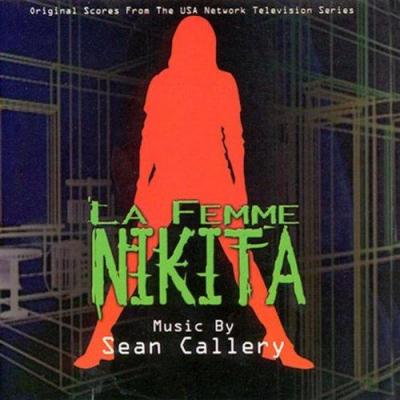
La Femme Nikita Album Cover

"La Femme Nikita" Soundtrack Lyrics

TV • 1998

Track Listing


"La Femme Nikita: Music From the Television Series (1998)" – Album Guide to Tracks and Key Scenes

Season 1 promo montage for La Femme Nikita (1997): Section One corridors, surveillance feeds, and night ops cut to moody electronica
La Femme Nikita — early TV promo (1997)

Overview

How do you score a show where trust is a currency and love is leverage? The 1998 compilation La Femme Nikita: Music From the Television Series answers with trip-hop shadows, industrial pulses, and cool-to-the-touch ballads. Across its cuts you hear the show’s split personality: Section One’s steel and Nikita’s stubborn humanity.

The album locks in the series’ early identity—main title by Mark Snow, with licensed songs that framed operations and aftermaths through Seasons 1–2. The underscore spine belongs to Sean Callery, whose motifs thread surveillance with ache; meanwhile the compilation’s selections (Depeche Mode, Morcheeba, Curve, Afro Celt Sound System) mirror what played in-episode. According to the show’s credits and album metadata, the set released in June 1998 on TVT Records, with Blaine Johnson handling music supervision on the series side.

Promo still: Nikita and Michael in hard side-light with the main title’s whispered vocal motif in mind
Steel and subtext: the sound of Section One

Questions & Answers

Is the 1998 album a score or a song compilation?
Song compilation. It includes the Mark Snow main title plus licensed tracks used prominently in Seasons 1–2; Callery’s dramatic score circulated separately in a limited promotional CD.
Who composed the show’s music?
Theme by Mark Snow; episodic score by Sean Callery.
Who supervised the licensed music?
Blaine Johnson is credited as music supervisor across the majority of episodes.
What label released the 1998 CD?
TVT Records. Street date: June 16, 1998.
Does the DVD/streaming version always match the broadcast songs?
No. A few placements changed later due to licensing; the 1998 CD preserves the period snapshot.
Is there an official score album from the 90s run?
A limited promotional disc of Sean Callery’s score (c. 2001) exists; it was not a wide retail release at the time.

Notes & Trivia

  • The whispered main title vocal was re-recorded in Season 3 with a different singer while keeping Mark Snow’s motif intact.
  • The soundtrack producers paired club-floor cuts (“Chinese Burn,” “Absurd”) with introspective selections (“Fear and Love”) to mirror the show’s mission/aftermath rhythm.
  • A rare early Season 2 DVD pressing briefly contained a contested song clearance; later sets revised the cue.
  • Callery’s success here led directly to his hire on 24 with the same creators—useful lineage for the sound of covert TV in the 2000s.

Genres & Themes

Trip-hop & downtempo (Morcheeba, Enigma) → debriefs, moral hangovers, late-night intelligence work. Electro/industrial (Curve, Fluke) → breach, chase, extraction. Alt-rock/post-punk electronics (GusGus, Vibrolux) → surveillance and double-binds. World/electronic hybrids (Afro Celt Sound System) → field ops crossing borders. Score motifs (Callery) → the hum of Section One: procedure, paranoia, and the ache between Nikita and Michael.

Promo frame: green CRT monitors and wide shots of Section One; sonically paired with industrial and trip-hop cues
Industrial edges, human core — the show’s sonic grammar

Tracks & Scenes

Episode references follow original USA/CTV broadcast order. Timestamps are approximate windows derived from documented placements; diegetic status noted.

"The Love Thieves" — Depeche Mode
Where it plays: S2E1 “Hard Landing,” late-act reconciliation beat (~40–44m, non-diegetic). After a season-break reset, Michael and Nikita negotiate feeling vs. duty; strings hover as they choose the mission over the moment.
Why it matters: Velvet gloom for a brutal truth—their romance survives, but only inside stolen seconds.

"Chinese Burn" — Curve
Where it plays: S2E6 “Mandatory Refusal,” operation montage and prep (~mid-episode, non-diegetic). Cut-ups of weapons checks and surveillance sync with the track’s serrated edges.
Why it matters: Cold propulsion; it turns logistics into adrenaline.

"Skin Against Skin" — DJ Krush feat. Deborah Anderson
Where it plays: S2E6 “Mandatory Refusal,” club/interior (diegetic bleed, ~25–30m). Targets and agents share air; the whisper-sung hook doubles the episode’s trust games.
Why it matters: Sensuality as cover. The show loves blurring seduction with surveillance.

"Fear and Love" — Morcheeba
Where it plays: Season 1 montage use (non-diegetic, reflective windows). Nikita sits with the cost of a win; the Rhodes warmth cools the frame down after action spikes.
Why it matters: The series’ diary tone in one track—calm voice, heavy heart.

"Inion/Daughter" — Afro Celt Sound System
Where it plays: Late Season 1 field-op transition (non-diegetic). The polyrhythmic lift sweeps us between continents and safe houses.
Why it matters: Suggests the global chessboard without exposition.

"Gun" — GusGus
Where it plays: S1/S2 club-adjacent sequences (diegetic/PA). Glances, coded lines, a handoff that might be a flirtation—or a trap.
Why it matters: The lyric is on-the-nose but the show embraces the double meaning.

Theme cue: "Main Title" — Mark Snow
Where it plays: Every episode open (~0:00–1:00, non-diegetic title). Whispered French over synth pulse; a promise and a warning in one breath.
Why it matters: Defines the series brand; a cold mask with a human whisper underneath.

Music–Story Links

When Michael and Nikita collide emotionally, selections like “The Love Thieves” and Morcheeba’s “Fear and Love” cool the frame and force eye contact—music slows time so subtext can surface. During intel and breach, Curve or Fluke accelerate edits; they make procedure feel dangerous. Diegetic club tracks (“Skin Against Skin,” “Gun”) let the show stage seduction as tradecraft, where a chorus hook can be a honeypot.

Promo still: Michael in profile, Nikita reflected on a monitor—Callery’s motifs implied under quiet dialogue
When score and song meet: procedure vs. feeling

How It Was Made

Series creators Joel Surnow and Robert Cochran set the sonic brief: a European-leaning electronic bed meeting North American action grammar. Mark Snow delivered the title identity; Sean Callery’s episodic score handled dread, moral calculus, and the Michael–Nikita tension. According to album credits and crew listings, Blaine Johnson supervised the licensed music, while TVT Records packaged the 1998 compilation with marquee cues from Seasons 1–2.

Reception & Quotes

“Sleek, moody, and surprisingly romantic—exactly the show’s temperature.” Album guide note
“The licensed tracks don’t date the series; they define its world.” Fan commentary
“Callery’s score hums like machinery, then breaks your heart.” Composer profile

Additional Info

  • Album anchor cuts include Depeche Mode’s “The Love Thieves,” Morcheeba’s “Fear and Love,” Curve’s “Chinese Burn,” Fluke’s “Absurd,” GusGus’s “Gun.”
  • Title theme vocal was refreshed in Season 3; same motif, new performance.
  • A limited promotional CD of Callery’s score surfaced via a 2001 fan convention; later re-recordings of themes appear on compilation albums.
  • Some episode guides list territory-specific song swaps; always cross-check with the broadcast/box-set you own.
  • The show’s music choices influenced later covert TV (notably the creators’ next series, where Callery returned).

Technical Info

  • Title: La Femme Nikita: Music From the Television Series
  • Year: 1998 (album); TV series ran 1997–2001
  • Type: Television soundtrack (songs + main title)
  • Theme Composer: Mark Snow
  • Series Composer (score): Sean Callery
  • Music Supervision: Blaine Johnson
  • Label: TVT Records (U.S.)
  • Release date: June 16, 1998
  • Selected notable placements (by ep.): “Hard Landing” (S2E1) — “The Love Thieves”; “Mandatory Refusal” (S2E6) — “Chinese Burn,” “Skin Against Skin”; assorted S1/S2 montages — “Fear and Love,” “Gun,” “Inion/Daughter.”
  • Availability: Original CD (1998); tracks widely stream via artist catalogs; score selections exist in promotional/compilation form.

Canonical Entities & Relations

SubjectRelationObject
Mark SnowcomposedLa Femme Nikita main title
Sean CallerycomposedLa Femme Nikita episodic score
Blaine Johnsonmusic supervisedLa Femme Nikita (TV series)
TVT RecordsreleasedLa Femme Nikita: Music From the Television Series (1998)
USA Network / CTVbroadcastLa Femme Nikita (1997–2001)

Sources: Discogs (album credits); Wikipedia (album + TV series pages; episode song listings); Fandom/Wiki episode music pages; IMDb/Metacritic credits (music supervision & theme); label/retail listings (TVT Records).

According to album/retail listings, the soundtrack streeted June 16, 1998 on TVT Records. According to the series credits and crew databases, Mark Snow wrote the theme, Sean Callery scored episodes, and Blaine Johnson supervised licensed music. Episode-by-episode song lists corroborate the placements above for S1–S2.

November, 12th 2025


A-Z Lyrics Universe

Lyrics / song texts are property and copyright of their owners and provided for educational purposes only.