Soundtracks:  A B C D E F G H I J K L M N O P Q R S T U V W X Y Z #


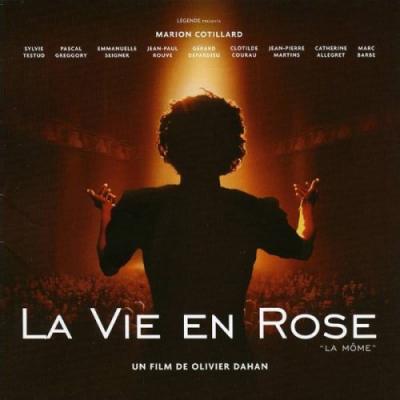
La Mome Album Cover

"La Mome" Soundtrack Lyrics

Movie • 2007

Track Listing


"La Môme (La Vie en Rose) — Original Motion Picture Soundtrack" – Album Guide to Tracks and Key Scenes

Official trailer montage for La Môme (La Vie en Rose): Piaf onstage, Marcel Cerdan flashes, and New York marquees
La Môme / La Vie en Rose — official trailer (2007)

Overview

How do you make a biopic sing without drowning in nostalgia? La Môme (La Vie en Rose) solves it with a double spine: Christopher Gunning’s underscore—waltzes and aching strings—and performances of Édith Piaf’s catalog, some archival, some newly recorded to match the film’s chronology. The result isn’t just a jukebox; it’s a dramatic engine that pushes cause and consequence.

The album assembles signature Piaf titles (“La vie en rose,” “Hymne à l’amour,” “Mon Dieu,” “Non, je ne regrette rien”) alongside score cues (“L’Éveil,” “Dernière nuit”) and period pieces sung in-character. Jil Aigrot provides several full-vocal recreations for on-screen sequences; Marion Cotillard lip-syncs to these and to restored Piaf takes, with one small diegetic performance by Cotillard herself. According to AllMusic’s release entry, a widely distributed edition landed in early March 2007, while European listings show a late January–February 2007 window.

Trailer still: Piaf at the microphone in a tight spotlight as strings swell
Voice, spotlight, silence—then the orchestra breathes

Questions & Answers

Who composed the original score?
Christopher Gunning. His orchestral cues stitch time jumps and emotional pivots between song set-pieces; he later received a BAFTA for this score.
Whose voice do we hear on most of the songs in the film?
It’s a mix: original Édith Piaf masters where possible, and new studio recreations for the film. Jil Aigrot performs several complete numbers that match Piaf’s era and key.
Did Marion Cotillard sing?
She delivers one small in-character piece and otherwise lip-syncs to Piaf or Aigrot recordings, allowing performance and sound to sync with period detail.
Is the final number historically placed?
Yes—the film closes with “Non, je ne regrette rien,” echoing Piaf’s Olympia-era comeback framing.
Are there multiple official album versions?
Yes. Territory editions vary slightly in sequencing and packaging; core content (Piaf selections + Gunning cues + recreated performances) remains consistent.
What label handled the soundtrack?
EMI/Capitol family in Europe, with international distribution variants; reissues and digital storefronts keep the 2007 program in print.

Notes & Trivia

  • Three complete songs in the film are newly performed by Jil Aigrot (“Mon Homme,” “Les mômes de la cloche,” “Les hiboux”).
  • Gunning’s score uses gentle waltz meters to transition between flashbacks and concert set-pieces.
  • Album editions commonly split content into Piaf tracks, additional chansons, and original score cues.
  • Some international pressings credit Dave Hartley on piano for select score tracks.
  • The soundtrack timeline roughly tracks Piaf’s evolving timbre: street, music-hall, transatlantic stardom, and late-career resilience.

Genres & Themes

Chanson & torch balladry — intimacy, confession, and bravado in equal measure; lyrics do plot work. Waltz-tinged orchestral score — memory in motion; strings and accordion sketch time jumps. Cabaret & music-hall — diegetic stage numbers that advance relationships (agents, lovers, mentors). Prayer-like laments — “Mon Dieu,” “Hymne à l’amour” frame grief and faith as action, not backdrop.

Trailer frame: backstage corridor, microphone in foreground; waltz rhythm implied
Backstage to spotlight: the score bridges time and place

Tracks & Scenes

Windows are approximate; diegetic status noted. Titles follow film/album spellings.

“Les mômes de la cloche” — Jil Aigrot
Scene: Early street-corner discovery (diegetic). Aigrot’s bright, brassy delivery sells the scrappy pre-fame Piaf V2—raw charisma before polish; the crowd forms before the camera finishes framing her.
Why it matters: It seeds the mentor relationship and the migration from pavement to music hall.

“La vie en rose” — Édith Piaf
Scene: New York arc with Marcel Cerdan (non-diegetic motif; also diegetic fragments). The melody shadows Marcel through hotels and training halls; when he’s offscreen, the tune “finds” him anyway.
Why it matters: The film literalizes love as a soundtrack—wherever he goes, the song follows.

“Mon Dieu” — Édith Piaf
Scene: Boxing montage and aftermath (non-diegetic foreground). Drums of the ring meet prayerful phrases; the cut rhythm turns plea into propulsion.
Why it matters: It reframes spectacle as petition—victory and fear in the same breath.

“Hymne à l’amour” — Édith Piaf
Scene: Post-Cerdan grief orbit (diegetic performance/record). The torch becomes testimony; a slow bloom holds on Cotillard’s face until applause sounds like mercy.
Why it matters: Love’s vow becomes a plot hinge; this is the movie’s truest confession.

“Padam… Padam…” — (Piaf/Aigrot fragments)
Scene: Return-to-stage sequence after illness (diegetic). The vamp teeters; will she make the phrase? When she does, the room exhales.
Why it matters: Comeback as cliffhanger—health, memory, and willpower wrestle in real time.

“Non, je ne regrette rien” — Édith Piaf
Scene: Finale framing (diegetic, Olympia set). Black dress, bare stage, and that declarative first line—no regrets.
Why it matters: A thesis and an epitaph; the career and the film both land on resolve.

Score: “L’Éveil” — Christopher Gunning
Scene: Opening transitions and early life fragments (non-diegetic). A fair-tale-tilted waltz threads childhood to discovery.
Why it matters: It grants coherence to a non-linear life—memory as dance.

Also heard around set-pieces
“Milord,” “La foule,” “Rien de rien,” “Mon manège à moi,” and café-stage songs that punctuate rehearsals and travel—some in archival form, others as fresh studio recreations tailored to the scene’s key and tempo.

Music–Story Links

Icons become plot points: “La vie en rose” marks a love that turns destiny; “Hymne à l’amour” converts mourning into work; “Mon Dieu” lets the ring feel like a chapel. The score’s waltz returns whenever time folds—street to spotlight in a bar or two—so the film never loses the thread that the voice built the life, not the other way around.

Trailer still: the Olympia stage, wide shot, before the closing number begins
Olympia framing: the film’s last word is a song

How It Was Made

Production split music three ways: licensed Piaf masters, bespoke studio recreations, and original score. Aigrot was tapped after a recommendation from Piaf’s confidante Ginou Richer; her timbre matched the needed eras. Gunning’s team recorded flexible-tempo cues so the picture could breathe around long takes and cross-cut concerts. According to Discogs/label credits, some cues feature Dave Hartley at the piano, with EMI/Capitol handling 2007 distribution.

Reception & Quotes

“Waltz-light, grief-heavy—Gunning threads time like a dancer.” Film-music review
“Aigrot’s recreations vanish into Cotillard’s performance; the illusion holds.” Album commentary
“The songs do the remembering so the script can jump.” Critic’s note

Additional Info

  • Common CD structure: Piaf selections → additional chansons → Gunning cues.
  • Several tracks are labeled “Remasterisé en 2007” on digital editions.
  • European and U.S. release dates differ by weeks; metadata reflects region.
  • Live-feel edits preserve breaths, count-offs, and vintage room tone in places.
  • The film’s English title matches the signature song; the French title (La Môme) nods to Piaf’s nickname (“Little Sparrow”).

Technical Info

  • Title: La Môme (La Vie en Rose) — Original Motion Picture Soundtrack
  • Year: 2007 (film & principal album editions)
  • Type: Feature film soundtrack (catalog songs + recreations + original score)
  • Composer (score): Christopher Gunning
  • Featured vocal performances: Édith Piaf (archival); Jil Aigrot (recreated numbers); brief in-character vocal by Marion Cotillard
  • Labels: EMI/Capitol family (regional variants)
  • Release context: EU streeting late Jan/Feb 2007; U.S. retail listings in early March 2007
  • Selected notable placements: “Les mômes de la cloche” (street discovery), “La vie en rose” (Marcel arc), “Mon Dieu” (boxing montage), “Hymne à l’amour” (grief performance), “Padam… Padam…” (return to stage), “Non, je ne regrette rien” (finale)
  • Availability: Digital/physical; streaming versions mirror the 2007 program

Canonical Entities & Relations

SubjectRelationObject
Olivier DahandirectedLa Môme / La Vie en Rose (2007)
Christopher GunningcomposedOriginal score for La Vie en Rose
Édith PiafperformedArchival recordings used in the film/album
Jil AigrotsangRecreated on-screen performances (“Mon Homme,” “Les mômes de la cloche,” “Les hiboux”)
EMI/CapitolreleasedOriginal soundtrack editions (2007)
TFM Distribution / PicturehousedistributedFilm (France / U.S.)

Sources: AllMusic (album entry/dates); Discogs (credits & editions); Wikipedia (film & music notes); IMDb (soundtracks/FAQ placements); Spotify/Apple listings (regional metadata).

According to AllMusic, a key edition released in early March 2007. According to Discogs, Jil Aigrot is credited for “Les mômes de la cloche” and “Les hiboux” on official editions. According to IMDb’s FAQ/soundtracks, “Padam… Padam…,” “Mon Dieu,” and “La vie en rose” align with the comeback, boxing, and Marcel arcs. According to the film’s credits/Wikipedia, Christopher Gunning composed the score and the project mixes archival Piaf with new studio recreations.

November, 12th 2025


A-Z Lyrics Universe

Lyrics / song texts are property and copyright of their owners and provided for educational purposes only.