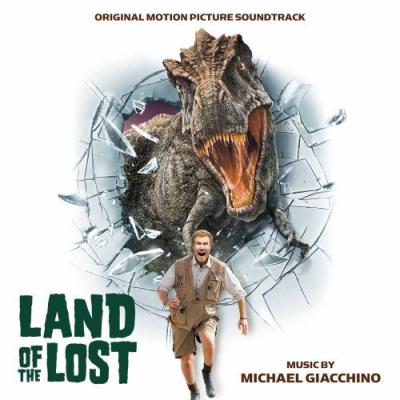
"Land of the Lost" Soundtrack Lyrics
Movie • 2009
Track Listing
Michael Giacchino
Michael Giacchino
Michael Giacchino
Michael Giacchino
Michael Giacchino
Michael Giacchino
Michael Giacchino
Michael Giacchino
Michael Giacchino
Michael Giacchino
Michael Giacchino
Michael Giacchino
Michael Giacchino
Michael Giacchino
Michael Giacchino
Michael Giacchino
Michael Giacchino
Michael Giacchino
Michael Giacchino
Michael Giacchino
Michael Giacchino
Michael Giacchino
Michael Giacchino
Michael Giacchino
Michael Giacchino
Michael Giacchino
Michael Giacchino
Michael Giacchino
Michael Giacchino
Michael Giacchino
Michael Giacchino
John Williams
The Wiener Philharmoniker
Cast of A Chorus Line
The Andrews Sisters
Ilse Werner
Will Ferrell, Danny Mcbride
Ciara Featuring Petey Pablo
Will Ferrell
Rare Earth
Jimi Hendrix
Seals & Crofts
"Land of the Lost (Original Motion Picture Soundtrack)" – Album Guide to Tracks and Key Scenes
Overview
How do you score a screwball dino-quest that also winks at ’70s TV? This soundtrack splits the difference: Michael Giacchino’s orchestral writing plays the adventure straight—full-bodied themes, brass flourishes, choir—while the film threads in cheeky pop/classical cues and TV stings that undercut the peril with a grin.
The result is a tonal two-hander. The score (over 60 minutes on album) propels chases, Sleestak creep, and portal awe; diegetic bits like “I Hope I Get It” and Ferrell’s deadpan “Believe” interlude add comic contrast. Varèse Sarabande issued the album the week of release; the film itself also nods to Megadeth in the late goings—another playful gear shift that matches the movie’s genre-hopping attitude.
Questions & Answers
- Who composed the score?
- Michael Giacchino; he recorded it with the Hollywood Studio Symphony plus a 35-voice choir.
- Is there an official album?
- Yes — Land of the Lost (Original Motion Picture Soundtrack), 32 tracks, released by Varèse Sarabande in June 2009.
- Any notable source music moments?
- Ferrell briefly sings Cher’s “Believe”; the musical A Chorus Line surfaces via “I Hope I Get It”; late in the film you can hear parts of Megadeth’s “The Right to Go Insane.”
- Does the film reuse the classic TV theme?
- Yes. Ferrell’s Dr. Rick Marshall sings the original TV theme in-universe, and Giacchino weaves fragments of it into a couple of cues.
- What’s the trailer music?
- Studio trailer cuts lean on Giacchino’s adventure textures and library percussion; no separate trailer single was issued.
- Where can I stream the score?
- On major DSPs under the title above (artist credit: Michael Giacchino).
Notes & Trivia
- Giacchino’s score was recorded at Warner Bros. Eastwood Stage and Fox Newman Stage with an 88-piece ensemble and 35-voice choir.
- Megadeth’s “The Right to Go Insane” is heard near the end; Dave Mustaine teased the placement prior to release.
- Will Ferrell sings the original TV theme on-screen; cue titles on the album cheekily riff on TV-episode phrasing.
- Varèse Sarabande released the score album in June 2009; streaming editions list 32 cues and ~60 minutes.
- The film plays a gag with A Chorus Line’s “I Hope I Get It” via a scavenged amplifier.
Genres & Themes
Orchestral adventure with comic detonators: bold brass and rhythmic ostinati = earnest peril; sudden pop/classical drop-ins = punchline or irony.
Retro-TV DNA: fragments of the Krofft theme surface in score cues, signaling nostalgia while the narrative goes full-parody.
Tracks & Scenes
“Swamp and Circumstance” — Michael Giacchino
Scene: Opening expedition set-up as Marshall’s dubious science turns into a tourist-trap demo (non-diegetic). ~00:01–00:03, ~2 min.
Why it matters: Establishes comic-adventure tone with nimble strings and swaggering brass.
“The Greatest Earthquake Ever Known” — Michael Giacchino
Scene: The theme-park experiment overloads; a time-rift swallows the trio (non-diegetic). ~00:12–00:15, ~3 min.
Why it matters: Giant set-piece scoring—meter shifts mirror the ride flipping from carnival to catastrophe.
“Matt Lauer Can Suck It” — Michael Giacchino
Scene: Marshall’s infamous TV appearance and its fallout (non-diegetic with TV diegetic stabs). Early reels.
Why it matters: Title-as-joke; Giacchino still plays it straight, keeping the pace brisk.
“I Hope I Get It” — A Chorus Line (Marvin Hamlisch/Edward Kleban)
Scene: A salvaged amp blares the audition anthem across the wasteland (diegetic). Mid-film, brief needle-drop.
Why it matters: The lyrics’ desperate optimism lampoon the crew’s survival “audition.” (As reported in film summaries.)
“Believe” — Cher (briefly sung by Will Ferrell)
Scene: Marshall, delirious and earnest, croons a fragment to rally spirits (diegetic performance). Mid-late.
Why it matters: Pop auto-tune classic undercut by Ferrell’s deadpan; a tonal pivot before danger resumes.
“Sleestak Attack” — Michael Giacchino
Scene: Labyrinth chase through torchlit corridors (non-diegetic). ~00:55–00:58, ~3 min.
Why it matters: Low brass and choir sell menace the jokes won’t; adventure grammar at work.
“Enik the Altrusian” — Michael Giacchino
Scene: First serious encounter with Enik and the crystals’ rules (non-diegetic). Middle third, ~3 min.
Why it matters: Harmonic mystery motif signals stakes beyond sight gags.
“When Piss on Your Head Is a Bad Idea” — Michael Giacchino
Scene: The notorious hadrosaur urine gag and its fallout (non-diegetic under scene + stingers). Early mid-film.
Why it matters: Comic escalation scored like high drama—part of the film’s tonal joke.
“A New Marshall in Town” — Michael Giacchino
Scene: Team confidence uptick after a narrow escape (non-diegetic). Late mid-film.
Why it matters: Triumphant variation of the quest material; sets up the finale run.
“The Right to Go Insane” — Megadeth (excerpt)
Scene: Late sequence and into the run-up to the ending (source/non-diegetic overlay, brief). Final reels.
Why it matters: A metal jolt that snaps the comedy back to propulsion; teased by the band prior to release.
“Land of the Lost Theme” — (TV theme; sung by Will Ferrell)
Scene: Marshall sings the classic TV theme in-world (diegetic performance). Early in the otherworld.
Why it matters: Nostalgia needle threaded through parody; Giacchino nods to it in two score cues.
Timing note: Minute marks vary by cut/format; placements align with documented scene notes, album cue titles, and widely cited summaries.
Music–Story Links
Adventure cues handle story mechanics—vortex, chases, crystal puzzles—so jokes can play clean. When the film drops “I Hope I Get It,” it reframes survival as a Broadway audition. Ferrell’s “Believe” bit disarms tension right before it spikes. And when metal slips in near the end, it signals the narrative’s last lunge back toward momentum.
How It Was Made
Recording took place at the Eastwood Scoring Stage (Warner Bros.) and the Newman Scoring Stage (Fox). Tim Simonec conducted; Dan Wallin mixed. Giacchino’s palette favors propulsive ostinati, bold brass, and choir for Sleestak dread. According to session coverage, the orchestra numbered 88, with a 35-voice choir.
Varèse Sarabande handled the commercial album (32 cues). The film additionally features on-screen vocal gags (TV theme; “Believe”) and the A Chorus Line needle-drop; late in the feature you can hear Megadeth’s “The Right to Go Insane.”
Reception & Quotes
Critical response skewed mixed-negative, though some singled out the score’s large-canvas brio amid the film’s goofball tone. Box-office performance underwhelmed in a crowded early-summer frame, but the soundtrack plays as a straight-faced adventure record—one of the film’s most durable elements.
“A seriously deranged movie… I raise my voice in lonely, if moderate, admiration.” Roger Ebert
“Falls short of its comic potential.” Rotten Tomatoes critics capsule
Additional Info
- Album runtime ~60 minutes; streaming editions list 32 tracks.
- Score features choir prominently in Sleestak material.
- Two cues incorporate fragments of the classic TV theme.
- Commercial release week matched the film’s early-June rollout.
- Megadeth placement was teased publicly before the film opened.
Technical Info
- Title: Land of the Lost (Original Motion Picture Soundtrack)
- Year: 2009
- Type: Film score (with additional source music in film)
- Composer: Michael Giacchino
- Recording forces: ~88-piece orchestra + 35-voice choir
- Label: Varèse Sarabande (digital/CD)
- Notable source cues (in film): “I Hope I Get It” (A Chorus Line), “Believe” (sung by Will Ferrell), classic TV theme (sung by Ferrell), Megadeth’s “The Right to Go Insane.”
- Release context: U.S. theatrical release June 5, 2009; album issued in June 2009
- Availability: Streaming (Spotify/Apple Music) and CD via specialty retailers
Canonical Entities & Relations
| Subject | Relation | Object |
|---|---|---|
| Michael Giacchino | composed | Land of the Lost (2009) score |
| Tim Simonec | conducted | Hollywood Studio Symphony (score sessions) |
| Dan Wallin | mixed | score recording |
| Varèse Sarabande | released | official soundtrack album |
| Will Ferrell | sang | “Land of the Lost” TV theme (in film) |
| Marvin Hamlisch & Edward Kleban | wrote | “I Hope I Get It” from A Chorus Line (used in film) |
| Cher | originated | “Believe” (briefly sung by Ferrell, in film) |
| Megadeth | performed | “The Right to Go Insane” (excerpt heard late in film) |
Sources: Wikipedia (film & music details); ScoringSessions session report; Spotify/Apple Music album listings; Discogs release credits; RogerEbert.com review; Rotten Tomatoes capsules; Michael Giacchino’s official site.
November, 12th 2025
Read about 'Land of the Lost', an American adventure comedy film on Wikipedia and Internet Movie DatabaseA-Z Lyrics Universe
Cynthia Erivo Popular
Ariana Grande Horsepower
Post Malone Ain't No Love in Oklahoma
Luke Combs Good Riddance (Time of Your Life)
Green Day Bye Bye Bye
*NSYNC You're the One That I Wan
John Travolta & Olivia Newton-John I Always Wanted a Brother
Braelyn Rankins, Theo Somolu, Kelvin Harrison Jr. and Aaron Pierre The Power of Love
Frankie Goes to Hollywood Beyond
Auli’i Cravalho feat. Rachel House MORE ›