Soundtracks:  A B C D E F G H I J K L M N O P Q R S T U V W X Y Z #


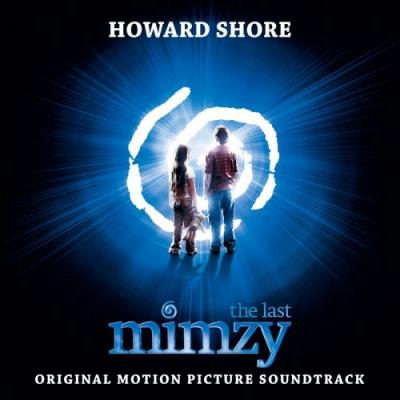
Last Mimzy Album Cover

"Last Mimzy" Soundtrack Lyrics

Cartoon • 2007

Track Listing

The Mandala

Whidbey Island

Under the Bed

Cuddle

Beach

Scribbles

Blackout

Palm Readings

I Love the World

Help!

I Have to Look

Can I Talk?

Eyes

The Tear

Through the Looking Glass

Hello (I Love You)

Roger Waters


"The Last Mimzy (Original Motion Picture Soundtrack)" – Album Guide to Tracks and Key Scenes

The Last Mimzy (2007) official trailer frame: the siblings discover a strange box glowing in their bedroom
The Last Mimzy — official trailer, 2007

Overview

Is a family sci-fi fable better served by lullaby or lab equipment? Howard Shore chooses both: a motif that feels like a bedtime hum, and harmonic colors that suggest circuitry stirring awake. The film is live-action (not animation); Shore’s orchestral writing steers discovery, fear, and wonder without tipping into horror.

The commercial album runs ~50 minutes and collects Shore’s score cues, with a single standout needle-drop: Roger Waters’ end-credits song “Hello (I Love You),” co-written with Shore. Label listings place the release on March 20, 2007; the track titles mirror key beats—“Under the Bed,” “Blackout,” “Through the Looking Glass”—so even the cue names read like chapter headers.

Trailer frame: eerie electromagnetic effects flicker through a suburban home in The Last Mimzy
Score language: cradle-soft melody over quietly unstable harmony; one original rock single at the end.

Questions & Answers

Is this a 2007 cartoon?
No. It’s a 2007 live-action sci-fi film directed by Robert Shaye, based on “Mimsy Were the Borogoves.”
Who composed the soundtrack?
Howard Shore composed the original score; the album is issued under his name.
Is Roger Waters really on the soundtrack?
Yes. Waters and Shore co-wrote and produced the end-credits single “Hello (I Love You).”
What label released the album and when?
New Line Records (with WaterTower handling digital catalog later); release date March 20, 2007.
Is there much licensed music in the film?
No. It’s a score-driven picture; the notable non-score piece is Waters’ closing song.
Is the album on streaming?
Yes. The 16-track edition is available on major services (artist: Howard Shore; features “Hello (I Love You)”).

Notes & Trivia

  • The 16-track digital edition runs ~50 minutes; physical editions list New Line Records catalog NLR 39084.
  • “Hello (I Love You)” was released as a single in March 2007 and plays over the end credits.
  • Several cue titles—“Whidbey Island,” “Under the Bed,” “Blackout”—map directly to the story’s set pieces.
  • The trailer IDs in circulation are studio uploads; the film’s marketing leaned heavily on family-friendly wonder rather than menace.

Genres & Themes

Orchestral wonder with a child-voice motif: celesta, high woodwinds, and strings suggest curiosity; low brass and synthetic underpinnings suggest the device’s unnerving power.

End-credits art-rock: Waters’ single folds lyrical warnings (humanity vs. hubris) into Shore’s harmonic world, bridging the fable to pop consciousness.

Trailer frame: the siblings stare at levitating objects as energy crackles in The Last Mimzy
Innocence vs. interference: the music keeps both in frame.

Tracks & Scenes

“The Mandala” — Howard Shore
Scene: Opening images of pattern and play as the found box enters the kids’ orbit (non-diegetic). ~00:00–00:02, ~1.5 min.
Why it matters: Introduces the circular motif—order that will soon be disrupted.

“Whidbey Island” — Howard Shore
Scene: Home routines fracture as Emma and Noah begin to change (non-diegetic). Early reels, ~3 min.
Why it matters: Pastoral textures turn slightly off-axis, hinting at abilities beyond normal.

“Under the Bed” — Howard Shore
Scene: Night discovery; the device hums and toys act like antennae (non-diegetic). First act, ~2–3 min.
Why it matters: Whisper-quiet suspense—curiosity without fear, yet.

“Blackout” — Howard Shore
Scene: The neighborhood loses power when the object surges (non-diegetic). Mid-film set piece, ~2 min.
Why it matters: Low brass and electronics underline cause-and-effect; wonder becomes public.

“Palm Readings” — Howard Shore
Scene: Lab testing; adult certainty meets child intuition (non-diegetic). Mid-film, ~2 min.
Why it matters: Oscillating figures mimic diagnostic machines, but the theme stays humane.

“I Love the World” — Howard Shore
Scene: Emma’s empathy peaks during a quiet family beat (non-diegetic). Mid-late, ~2 min.
Why it matters: The melody opens up—scale without spectacle.

“Through the Looking Glass” — Howard Shore
Scene: Final passage as the children complete the device’s purpose (non-diegetic). Climax, ~3–4 min.
Why it matters: The lullaby motif returns, now resolute; science fiction resolves as lullaby.

“Hello (I Love You)” — Roger Waters & Howard Shore
Scene: End credits after the resolution (non-diegetic). Final ~6 min (album version).
Why it matters: Lyric reframes the story as a warning and a benediction; collaboration ties the score world to a rock voice.

Timing note: Minute marks vary by cut/platform; placements align with cue titles and widely reported scene summaries.

Music–Story Links

Shore scores the box as if it were both toy and transmitter. When domestic scenes soften, celesta and light strings say “childhood”; when the grid flickers, low brass and processed resonance say “signal.” The credits song then speaks plainly—Waters’ lyric turns the subtext (innocence vs. hubris) into text.

Trailer frame: the device forms a luminous pattern while scientists watch in The Last Mimzy
Score for the children; single for the thesis.

How It Was Made

Robert Shaye directed; Howard Shore composed and produced the score. New Line Records issued the album (later managed digitally by WaterTower Music). The end-credits single “Hello (I Love You)” was co-written and produced by Roger Waters with Shore and James Guthrie—press materials and label notes emphasized that it reflected the film’s ecological and ethical themes.

Reception & Quotes

Reviews called out Shore’s gentle approach—curiosity over shock—and the curiosity of hearing Waters in a family film context.

“Music: Howard Shore.” The Hollywood Reporter
“Waters’ ‘Hello (I Love You)’—a credits coda that states the case outright.” album/press notes

Additional Info

  • Physical CD UPC: 79404390842; catalog: NLR 39084.
  • Digital editions credit WaterTower Music as licensee for New Line.
  • Track names on label sites align across CD and digital; some listings show 15 (score only), others 16 (plus the Waters single).
  • Trailer usage leans on the score; no separate “trailer single” was marketed.
  • The film garnered Saturn and Young Artist nominations; music remained a low-key critical plus.

Technical Info

  • Title: The Last Mimzy (Original Motion Picture Soundtrack)
  • Year: 2007
  • Type: Film score with one featured original song (end credits)
  • Composer: Howard Shore
  • Featured artist/song: Roger Waters — “Hello (I Love You)” (end credits)
  • Label: New Line Records (digital catalog via WaterTower Music)
  • Commercial release: March 20, 2007; ~50 minutes; 15–16 tracks depending on edition
  • Availability: Streaming (Apple Music/Spotify) and CD

Canonical Entities & Relations

SubjectRelationObject
Howard ShorecomposedThe Last Mimzy original score
Roger Watersco-wrote & performed“Hello (I Love You)” (end-credits song)
New Line RecordsreleasedThe Last Mimzy (Original Motion Picture Soundtrack)
WaterTower Musiclicensed catalog fordigital distribution of the album
Robert ShayedirectedThe Last Mimzy (live-action feature)
New Line Cinemaproduced/distributedthe film

Sources: Apple Music and Spotify album pages; WaterTower Music release page; IMDb/Wikipedia film entries; SoundtrackINFO tracklist and Q&A; industry reviews/trailer uploads.

November, 12th 2025


A-Z Lyrics Universe

Lyrics / song texts are property and copyright of their owners and provided for educational purposes only.