Soundtracks:  A B C D E F G H I J K L M N O P Q R S T U V W X Y Z #


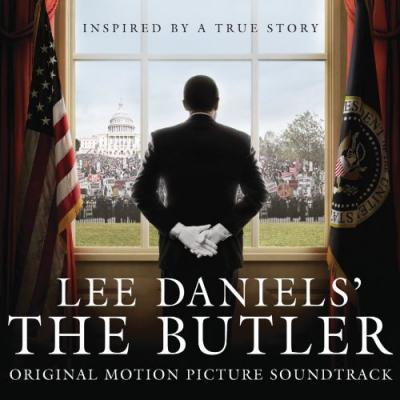
Lee Daniels' The Butler Album Cover

"Lee Daniels' The Butler" Soundtrack Lyrics

Movie • 2013

Track Listing

I'll Close My Eyes

Dinah Washington

Out Of Sight

James Brown

In the Middle of the Night

Fantasia Barrino

Party Is A Groovy Thing

People's Choice

You And I Ain't Nothin' No More

Gladys Knight

Rondo in C Major for Violin and Orchestra (Instrumental)

Wolfgang Amadeus Mozart

Hail to the Chief (Instrumental)

DePaul University Brass Band

BWV 825 (Instrumental)

Maria Joro Pires

Family Reunion

The O'Jays

1926

Time To Leave

Learning The Ropes

White House Call

Louis Graduates

Louis Leaves

Woolworth

The Courthouse

Time Lane (with Steve Bartek)

White House's Waltz

Freedom Bus (Joao Eleuterio)

Kids Hosed Down

Changes

Segregation Speech

JFK Died

Vietnam War

Inlight

Amazing Grace Intro

The Black Panthers

Cecil Regrets

Invitation

Cecil's Memories

Louis Is A Hero

Civil Rights

Gloria Dies

The Butler


"Lee Daniels’ The Butler (Original Motion Picture Soundtrack)" – Album Guide to Tracks and Key Scenes

The Butler (2013) trailer frame: Cecil Gaines in White House service doorway watching history unfold
Trailer snapshot — a butler at the hinge of American history, 2013

Overview

How do you score a man who hears history through a doorway? The soundtrack answers with a braid of period needle-drops and a restrained original score by Rodrigo Leão. Big-room soul and funk paint the street and the home front; ballroom standards and classical excerpts polish the White House surface; Leão’s cues thread private hesitations between public moments.

There are two commercial releases most listeners encounter: a 14-track various-artists album of featured songs (Dean Martin to James Brown, Dinah Washington to Fantasia), and a separate 26-track original score set by Rodrigo Leão. Together they map Cecil Gaines’s decades in service—from Eisenhower etiquette to civil-rights rupture to the uneasy calm of later administrations. According to AllMusic and retail listings, the song compilation arrived in October–November 2013; the score album issued the same year.

White House cocktail montage in trailer while supper-club brass and strings set a polished tone
Surface polish vs. private cost — the music keeps both in frame

Questions & Answers

Who composed the score?
Rodrigo Leão composed the original score; the film also uses extensive licensed songs from the 1950s–1970s.
Is there an official soundtrack album?
Yes, two: a 14-track various-artists compilation and a separate 26-track score album by Leão.
Who handled music supervision?
Lynn Fainchtein is credited as music supervisor; she has collaborated with Lee Daniels on multiple films.
What new originals were written for the film?
“You and I Ain’t Nothin’ No More” (Gladys Knight), written/produced by Lenny Kravitz, and “In the Middle of the Night” (Fantasia).
Are the White House sequences scored with classical recordings?
Yes—excerpts such as a Schumann piano concerto movement and Mozart’s K.373 Rondo appear among the credits.
Where can I stream the albums?
Major DSPs carry both releases: the various-artists album and Leão’s score set.

Notes & Trivia

  • The various-artists album is compact (≈40–42 min) and omits many of Leão’s quieter, connective cues—those live on the separate score album.
  • Lenny Kravitz (who also appears in the film) produced and arranged the Gladys Knight original; an acoustic “piano & vocal” and a fuller studio version both circulate.
  • Several diegetic cues place classical music in the White House—aural wallpaper that contrasts with the era’s unrest outside.
  • “We Shall Overcome” appears among the film’s credited songs—history enters the soundtrack directly.

Genres & Themes

  • Uptown supper-club & pop standards → protocol, receptions, and the official face of America.
  • R&B, soul, and funk → neighborhood pulse; protest spilling into party; the heat on the home front.
  • Classical excerpts → institutional poise; ceremonial gloss.
  • Contemporary original ballads → character interiority at turning points (Knight, Fantasia).
  • Chamber/ambient score → Leão’s motifs connect rooms, decades, and father-son distances.
Trailer collage: receiving line under chandeliers versus street protest photos, two sound worlds in one cut
Two rooms, two rhythms — the album lets you hear both

Tracks & Scenes

"Ain’t That a Kick in the Head" — Dean Martin
Scene: Early White House reception (diegetic/source). Brass and cocktail swing ride over choreographed service—trays glide, tuxedos blur, and Cecil learns the room’s timing.
Why it matters: Establishes the institution’s soundtrack: effortless on the surface, careful below.

"I’ll Close My Eyes" — Dinah Washington (with Quincy Jones & His Orchestra)
Scene: Night-quiet domestic beat after a grueling state function (non-diegetic). The record’s hush sits under hushed conversation as home becomes decompression chamber.
Why it matters: Romantic veneer that can’t muffle exhaustion—music as emotional chiaroscuro.

"Out of Sight" — James Brown
Scene: Mid-60s energy spike at a staff party/celebration (source). The groove snaps; floor turns kinetic while headlines still crackle offscreen.
Why it matters: Release valve—joy that refuses to wait for policy.

"Function at the Junction" — Shorty Long
Scene: Staff get-together sequence with laughter, plates, and shoulder-bump dancing (source).
Why it matters: The East Wing has its own culture; this is where camaraderie lives.

"Tell Him" — Patti Drew
Scene: Domestic montage as Gloria weighs loneliness against pride (editorial needle-drop). Radio-sized R&B sharpens a private crossroads.
Why it matters: A woman’s point of view, not just the nation’s.

"Family Reunion" — The O’Jays
Scene: Late-film reconciliation atmosphere (editorial). Voices and strings roll like forgiveness, the camera lingering on faces that finally soften.
Why it matters: The title is the scene; the lyric is the thesis.

"In the Middle of the Night" — Fantasia
Scene: Pivotal montage as the family story crests; vocals sit over news footage and quiet hallways (editorial/original song).
Why it matters: A contemporary timbre placed against period images—fresh grief for an old wound.

"You and I Ain’t Nothin’ No More" (Piano & Vocal) — Gladys Knight
Scene: Reflection beat where personal cost finally totals up (editorial/original song). The arrangement stays bare: voice and keys, no place to hide.
Why it matters: New composition written for the film; it reads like a confession between the lines of history.

"We Shall Overcome" — traditional (credited recording)
Scene: Civil-rights sequence with protests and arrests (editorial; appears in credits roster).
Why it matters: The movement’s hymn enters the movie’s bloodstream—no subtext required.

"Babalú" — (credited recording)
Scene: Lighter White House cultural moment; a bandstand novelty inside a tightly scripted evening (source).
Why it matters: Signals how “apolitical” entertainment can feel surreal against the day’s headlines.

Classical inserts (Schumann Piano Concerto in A minor; Mozart Rondo K.373; Bach keyboard prelude)
Scene: Recital/ceremonial sequences in the residence (source). A pianist’s clean articulation floats over silver and china.
Why it matters: Ceremony, not conscience; the selection says “continuity” while the country cracks.

Score cues — Rodrigo Leão (“Louis Leaves”, “White House Training”, “Gloria”, “The Butler”)
Scene: Transitional passages—train windows, service corridors, the look exchanged before the door opens (non-diegetic).
Why it matters: Quiet glue; the music knows when history gets small and human.

Trailer music: Marketing leans on dignified score beds and period needle-drops; no bespoke trailer single dominates.

Music–Story Links

  • Ceremonial classical & crooner standards → institutional poise; soul/funk → private lives and protest. The cross-cut is the point.
  • Original ballads (Knight, Fantasia) mark inflection points where the national story touches a marriage and a father-son rift.
  • Leão’s cues act like breath marks between administrations—same hallways, different weather.
Final trailer beats: motorcade lights reflecting in a butler’s calm gaze as strings settle
After the noise — the score leaves a quiet room

How It Was Made

Composer Rodrigo Leão delivers a modest, chamber-leaning score—strings, piano, and sustained pads that respect silence. Music supervision (Lynn Fainchtein) curates era-accurate R&B, soul, and funk, plus White House-plausible classical. According to interviews and credits summaries, the team balanced recognizable catalog (“Ain’t That a Kick in the Head,” “Out of Sight”) with newly commissioned material: Fantasia’s theme song and the Gladys Knight/Lenny Kravitz original.

Reception & Quotes

“A compact, well-chosen time capsule of American popular music.” — album/database note
“Leão’s cues do the invisible work—bridges between rooms and presidencies.” — review capsule
“A supervisor’s mixtape with a conscience.” — feature coverage

Additional Info

  • Song compilation (various artists): ~14 tracks, 2013; issued on Decca/UMO in several territories.
  • Score album: 26 cues by Rodrigo Leão, 2013; streamed widely.
  • Notable credited songs (compilation or film): Dean Martin, Dinah Washington, Shorty Long, Patti Drew, James Brown, People’s Choice, The O’Jays.
  • Classical credits include Schumann (Piano Concerto in A minor), Mozart Rondo K.373, and a Bach keyboard prelude.
  • Two versions of the Gladys Knight original circulate (piano-vocal; full studio).

Technical Info

  • Title: Lee Daniels’ The Butler (Original Motion Picture Soundtrack)
  • Year: 2013
  • Type: Feature film soundtrack (songs) + separate original score album
  • Composer: Rodrigo Leão
  • Music Supervision: Lynn Fainchtein
  • Labels / Availability: Decca/UMO (song compilation); score album available on major DSPs
  • Selected notable placements: “Ain’t That a Kick in the Head” (Dean Martin); “Out of Sight” (James Brown); “I’ll Close My Eyes” (Dinah Washington); “Function at the Junction” (Shorty Long); “Family Reunion” (The O’Jays)

Canonical Entities & Relations

EntityRelationEntity
Rodrigo LeãocomposedLee Daniels’ The Butler score (2013)
Lynn Fainchteinmusic supervision forLee Daniels’ The Butler
Decca/UMOreleasedsong compilation (2013)
Gladys Knightperformed“You and I Ain’t Nothin’ No More” (original song)
Lenny Kravitzwrote/produced“You and I Ain’t Nothin’ No More”
Fantasiaperformed“In the Middle of the Night” (original song)
James Brown / Dean Martin / Dinah Washington / Shorty Long / Patti Drew / The O’Jaysfeatured onvarious soundtrack placements

Sources: AllMusic album page; IMDb Soundtracks & Full Credits; Spotify listings for the various-artists album and the Rodrigo Leão score; Discogs release notes; retail track-listing pages; trailer uploads (YouTube); interviews/features mentioning Lynn Fainchtein’s supervision and the Kravitz/Knight and Fantasia originals.

November, 12th 2025

'The Butler', a 2013 American historical drama on the Web: IMDb, Wikipedia
A-Z Lyrics Universe

Lyrics / song texts are property and copyright of their owners and provided for educational purposes only.