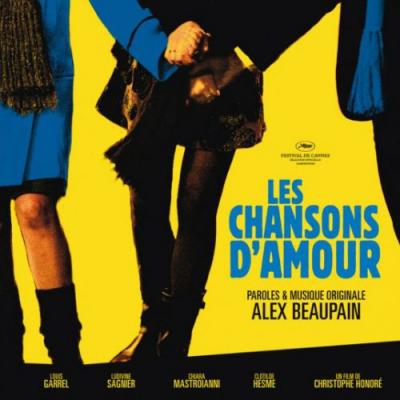
"Les Chansons d'Amour" Soundtrack Lyrics
Movie • 2007
Track Listing
Louis Garrel, Ludivine Sagnier
Ludivine Sagnier, Louis Garrel
Ludivine Sagnier, Jean-Marie Winling, Alice Butaud, Chiara Mastroianni
Ludivine Sagnier, Louis Garrel, Clotilde Hesme
Alex Beaupain
Louis Garrel
Louis Garrel, Clotilde Hesme
Louis Garrel
Gregoire Leprince-Ringuet, Louis Garrel
Louis Garrel
Chiara Mastrioanni
Louis Garrel, Gregoire Leprince-Ringuet
"Les Chansons d’Amour (Original Motion Picture Soundtrack)" – Album Guide to Tracks and Key Scenes
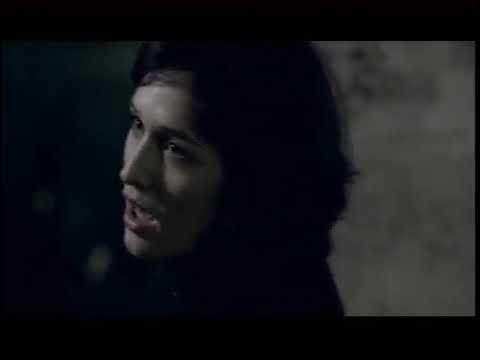
Overview
Why do these lovers sing only when words won’t hold? Christophe Honoré’s Les Chansons d’Amour threads a modern Paris romance through 14 original songs by Alex Beaupain, performed by the cast in character. The soundtrack stands on crisp verse–chorus forms, quick modulations, and lyrics that move the plot rather than pausing it.
The album—issued by Naïve in May 2007—collects the film’s sung scenes in studio fidelity while preserving street-level intimacy: voices close to the mic, hand-off duets, and harmonies that feel overheard. It’s a city map in songs: Faubourg-Saint-Martin, Bastille, Richard-Lenoir, Montparnasse. According to festival and album notes, the film premiered at Cannes in 2007 with the actors themselves singing every number.
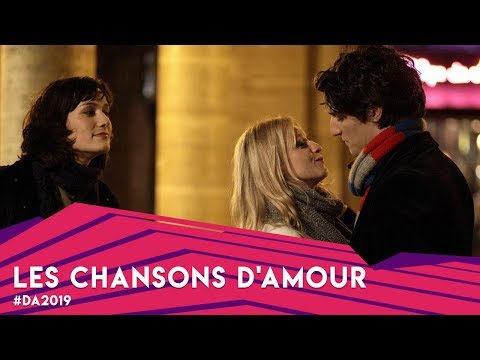
Questions & Answers
- Who wrote the songs?
- Alex Beaupain wrote the music and lyrics; the cast—Louis Garrel, Ludivine Sagnier, Clotilde Hesme, Chiara Mastroianni, Grégoire Leprince-Ringuet—perform them in character.
- Is this a classic lip-sync musical?
- No. Songs were recorded for the film and staged to feel diegetic—sung on streets, in apartments, cafés, and parks.
- What label released the soundtrack?
- Naïve (France), May 2007; 14 tracks, roughly 40 minutes.
- Did the film or score win awards?
- Yes. The film’s music won the César Award for Best Music (2008).
- How is the film structured?
- As a triptych—Le départ, L’absence, Le retour—with songs anchoring each movement.
- Is the album the exact film audio?
- It’s a companion studio release mirroring the numbers and voices; edits and fades are album-friendly but keep the scene logic.
Notes & Trivia
- Four songs trace back to Beaupain’s debut album Garçon d’honneur, adapted for the script.
- The soundtrack credits producer/arranger Frédéric Lo; recording at Studio Mélodium, mixing at La Truite.
- Street geography is precise: Rue du Faubourg-Saint-Martin, Passage Gustave-Goublier, Boulevard de Strasbourg, Jardin des Plantes, and Montparnasse Cemetery all appear.
- Cast vocals are un-doubled in character; the intimacy is intentional.
Genres & Themes
Chanson française + pop minimalism → verse–chorus forms with conversational hooks; acoustic guitars, bell-like keys, and small drum kits keep lyrics front-row.
Processional ballads → walking-song rhythms (BPM in the 90–110 range) turn Paris streets into moving stages—love literally on foot.
Elegy as everyday → grief numbers avoid melodrama: plain diction, soft upper harmonies, restrained strings.
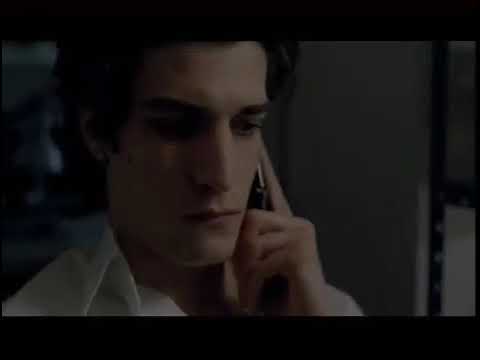
Tracks & Scenes
“De bonnes raisons” — Louis Garrel & Ludivine Sagnier
Scene: Le départ opens in the 10th arrondissement. The couple sings while strolling through Passage Gustave-Goublier, finishing the verse as they climb stairs to their flat on Rue du Faubourg-Saint-Martin. Diegetic; street-to-apartment flow (~2 min).
Why it matters: Launches the triangle’s rules with playful, itemized reasons—love by ledger.
“Inventaire” — Ludivine Sagnier & Louis Garrel
Scene: Immediately after the door closes, they inventory their love inside the cramped apartment—boxes, coats, unmade bed in frame. Diegetic; close-mic domestic duet (~2 min).
Why it matters: Locks the film’s talk-sing rhythm and establishes the home key, musically and emotionally.
“La Bastille” — Ensemble (Sagnier, Chiara Mastroianni, et al.)
Scene: Family dinner fallout spills into the night. Jeanne escorts Julie to the Bastille Metro; the song rides neon and traffic wash. Diegetic; location performance (~2–3 min).
Why it matters: Sisters harmonize across disapproval and care—first fault line in the trio.
“Je n’aime que toi” — Sagnier, Garrel & Clotilde Hesme
Scene: Boulevard de Strasbourg; the trio navigates public space and private rules. Diegetic; walking number with hand-offs (~2–3 min).
Why it matters: Defines the ménage à trois terms in plain pop phrasing.
“Brooklyn Bridge” — Alex Beaupain (on-screen)
Scene: At L’Étoile (Rue du Château-d’Eau), Beaupain himself sings from the stage while the characters listen—fiction meets author. Diegetic; stage insert (~2 min).
Why it matters: A meta-cameo that briefly lifts the camera off the couple toward a wider city of songs.
“Delta Charlie Delta” — Louis Garrel
Scene: After the shock that resets the story, Ismaël walks up Rue du Château-d’Eau toward Porte Saint-Denis. The melody tightens; footsteps set tempo. Diegetic; solitary street song (~2 min).
Why it matters: Codes grief without grandiosity—marching to keep from collapsing.
“Il faut se taire” — Garrel & Hesme
Scene: Confession behind a café’s glass; their reflections duet with them. Diegetic; murmured counter-melodies (~2 min).
Why it matters: Silence is argued in song—love’s ethics under pressure.
“As-tu déjà aimé ?” — Grégoire Leprince-Ringuet & Garrel
Scene: In Erwann’s flat on Rue Louis-Blanc, the question is both flirt and challenge; the camera lingers on shoulders and doorframes. Diegetic; two-hander (~2–3 min).
Why it matters: The film pivots from absence to possibility.
“Les yeux au ciel” — Louis Garrel
Scene: Leaving Jeanne’s parents’ place, Ismaël sings along Boulevard Richard-Lenoir, down into the Metro, and out at Gare de l’Est. Diegetic; travel-song (~2–3 min).
Why it matters: A prayer with sneakers on—head up, feet moving.
“Au parc” — Chiara Mastroianni
Scene: Jeanne reflects in a green pocket that plays like the Jardin des Plantes; autumn light, stroller wheels, and hush. Diegetic; solo (~2 min).
Why it matters: A sister’s grief given its own voice and space.
“Pourquoi viens-tu si tard ?” — Ludivine Sagnier
Scene: Among graves and stone—shot around Montparnasse Cemetery—Julie’s plea arrives like a letter from another room. Diegetic; elegy (~2–3 min).
Why it matters: The film’s bluntest address to loss.
“J’ai cru entendre” — Garrel & Leprince-Ringuet
Scene: Balcony and bedroom at Erwann’s place; dawn blue, voices soft to spare the neighbors. Diegetic; intimate closer (~2–3 min).
Why it matters: Acceptance without fanfare—the return movement lands quietly.
Music–Story Links
- Triptych form → tonal shifts: each act moves the key center from flirt to void to renewal; reprises of walking tempo tie the city to emotion.
- Public space → private stakes: Bastille and Richard-Lenoir scenes leverage crowds and transit noise so confessions feel braver.
- Author in frame: Beaupain’s stage cameo (“Brooklyn Bridge”) collapses distance between score and story.
- Queer turn as healing: “As-tu déjà aimé ?” reframes Ismaël’s desire as forward motion rather than scandal.
How It Was Made
Beaupain’s songs were recorded ahead of production; Frédéric Lo produced/arranged, with sessions at Studio Mélodium and mixes at La Truite. Honoré structured the script around existing Beaupain pieces—then wrote new ones to answer specific beats. The actors learned the material as dialogue, so camera blocking could keep lyrics natural—on stairwells, sidewalks, and metro platforms.
As per Cannes program notes, the film screened in the 2007 Official Competition; the music later earned the César for Best Music, cementing the album’s place in 2000s French film-song canon.
Reception & Quotes
Critical response praised the unforced singing and the city-as-score idea; some compared its plain-spoken candor to Demy by way of modern pop craft.
“A graceful city musical where songs feel overheard.” festival/retrospective notes
“Beaupain’s tunes walk and breathe—love sung at street level.” album guides
Additional Info
- International title: Love Songs.
- Street placements are not throwaway backdrops—addresses match lyric intent.
- The album sequence follows the film’s triptych closely.
- Studio credits name Jonathan Masterson (recording) and Yann Arnaud (mix).
- Naïve catalog ref. commonly listed as K 1624 on retail sites.
Technical Info
- Title: Les Chansons d’Amour (Original Motion Picture Soundtrack)
- Year: 2007
- Type: Film soundtrack (sung by cast)
- Composer/Lyricist: Alex Beaupain
- Producer/Arranger: Frédéric Lo
- Label: Naïve (France)
- Running time / tracks: ~40 min / 14 tracks
- Selected placements: “De bonnes raisons” (Passage Gustave-Goublier), “La Bastille” (Bastille), “Les yeux au ciel” (Boulevard Richard-Lenoir → Gare de l’Est), “Pourquoi viens-tu si tard ?” (Montparnasse Cemetery)
Canonical Entities & Relations
| Subject | Relation | Object |
|---|---|---|
| Les Chansons d’Amour (film, 2007) | directed by | Christophe Honoré |
| Les Chansons d’Amour (film) | music by | Alex Beaupain |
| Les Chansons d’Amour (soundtrack) | record label | Naïve (2007) |
| Frédéric Lo | produced/arranged | Les Chansons d’Amour (soundtrack) |
| Louis Garrel; Ludivine Sagnier; Clotilde Hesme | performed vocals in | Les Chansons d’Amour (film & album) |
| Chiara Mastroianni; Grégoire Leprince-Ringuet | performed vocals in | Les Chansons d’Amour (film & album) |
| Festival de Cannes 2007 | selected | Les Chansons d’Amour (Official Competition) |
| César du cinéma 2008 | awarded Best Music to | Les Chansons d’Amour |
Sources: Cannes program notes; Naïve/album credits; Wikipedia (film & soundtrack); Discogs release pages; Spotify listing; SoundtrackCollector.
November, 12th 2025
A-Z Lyrics Universe
Cynthia Erivo Popular
Ariana Grande Horsepower
Post Malone Ain't No Love in Oklahoma
Luke Combs Good Riddance (Time of Your Life)
Green Day Bye Bye Bye
*NSYNC You're the One That I Wan
John Travolta & Olivia Newton-John I Always Wanted a Brother
Braelyn Rankins, Theo Somolu, Kelvin Harrison Jr. and Aaron Pierre The Power of Love
Frankie Goes to Hollywood Beyond
Auli’i Cravalho feat. Rachel House MORE ›