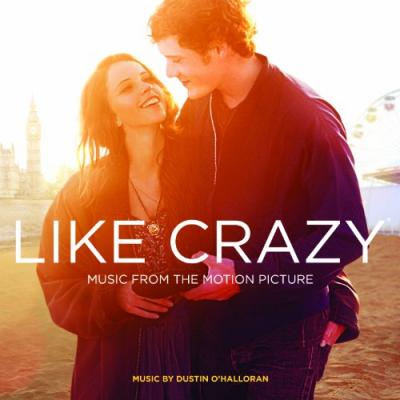
"Like Crazy" Soundtrack Lyrics
Movie • 2011
Track Listing
Dustin O'Halloran
Paul Simon
Dustin O'Halloran
The Mary Onettes
Dustin O'Halloran
Figurine
Fool's Gold
M83
Dustin O'Halloran
Dustin O'Halloran
Stars
Asobi Seksu
Radio Depot
"Like Crazy (Music from the Motion Picture) / Like Crazy (Original Motion Picture Soundtrack)" – Album Guide to Tracks and Key Scenes
Overview
How do you soundtrack a love story built from glances, pauses, and the ache of distance? Like Crazy answers with a two-album approach: a curated songs compilation featuring Paul Simon, M83, Stars, The Mary Onettes, Figurine and others, and a companion original score by pianist-composer Dustin O’Halloran. Together they sketch an intimate grammar—indie/electronic textures to place the couple in time, piano miniatures to hold breath between choices.
The songs album (Relativity Music Group) works like a mixtape the characters might have traded; the score album (17 cues, ~41 minutes) keeps the film’s pulse steady with spare piano, strings, and chamber colors. As reported by IndieWire and reflected in label listings, both releases arrived alongside the U.S. rollout in late October 2011. On screen, supervisor Tiffany Anders’ placements avoid wall-to-wall needle-drops; instead, they surface at turning points, while O’Halloran’s cue titles (“Arrivals,” “Departures,” “We Move Lightly”) mirror the film’s migrations.
Questions & Answers
- Are there two official soundtrack releases?
- Yes. A various-artists album (Like Crazy: Music from the Motion Picture) and an original score album by Dustin O’Halloran (Like Crazy (Original Motion Picture Soundtrack)).
- Who composed the score and who supervised the music?
- Dustin O’Halloran composed the score; Tiffany Anders served as music supervisor.
- Key artists featured on the songs album?
- Paul Simon (“Crazy Love, Vol. II”), M83, Stars (“Dead Hearts”), The Mary Onettes (“Century”), Figurine (“Impossible”), Asobi Seksu (“Thursday”), The Radio Dept. (“Closing Scene”).
- Is Bowie’s “Starman” in the film?
- No—marketing leaned on other tracks elsewhere; the feature uses the artists listed above plus O’Halloran’s cues.
- Where can I find the piano piece used in the final shower scene?
- O’Halloran’s “Opus 37” (and related “Opus 38” listings) score that closing passage on the commercial score album.
- Does the film use diegetic music?
- Sparingly; most cues are non-diegetic. A few party/club moments are source-led.
Notes & Trivia
- The film’s music credit reads: “Music by Dustin O’Halloran”; additional scoring personnel include Nils Frahm and Adam Wiltzie in the music department.
- The songs album places Paul Simon’s “Crazy Love, Vol. II” as an early anchor; Stars’ “Dead Hearts” closes over the credits.
- Two official releases circulated on digital platforms: the 14-track songs compilation and the 17-track score set (~41 minutes).
- Doremus famously built actor direction from a reference mixtape—those artists shaped tone and pacing.
Genres & Themes
Indie/electronic pop — Figurine, M83, The Radio Dept.: synthetics for text messages, airports, and after-hours drift; distance rendered in reverb tails.
Indie rock & dream-pop — Stars, The Mary Onettes, Asobi Seksu: gauzy guitars and hushed vocals mark memory and idealization.
Chamber-piano score — O’Halloran’s sparse piano with strings: breath-held cues for waiting rooms, kitchen arguments, and that wordless coda.
Tracks & Scenes
“Crazy Love, Vol. II” — Paul Simon
Scene: Early courtship montage rolls through their LA days—letters and looks, sunlight and thrift-store dates (first reel). Non-diegetic. Why it matters: a seasoned voice that ironizes the title while warming the film’s “we’re making this up” vibe. (listed on official song credits)
“Impossible” — Figurine
Scene: 00:48:00 Jacob goes out with Samantha; a club pulse, blue light, and an uneasy phone glow as Anna texts from London. Semi-diegetic/club source. Why it matters: a clean pivot from idealism to drift; the beat puts their time-zone lag on the floor.
“Surprise Hotel” — Fool’s Gold
Scene: 00:56:00 First song in the hotel room after the hurried wedding; a giddy, percussive release before paperwork reality returns. Non-diegetic with source bleed. Why it matters: sudden joy as intermission—hope scored like a travel reel.
“Fragile N.4” — Dustin O’Halloran
Scene: 00:58:00 Time-lapse of Anna waiting through the six-month process at the airport; daytime cycles over stillness. Non-diegetic score. Why it matters: patience becomes plot; the cue suspends time without melodrama.
“We Move Lightly” — Dustin O’Halloran
Scene: 01:06:00 After the kitchen fight they retreat to old partners; the piano lands like a shared regret. Non-diegetic score. Why it matters: one of the film’s signature pieces; tenderness without rescue.
“The Wild Hunt” — The Tallest Man on Earth
Scene: 00:56:00 They keep dancing in the hotel room; energy spikes before the next complication. Diegetic-feeling party momentum. Why it matters: the honeymoon bubble in miniature.
“Dead Hearts” — Stars
Scene: End credits. Non-diegetic. Why it matters: crystalline post-script—young love remembered from a small distance, exactly this movie’s aftertaste.
“Thursday” — Asobi Seksu
Scene: City drift and trains; transitional montage as obligations pull them apart again. Non-diegetic. Why it matters: the title and tremolo guitars read like a late-week sigh.
“I Guess I’m Floating” — M83
Scene: Between-places gliding—airplane windows, station platforms; a breath between choices. Non-diegetic. Why it matters: miniature duration for mini-decisions; an M83 postcard.
“Closing Scene” — The Radio Dept.
Scene: Final London/LA reverie (pre-credits). Non-diegetic. Why it matters: bittersweet glide that hands off to Stars in the roll.
Score coda: “Opus 37 / 38” cover the wordless shower sequence—two faces, one memory, a question left deliberately open.
Music–Story Links
Mixtape tracks articulate time: courtship warmth (Simon), hope spikes (Fool’s Gold), and late-night drift (Figurine, The Radio Dept.). The score articulates space—airport benches, kitchen edges, the literal distance between two frames. When they reunite, O’Halloran doesn’t swell; he pares back, letting “Opus 37” say the quiet thing quietly. It’s not cynicism; it’s honesty about what time has done.
How It Was Made
The film premiered at Sundance (Grand Jury Prize) and was built from a 50-page outline; actors improvised dialogue. Director Drake Doremus developed a guiding playlist for cast and crew; that fabric became the commercial “Music from the Motion Picture” album. O’Halloran’s score sessions involved a small ensemble with the composer at piano; music department credits include Tiffany Anders (music supervisor), with additional engineering support from Nils Frahm and others.
Reception & Quotes
Coverage consistently singled out the music’s restraint and taste. The songs album landed on several year-end roundups, while the score was lauded for its miniature architecture.
“O’Halloran’s spare, evocative, piano-based score is the final graceful touch.” The Davis Enterprise
“Paul Simon, M83, Stars… the curation sets the film’s mood as much as the images.” IndieWire summary
Additional Info
- Songs album label: Relativity Music Group (2011); score released digitally (17 tracks; ~41 min).
- Key songs not in the score album: “Century” (The Mary Onettes), “Thursday” (Asobi Seksu), “Closing Scene” (The Radio Dept.).
- Music supervisor: Tiffany Anders; early track lists on stores and databases confirm credits and ordering.
- Streaming: both albums are available on major platforms; regional storefronts may show slightly different dates.
- End-credits order: The Radio Dept. “Closing Scene” into Stars “Dead Hearts” (territorial releases may vary).
Technical Info
- Title: Like Crazy (Music from the Motion Picture) / Like Crazy (Original Motion Picture Soundtrack)
- Year / Type: 2011 / Compilation (songs) + Original score album
- Composer (score): Dustin O’Halloran
- Music Supervision: Tiffany Anders
- Labels: Relativity Music Group (songs); various digital/streaming editions for the score
- Selected notable placements: “Crazy Love, Vol. II” (Paul Simon) — early montage; “Impossible” (Figurine) — 00:48 club scene; “Surprise Hotel” (Fool’s Gold) — 00:56 hotel dance; “Fragile N.4” (O’Halloran) — 00:58 airport wait; “We Move Lightly” (O’Halloran) — 01:06 aftermath; “Opus 37” — 01:25 shower coda; “Dead Hearts” (Stars) — credits.
- Film release: U.S. limited release October 28, 2011; runtime ~90 minutes.
- Availability/Formats: Digital albums on Spotify/Apple Music; no standalone physical CD widely circulated for the score in all regions.
Canonical Entities & Relations
| Subject | Relation | Object |
|---|---|---|
| Like Crazy (film, 2011) | directedBy | Drake Doremus |
| Like Crazy (film, 2011) | musicBy | Dustin O’Halloran |
| Like Crazy (Music from the Motion Picture) | recordLabel | Relativity Music Group |
| Like Crazy (Original Motion Picture Soundtrack) | byArtist | Dustin O’Halloran |
| Tiffany Anders | musicSupervisorOf | Like Crazy (film) |
| Paul Simon | performed | “Crazy Love, Vol. II” |
| Figurine | performed | “Impossible” |
| Fool’s Gold | performed | “Surprise Hotel” |
| Stars | performed | “Dead Hearts” |
| M83 | performed | “I Guess I’m Floating” |
| Asobi Seksu | performed | “Thursday” |
| The Radio Dept. | performed | “Closing Scene” |
Sources: IMDb Soundtracks & full credits; Relativity/retail album listings (Spotify/Apple); IndieWire coverage on album line-up; Wikipedia (film & soundtrack entries); Discogs release pages; WhatSong scene-by-scene timings; Bandcamp/retail pages for O’Halloran’s score; Paramount trailer upload.
November, 13th 2025
'Like Crazy' profiles on Internet Movie Database and Rotten TomatoesA-Z Lyrics Universe
Cynthia Erivo Popular
Ariana Grande Horsepower
Post Malone Ain't No Love in Oklahoma
Luke Combs Good Riddance (Time of Your Life)
Green Day Bye Bye Bye
*NSYNC You're the One That I Wan
John Travolta & Olivia Newton-John I Always Wanted a Brother
Braelyn Rankins, Theo Somolu, Kelvin Harrison Jr. and Aaron Pierre The Power of Love
Frankie Goes to Hollywood Beyond
Auli’i Cravalho feat. Rachel House MORE ›