Soundtracks:  A B C D E F G H I J K L M N O P Q R S T U V W X Y Z #


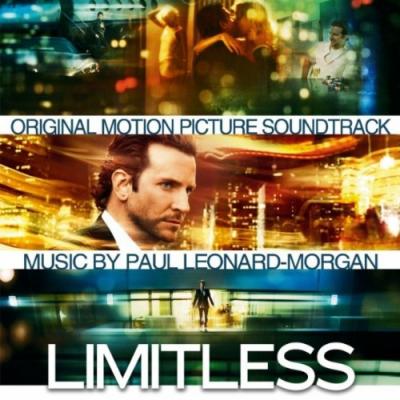
Limitless Album Cover

"Limitless" Soundtrack Lyrics

Movie • 2011

Track Listing


"Limitless (Original Motion Picture Soundtrack)" – Album Guide to Tracks and Key Scenes

Limitless official trailer frame: Eddie Morra on NZT, New York lights streaking
“Limitless” — theatrical trailer imagery, 2011

Overview

What does a brain on a miracle-pill sound like? “Limitless” answers with a glossy, motoric score by Paul Leonard-Morgan and a lean set of needle-drops that mark Eddie Morra’s jumps in status, risk, and ego. The commercial album is a score release—25 cues that track Eddie’s ascent and consequences—whereas the film itself sprinkles club, blues-rock, and catalog cuts into key beats.

The score’s palette—pulsing bass, brittle percussion, and high-register synths—mirrors the NZT “tunnel” effect the movie visualizes. Around it, placements like The Black Keys’ “Howlin’ for You,” Eric B. & Rakim’s “Don’t Sweat the Technique,” and a Rachmaninoff prelude play as chapter markers for swagger, fluency, and “look what my brain can do” bravado. Trailer marketing leaned on Kanye West’s “Power,” but the track doesn’t appear in the feature.

Trailer frame: time-slice zoom down Broadway, matching the score’s propulsive pulse
Album = Leonard-Morgan’s propulsive score; film = score + sharp, scene-coded songs.

Questions & Answers

Who composed the score and who released the album?
Paul Leonard-Morgan composed the score; the 25-track album was released by Relativity Music Group in 2011 (digital/retail).
Is the retail album the complete soundtrack?
No. It’s a score album. Several on-screen songs (e.g., The Black Keys, Eric B. & Rakim, Conway Twitty) are not part of the official score release.
Who supervised the film’s music?
Season Kent and Happy Walters received music-supervisor credits.
What’s the best-known needle-drop?
The Black Keys’ “Howlin’ for You” underscores Eddie’s post-NZT glow-up and appears again over the end credits.
Did the trailer music show up in the film?
The marketing prominently used Kanye West’s “Power”; it’s not in the feature cut.
Runtime and release?
105 minutes; U.S. theatrical release March 18, 2011.

Notes & Trivia

  • The album’s cue names (“Psyched,” “Trading Up,” “Eddie Knows What To Do”) shadow Eddie’s power curve.
  • Animal Collective were asked early on about contributing music; the band later said they declined.
  • Two supervisors are credited: Season Kent and Happy Walters.
  • The official album resides on major platforms with 25 tracks (~54 minutes).

Genres & Themes

Electro-thriller score — ticking synth arpeggios, drum programming, and sleek low end trace focus, acceleration, and crash.

Club & hip-hop needle-drops — status markers for entry into smarter rooms (“Don’t Sweat the Technique,” Jon Kennedy’s trip-hop textures).

Blues/garage rock flash — The Black Keys cue sells the confidence montage; electric swagger = new persona.

Trailer still: fast dolly through trading floor glass—a visual for the score’s momentum
Motif map: synth-pulse for cognition, needle-drops for image management.

Tracks & Scenes

“Howlin’ for You” — The Black Keys
Where it plays: Eddie bolts with the NZT stash, kits himself out (barber, suit), and blitz-writes (≈00:23). Non-diegetic. Why it matters: swagger montage—music that makes success look inevitable and addictive.

“Walking” — Ash Grunwald
Where it plays: First NZT surge cleanup and book burst (≈00:12). Non-diegetic. Why it matters: foot-down groove for the “new operating system” moment.

“Prelude in C♯ minor, Op. 3 No. 2” — Sergei Rachmaninoff
Where it plays: Eddie sits at a piano and, on NZT, plays it (≈00:24). Partly diegetic. Why it matters: show-and-tell genius beat—the pill makes skill plausible.

“Chocolate and Cheese” — Jon Kennedy
Where it plays: Talking markets with brokers (≈00:25). Non-diegetic. Why it matters: trip-hop polish for instant fluency.

“Don’t Sweat the Technique” — Eric B. & Rakim
Where it plays: Club language-flex and social high ground (≈00:25). Non-diegetic. Why it matters: the lyric is mission-statement energy: execution over mystique.

“La Boquilla (Dixone Remix)” — Bomba Estéreo
Where it plays: Night-drive victory lap (≈00:25). Non-diegetic. Why it matters: cosmopolitan shine—the world opens up.

“Athens by Night” — Matt Hirt
Where it plays: Borrowing 100k from a loan shark (≈00:27). Non-diegetic. Why it matters: shifts from glamour to risk; the soundtrack signals the cost of acceleration.

“The Way It Was” — Daniel May
Where it plays: Dinner with Lindy; détente before stakes rise (≈00:30). Source-like ambiance. Why it matters: a reset before the plot tightens.

“The Believers” — How to Destroy Angels
Where it plays: After a violent confrontation (≈00:41). Non-diegetic. Why it matters: metallic calm after shock—edge replaces euphoria.

“This My Club” — Prophit → “Jukebox” — Kidz in the Hall
Where it plays: Post-fight club rebound (≈00:42–00:44). Diegetic/club source. Why it matters: “I’m fine” denial sequence—the party keeps moving while the danger compounds.

“Yangtze Valley” — Matt Hirt
Where it plays: Mandarin banter at a restaurant (≈01:34). Source. Why it matters: the NZT flex becomes social camouflage.

Trailer note: Marketing used Kanye West’s “Power,” but it’s not in the film.

Music–Story Links

Score cues articulate velocity—every arpeggio click is a thought snapping into place. Songs articulate image—Eddie’s makeover needs a soundtrack people recognize as “arrived.” When the story pivots to peril, the needle-drops darken or drop out, and the score’s low synths take over, telegraphing that cognition without ethics is just acceleration toward a wall.

Trailer coda: Eddie’s thousand-yard stare; the score thins to a glassy hum
By the end, the pulse is still there—only the meaning has changed.

How It Was Made

Neil Burger directed; Leslie Dixon adapted Alan Glynn’s novel The Dark Fields. Paul Leonard-Morgan’s score was built around modular synth pulses and tight percussion; the soundtrack album (Relativity Music Group) collects 25 cues. Music supervision is credited to Season Kent and Happy Walters; their selections trace Eddie’s climb from shabby to chic and then to compromised.

Reception & Quotes

Critics called out the sleek sound design and the clever use of a few high-impact songs in a largely score-driven film.

“The Black Keys’ ‘Howlin’ for You’ is used rather well.” Reactor review

Additional Info

  • Score album: 25 tracks (~54 min), widely available on streaming stores.
  • Well-documented film songs include Versus (“Cicada”), Phosphorescent, Conway Twitty, Ash Grunwald, Jon Kennedy, Eric B. & Rakim, Bomba Estéreo, How to Destroy Angels, Kidz in the Hall, Matt Hirt, Daniel May.
  • The TV spinoff (2015) followed years later with different music personnel.
  • Box office: ~$162M worldwide on a ~$27M budget.

Technical Info

  • Title: Limitless (Original Motion Picture Soundtrack)
  • Year / Type: 2011 / Original score album + licensed songs in film
  • Composer: Paul Leonard-Morgan
  • Music Supervision: Season Kent; Happy Walters
  • Label (album): Relativity Music Group (digital/retail)
  • Selected placements (film): “Howlin’ for You” (The Black Keys) — 00:23 glow-up; “Walking” (Ash Grunwald) — 00:12 first surge; “Don’t Sweat the Technique” (Eric B. & Rakim) — club flex; Rachmaninoff Prelude — piano scene; “The Believers” (How to Destroy Angels) — post-fight; “Jukebox” (Kidz in the Hall) — club; “Yangtze Valley” (Matt Hirt) — restaurant.
  • Release: U.S. theatrical March 18, 2011; runtime 105 min

Canonical Entities & Relations

SubjectRelationObject
Limitless (film, 2011)musicByPaul Leonard-Morgan
Limitless (Original Motion Picture Soundtrack)recordLabelRelativity Music Group
Season KentmusicSupervisorOfLimitless (film)
Happy WaltersmusicSupervisorOfLimitless (film)
The Black Keysperformed“Howlin’ for You” (film use)
Eric B. & Rakimperformed“Don’t Sweat the Technique” (film use)
How to Destroy Angelsperformed“The Believers” (film use)
Bomba Estéreoperformed“La Boquilla (Dixone Remix)” (film use)

Sources: Apple Music album page (label, 25 tracks); Discogs listings (track titles); IMDb/Moviefone/Plex credits (music supervisors, composer); Wikipedia (film basics, composer); SoundtrackRadar (scene-by-scene song placements with timestamps); Reactor review noting “Howlin’ for You”; trailer uploads (YouTube official).

November, 13th 2025


A-Z Lyrics Universe

Lyrics / song texts are property and copyright of their owners and provided for educational purposes only.