Soundtracks:  A B C D E F G H I J K L M N O P Q R S T U V W X Y Z #


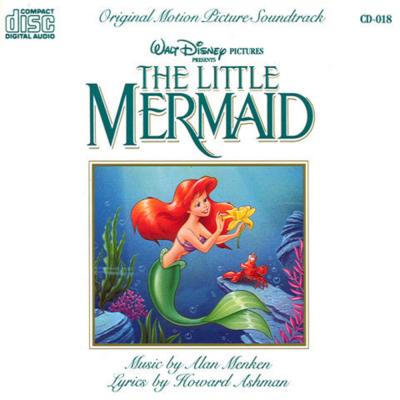
Little Mermaid Album Cover

"Little Mermaid" Soundtrack Lyrics

Musical • 1989

Track Listing


"The Little Mermaid (Original Motion Picture Soundtrack, 1989)" – Album Guide to Tracks and Key Scenes

1989 trailer thumbnail for Disney’s The Little Mermaid showing Ariel gazing upward from undersea
The Little Mermaid — classic trailer imagery, 1989

Overview

What if a Broadway show burst out of a fairy tale and dove straight into the ocean? The 1989 soundtrack to The Little Mermaid answers with showstoppers built for character, not just spectacle. Composer Alan Menken and lyricist Howard Ashman fire off a suite of songs—calypso, torch, patter—that define Ariel, Sebastian, and Ursula before the plot even crests the first wave.

The album dropped on Walt Disney Records in October 1989 and pairs the film’s songs with Menken’s symphonic score (orchestrations by Thomas Pasatieri; session conducting by J.A.C. Redford). The package went multi-platinum and swept major music awards for animation that year (Best Original Score; “Under the Sea” taking Best Original Song). As reported by industry databases and label histories, later reissues expanded with demos and cue merges, culminating in archival editions that reveal the film’s detailed cue map.

Trailer still highlighting Ariel’s grotto as strings and harp outline her theme
Broadway DNA beneath the waves; pop instincts on the surface

Questions & Answers

Who wrote the songs and score?
Alan Menken composed the music; Howard Ashman wrote the lyrics. Menken also composed the underscore.
When was the original album released?
October 1989 on Walt Disney Records; subsequent reissues added demos and remasters.
Which song won the Oscar?
“Under the Sea” won Best Original Song; Menken won Best Original Score.
Is the music style closer to Broadway or pop?
Broadway-first writing with pop-savvy hooks: character-led numbers, reprises, and leitmotifs stitched by orchestral score.
Are there later archival/expanded editions?
Yes—box sets and legacy editions compile work tapes, demos, and merged cues from the original sessions.
Any official tracklist differences across editions?
Core songs are consistent; special editions add demos, alternates, and additional score cues.

Notes & Trivia

  • The album’s RIAA certification reached 6× Platinum; the film’s revival kicked off the so-called Disney Renaissance.
  • “Under the Sea” also earned a Grammy; the soundtrack won Best Recording for Children.
  • The orchestrations emphasize character motifs: horn for Triton, oboe for Eric, darker minor writing for Ursula.
  • Archival cue sheets group endgame material under “The Truth” and related merged tracks in legacy editions.
  • A later live-action adaptation (2023) revised lyrics in two numbers; the 1989 originals remain unchanged on this album.

Genres & Themes

Broadway showtune craft powers Ariel’s longing (“Part of Your World”) and Ursula’s villainy (a campy music-hall patter in “Poor Unfortunate Souls”). Calypso and Caribbean pop color Sebastian’s worldview—sprung rhythms, steel-drum inflections—most vivid in “Under the Sea” and “Kiss the Girl.” Symphonic film score binds it: strings and woodwinds trace innocence; brass and timpani frame parental authority; low winds and organ shadow Ursula’s deals.

Trailer montage: coral blues and quick cuts while calypso rhythms hint at Sebastian’s numbers
Styles map to meaning: calypso for community, balladry for desire, minor-key swagger for temptation

Tracks & Scenes

Scene placements use the film’s cue list and reputable song logs; minute marks are approximate and for orientation.

“Fathoms Below” — Ship’s Chorus
Scene: Sailors chant about merfolk as the camera descends beneath the waves (opening, ~00:01). Non-diegetic chorus over transition.
Why it matters: Frames two worlds—sea myth vs. human deck—before Ariel’s entrance.

“Daughters of Triton” — The Mersisters
Scene: Royal concert where Ariel misses her cue (~00:05). Diegetic performance in Triton’s court.
Why it matters: One joke, one character beat: Ariel’s absence defines her curiosity and rule-bending.

“Part of Your World” — Ariel (Jodi Benson)
Scene: In the grotto, Ariel sings her thesis of desire (~00:15). Non-diegetic solo that plays like inner monologue.
Why it matters: The “I Want” song that resets modern Disney; melody and lyric fuse character with motive.

“Part of Your World (Reprise)” — Ariel
Scene: After saving Eric, she vows to join his world on the shore (~00:25). Non-diegetic, wind-swept shore visuals.
Why it matters: Stakes go from fantasy to vow; the key change lifts resolve.

“Under the Sea” — Sebastian (Samuel E. Wright)
Scene: Sebastian sells the joys of home after Triton’s warning (~00:31). Diegetic/semi-diegetic production number in the reef.
Why it matters: Comic persuasion via calypso; wins the Oscar and momentarily stays Ariel’s restlessness.

“Poor Unfortunate Souls” — Ursula (Pat Carroll)
Scene: In the sea witch’s lair, Ursula pitches her contract (~00:41–00:46). Diegetic cabaret-style spiel with magical underscoring.
Why it matters: Seduction by rhetoric; groove, rhyme, and visual business make the con feel inevitable.

“Les Poissons” — Chef Louis (René Auberjonois)
Scene: In Eric’s kitchen, Louis attempts haute cuisine on Sebastian (~00:52). Diegetic slapstick solo.
Why it matters: Comic breather that flips predator–prey dynamics; a cult favorite.

“Kiss the Girl” — Sebastian & chorus
Scene: Gondola scene at the lagoon (~00:59). Diegetic serenade with critter backup and soft lantern light.
Why it matters: Consent-aware romance framed as gentle nudge; harmonies do the matchmaking while Ariel is voiceless.

“Vanessa’s Song” — Vanessa (Ursula in disguise)
Scene: Ariel sees “Vanessa” preening with Ariel’s stolen voice (~01:07). Diegetic vocal tease in the mirror.
Why it matters: A chilling mini-reprise that weaponizes Ariel’s own timbre against her.

“Poor Unfortunate Souls (Reprise)” — Ursula
Scene: The wedding ship chaos as Ursula regains control (~01:15). Diegetic-to-score hybrid during the storming interruption.
Why it matters: Villain victory lap before the final reversal.

“Happy Ending” — Ensemble
Scene: Post-battle resolution and sea–land union (~01:20+). Non-diegetic celebratory finale.
Why it matters: Brings back main motifs to seal character arcs.

Key score moments worth noting: “The Storm” (shipwreck rescue, ~00:22), “Destruction of the Grotto” (Triton’s wrath, ~00:35), “Tour of the Kingdom” (human-world montage, ~00:57). Timepoints reflect common scene logs.

Music–Story Links

Every principal song is a plot pivot. Ariel’s “I Want” number motivates the surface obsession; Sebastian’s calypso argues the counter-thesis (community, safety); Ursula’s cabaret codifies the price of desire. The lagoon waltz translates consent and connection into arrangement: call-and-response woodwinds, whispering chorus, and a cadence that literally leans toward a kiss.

Score threads these choices. Triton’s horn motif connotes authority and protection; Eric’s oboe line signals warmth and steadiness. When Ursula moves, harmony turns minor and textures thicken—low winds, organ, chromatic slides—so the contract never sounds free.

Closing trailer beat with Ariel and Eric on the shore as the end-title motif swells
Leitmotifs knit character decisions into one tide: want → bargain → consequence → choice

How It Was Made

Menken and Ashman—fresh from Off-Broadway success—wrote for character first, demoing numbers before full story lock. Orchestrator Thomas Pasatieri expanded the Broadway-minded writing for symphonic palette; conductor J.A.C. Redford led the recording sessions. According to label notes and cue lists, the finished film preserves their theater logic: openings, reprises, and a finale with motif recalls. The 1994 Music Behind the Magic box and later Legacy editions document the process with work tapes and cue merges.

Reception & Quotes

“Menken and Ashman reinvented the animated musical with one yearning ballad and a calypso showstopper.” Album guide note
“‘Under the Sea’ is pure joy—arrangement as worldbuilding.” Contemporary critic summary
“The underscore breathes between jokes and danger; it’s never filler.” Orchestration notes

Additional Info

  • Label: Walt Disney Records; original release October 1989; multiple reissues (1997 re-release; archival/Legacy editions).
  • Awards haul includes Oscar wins (Song, Score) and RIAA multi-platinum certifications.
  • IMDB logs include “Vanessa’s Song,” a brief in-story vocal not always listed on early albums.
  • Cue nomenclature (e.g., 9m1–9m5 under “The Truth”) appears in score paperwork and later releases.
  • Live-action (2023) altered lyrics in two songs; those changes do not affect this 1989 album.

Technical Info

  • Title: The Little Mermaid — Original Motion Picture Soundtrack
  • Year: 1989
  • Type: Songs + original score
  • Composers/Lyricists: Music by Alan Menken; lyrics by Howard Ashman
  • Orchestrations / Conducting: Thomas Pasatieri (orchestrations); J.A.C. Redford (session conductor)
  • Label: Walt Disney Records
  • Awards: Academy Awards (Best Original Song “Under the Sea”; Best Original Score)
  • Notable placements described: “Part of Your World,” “Under the Sea,” “Poor Unfortunate Souls,” “Kiss the Girl,” “Les Poissons,” “Vanessa’s Song.”
  • Availability: Streaming and physical (various reissues and legacy editions)

Canonical Entities & Relations

SubjectVerbObject
The Little Mermaid (1989 film)featuresOriginal songs by Alan Menken & Howard Ashman
The Little Mermaid (1989 film)includes score byAlan Menken
Walt Disney RecordsreleasedThe 1989 original soundtrack
Thomas PasatieriorchestratedScore for the film
J.A.C. RedfordconductedSoundtrack recording sessions
“Under the Sea”wonAcademy Award for Best Original Song (1989)

Sources: Wikipedia soundtrack & film entries; MusicBrainz release group; Discogs master; IMDb Soundtracks; WhatSong scene log.

November, 13th 2025

'Little Mermaid' on Wikipedia and IMDb
A-Z Lyrics Universe

Lyrics / song texts are property and copyright of their owners and provided for educational purposes only.