Soundtracks:  A B C D E F G H I J K L M N O P Q R S T U V W X Y Z #


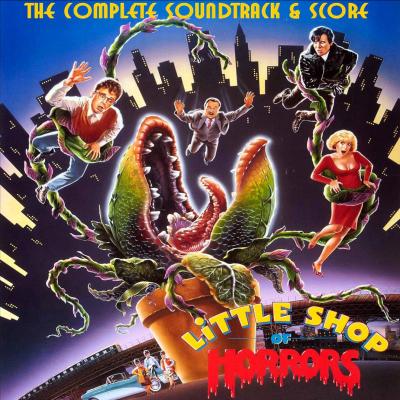
Little Shop of Horrors Album Cover

"Little Shop of Horrors" Soundtrack Lyrics

Musical • 2003

Track Listing


"Little Shop of Horrors (The New Broadway Cast Recording, 2003)" – Album Guide to Tracks and Key Scenes

Little Shop of Horrors stage trailer still with Audrey II looming and the Skid Row trio under neon light
Little Shop of Horrors — Broadway revival promo imagery, 2003

Overview

What changes when a famously “intimate” Off-Broadway musical finally hits Broadway? The 2003 revival answers with a bigger band, a slicker cast album, and puppetry scaled for the Virginia Theatre. The New Broadway Cast Recording on DRG Records documents the Jerry Zaks–directed production with Hunter Foster (Seymour), Kerry Butler (Audrey), Douglas Sills (Orin), Rob Bartlett (Mushnik), and Michael-Leon Wooley as the voice of Audrey II.

The album folds the show’s 60s-pop pastiche (“Skid Row,” “Somewhere That’s Green,” “Suddenly, Seymour”) and the doo-wop Greek-chorus into punchier orchestrations. It also preserves revival tweaks: an expanded title song, a beefed-up “You Never Know” with a WSKID radio intro, an adjusted Act I finale, and an Entr’acte before “Call Back in the Morning.” The result is faithful to Ashman & Menken’s blueprint, just dressed for a bigger house.

Trailer still: the Skid Row trio framed in spotlights while Audrey II’s vines creep from the wings
Same dark joke, bigger bite: the revival’s sound thickens reeds, brass, and percussion

Questions & Answers

Who wrote the music and lyrics?
Music by Alan Menken; lyrics and book by Howard Ashman.
When and where did the 2003 revival open?
October 2, 2003 at Broadway’s Virginia Theatre; it ran through August 22, 2004.
Who voices Audrey II on the 2003 cast album?
Michael-Leon Wooley provides the plant’s voice on Broadway and on the recording.
What label released the album and when was it recorded?
DRG Records recorded the album on September 15, 2003 and released it October 21, 2003.
What’s musically different in this revival?
An expanded title number, a “WSKID” radio intro before “You Never Know,” revised Act I finale, and fuller orchestrations.
Who handled orchestrations and music direction?
Danny Troob orchestrations; Henry Aronson music director/conductor.
Who built/manipulated Audrey II for Broadway?
Original designer Martin P. Robinson led the new puppet build and operation; Henson veterans assisted.

Notes & Trivia

  • Although a first-time Broadway run, awards categorized it as a “Revival” due to earlier Off-Broadway and film success.
  • The cast album adds five early demo rarities (“A Little Dental Music,” “The Worse He Treats Me,” “We’ll Have Tomorrow,” “Bad,” “I Found a Hobby”).
  • Joey Fatone later replaced Hunter Foster during the Broadway run.
  • Wooley’s plant voice drew raves for its cavernous, gospel-tinged heft.

Genres & Themes

Early-60s pop/doo-wop/Motown power the street-corner choruses and patter; torch-ballad grammar frames Audrey’s fantasies; rock-R&B muscle sells Audrey II’s temptations. Fuller reeds, trumpets, and percussion in 2003 add Broadway punch without losing the back-alley swing.

Promo montage: Skid Row stoops, WSKID radio bump, and Audrey II’s maw snapping under stage lights
Street-corner doo-wop meets brass-topped Broadway sheen

Tracks & Scenes

Album-backed placements; diegetic = performed in-world on stage. Act/scene context stands in for timestamps.

“Prologue / Little Shop of Horrors” — Urchins (Chiffon, Crystal, Ronnette)
Scene: Alleyway omen and title sting; the trio set the rules of Skid Row (Act I, opening; non-diegetic chorus that frames the world).
Why it matters: The Greek-chorus engine. In 2003, the title song is the expanded film version, giving the opener extra snap.

“Skid Row (Downtown)” — Company
Scene: Seymour and Audrey grind through their morning; storefronts roll by; Mushnik fumes (Act I). Non-diegetic ensemble that bleeds into scene action.
Why it matters: Defines the stakes: no money, no future—so a miracle plant can rewrite fate.

“Da-Doo” — Urchins & Seymour
Scene: Seymour recounts buying the plant after a strange eclipse (Act I). Semi-diegetic story-song.
Why it matters: The urban legend origin, sung like a corner-store myth.

“Grow for Me” — Seymour
Scene: Late-night plea at the workbench (Act I). Non-diegetic soliloquy until the first blood-prick turns it diegetic-ish.
Why it matters: The pact begins, underscored by the tiniest, funniest “feeding.”

“Somewhere That’s Green” — Audrey
Scene: Audrey imagines a safe, suburban life (Act I). Non-diegetic ballad.
Why it matters: The show’s tender heart; the 2003 album preserves Butler’s luminous, lightly comic reading.

“Dentist!” — Orin & Company
Scene: Orin’s leather-jacket manifesto in his office (Act I). Diegetic performance within the world of the scene.
Why it matters: A villain song that explains Audrey’s bruises and Seymour’s dread with a grin and a drill.

“Mushnik and Son” — Mushnik & Seymour
Scene: Mushnik adopts Seymour after the plant draws crowds (Act I). Non-diegetic klezmer-flavored two-hander.
Why it matters: Family by convenience—until the plant raises a darker option.

“Feed Me (Git It)” — Audrey II & Seymour
Scene: The plant talks; a nightclub-slick voice tempts Seymour to murder (late Act I). Non-diegetic dialogue-song that becomes a deal.
Why it matters: The pivot. Wooley’s bass makes the bribe irresistible.

“You Never Know / WSKID” — Urchins & Company
Scene: Radio-show bump and crowd frenzy as Audrey II brings fame (Act I). Diegetic radio intro + production number.
Why it matters: A 2003 expansion that plugs the show into a louder, media-savvy Skid Row.

“Now (It’s Just the Gas)” — Seymour & Orin
Scene: The botched nitrous setup in Orin’s office (end of Act I). Non-diegetic patter spiraling into a blackout.
Why it matters: Menken’s comedic counterpoint at its cruelest—and funniest.

“Suddenly, Seymour” — Seymour & Audrey
Scene: Confession and first kiss in the shop (Act II). Non-diegetic duet.
Why it matters: The emotional peak; harmony equals courage.

“Suppertime” — Audrey II & Company
Scene: The plant advances on Audrey; the trio warn from the shadows (Act II). Non-diegetic groove that plays like a horror chant.
Why it matters: The thriller turn; Motown menace with teeth.

“Finale: Don’t Feed the Plants” — Company
Scene: The cautionary epilogue with creeping vines and smiling blossoms (curtain). Non-diegetic moral.
Why it matters: The dark punchline remains intact on Broadway: ambition eats.

Music–Story Links

Every style choice doubles as character logic. Audrey’s ballads are lighter than air because her dreams are; Orin’s rockabilly sneer is pain set to a backbeat; Audrey II’s R&B growl sells the American dream as a contract. When the revival widens the band, those contrasts sharpen—Skid Row feels bigger, the plant sounds richer, and the moral lands harder.

Closing trailer frame with Audrey II’s blossom grinning as the company readies the finale
Temptation sings in major keys; consequences answer with brass and bite

How It Was Made

The Broadway transfer followed a turbulent Florida tryout and a full reset under director Jerry Zaks. Martin P. Robinson returned to design and operate new Audrey II builds with Henson veterans. DRG recorded the cast on September 15, 2003; the CD streeted October 21 with five archival demos appended. Orchestrations expanded from the classic five-piece combo to include reeds, trumpets, and additional percussion for the larger venue (Danny Troob orchestrations; Henry Aronson music director). As reported by Playbill, DRG produced the set; DRG’s Hugh Fordin is credited as album producer.

Reception & Quotes

“The CD has Broadway size without sanding off the Off-Broadway snap.” Album guide note
“Wooley’s Audrey II—molasses and menace in equal measure.” Review capsule
“Zaks’s production keeps the jokes sharp and the beat ruthless.” Critic summary

Additional Info

  • The Broadway venue was the Virginia Theatre (renamed the August Wilson Theatre in 2005).
  • Foster received a 2004 Tony nomination (Best Actor in a Musical).
  • The album runs ~78 minutes across 27 tracks (streaming editions mirror the DRG CD).
  • The urchins’ mic’d blend is tighter on the album than many earlier releases, foregrounding counter-melodies.
  • National tour launched August 10, 2004 with Anthony Rapp as Seymour.

Technical Info

  • Title: Little Shop of Horrors — The New Broadway Cast Recording
  • Year: 2003
  • Type: Original Broadway (revival) cast album
  • Music/Lyrics/Book: Alan Menken / Howard Ashman
  • Director (revival): Jerry Zaks
  • Lead cast: Hunter Foster (Seymour), Kerry Butler (Audrey), Rob Bartlett (Mushnik), Douglas Sills (Orin), Michael-Leon Wooley (Audrey II)
  • Orchestrations / Music Director: Danny Troob / Henry Aronson
  • Label / Producer: DRG Records / Hugh Fordin
  • Recording / Release: Sept 15, 2003 / Oct 21, 2003
  • Venue: Virginia Theatre, Broadway
  • Notable revival changes on album: Expanded title song; “You Never Know (WSKID)” intro; revised Act I finale; Entr’acte before “Call Back in the Morning.”

Canonical Entities & Relations

SubjectVerbObject
Little Shop of Horrors (2003 Broadway revival)starsHunter Foster; Kerry Butler; Rob Bartlett; Douglas Sills; Michael-Leon Wooley
Little Shop of Horrors (The New Broadway Cast Recording)released byDRG Records
Danny Trooborchestrated2003 Broadway revival
Henry Aronsonmusic directed2003 Broadway revival/album
Martin P. Robinsondesigned/operatedAudrey II puppets (Broadway 2003)
Jerry ZaksdirectedBroadway 2003 revival

Sources: Playbill news & production page; IBDB production/cast entries; Apple Music album page; Discogs release credits; Wikipedia musical history; CastAlbumsDB entry; MTI show history; contemporary trailer uploads.

November, 13th 2025


A-Z Lyrics Universe

Lyrics / song texts are property and copyright of their owners and provided for educational purposes only.