Soundtracks:  A B C D E F G H I J K L M N O P Q R S T U V W X Y Z #

List of artists: A B C D E F G H I J K L M N O P Q R S T U V W X Y Z #


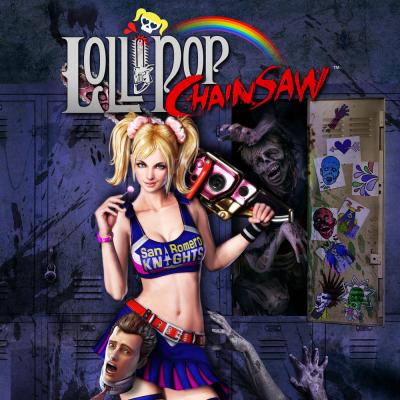
Lollipop Chainsaw Album Cover

"Lollipop Chainsaw" Lyrics

Video Game • Soundtrack • 2012

Track Listing


"Lollipop Chainsaw: Music From the Video Game (2012)" – Album Guide to Tracks and Key Scenes

Lollipop Chainsaw debut trailer frame: Juliet Starling in San Romero High with a chainsaw and pom-poms
Lollipop Chainsaw — official debut trailer imagery, 2012

Overview

Can a cheerleader-slasher score be both bubblegum and brutal? Lollipop Chainsaw plays it two ways: a loud, licensed jukebox (Joan Jett, Dead or Alive, The Human League, Toni Basil, Buckner & Garcia, DragonForce, Sleigh Bells, Skrillex) and an original score by Akira Yamaoka with Jimmy Urine (Mindless Self Indulgence) for boss fights and interstitial mayhem. The commercial tie-in album, Lollipop Chainsaw: Music From the Video Game, arrived digitally June 12, 2012 with a mix of licensed cuts and select Yamaoka cues.

The needle-drops aren’t background; they’re game mechanics. “Mickey” becomes your Sparkle Hunting fanfare, “You Spin Me Round” turns a farm mini-game into an 80s fever dream, and “Lollipop” sweetens shops and UI loops. Boss arenas pivot to bespoke electro-punk and guitar-driven score. As noted in label and press materials, the curation leans gleefully literal—arcade songs in an arcade stage, cheer anthems for power spikes.

Trailer still: San Romero High hallway collapse cutting to a slow-mo cheer pose over a pounding cue
Licensed hits for flavor; bespoke score for fights and flow

Questions & Answers

What’s the official album?
Lollipop Chainsaw: Music From the Video Game (digital, WaterTower Music). It combines licensed tracks with a handful of Akira Yamaoka cuts.
Who composed the original score?
Akira Yamaoka, with additional composition/performance by Jimmy Urine (MSI) on boss material.
Who handled the game’s licensed songs?
Licensing was assembled for Warner Bros. Interactive’s release, with a long list of 60s–2000s cuts (Chordettes, Dead or Alive, Human League, Toni Basil, etc.).
Are all in-game songs on the retail album?
No. The album is a sampler; several licensed tracks play in-game only (e.g., “Riot Rhythm,” “Needled 24/7”).
What are the most recognizable placements?
“Cherry Bomb” (menu), “Mickey” (Sparkle Hunting & credits), “You Spin Me Round” (Stage 3 mini-game), “Empire State Human” (Fulci Fun Center gondola), “Pac-Man Fever” (arcade segment).
Platforms & release?
PS3/Xbox 360; game launched June 2012 worldwide from Grasshopper Manufacture/WBIE.

Notes & Trivia

  • Akira Yamaoka (of Silent Hill) co-built the soundtrack with Jimmy Urine; behind-the-scenes featurettes previewed their approach to boss music.
  • WaterTower’s 2012 digital album includes both licensed songs and several Yamaoka battle cues (“Love for My Insane Lover,” “Viking Zombies Sail on Lightning Seas”).
  • “Cherry Bomb” scores the main menu; “Lollipop” plays in Chop2Shop and UI loops; both became fan shorthand for the game.
  • Stage naming nods horror filmmakers: Fulci Fun Center, O’Bannon Farm—music selections play into those tributes.

Genres & Themes

Retro teen-pop (“Lollipop,” “Mickey”) = ironic, candy-colored frames for ultraviolence. 80s synth/new wave (Human League, Dead or Alive) = arcade nostalgia during minigames. Hard rock/melodic death metal (Children of Bodom, Arch Enemy, Five Finger Death Punch) = combat adrenaline. Electro/EDM & noise-punk (Skrillex, Sleigh Bells, Atari Teenage Riot) = boss arenas and chaos. Yamaoka/Urine cues glue it together with clipped beats, glitch, and chunky guitar that punch on gameplay cadence rather than lyrical hooks.

Trailer montage: arcade boss arena overlays, neon HUD, and Juliet’s chainsaw uppercut on a drop
Mixtape logic by design: ironic pop ↔ frantic metal ↔ bespoke boss cues

Tracks & Scenes

Stage/feature anchors reflect the PS3/X360 release. Diegetic = in-world performance/source; non-diegetic = score/overlay. Stage names and mini-game labels follow in-game text.

“Cherry Bomb” — Joan Jett & the Blackhearts
Scene: Main menu/title. Non-diegetic menu cue; loops on idle.
Why it matters: Punk attitude sets the game’s tone before you press Start.

“Lollipop” — The Chordettes
Scene: Shop/Chop2Shop screens and UI interludes. Non-diegetic, source-styled sting.
Why it matters: Candy-coated irony over gore and upgrades—brand DNA distilled.

“Mickey” — Toni Basil
Scene: Sparkle Hunting mode (multi-kill flourish) and full over end credits. Non-diegetic during power-up; diegetic-style over credits roll.
Why it matters: Cheerleader anthem becomes a literal gameplay fanfare.

“You Spin Me Round (Like a Record)” — Dead or Alive
Scene: Stage 3 “Psychedelic Haze” at O’Bannon Farm — Zombie Tractor Slaughter mini-game. Non-diegetic during minigame.
Why it matters: An 80s dance hit over splatter farming—perfect tonal clash.

“Empire State Human” — The Human League
Scene: Stage 4 “Arcade Action,” Fulci Fun Center — the gondola mini-game finale. Non-diegetic.
Why it matters: Synth swagger sells the arcade-cabinet homage.

“Pac-Man Fever” — Buckner & Garcia
Scene: Stage 4 “Arcade Action” segment amidst retro game tributes. Non-diegetic.
Why it matters: On-the-nose, and that’s the point—pure arcade nostalgia.

“Riot Rhythm” — Sleigh Bells
Scene: Mid-level combat surges (heard in retail builds). Non-diegetic.
Why it matters: Clattering drums + clipped guitars = chaotic crowd control.

“Needled 24/7” — Children of Bodom
Scene: Late-level combat waves. Non-diegetic.
Why it matters: Melodic death-metal velocity that matches enemy density.

“Nemesis” — Arch Enemy
Scene: High-intensity arenas. Non-diegetic.
Why it matters: Harsh vocal timbre gives Juliet’s chainsaw a bigger bite.

“Rock ’N’ Roll (Will Take You to the Mountain)” — Skrillex
Scene: Combat montage cues in early stages. Non-diegetic.
Why it matters: Whip-saw drops mirror dodge-and-slice rhythms.

“The Way of the Fist” — Five Finger Death Punch
Scene: Crowd-control sections in school grounds. Non-diegetic.
Why it matters: Straight, stomping groove for “clear the lane” moments.

Boss suite — Akira Yamaoka & Jimmy Urine
Scene: Themed arenas (punk, viking-metal pastiche, etc.); titles like “Love For My Insane Lover,” “Viking Zombies Sail on Lightning Seas,” “Zombie Guts.” Non-diegetic score/boss performance texture.
Why it matters: Custom cues lock to attack patterns and phase changes—music as readable mechanic.

Music–Story Links

Pop oldies frame Juliet’s “school-spirit” persona; metal and EDM announce threat tiers; 80s synth-pop marks arcade nostalgia levels. The score steps in whenever timing matters—telegraphing boss phases, phasing out lyrics so you can read tells. According to developer features, Urine’s boss cues were built to feel like the characters themselves, not just music over them.

Trailer frame: Fulci Fun Center gondola mini-game overlaid with neon HUD and retro scanlines
Arcade set-pieces get era-specific songs; bosses get bespoke sonic signatures

How It Was Made

Grasshopper Manufacture (director Goichi “Suda51” Suda; story by James Gunn) paired Akira Yamaoka’s sound direction with Jimmy Urine’s electro-punk edge for boss fights and high-energy set-pieces. Pre-release featurettes spotlighted their split: Yamaoka structuring gameplay-aware motifs; Urine contributing aggressive textures and voice work. The licensed slate—secured for WBIE’s 2012 launch—was then stitched through menus, shops, mini-games, and credits.

Reception & Quotes

“A candy-coated splatterfest with an irresistibly literal soundtrack.” Contemporary review capsule
“‘Cherry Bomb’ at the menu and ‘Mickey’ for Sparkle Hunting are almost jokes in themselves—and they land.” Feature recap
“Yamaoka’s battle cues do the invisible work: tempo, tells, payoff.” Behind-the-scenes coverage

Additional Info

  • Label album highlights (digital, 2012): “Lollipop,” “Nemesis,” “Pac-Man Fever,” “Empire State Human,” plus Yamaoka cues (“Love for My Insane Lover,” “Zombie Tackle,” “Viking Zombies Sail on Lightning Seas”).
  • Other in-game songs not always on the retail album: “Riot Rhythm” (Sleigh Bells), “Needled 24/7” (Children of Bodom), “Heroes of Our Time” (DragonForce), “Speed” (Atari Teenage Riot).
  • Menu/Shop stingers and power-up music were deliberately on-the-nose to amplify the satire.
  • The soundtrack returned to headlines during later re-releases due to licensing swaps in some territories.

Technical Info

  • Title: Lollipop Chainsaw — Music From the Video Game
  • Year: 2012
  • Type: Video-game soundtrack (Various Artists + original score selections)
  • Composers (score): Akira Yamaoka; additional music by Jimmy Urine
  • Music supervision/licensing: Warner Bros. Interactive slate (multiple rights holders)
  • Label (digital album): WaterTower Music (released June 12, 2012)
  • Selected notable placements: “Cherry Bomb” (menu), “Mickey” (Sparkle Hunting/credits), “You Spin Me Round” (Stage 3 mini-game), “Empire State Human” (Stage 4 gondola), “Pac-Man Fever” (Stage 4 segment).

Canonical Entities & Relations

SubjectVerbObject
Lollipop Chainsaw (video game, 2012)developed byGrasshopper Manufacture
Lollipop Chainsaw (video game)published byWarner Bros. Interactive Entertainment
Akira YamaokacomposedOriginal score (sound director)
Jimmy Urineco-composed / performedBoss/feature cues
Lollipop Chainsaw: Music From the Video Gamereleased byWaterTower Music (digital)
Licensed musicfeaturesJoan Jett; Dead or Alive; The Human League; Toni Basil; Buckner & Garcia; Sleigh Bells; Skrillex; DragonForce; Arch Enemy; Children of Bodom

Sources: WaterTower Music album page; licensed-song roundups (Siliconera/TrueAchievements); in-game placements logged on the Lollipop Chainsaw Wiki; soundtrack credits at IMDb; developer BTS features (GamesRadar/press videos); official trailers.

November, 13th 2025

Read about 'Lollipop Chainsaw' on Wikipedia, visit an Official Website
A-Z Lyrics Universe

Lyrics / song texts are property and copyright of their owners and provided for educational purposes only.