Soundtracks:  A B C D E F G H I J K L M N O P Q R S T U V W X Y Z #


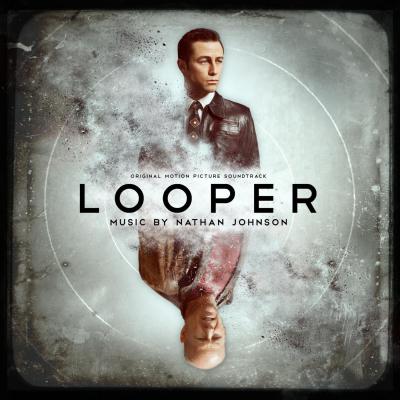
Looper Album Cover

"Looper" Soundtrack Lyrics

Movie • 2012

Track Listing


"Looper (Original Motion Picture Soundtrack)" – Album Guide to Tracks and Key Scenes

Looper 2012 official trailer still with Joseph Gordon-Levitt aiming a gun
Looper (2012) movie soundtrack mood starts right in the trailer.

Overview

What does time travel sound like when it is built from fans, gun clicks and slamming doors instead of violins and horns? The score to Looper answers that question with a mix of scrapyard rhythm and delicate melody. Nathan Johnson’s music turns a grim time-travel thriller into something strangely tender, wrapping the violence in a haze of ghostly pulses and distant metallic echoes.

Across the film, the soundtrack behaves less like traditional “themes for characters” and more like a living environment. The found-sound percussion clatters around Joe’s world like loose machinery, while long, hovering tones stretch over farm fields and city alleys. One simple main theme sits buried inside this texture and surfaces at key moments — Joe’s routines, his memories, and finally his last decision — so the music feels as if the story is compressing itself into a single looping phrase.

Critics often singled the score out as one of the film’s secret weapons: ambient and atmospheric but also muscular enough to hold the action together. Several year-end lists of 2012 film music put Looper near the top, and the International Film Music Critics Association later named Johnson Breakthrough Composer of the Year for this work. The soundtrack is one of those cases where a mid-budget genre film ends up with a sonically ambitious score usually reserved for art-house experiments.

In terms of genre, the album leans on experimental, ambient and industrial palettes, with a small orchestra threaded through. The industrial loops and processed noise mirror the decaying urban future; ambient swells and sustained strings mark the film’s time-travel disorientation; while piano and celeste lines carry the human side — Sara and Cid on the farm, Joe trying to imagine a different future. The licensed songs pull in other flavours: deep soul, British folk-rock, country ballads and lounge jazz. Each style tags a specific human corner of this world — intimacy with Suzie, melancholy in the diner, fatalism over the credits.

How It Was Made

Composer Nathan Johnson had already scored Rian Johnson’s Brick and The Brothers Bloom, but the brief for Looper was different: the music had to feel like it grew out of this particular future. Instead of starting with melodies, he started with microphones. He went to New Orleans, where much of the film was shot, and recorded anything with an interesting sound — industrial fans, doors, guns, treadmills, street ambience, odd instruments like a Marxophone. Back in the studio he and frequent collaborator Ryan Lott (Son Lux) turned these recordings into playable instruments and drum kits.

In one interview Johnson describes the appeal of these recordings as “imperfection”: every slam or spin comes with tiny variations, so when those are pitched and sequenced into rhythms, the music feels both mechanical and slightly alive. He and Lott even recorded the mechanical noises of Kid Blue’s “gat” revolver, turning its hammer and cylinder into percussion patterns that echo the film’s gunplay without sounding like literal effects.

Traditional instruments still sit in the mix. The Magik*Magik Orchestra provides strings and horns; there is piano, celeste and some acoustic percussion. But these are often stripped down — a single celeste playing the main theme, a thin piano figure barely poking through the drones — so the orchestral world feels fragile against the heavy found-sound scaffolding. Johnson has said there is essentially one core theme that represents both young and old Joe, stretched and re-coloured across the score rather than a full set of character leitmotifs.

Production-wise, the album went through a few incarnations. It first appeared as a 19-track digital release on Johnson’s own label Cut Narrative in early October 2012, then as an expanded CD (limited to a few thousand copies) on La-La Land Records with extra cues and film mixes. Later, boutique label Mondo issued a double-LP on heavyweight vinyl, packaged in a gatefold sleeve and a burlap-style bag printed with the film’s iconic gold bars. For a relatively small film, Looper ended up with the kind of deluxe soundtrack treatment usually reserved for established franchises.

Looper soundtrack themed artwork echoing gold bars and dystopian cityscape
Vinyl and CD editions turned the Looper score into a collectible object.

Tracks & Scenes

Below are key songs and score cues, tied to specific scenes. Times are approximate and refer to the feature film, not the album running order.

"Powerful Love" – Chuck & Mac
Scene: Very early in the film (around 0:04), Joe pulls his vintage convertible out and drives through the battered city to meet Seth. A dusty Kansas-City-of-the-future rolls past, neon signs flickering over homeless drifters and tarp-covered fields, while this deep-soul track plays on his car stereo. The same song returns over the end credits, right after Joe’s final act on the farm, now detached from dialogue so the vocal and horns carry the emotional aftershock on their own.
Why it matters: The track anchors the movie in a specific, crate-digging musical taste rather than generic “futuristic” sound. Opening with a 1970s soul cut instantly tells us Joe is a guy clinging to old comforts, and when it comes back over the credits, that “powerful love” hook recontextualises the ending as a sacrifice driven by love rather than paradox logic.

"Slinky" – Kid Koala
Scene: At about 0:06, Joe and Seth roll up to a club, stepping out of the car into a humid night full of neon tubes and cigarette smoke. Inside, slow-motion shots of bodies on the dance floor and waitresses weaving through tables are glued together by this woozy turntablist track, which feels half-stoned and half on edge. The music plays as if coming from the club system (diegetic), but it is mixed loud enough that it also takes over as score.
Why it matters: The cue adds texture to the film’s version of nightlife: not sleek cyber-clubs, but grungy spaces where criminals and loopers unwind. Kid Koala’s off-kilter rhythms mirror Joe’s own half-checked-out state, numbed by drugs and routine.

"Weapons" – Son Lux
Scene: Still in the club sequence (around 0:08), after Zach successfully closes his loop, the crew celebrates. We see shots of champagne, dancing, and Joe watching the ritual with a mix of envy and dread. Over this, Son Lux’s track builds in layers — clapping patterns, chopped vocal fragments, and shifting synth pulses. It feels like a song that could be playing in the club, yet it is produced and edited to track the montage cuts, blurring the line between source music and score.
Why it matters: The title is on the nose; these men treat time-travel murders as a job, and the music paints that job as part of a lifestyle. This is the sound of violence turned into background party noise, which makes Joe’s eventual break from the loop feel heavier.

"I Want to See the Bright Lights Tonight" – Richard & Linda Thompson
Scene: Roughly a quarter into the film (around 0:24), the action slows in Suzie’s room. Joe lies on the bed with her while the folk-rock song plays, slightly muffled, as if from a speaker in the corner. The camera lingers on his face, the small, tired gestures of people who know this is a transaction but still seek a hint of genuine warmth. The lyrics about going “where the bright lights are shining” contrast with the drab room and Joe’s numb stare.
Why it matters: This is one of the few scenes where music feels openly nostalgic. The track’s 1970s British folk vibe underlines Joe’s craving for a different life — a night out that is not paid for, a future that is not already written in silver bars.

"Carmelita" – Warren Zevon
Scene: Around 0:41 in the diner, when old Joe finally sits across from his younger self, “Carmelita” plays on the jukebox. The camera cuts between the two Joes, the worn linoleum, and the rain streaking the windows, while Zevon’s weary voice fills the background. The song is not foregrounded; it is just part of the room. But its story of addiction and bad choices quietly parallels Joe’s own path, especially the Shanghai interlude we later see in flashbacks.
Why it matters: Using a classic Zevon track in such a pivotal dialogue scene roots the time-travel concept in human messiness — bad habits, bad romances, and people trying to escape themselves. It helps the diner feel like a real place that would still exist in this skewed 2044.

"Someday He’ll Break Your Heart (The Way He Broke Mine)" – Rebecca Kilgore
Scene: Shortly after “Carmelita,” still in the diner (around 0:44), this gently swinging jazz vocal tune becomes the second song on the jukebox. By this point, the conversation between the two Joes has turned tense. Old Joe refuses to talk time-travel mechanics; young Joe wants answers. While they spar verbally, the song’s deceptively sweet melody and resigned lyrics float along under their argument.
Why it matters: The cue adds a bitterly ironic commentary track to the scene. Two versions of the same man are effectively breaking each other’s lives, yet the music is a sentimental warning about heartbreak. It is the kind of old-fashioned tune a place like that diner would actually have, which keeps the world grounded even as the plot bends in on itself.

"A Day in the Life" – Nathan Johnson
Scene: This short score cue scores the montage of young Joe’s daily routine as a looper: waking up, heading to the field, waiting with his blunderbuss, killing hooded targets, collecting silver, then numbing himself with drugs and nights at Suzie’s. The cue is built from tightly edited found-sound percussion and a ghost of the main theme, cycling as Joe’s days blur together.
Why it matters: The track is the clearest musical depiction of the “loop” idea. Its repeating structure and mechanical timbre show how Joe has turned murder into a habit. As noted in later interviews, Johnson deliberately kept melody minimal here so that the rhythm of doors, guns and metal could do most of the storytelling.

"Everything Comes Around" – Nathan Johnson
Scene: Near the end of the film, on Sara’s farm, this cue plays during the climactic sequence where Sara reaches Cid in the field and pulls him into her arms. The chaos of gunfire and telekinetic destruction fades, and the main theme returns on celeste and strings, more exposed and fragile than before. The camera shifts between Sara shielding Cid and Joe watching them, understanding what he has to do.
Why it matters: This piece works almost as a summary of the whole score: found-sound textures still throb underneath, but the emotional core is now clear and simple. Everything the music has hinted at — cycles, consequences, the possibility of change — comes to a head here. When Joe makes his final choice seconds later, the cue’s title reads like a statement of cosmic bookkeeping.

"The Path Was a Circle" – Nathan Johnson
Scene: On the album, this extended cue accompanies the film’s final stretch on the farm and Joe’s realisation that he is trapped in a literal and moral loop. The music slowly builds from tense pulses into a more lyrical statement of the theme as Joe narrates how he “saw the path” laid out in front of him.
Why it matters: Even if you only know it from the record, the track is the conceptual spine of the score. Its circular structure and gradual harmonic shift map perfectly onto Joe’s monologue about breaking the cycle, making the final gunshot feel like a musical cadence as well as a plot twist.

As for the trailers, they lean heavily on the more percussive parts of Johnson’s score and generic trailer percussion rather than a single famous song. That choice keeps the marketing consistent with the film’s sound world instead of selling it with an unrelated pop track.

Looper trailer frame showing Bruce Willis and Joseph Gordon-Levitt confronting each other in the diner
Key musical moments revolve around the two Joes facing each other.

Notes & Trivia

  • Johnson and director Rian Johnson are cousins and had already built a shared musical language on Brick and The Brothers Bloom before pushing it furthest on Looper.
  • Much of the sound library came from real locations around New Orleans, so some rhythmic textures literally contain the ambience of the film’s shooting locations.
  • Instead of many themes, Johnson wrote essentially one core motif for Joe and used orchestration and harmony to reflect the two timelines and Joe’s evolution.
  • The CD edition adds several bonus cues (like alternate film mixes and “Theme from Looper” on solo piano) that are not on the original digital release.
  • The vinyl release’s burlap bag and gold-bar artwork mirror the sacks of bullion that loopers collect in the film.
  • Johnson has said that if he had taken conventional piano lessons earlier in life, he might never have thought to turn a fan into an instrument — an odd, but revealing, origin story for this score.

Music–Story Links

The clearest structural link between music and story is the notion of cycles. “A Day in the Life” outlines Joe’s literal daily loop — work, drugs, club, bed — using a repeating rhythmic pattern that feels like a machine stuck in one gear. When the music finally opens up into cues like “The Path Was a Circle” and “Everything Comes Around,” the harmony shifts just enough to suggest that the loop might be broken, even before Joe acts.

The licensed songs also mark important character beats. “Powerful Love” bookends Joe’s journey: first as background to his selfish looper life, and finally as an elegy after he sacrifices that life. In the diner, “Carmelita” and “Someday He’ll Break Your Heart” underline how much pain and regret sit under the surface of Old Joe’s mission; the jukebox keeps playing songs about damage while the two Joes debate whose version of the future deserves to exist.

On the farm, the score deliberately strips down. Instead of the noisy industrial layers heard in the city, cues like “Her Face” and “Everything Comes Around” rely on quiet piano and celeste, mirroring how the story narrows from a wide sci-fi premise to one frightened child and his mother. When Cid’s telekinetic outbursts happen, the music often gives way to sound design, making those moments feel less like standard “big action beats” and more like ruptures in the film’s sonic fabric.

Even smaller details reflect character: the club tracks feel slightly behind the times, full of glitch and turntablism rather than glossy EDM, which fits a world where technology is advanced in some areas (time travel, tracking) and broken in others (infrastructure, social order). Joe is part of that world — using advanced criminal tech while still listening to old records in a dingy apartment.

Reception & Quotes

The film itself received strong reviews, and the score often got singled out in coverage. Several critics described the music as one of the most original genre soundtracks of the year, praising both its conceptual ambition and its listenability away from the film.

“A score that combines new sounds and ideas drawn from the past, perfectly echoing the film’s themes.”
Film School Rejects, on the Looper score
“Profoundly ambient and atmospheric… almost like nothing I have heard before.”
The Gate, on Nathan Johnson’s work
“Cacophonous, unsettling, but weirdly fascinating… an unconventional, exciting score.”
MovieMusicUK review
“One of the best movie soundtracks and scores of 2012.”
Year-end roundup of film music

On the industry side, Johnson’s work on Looper helped him get noticed beyond Rian Johnson’s films. The IFMCA’s Breakthrough Composer award put him on the radar for other high-profile projects, and you can hear echoes of this found-sound approach in later scores like Knives Out, even when the instrumentation is more traditional.

Looper trailer image highlighting the farm setting at sunset
The score gradually shifts from urban grit to fragile, rural textures on the farm.

Interesting Facts

  • The official digital album runs just under 50 minutes, but expanded physical editions add multiple bonus tracks and film mixes.
  • The CD from La-La Land Records was pressed in a relatively small run, making it a collector’s item on the secondary market.
  • Mondo’s vinyl sequencing spreads the music over four sides, ending with “Everything Comes Around” as a quiet epilogue.
  • Despite critical praise, the album never made a major impact on mainstream charts; it remained more of a cult favourite among film-music fans.
  • Johnson’s website and interviews often use Looper as the example when he talks about building instruments from scratch for a score.
  • The film’s audio commentary (released free online by the director) discusses specific cues in context, effectively turning the movie into its own making-of feature for the soundtrack.
  • A few television programs and online videos have reused tracks like “Closing Your Loop” and “Run” in trailers and montages, helping the music live beyond the film.
  • Because the licensed songs are relatively obscure or older catalogue cuts, the soundtrack album focuses purely on Johnson’s score; you have to dig through separate playlists to reconstruct the full song landscape heard in the film.

Technical Info

  • Title: Looper (Original Motion Picture Soundtrack)
  • Year: 2012
  • Type: Film score / soundtrack
  • Primary composer: Nathan Johnson
  • Additional sound design / instruments: Ryan Lott (Son Lux) and collaborators
  • Orchestra / ensemble: The Magik*Magik Orchestra, conducted by Minna Choi
  • Music supervision: John Houlihan
  • Labels: Cut Narrative (digital), La-La Land Records (CD), Mondo (vinyl)
  • Recorded: 2011–2012
  • Genres (album classification): Experimental, ambient, industrial, with orchestral and acoustic elements
  • Approximate album length: 48 minutes
  • Notable score cues: “A Body That Technically Does Not Exist”, “A Day in the Life”, “Closing Your Loop”, “The Rainmaker”, “The Path Was a Circle”, “Everything Comes Around”
  • Notable licensed songs in the film: “Powerful Love”, “Slinky”, “Weapons”, “I Want to See the Bright Lights Tonight”, “Carmelita”, “Someday He’ll Break Your Heart (The Way He Broke Mine)” and others.
  • Film release context: Premiered at Toronto International Film Festival on 6 September 2012; US theatrical release on 28 September 2012.
  • Awards / distinctions: International Film Music Critics Association – Breakthrough Composer of the Year (for Nathan Johnson’s work on Looper), plus multiple year-end “best score” list mentions.
  • Availability: Streaming and download on major digital platforms; out-of-print CD; limited-edition 2xLP vinyl still circulates among collectors.

Canonical Entities & Relations

Subject Relation Object
Rian Johnson directed Looper (2012 film)
Nathan Johnson composed score for Looper (2012 film)
Nathan Johnson created Looper (Original Motion Picture Soundtrack) (music album)
Ryan Lott (Son Lux) contributed sound design to Looper score
Magik*Magik Orchestra performed strings and horns on Looper score
Cut Narrative released digital album Looper (Original Motion Picture Soundtrack)
La-La Land Records released CD edition of Looper (Original Motion Picture Soundtrack)
Mondo released vinyl edition of Looper (Original Motion Picture Soundtrack)
TriStar Pictures / FilmDistrict distributed Looper in the United States
Bruce Willis starred as Old Joe in Looper
Joseph Gordon-Levitt starred as young Joe in Looper
Emily Blunt starred as Sara in Looper

Questions & Answers

What makes the Looper soundtrack different from a typical sci-fi score?
Instead of relying on big synth or orchestral themes, it builds much of its sound from field-recorded “found” noises — fans, guns, doors — turned into instruments, then threads a single fragile theme through that industrial texture.
How much of the movie uses Nathan Johnson’s score versus licensed songs?
Most of the running time is driven by Johnson’s score. The licensed tracks appear in focused pockets — the opening and closing with “Powerful Love,” the club scenes, Suzie’s room, and the diner — so they stand out as specific character or setting markers.
Is the complete Looper score available on physical media?
The core 19-track score is on digital platforms. A CD edition added several bonus tracks and film mixes, and a later double-LP vinyl release collected the album (with its own sequencing) but also sold out quickly, so both physical formats now trade mainly on the secondary market.
Which tracks are the best starting point if I am new to this soundtrack?
For a quick overview, “A Day in the Life” shows the found-sound rhythm idea, “Closing Your Loop” covers the darker action writing, and “The Path Was a Circle” plus “Everything Comes Around” deliver the emotional climax of the score.
Did the Looper score win any awards or notable recognition?
Yes. Nathan Johnson received the International Film Music Critics Association’s Breakthrough Composer of the Year award in part for this score, and several outlets listed the album among the standout soundtracks of 2012.

Sources: IMDb, Wikipedia (film and soundtrack), The Atomy interview with Nathan Johnson, year-end film-music features, MovieMusicUK review, Film School Rejects, The Gate, Soundtrackradar, WhatSong, Popkultur.de, Discogs, Mondo, La-La Land Records notes and label materials.

November, 14th 2025

'Looper' is a neo-noir science fiction thriller film written and directed by Rian Johnson, and produced by Ram Bergman and James D. Stern. Learn more: Internet Movie Database, Wikipedia
A-Z Lyrics Universe

Lyrics / song texts are property and copyright of their owners and provided for educational purposes only.