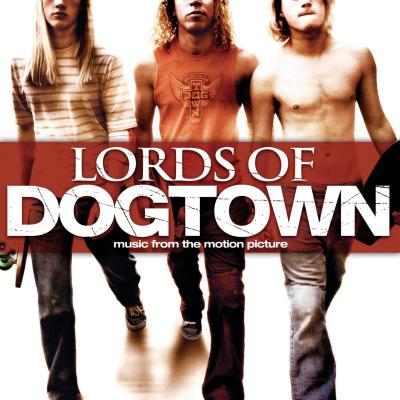
"Lords of Dogtown" Soundtrack Lyrics
Movie • 2005
Track Listing
Social Distortion
Nazareth
Foghat
Sweet
Ted Nugent
Joe Walsh
The Allman Brothers Band
Jimi Hendrix
Deep Purple
Iggy Pop
David Bowie
Black Sabbath
Rise Against
T.Rex
Rod Stewart
Sparklehorse
"Lords of Dogtown: Music from the Motion Picture" – Album Guide to Tracks and Key Scenes
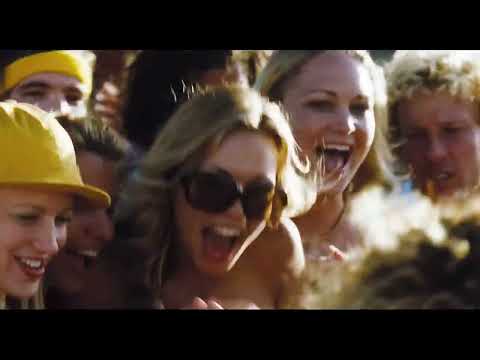
Overview
What does 1970s Venice skate culture sound like when you compress the whole myth into 107 minutes? In Lords of Dogtown, the answer is a wall of classic rock, proto-punk and soul, slammed together around an original score by Mark Mothersbaugh. The soundtrack album, Lords of Dogtown: Music from the Motion Picture, pulls many of those cues into a single disc built for loud speakers and long skate sessions.
The film follows Stacy Peralta, Tony Alva and Jay Adams as they hack surfing moves onto urethane wheels and drain the suburbs’ swimming pools for concrete waves. The music tracks that story beat for beat. Big riffs from Nazareth, Deep Purple and Black Sabbath fuel contests and backyard raids; Hendrix, Bowie and T.Rex carry the swagger; softer cuts like Rod Stewart’s “Maggie May” and Sparklehorse’s “Wish You Were Here” catch the moments when the bravado cracks. Mothersbaugh’s score, used more sparingly, glues those eras and moods together with a hazy guitar-driven theme that feels like late-afternoon Pacific light.
What makes this soundtrack distinct is how little it tries to be “nostalgic” in the cute way. Most of the selections are exactly what a mid-70s skater in Dogtown would have blasted out of a cheap car radio: heavy, sometimes a bit ugly, occasionally funky and often more about attitude than polish. A Social Distortion Clash cover and a Rise Against Black Flag cover yank the energy forward in time without breaking that attitude, something a few reviewers have pointed out when they talk about the album’s mix of classic rock and punk.
Genre-wise, the songs skew hard toward classic rock, glam, early metal and proto-punk — Nazareth, Sweet, Ted Nugent, The Stooges, Deep Purple, Black Sabbath, Bowie, T.Rex. That palette maps cleanly to the narrative: glam and Bowie/T.Rex for the sudden fame and style obsession; heavy metal for competition and violence (bull runs, bails, broken bones); funk and soul for house parties and hazy nights; acoustic folk-rock for regret and growing up. Mothersbaugh’s score and a still-unreleased guitar theme lean into surf-psych textures, giving the Z-Boys’ rides a strangely dreamy, almost mythic aftertaste.
How It Was Made
Catherine Hardwicke’s film leans heavily on music to sell time and place, so locking in the right team mattered. The score comes from Mark Mothersbaugh, best known to many as a member of Devo but also a prolific film composer whose work ranges from Rushmore to The Royal Tenenbaums. Here he blends subtle, guitar-led cues with era-flavored textures so the score never feels like a modern orchestral blanket dropped on 1970s footage.
The music supervision sits with Liza Richardson, a longtime KCRW DJ and sought-after supervisor for film and TV. She came in with a deep knowledge of rock, punk and roots music and helped Hardwicke and the producers stitch together roughly two dozen needle-drops that feel organic to Dogtown, not like a “greatest hits of the 70s” CD. Her work bridges studio needs (Geffen catalog cuts, trailer songs) and fan service (deep Stooges, Hendrix variations, Funkadelic, Peter Tosh) without losing the grime.
Production-wise, a lot of the music choices were driven by skate footage. Sequences were cut to temp tracks from the era, then replacements were hunted down where licenses proved complicated. A live Hendrix “Voodoo Chile” variant replaces studio versions that were harder to clear; Black Sabbath’s “Iron Man” and Ted Nugent cuts pin down specific contest runs; the Sparklehorse/Thom Yorke version of “Wish You Were Here” handles the film’s most sentimental stretch without tipping into straight classic-rock radio.
The official Geffen soundtrack album, released in 2005, focuses on 16 songs, mostly rock and glam, while a larger set of cues appears only in the film or on playlists built around it. Meanwhile, Mothersbaugh’s original score has circulated far less widely than the song compilation, which is why that recurring acoustic-to-electric guitar theme has become a minor obsession among fans hunting for an official release.
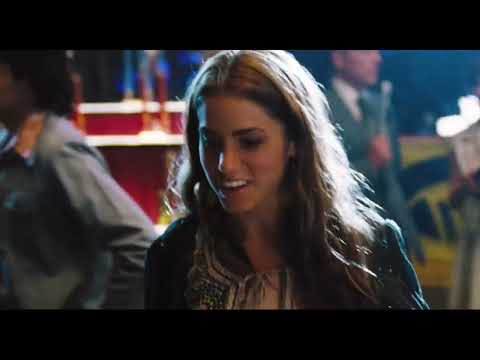
Tracks & Scenes
Below are some of the most important songs and cues, with how they’re used in the film. This is not a full tracklist; it focuses on scenes where music and story really lock together.
"Voodoo Chile" / live variant – The Jimi Hendrix Experience
Where it plays: Right at the start of the film, when the boys sneak out of their houses and head toward the pier, then paddle into the early-morning surf. The camera rides along with them as they paddle under the pier and drop into the waves, the music crunching and swirling like the water underneath.
Why it matters: As an opening statement, it’s perfect: loose, distorted, a little dangerous. The Hendrix jam sets the tone that this isn’t a sanitized sports biopic — it’s about kids pushing past limits in a world that already feels frayed around the edges.
"Loose" – The Stooges
Where it plays: Over early surf and skate moments with the Z-Boys, and also on the DVD main menu. We see Jay, Tony and Stacy carving lines in the waves and rolling down cracked Venice streets, the song’s lurching groove underlining the feeling that everything’s slightly out of control but completely alive.
Why it matters: This track is basically Dogtown in audio form: raw, minimal, and full of forward motion. It gives the early scenes a proto-punk edge that cuts through any nostalgic haze.
"Iron Man" – Black Sabbath
Where it plays: At Jay’s first big skate championship run. As he drops into the bowl, the iconic riff lines up with his aggressive, surf-style carving and the aggression in his body language. The crowd noise rides on top, but the riff punches through every time he hits coping.
Why it matters: Jay is the chaotic one, and this cue brands him that way. “Iron Man” has been used in countless contexts, but here it really does sound like the internal soundtrack of a teenage kid who thinks he can’t be hurt yet.
"Hair of the Dog" – Nazareth
Where it plays: Around the first big competition when the Z-Boys roll in wearing the Zephyr shirts. The infamous “Now you’re messin’ with a son of a bitch” line hits as they push through the crowd and take over the space, confident and slightly confrontational.
Why it matters: The lyric almost functions as a group motto. The song exaggerates their swagger and marks the moment when this isn’t just surf kids goofing around anymore — it’s a team about to rewrite the rulebook.
"Motor City Madhouse" – Ted Nugent
Where it plays: Used as Tony Alva’s pump-up song at one of his first big competitions, contrasting with Jay’s “Iron Man” run. The camera stays tight on Tony’s more controlled but still wild style as the song races forward.
Why it matters: It positions Tony as the guy who will weaponize all this chaos into a brand. Where Jay’s metal is pure blunt force, Tony’s track feels like the soundtrack of future contracts and magazine covers, still heavy but more showman than street kid.
"Turn to Stone" – Joe Walsh
Where it plays: Late-night, in an alley sequence where Jay skates alone under streetlights. We get longer takes of him carving, spinning and venting anger into motion while everyone else is moving on without him.
Why it matters: The song’s mood — restless, slightly haunted — sits right on Jay’s arc. It’s the sound of realizing the industry is leaving you behind but still having nothing to lean on except your board.
"Shambala" – Three Dog Night
Where it plays: When Jay meets his mom’s boyfriend, who casually gives him a surfboard. The scene is domestic and awkward, with the song playing in the background and underlining this weirdly bright, almost cheesy attempt at a fresh start.
Why it matters: Sonically, it clashes with the harsher Dogtown cues, which is the point: someone is trying to hand Jay a more conventional life. The music’s easy optimism makes his discomfort even clearer.
"Steppin’ Razor" – Peter Tosh
Where it plays: At Alva’s house party, a reggae cloud hanging over the crowd as people drift through rooms, drink, and flirt. The track drifts in and out under dialogue but its vibe is strong enough to define the setting.
Why it matters: It’s one of the few moments where the soundtrack leaves rock and metal entirely. The groove is laid-back but the lyrics are sharp, matching Tony’s growing sharpness as he separates himself from the crew.
"Space Truckin’" – Deep Purple
Where it plays: During a montage of the Z-Boys sneaking into backyard pools. They jump fences, scout the depths, and then carve walls while lookouts scan for cops. The riff syncs with fast push-offs and low, crouched turns.
Why it matters: It’s a heist movie sequence, basically, and this is the heist song. The music leans into the sense of outlaw fun rather than police danger, which keeps the film’s energy high instead of paranoid.
"Crash Course in Brain Surgery" – Budgie
Where it plays: When Jay storms out of a party, throwing his fist in the air in time with the music as he exits through the door. Inside, things are chaotic; outside, he’s burning with a different kind of anger.
Why it matters: The title alone is a joke about how hard they’re smashing their bodies. Sonically, it’s raw and a bit unhinged, which matches Jay’s feeling that everyone is messing up what skating should be.
"Too High" – Stevie Wonder
Where it plays: Over a sex scene, as the camera cuts between bodies, close-ups and half-lazy dialogue. The groove is smooth and slippery, slightly woozy on purpose.
Why it matters: Using Stevie here pushes the film briefly into soul territory and gives the scene a warmth that avoids the usual “rock ballad over sex” cliché. The lyrics about getting too high work both literally and metaphorically for kids living too fast.
"Old Man" – Neil Young
Where it plays: In the sequence where Jay shaves his hair in a kind of quiet breakdown, and again in a moment at the burnt-out cove where he apologizes to Skip. The song’s weary tone plays directly against images of still-young faces that look suddenly older.
Why it matters: It’s the most on-the-nose use of lyrics in the film but it works. Hearing “Old man take a look at my life” over Jay makes his whole arc click — he’s aged ten years emotionally in the space of one chaotic summer.
"T.V. Eye" – The Stooges
Where it plays: At a rooftop party where Skip stands high above the crowd, half-performing and half falling apart. The song snarl runs under shots of drinking, cops, and the sense that the scene is eating itself.
Why it matters: It is pure excess. The feral Stooges track matches Skip’s barely controlled chaos and the way the Zephyr era is burning up under him.
"Nervous Breakdown" – Rise Against (Black Flag cover)
Where it plays: At the punk show where Black Flag appear diegetically, portrayed on stage by Rise Against. The camera cuts between the band, a thrashing crowd, and the Z-Boys trying to figure out where they fit now that the culture is shifting under them.
Why it matters: The decision to use a then-current band channeling Black Flag is a neat time bridge. It also underlines that punk energy, not just rock, grows out of the same restless West Coast streets.
"Long Way to Go" – Alice Cooper
Where it plays: After the boys get the Zephyr crew T-shirts, during a long group skate through town. They flow through traffic, trade spots up front, and then Sid crashes dramatically, cutting the joy short.
Why it matters: The lyric hook about having a long way to go lands hard here. The moment looks like triumph but the song quietly points out they’re only at the start of something that might chew them up.
"Wish You Were Here" – Sparklehorse & Thom Yorke (Pink Floyd cover)
Where it plays: Late in the film, during the sequence where the boys skate Sid’s pool after his diagnosis, and in quiet moments around that reunion. The arrangement starts fragile and grows, mirroring the way the session shifts from sadness to celebration.
Why it matters: This is the emotional center of the movie. The choice of a hushed, modern cover instead of the original keeps the moment from feeling like classic-rock karaoke and makes it more about loss and changed friendships than about 70s nostalgia itself.
"Daydream" – Robin Trower
Where it plays: Also in the final pool-skating stretch, particularly as Jay starts carving harder lines. The guitar tone feels like liquid sunset, matching the light and the slow-motion shots of wheels on tile.
Why it matters: It gives the ending a sense of suspended time. The characters’ lives are already diverging, but for a few minutes the soundtrack lets them exist in pure motion again.
"Death or Glory" – Social Distortion (The Clash cover)
Where it plays: Over the closing montage that explains what happened to each of the real-life skaters, and in the late scene of the boys pushing Sid in his wheelchair around the pool. The song builds as text appears on screen, then lets the film slam to black.
Why it matters: If Dogtown and Z-Boys is the documentary version of this story, “Death or Glory” is this film’s thesis in three minutes. The Clash lyric takes on a bittersweet tone when you know how many of these skaters got both.
Trailer-only cuts
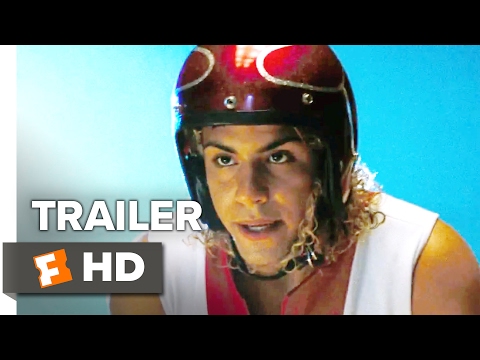
Where they play: Green Day’s “Boulevard of Broken Dreams” appears in marketing rather than the film itself, and Sum 41’s “No Reason” surfaced in TV spots. Their slick, 2000s-era pop-punk feel sets a different expectation in trailers — more teen drama, less grimy 70s — than the actual movie and album deliver.
Why it matters: It’s a reminder that trailers sell to a different audience. The promos push modern rock radio; the film itself stays loyal to the older, rougher cuts.
Notes & Trivia
- The soundtrack album focuses on 16 tracks, but the film uses well over 30 songs once you count deep background cues and party music.
- Rise Against physically appear on screen as Black Flag, performing “Nervous Breakdown” rather than just contributing a studio track.
- The Hendrix track in the opening is a live or alternate “Voodoo Chile” variant, which confused fans trying to match it to the studio album version.
- Fans have spent years trying to identify the recurring acoustic-then-electric guitar theme; many now assume it is an unreleased Mark Mothersbaugh cue.
- “Wish You Were Here” appears as a Sparklehorse/Thom Yorke cover on the album, while the end of the movie layers it with Robin Trower’s “Daydream” for extra weight.
Music–Story Links
The soundtrack doesn’t just label scenes; it tracks the boys’ relationship to power and control. Early on, Hendrix and The Stooges make the world feel limitless — surf, concrete and risk all blend together in those long, low shots under “Voodoo Chile” and “Loose.” As soon as contests arrive, the music hardens into metal and strutting classic rock. That shift mirrors the story’s pivot from free play to structured competition.
Jay’s arc rides particularly close to the soundtrack. “Iron Man” and “Turn to Stone” bracket his rise and isolation: first he’s the invincible kid tearing up bowls, later he’s the lone figure in an alley, still moving but clearly stuck. Neil Young’s “Old Man” and the quieter moments at the burnt cove push him into a kind of forced adulthood that the others mostly dodge.
Tony’s storyline leans on flashier cuts — “Motor City Madhouse,” full-tilt Nugent, blasting over wins and new sponsors. Those songs are fun, but they also hint at the commercialization creeping in: amp stacks, arena-rock, contracts. Stacy’s journey, on the other hand, often lands on more melodic or reflective cues, underscoring how he tries to balance ambition with loyalty.
By the time we reach Sid’s pool, the soundtrack has to reconcile all of that. The Sparklehorse “Wish You Were Here” cover carries the weight of loss and nostalgia; “Daydream” wraps that in a dreamy glaze; “Death or Glory” snaps everyone back to reality with a reminder that legends always come at a price. The music in those final minutes is basically the film’s emotional epilogue.
Reception & Quotes
Critically, the film landed in the “mixed but interesting” zone, while the soundtrack album drew warmer reactions from rock and punk circles. Reviewers often singled out the track selection as one of the movie’s strongest assets, even when they felt the narrative hit familiar beats.
“This is a groovy soundtrack that will probably make a lot of people crave some doobies, and I’m not talking about the band.” — ReadJunk review
“Classic rock and punk? Cool!!” — ReadJunk on the album’s blend
“Songs from bands like Iggy Pop & The Stooges, David Bowie, and Jimi Hendrix appear throughout… reflecting the gritty Venice skate culture.” — film music summary
The album remains widely available on streaming platforms under the original Geffen release, while some specific film-only uses (live Hendrix takes, background cues, Mothersbaugh’s guitar theme) have never received an official standalone release. According to various catalogue listings, the core compilation has stayed in print or digital circulation since 2005 with minor regional packaging differences but consistent track order.
Interesting Facts
- The soundtrack album is Geffen-branded, which may help explain the inclusion of then-current label acts like Rise Against alongside 70s staples.
- “Nervous Breakdown” was produced by Descendents drummer Bill Stevenson, a nice Easter egg for punk fans paying attention to the credits.
- Some fans insist the mysterious recurring guitar theme might be a reworked Crowded House fragment; others argue it’s pure Mothersbaugh. No official credit has surfaced.
- Green Day’s “Boulevard of Broken Dreams” and Sum 41’s “No Reason” are canon to the marketing but never appear in the film itself.
- Licensing Hendrix required using a live “Voodoo Chile” variant rather than the better-known studio version, which is why the opening sounds slightly “off” even to hardcore fans.
- The film’s mix of glam (“Suffragette City”), proto-metal (“Iron Man”), and funk (“Super Stupid,” “Fire” by Ohio Players) quietly maps how skate culture fed off many different radio currents at once.
- Liza Richardson’s later work on shows like Friday Night Lights and The Leftovers kept a similar philosophy: songs should feel like they’re leaking out of the world, not pasted on top.
Technical Info
- Title (album): Lords of Dogtown: Music from the Motion Picture
- Film: Lords of Dogtown (2005, biographical drama)
- Type: Song-driven soundtrack compilation with original score elements in the film mix
- Primary composer (score): Mark Mothersbaugh
- Music supervisor: Liza Richardson
- Label: Geffen Records (CD and digital release, 2005)
- Core genres: Classic rock, glam rock, proto-punk, metal, funk, soul
- Notable placements: “Iron Man” (Jay’s contest run), “Motor City Madhouse” (Tony’s competition), “Old Man” (Jay’s hair-cut and cove), “Wish You Were Here” / “Daydream” (Sid’s pool), “Death or Glory” (end montage)
- Release context: Issued alongside the film’s theatrical run in 2005, later made widely available on streaming services.
- Chart/availability notes: Not a blockbuster chart item but a steady catalogue title; the album is still accessible on major services, while several in-film cues and the score remain partially unreleased.
Canonical Entities & Relations
| Subject | Relation | Object |
|---|---|---|
| Catherine Hardwicke | directs | Lords of Dogtown (film) |
| Stacy Peralta | writes | Lords of Dogtown (film) |
| Mark Mothersbaugh | composes score for | Lords of Dogtown (film) |
| Liza Richardson | music-supervises | Lords of Dogtown (film) |
| Geffen Records | releases | Lords of Dogtown: Music from the Motion Picture (album) |
| Social Distortion | performs cover on | “Death or Glory” (track on soundtrack album) |
| Rise Against | portrays | Black Flag (on-screen punk show in film) |
| Jimi Hendrix | performs | “Voodoo Chile” / “Voodoo Chile Blues” (opening surf sequence) |
| Columbia Pictures / TriStar Pictures | produce/distribute | Lords of Dogtown (film) |
| Lords of Dogtown: Music from the Motion Picture | is soundtrack to | Lords of Dogtown (2005 film) |
Questions & Answers
- Who composed the score for Lords of Dogtown?
- Mark Mothersbaugh composed the original score, adding guitar-heavy, era-tinged cues that sit alongside the classic rock and punk songs.
- Why does the movie lean so hard on 1970s classic rock and proto-punk?
- Those tracks mirror what Dogtown skaters were actually hearing — heavy riffs, glam swagger and raw Stooges-style noise blasting from car stereos and local radio.
- What songs play in the final pool-skating scenes at Sid’s house?
- The climax layers the Sparklehorse/Thom Yorke cover of “Wish You Were Here” with Robin Trower’s “Daydream,” and later tags out with Social Distortion’s “Death or Glory.”
- What’s the song when Jay skates his first big competition run?
- Jay’s defining contest run pounds along to Black Sabbath’s “Iron Man,” while Tony Alva gets Ted Nugent’s “Motor City Madhouse” in a later competition.
- Is the acoustic-to-electric guitar “theme” from the movie available anywhere?
- No official release has been confirmed. Many viewers think it’s an unreleased Mark Mothersbaugh cue; for now, it lives only inside the film’s mix.
Sources: Wikipedia film and soundtrack entries; IMDb credits; SoundtrackINFO scene Q&A; ReadJunk album review; label/discography listings; recent film-music overviews.
November, 13th 2025
A-Z Lyrics Universe
Cynthia Erivo Popular
Ariana Grande Horsepower
Post Malone Ain't No Love in Oklahoma
Luke Combs Good Riddance (Time of Your Life)
Green Day Bye Bye Bye
*NSYNC You're the One That I Wan
John Travolta & Olivia Newton-John I Always Wanted a Brother
Braelyn Rankins, Theo Somolu, Kelvin Harrison Jr. and Aaron Pierre The Power of Love
Frankie Goes to Hollywood Beyond
Auli’i Cravalho feat. Rachel House MORE ›