Soundtracks:  A B C D E F G H I J K L M N O P Q R S T U V W X Y Z #


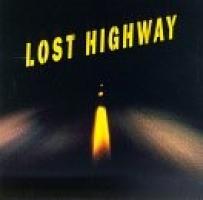
Lost Highway Album Cover

"Lost Highway" Soundtrack Lyrics

Movie • 1997

Track Listing


"Lost Highway (Soundtrack from the Motion Picture)" – Album Guide to Tracks and Key Scenes

Lost Highway 1997 theatrical trailer still with highway at night
Lost Highway film soundtrack imagery, 1997 – yellow lines, blacktop, and deranged synths.

Overview

What happens when a neo-noir nightmare gets produced like a rock record? The Lost Highway soundtrack answers that with a blend of industrial rock, bad-dream jazz, and lounge music that never quite lets you breathe. It is less a background score and more a parallel narrative: engines roar, saxophones scream, and songs bleed into the film’s Möbius-strip story about identity collapse and violence.

On paper it is a “various artists” album. In practice it feels like a single statement curated by Trent Reznor around David Lynch’s obsessions. Angelo Badalamenti’s score cues sketch out Fred Madison’s inner turbulence; Barry Adamson’s brass-heavy themes follow gangster Mr. Eddy like a noisy tail; outside songs from David Bowie, Lou Reed, Marilyn Manson, Rammstein, The Smashing Pumpkins, and Antônio Carlos Jobim give the film a jukebox quality that still somehow sounds of one piece.

The film uses music aggressively. Opening and closing credits ride to Bowie’s “I’m Deranged,” highway lines flickering like a heartbeat monitor. Industrial textures from Nine Inch Nails and Reznor’s own instrumentals grind against bossa nova strings, while Badalamenti’s cue “Red Bats With Teeth” turns a club saxophone solo into a panic attack. You can watch the movie just by listening to how the tracks morph from smoky cool to total collapse.

Stylistically, the album jumps between industrial rock and metal (Nine Inch Nails, Marilyn Manson, Rammstein), noir jazz and orchestral score (Badalamenti, Adamson), gothic alt-rock (The Smashing Pumpkins), crooner balladry (Lou Reed), and classic bossa nova (Jobim). Industrial textures double as the sound of fractured identity; jazz cues voice Fred’s anxiety; Rammstein’s metal underscores sex and violence in Pete’s strand; Jobim’s “Insensatez” plays like surface normality pasted over something deeply wrong. That contrast between genre and image is the soundtrack’s core trick.

How It Was Made

David Lynch asked Trent Reznor to produce the soundtrack after hearing his work on Natural Born Killers. Reznor’s job was unusual: he wasn’t just contributing songs, he was effectively music supervisor, producer, and curator. He brought in Nine Inch Nails, wrote and recorded instrumentals like “Videodrones; Questions” and “Driver Down,” and helped integrate Badalamenti and Adamson’s score into a coherent album instead of a random cue dump.

Lynch had already built a long partnership with Angelo Badalamenti on Blue Velvet and Twin Peaks. For Lost Highway, Badalamenti recorded most of the score with an orchestra in Prague, then added further sessions in London. Lynch wanted music that sounded like the inside of Fred’s head: noir harmonies that could suddenly tilt into atonality and teeth-gritting noise. Barry Adamson contributed brass-and-bass-driven themes that emphasize swagger and menace, especially for Mr. Eddy and the L.A. underworld.

According to later interviews and coverage, Lynch also wanted big-name artists he found inspiring but who could still move units: Bowie, Manson, Lou Reed, The Smashing Pumpkins, Rammstein and others. Reznor has said he tried to make an album that would work both for hardcore Lynch fans who hate pop and for 14-year-olds buying it just to get the new Nine Inch Nails or Pumpkins track. The result is a soundtrack that plays like a dark mid-90s compilation while still feeling tightly tied to the film’s imagery and structure.

Lost Highway recording and soundtrack era promotional still of cast and crew
Behind the soundtrack – Lynch, Badalamenti, Reznor and a roster of mid-90s misfits.

Tracks & Scenes

Below are key cues and songs, including a few that never made it to the official album but are crucial on screen.

"I'm Deranged" — David Bowie
Where it plays: The film opens in darkness, car POV screaming down an empty highway at night while yellow lane markers strobe under the headlights. Bowie’s “I’m Deranged” edit rides the credits, his vocal and skittering drums turning the drive into a warning. A second, slightly different edit returns over the end credits after Fred’s final transformation, starting almost a cappella before the backing track swells in.
Why it matters: The song literally frames the movie, hinting that everything we see sits inside a deranged mind. Its industrial art-rock texture ties Lynch’s noir imagery to mid-90s experimental rock and makes the highway feel like a mental loop rather than a real road.

"Red Bats With Teeth" — Angelo Badalamenti
Where it plays: Early in the film, Fred plays saxophone with his jazz band in a smoky club. The camera pushes in as the music becomes more frantic: sax shrieks, rhythm section churns, and Fred appears to lose himself in the solo. The cue starts cool and West Coast-ish, then tips into atonal flurries and overblown sax, ending in near chaos.
Why it matters: It is the first time sound tells us how unstable Fred really is. The piece moves from suave noir mood to full panic, mirroring his paranoia about Renee and foreshadowing his psychic break.

"Videodrones; Questions" — Trent Reznor feat. Peter Christopherson
Where it plays: Short but crucial, this electronic fragment underpins the eerie VHS tapes that arrive at Fred and Renee’s house. The music is mostly rhythm and texture: low pulses, distorted hits, and processed noise that feel like interference leaking out of the tapes themselves.
Why it matters: Rather than a “theme,” it acts like sonic malware. It makes the videotapes feel physically toxic and marks the boundary where ordinary domestic space starts to get infected by something impossible.

"Fred & Renee Make Love" — Angelo Badalamenti
Where it plays: During the awkward sex scene between Fred and Renee, Badalamenti’s cue stays slow and heavy, with strings and synth pads hovering over distant percussion. The music doesn’t warm up the moment; it sits between them, as if narrating the disconnect while the camera observes Fred’s frustration and Renee’s disengagement.
Why it matters: This is a character cue more than a plot cue. It underlines their emotional distance and makes the scene feel lonely instead of erotic, which is crucial for how we read everything that follows.

"Something Wicked This Way Comes" — Barry Adamson
Where it plays: The track scores one of the film’s most memorable sequences: Mr. Eddy’s road-rage assault on a tailgating driver. Brass stabs, upright bass, and brushed drums swagger as Mr. Eddy first lectures the man about highway safety, then beats him senseless against his own car while still calmly talking about responsibility.
Why it matters: The cue walks a tightrope between cool crime-jazz and outright horror. It turns the scene into black comedy while still making Mr. Eddy terrifying, and it’s a perfect example of Lynch using “hip” music to frame something deeply ugly.

"This Magic Moment" — Lou Reed
Where it plays: Pete is working in the garage when Alice (blonde Patricia Arquette) steps out of a car in slow motion. Lou Reed’s intimate, guitar-led cover of the Drifters classic glides in as she lights a cigarette and looks at him, the whole world apparently narrowing to that instant.
Why it matters: The song title says it outright: this is the moment Pete falls under Alice’s spell. The tenderness of Reed’s vocal clashes with the danger we already sense around her, and that tension haunts every scene they share afterwards.

"Insensatez" — Antônio Carlos Jobim
Where it plays: Jobim’s instrumental bossa nova appears over a quiet stretch with Pete, foregrounding strings and piano in a gentle, almost kitschy arrangement. Visually we see banal movement through L.A. space — driving, hanging out — with none of the overt horror of the VHS sequences or Mr. Eddy’s violence.
Why it matters: The sweetness is a lie. Using a classic standard about emotional foolishness in such a calm, pretty way underlines how disconnected Pete’s everyday life is from the violence lurking just offscreen. It’s Lynch using easy-listening as a horror tool.

"Apple of Sodom" — Marilyn Manson
Where it plays: A grinding, slow-motion industrial track that surfaces around the film’s sleazier underworld images, including the 16mm pornography/snuff footage where Manson and Twiggy Ramirez cameo as doomed performers. The opening whisper, “You will never have me,” lifts directly from Alice’s dialogue in the desert cabin sequence and folds film and song into one another.
Why it matters: The song is obsession distilled: lurching bass, jungle-shaded drums, and Manson’s half-crooned, half-growled vocal. It blurs sex, violence, and addiction the same way the movie does and became one of the key cult tracks associated with the film.

"I Put a Spell on You" — Marilyn Manson
Where it plays: Manson’s cover appears prominently in marketing and trailer material, superimposed over flashes of Fred, Renee/Alice, and the Mystery Man. The song doesn’t dominate a single long scene the way “This Magic Moment” does, but it colors the film’s public image: sex, control, and possession wrapped in distortion and reverb.
Why it matters: Using such a famous standard in such an aggressive, mid-90s industrial style instantly dates the soundtrack in a good way. It ties Lost Highway into a wave of alt-culture horror, making it feel dangerous and fashionable at the same time.

"Rammstein" — Rammstein
Where it plays: In the notorious Room 26 sequence at the desert motel, Pete stumbles into a vision of Alice engaged in rough sex. As he watches, humiliated and confused, the German industrial metal of “Rammstein” hammers over the images: chugging guitars, shouted German lyrics, and pounding drums.
Why it matters: The cue is pure shock power. The foreign-language vocals and brutal sonics make the scene feel like a transmission from another, harsher reality, underscoring Pete’s sense that the woman he desires might be part of something he can’t control or even understand.

"Heirate Mich" — Rammstein
Where it plays: Later in the film, another Rammstein track, “Heirate Mich” (“Marry Me”), surfaces around violent confrontations and murder imagery tied to the criminal plotline. It tends to accompany the merger of sex, death and crime — the parts of Pete’s life that feel like they belong to someone else entirely.
Why it matters: The title’s twisted marriage proposition fits the film’s theme of binding yourself to a destructive fantasy. Sonically, it keeps industrial metal present as the story veers further from Fred’s jazz world into something more overtly brutal.

"Hollywood Sunset" — Barry Adamson
Where it plays: A brief but evocative cue that scores a transition over a literal L.A. sunset — the city turning gold as we move between narrative strands. Guitar and brass cast the skyline in melancholy rather than triumph.
Why it matters: It’s one of the few moments where the soundtrack gives you something like beauty without obvious menace. That makes it stand out and also emphasizes how much of the rest of the album is built on unease.

"Driver Down" — Trent Reznor
Where it plays: Near the end, as Fred barrels down the highway, identity loop closing in on itself, “Driver Down” roars. The track fuses industrial rock with wailing saxophone, starting as a punishing groove before opening into a more spacious, echoing coda as the chase reaches its abstract climax.
Why it matters: This is Reznor proving he can do narrative scoring, not just songs. The industrial section matches the violence of the finale; the final, empty-sounding sax phrases suggest that despite all this motion, Fred hasn’t escaped anything.

"Song to the Siren" — This Mortal Coil
Where it plays: Not on the album, but vital to the film: the ethereal cover of Tim Buckley’s song appears in the desert cabin love scene between Pete and Alice. She walks across the sand, half-mythic, as Elizabeth Fraser’s voice drifts over slow, reverb-heavy guitar. The moment feels suspended in time until reality snaps back.
Why it matters: This is the film’s romantic apex and its biggest lie. The siren metaphor is almost too on-the-nose — an impossible lover whose song leads you to destruction — but the pairing of image and music is devastating. Many fans consider this needle-drop the single most beautiful moment in the film, which makes its absence from the commercial soundtrack all the more frustrating.

Lost Highway montage of key musical scenes including club, desert and garage
Key musical cues in Lost Highway – from club sax to desert sirens and garage epiphanies.

Notes & Trivia

  • The official soundtrack omits “Song to the Siren” because of licensing cost and rights complexity, even though it plays a pivotal role in the finale.
  • Several cues on the album are slightly edited from their original album versions (for example Barry Adamson’s “Something Wicked This Way Comes” and both Rammstein tracks).
  • “Eye” by The Smashing Pumpkins was written specifically after Lynch rejected an earlier track (“Tear”); fans still debate how prominently “Eye” is heard in the finished film versus just on the album.
  • Marilyn Manson and bassist Twiggy Ramirez appear in the film as porn actors in snuff footage — the same seedy imagery that “Apple of Sodom” sonically magnifies.
  • Trent Reznor has openly said he dislikes “The Perfect Drug,” which he contributed for the soundtrack, and for years refused to play it live despite its cult status.

Music–Story Links

Bowie’s “I’m Deranged” brackets the entire narrative, so the film literally begins and ends with the idea that the narrator is untrustworthy. That framing encourages you to treat everything between those credits as subjective, maybe even as a self-protective fantasy invented in a prison cell.

Badalamenti’s jazz cues belong to Fred’s world: “Red Bats With Teeth” when he plays sax, “Haunting & Heartbreaking” and “Fred & Renee Make Love” around his home life. When the film jumps to Pete, the palette shifts toward rock, metal and bossa; Mr. Eddy’s brass themes and Rammstein’s industrial stomp define this more extroverted, violent reality. The two sound worlds help you track which “version” of the protagonist you’re with at any moment.

Lou Reed’s “This Magic Moment” doesn’t just underscore Pete’s attraction to Alice; it also hints that she may be a constructed ideal. The romantic, almost nostalgic arrangement clashes with what we later learn about her involvement in porn, crime and betrayal. In other words, the song is Pete’s fantasy, not the truth.

“Song to the Siren” ties the desert cabin scene directly to myth. Pete thinks he finally possesses Alice; the song’s lyrics and haunted arrangement suggest the opposite, that he is the one being claimed — and doomed. When she tells him, “You’ll never have me,” the music suddenly feels like a warning he ignored.

Finally, “Driver Down” closes the loop. By bringing saxophone back into Reznor’s industrial soundscape, it fuses Fred’s jazz identity with the harsher textures of Pete’s storyline, musically implying that the split between them was always an illusion.

Reception & Quotes

The film itself divided critics on release, but the soundtrack quickly earned a reputation as one of the defining dark compilations of the 1990s. It reached the top ten on the Billboard 200 and picked up Gold certification in the U.S. and Platinum in Canada, which is unusually strong performance for such an experimental movie album.

Writers on film and music frequently single it out. One soundtrack list calls it a perfect mix of “industrial rock and creepy detective-sax beats,” arguing it stands up as an album independent of the film. A feature on cult 90s soundtracks places it next to Trainspotting and Gummo, treating it as part of a wave where movie albums shaped youth culture as much as traditional studio LPs.

In a longform article on David Lynch’s use of pop songs, one critic describes Lost Highway as his ultimate jukebox movie, even ahead of Blue Velvet and Mulholland Drive, precisely because of how it deploys tracks like “I’m Deranged,” “This Magic Moment,” and “Song to the Siren.” Another writer notes that if Twin Peaks brought Lynch into America’s living rooms, the Lost Highway soundtrack put him “onto America’s car stereos.”

“Mixing Badalamenti’s score with Rammstein, Bowie and Nine Inch Nails, it plays like an uncomfortable dream you can’t stop replaying.” — soundtrack essay

“Lou Reed’s ‘This Magic Moment’ in the garage might be the single best needle drop in Lynch’s career.” — scene commentary

“The album cemented Trent Reznor as not just a rock star but a future film composer.” — music press on Reznor’s career arc

“I didn’t love the movie, but I loved the soundtrack and still play it start to finish.” — fan recollection

The album has stayed in print digitally, and its 2010s vinyl reissues introduced it to a new audience that discovered Lynch through later work and came backwards to this soundtrack.

Lost Highway soundtrack artwork and vinyl reissue inspired visuals
Lost Highway on vinyl – the soundtrack reborn for turntables and late-night drives.

Interesting Facts

  • The soundtrack was released in February 1997, essentially in sync with the film’s limited U.S. release, and has since been reissued multiple times on vinyl.
  • “Eye” became a surprise modern rock radio hit and nudged The Smashing Pumpkins further toward the electronic direction they embraced on Adore.
  • Antônio Carlos Jobim’s “Insensatez” had a long life before this film; here it is used purely instrumentally, leaning into its melancholy title (“foolishness” or “insensitivity”).
  • Rammstein’s “Rammstein” and “Heirate Mich” are early examples of the band’s music appearing in a major international film, helping expose them to non-German audiences.
  • “Apple of Sodom” never appeared on a regular Marilyn Manson studio album; for years, owning the Lost Highway soundtrack (or hunting for imports and promos) was the easiest way to get it.
  • Some cues on the disc (like “Red Bats With Teeth”) became cult favorites for jazz and experimental listeners completely apart from the film, thanks to Badalamenti’s writing and playing.
  • The soundtrack frequently appears on lists of the all-time best or most influential movie albums, especially in discussions of the 1990s.

Technical Info

  • Title: Lost Highway (Soundtrack from the Motion Picture)
  • Year: 1997 (album release February 18, 1997; film release 1997)
  • Type: Film soundtrack album (various artists, with original score and songs)
  • Main composers: Angelo Badalamenti (score), Barry Adamson (additional score)
  • Soundtrack producer / curator: Trent Reznor (Nine Inch Nails)
  • Key featured artists: David Bowie, Lou Reed, Marilyn Manson, Nine Inch Nails, The Smashing Pumpkins, Rammstein, Antônio Carlos Jobim
  • Labels: Nothing Records / Interscope Records (later vinyl reissues by other labels)
  • Chart performance: Peaked in the top 10 of the Billboard 200; certified Gold in the U.S. and Platinum in Canada.
  • Notable omissions: “Song to the Siren” (This Mortal Coil) and the unidentified song at Andy’s party are used in the film but not included on the album.
  • Availability: Widely available on major streaming platforms and digital stores; multiple vinyl editions exist, including later audiophile pressings.

Canonical Entities & Relations

Subject Relation Object
David Lynch directs Lost Highway (film, 1997)
Angelo Badalamenti composes score for Lost Highway (film)
Barry Adamson provides additional score for Lost Highway (film)
Trent Reznor produces soundtrack album Lost Highway (Soundtrack from the Motion Picture)
Trent Reznor writes and performs “Videodrones; Questions” and “Driver Down”
Nine Inch Nails performs “The Perfect Drug” on the soundtrack
David Bowie performs “I’m Deranged” (opening and closing credits)
Lou Reed performs “This Magic Moment” in the garage scene
Marilyn Manson performs “Apple of Sodom” and “I Put a Spell on You”
Rammstein performs “Rammstein” and “Heirate Mich” used in motel and violence sequences
The Smashing Pumpkins contribute song “Eye” to the soundtrack album
Antônio Carlos Jobim composes and performs “Insensatez” (bossa nova standard used in the film)
Nothing Records co-releases Lost Highway soundtrack
Interscope Records co-releases Lost Highway soundtrack
Ciby 2000 co-produces Lost Highway (film)
Asymmetrical Productions co-produces Lost Highway (film)

Questions & Answers

Is the music on the Lost Highway soundtrack the same as the music in the film?
Mostly, but not entirely. Some cues in the movie are missing from the album (notably “Song to the Siren” and the song at Andy’s party), and a few tracks appear in edited form.
Why isn’t “Song to the Siren” on the official soundtrack album?
The This Mortal Coil version was expensive and complicated to license for a commercial album. It remained in the film but was left off the disc, which is why fans often bring it up separately.
What role did Trent Reznor actually play in this soundtrack?
Reznor didn’t just contribute Nine Inch Nails material. He produced and curated the whole album, added original instrumentals, and helped shape how Badalamenti and Adamson’s score pieces sat alongside the rock and metal tracks.
How does the soundtrack connect to David Lynch’s other music collaborations?
Stylistically it extends the Lynch–Badalamenti partnership from Blue Velvet and Twin Peaks, but adds industrial rock and metal in a way that anticipates later Lynch projects and Reznor’s own scoring career.
What’s the best way to hear the soundtrack today?
The full album is available on major streaming services and as digital download, and several vinyl pressings exist if you want the late-night-drive experience as it was originally imagined.

Sources: AV Club, Dazed, Pitchfork, Wikipedia, MusicBrainz, Discogs, A.V. essays on Lynch and Reznor, fan scene analyses and soundtrack databases.

David Lynch did very controversial film that collected only USD 3.7 in the box office (which is very below its budget of 15 million) in 1997. Maybe that is why it is unknown to general public? The trailer is pretty repulsive also and does not contain any general line comprehensibly explaining what’s going on. Even more confusing looks Patricia Arquette when she wears either blond wig or a natural hair, somehow red. The creepy person with distinctive eyes and pale skin – a supposed antagonist in the film – makes this motion picture repulsive already in the trailer. The trailer is the full opposition to the video material and contains such huge stars like David Bowie, The Smashing Pumpkins, Rammstein and Marilyn Manson. Bowie’s ‘I'm Deranged’ sounds like young rock, not like ripe works of this performer. It is in style of Industrial rock, recorded by RCA Records. It contains many piano sounds and voice of the artist sounds as from afar, which makes it thrill. Several known covers on this song confirm its popularity, although in YouTube it has even below the million views. This song was opening and closing one for the movie. Marilyn Manson wouldn’t be himself, if he would not write something with controversial lyrics like he always does. His Apple of Sodom is a perfect piece to demonstrate his dissimilar identity to other people. Outstanding, hideous, repulsive and attractive at the same time. The original video wins over any other fan version placed on YouTube, though many of them have very intimate photos and videos. The Perfect Drug by Nine Inch Nails is expressive and voluminous in the matter of lyrics. They have aggressive feed of the material, just like in the Eye by The Smashing Pumpkins. Be aware that most of songs of this soundtrack are of fast tempo and include aggression.

November, 13th 2025


A-Z Lyrics Universe

Lyrics / song texts are property and copyright of their owners and provided for educational purposes only.