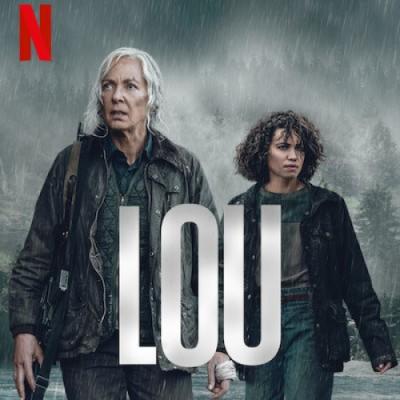
"Lou" Soundtrack Lyrics
Movie • 2022
Track Listing
"Lou (Soundtrack from the Netflix Film)" – Album Guide to Tracks and Key Scenes
Overview
Can a storm sound like cassette tape hiss, classic rock bravado, and the low growl of buried secrets? The soundtrack to Lou leans into that idea. Set in 1986 on a rain-soaked Pacific Northwest island, the film’s music splits in two: a gritty, analogue-scarred score by Nima Fakhrara and a small but carefully chosen set of needle-drops from Bon Jovi, Toto, and Zola Jesus. Together they frame Lou as both a throwback survival thriller and a character study about trauma, guilt, and family.
The score album, "Lou (Soundtrack from the Netflix Film)", released digitally by Netflix Music, is a tight 44-minute run of cues that favour texture over big themes. Fakhrara recorded the score through cassette decks to get a worn, unstable feel; every swell, scrape, and vocal fragment carries that warped-tape character. Instead of lush orchestral lines, you get small-ensemble strings, processed voices and synths that pulse like distant thunder. It keeps the film tense even in quiet stretches, pushing you to listen for danger in the background.
In the film itself, those cues sit alongside a handful of distinct songs that do a lot of character work fast: Bon Jovi’s road-worn swagger, Toto’s polished radio rock, and Zola Jesus’ brooding trailer song. The licensed tracks are few, but they hit specific points: opening character beats, a villain’s self-mythologising car ride, a blunt contrast between domestic routine and incoming violence. The soundtrack, in other words, is lean. No filler, just mood and story.
Stylistically, the score blends 80s thriller sonics (cassette warmth, synth pulses) with modern minimalist suspense writing. The songs skew to classic rock (Bon Jovi, Toto) for masculinity, bravado, and a hint of nostalgia, while the dark art-pop of Zola Jesus in the trailer gives Lou’s world a more haunted, internal voice. You can read the palette almost like a map: classic rock for the men acting out old fantasies, tense experimental score for Lou’s psychological landscape, and sparse diegetic moments to remind you that this is still a very physical survival story.
How It Was Made
The core of the album is Nima Fakhrara’s score. Working with director Anna Foerster and producers at Bad Robot and Netflix, he was asked explicitly not to write a generic action score. Instead he built something more claustrophobic and character-driven: small ensembles, extreme panning in the mix, and a heavy emphasis on analogue degradation. He ran every instrument through a multitrack cassette recorder before bringing the material into Pro Tools, then stretched, re-recorded, and processed the tapes until the sound felt “aged but not retro-pastichy.” Fakhrara has mentioned that some of the earliest experiments involved him singing Iranian classical ideas onto loops until the tape was nearly destroyed, then using those ghostly remnants as the backbone of the score.
This cassette-first method connects neatly to the film’s 1980s setting and to the Walkman and tapes we see on screen. The goal was not to write music that mimics 80s film scores, but to make the soundtrack feel like it physically belongs to that decade’s technology while still reading as contemporary thriller scoring. You can hear it clearly in cues like "Opening", "Storm Is Brewing", and "The World Is Not Your Playground", where string quartet and synths smear into each other under tape wobble and hiss.
On the supervision side, the featured songs were kept minimal and purposeful. Music supervisor Charles Scott cleared a very short list of classics, meaning every licensed song stands out. Bon Jovi and Toto do the heavy lifting for character signalling; Zola Jesus’ "Lost" is used for the official trailer rather than in the narrative, but it sets up expectations for a darker, more introspective tone. According to interview material, the filmmakers and Fakhrara were aligned on keeping the score unconventional for a Netflix action title, favouring tension and memory over big “hero theme” moments.
Tracks & Scenes
Below are key songs and cues, how they’re used in the film or marketing, and why they land so hard. Timestamps refer to the Netflix cut.
"Wanted Dead or Alive" — Bon Jovi
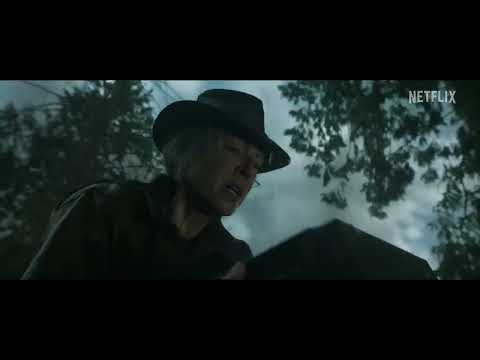
Where it plays: Around 00:03:00, non-diegetic. Lou drags a freshly killed deer through the rain, then methodically butchers it while her dog Jax feasts on the meat. The song keeps rolling as we cut to her shopping in a hardware store, moving with the same no-nonsense focus she brings to hunting.
Why it matters: The track’s outlaw-cowboy persona fits Lou’s history as a former CIA operative hiding in plain sight. It also weaponises a familiar classic-rock anthem: instead of barroom nostalgia, it becomes a character cue that quietly tells us this woman has lived on both sides of the law.
"Hold the Line" — Toto
Where it plays: About 00:14:00, diegetic in a car cassette deck. Philip rides with Chris, pulls out a tape, and declares how much he loves the band before blasting the song. The same cue returns later (around 00:30) as a callback, still linked to Philip’s point of view.
Why it matters: This is bravado music. The polished arena-rock production and sing-along chorus contrast sharply with the grim reality of a kidnapping plot. Philip’s enthusiasm hints at boyish arrested development; he soundtracks himself like a hero even as the movie slowly frames him as a dangerous, unstable presence.
"Africa" — Toto
Where it plays: Around 00:41:00, non-diegetic over dialogue and cross-cutting. Lou admits she spent 26 years in the CIA while rain lashes the island. The cue also follows Philip and Vee during a transition, dropping out briefly before swelling again near 00:44:00.
Why it matters: The song’s over-familiar, almost cosy pop sheen is used against us. Underneath the glossy chorus we’re watching a woman unpack a violent past and a child trapped with a kidnapper. The dissonance underlines how people paper over trauma with nostalgia and distractions.
"Lost" — Zola Jesus
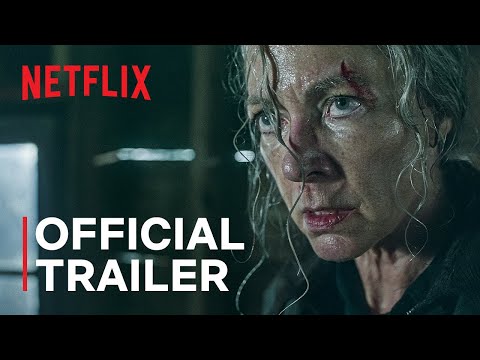
Where it plays: Trailer-only placement. Used in the official Netflix trailer rather than the feature itself, over a montage of storm, chases, and close-ups of Lou and Hannah.
Why it matters: Stylistically, this dark, atmospheric track previews the emotional register Fakhrara’s score aims for: heavy, echoing vocals and subterranean synths. It positions Lou less as a pure action flick and more as a survival psychodrama.
"Opening" — Nima Fakhrara
Where it plays: Title and early sequence cue, non-diegetic. Over the first shots of the island and Lou’s lonely routines, the music introduces the score’s cassette-scarred sound world: stretched vocal fragments, detuned strings and subtle synth pulses.
Why it matters: This cue quietly establishes that the storm is not just weather but a mental state. The smudged textures feel like memories recorded over each other, mirroring Lou’s layered secrets.
"Storm Is Brewing" — Nima Fakhrara
Where it plays: Early in the film as forecasts roll in and the physical storm closes around the island. Non-diegetic, building under shots of clouds, preparations, and tightening tensions between characters.
Why it matters: The cue’s gradually intensifying rhythm works almost like a barometer. It signals escalating danger without needing big melodic statements, keeping us uneasy even in mundane scenes.
"The World Is Not Your Playground" — Nima Fakhrara
Where it plays: Mid-film, underscoring confrontations about responsibility and the damage Lou’s decisions have caused. The cue likely covers sequences where the chase slows down long enough for revelations and arguments.
Why it matters: The title alone is a thesis for the film’s morality. Musically, the piece uses held, dissonant tones and flickers of melody that never quite resolve, echoing how none of these characters get clean closure for their pasts.
"My First Chance" — Nima Fakhrara
Where it plays: Later in the film, around the time deeper family secrets come out, and Philip’s twisted sense of “second chances” clashes with Lou’s attempt at atonement.
Why it matters: The cue’s slow-burn structure mirrors how the script reframes earlier events. It starts with almost fragile lines and grows thicker and more unstable, like a memory that keeps warping each time it is revisited.
"Lou Gears Up" — Nima Fakhrara
Where it plays: A classic gearing-up montage cue in the back half of the film: Lou arming herself, packing supplies and tracking gear as the storm hammers outside.
Why it matters: This is one of the few outright “action” build-ups in the score, but the cassette processing and close-miked sounds keep it intimate. Rather than triumphant, it feels like a last, grim commitment.
"The Beach" — Nima Fakhrara
Where it plays: Near the climax at the shoreline, where Lou and Philip’s conflict comes to a head in hand-to-hand combat amidst crashing waves and incoming CIA intervention.
Why it matters: Critics have singled out the final fight for how much weight rests on the score. Here the music becomes a mix of rage and mourning, underlining that no one truly “wins” on that beach; everyone is losing something—life, illusions, or family.
"You’ll Just Slow Me Down" — Nima Fakhrara
Where it plays: Final scenes and first end-credits cue. As the story lands on Hannah and Vee’s attempt to move on, and the possibility that Lou may have survived, this piece closes the book while leaving a faint question mark.
Why it matters: The title quotes Lou’s own blunt pragmatism but, in context, it sounds more like regret. The cue threads a thin line between closure and unease, carrying the emotional hangover into the credits.
Notes & Trivia
- The score was composed and then deliberately “damaged”: all material was recorded onto cassette tape and re-captured, giving the album its warbly, unstable texture.
- The film is set in 1986, and the cassette-based score subtly mirrors the Walkman and tapes that appear in the story.
- Netflix Music released the soundtrack digitally rather than on CD or vinyl, despite the strongly analogue sound concept.
- Classic-rock needle-drops are kept to a tiny handful; most of the film is carried by score rather than songs, unusual for a modern Netflix thriller.
- The official trailer uses Zola Jesus’ “Lost,” which never appears in the film proper, a common move when marketing wants a distinct trailer mood.
- Several reviewers who were lukewarm on the film’s script still singled out Fakhrara’s music as one of the strongest elements.
Music–Story Links
The soundtrack constantly ties sound to psychology. Lou herself is scored with a mix of cracked vocals and low, queasy strings, suggesting a mind full of suppressed memories. When she moves through the woods tracking Philip, the music often strips down to simple pulses and drones. It feels like a predator’s heartbeat: steady, focused, almost indifferent.
Philip’s presence, meanwhile, is repeatedly associated with classic rock. “Hold the Line” and “Africa” both play in close proximity to his scenes, and they function almost like self-curated theme songs. The slick, radio-friendly sound paints him as a man who never grew out of youthful fantasies about power and romance, even as his actions turn uglier and more desperate.
For Hannah, the score usually leans into more fragile motifs, especially in cues like “My First Chance” and “I Meant to Tell You.” When she pushes herself through the storm, those delicate ideas get buried under harsher textures, underlining how she is forced into Lou’s brutal world of surveillance and violence rather than belonging there.
The storm itself feels like a character. Cues such as “Storm Is Brewing” blur wind, rain and electronic noise until it is hard to tell where environment ends and score begins. You hear squalls and drones during scenes where nothing overtly dangerous is on screen, reinforcing the idea that the threat is always there—both in the sky and in Lou’s unresolved past.
Reception & Quotes
As a film, Lou landed in “mixed but interested” territory with critics: performances, atmosphere and action generally praised; plotting and twists less so. The music, though, gets consistently good notices. Several reviews describe Fakhrara’s work as one of the elements that makes the Netflix thriller feel a little stranger and moodier than its logline suggests.
One trade outlet described the album as a “suspenseful, vibey score” that fits the cat-and-mouse structure and foregrounds the analogue cassette concept. Another technical piece on post-production emphasised how unusual it is, on a major streaming release, to run the entire score through physical tape to get the right kind of 80s texture.
“A suspenseful, vibey score… for Netflix’s
Lou, recorded through cassette to capture an 80s warmth without full retro pastiche.” — Feature on composer Nima Fakhrara
“A grim, mournful score that carries the emotional weight of the climactic fight when there are no winners left.” — Film review noting the beach showdown
“There’s an intense, stylish thrumming through the runtime that keeps things feeling pacier and scarier than they actually are.” — Online review of the Netflix release
“A unique score from Nima Fakhrara… makes this by-the-numbers thriller worth a look.” — Aggregated critic consensus snippet
The soundtrack album itself is easy to find on major platforms (Spotify, Apple Music and others). There is no widely distributed physical edition at the time of writing, so for now it lives as a purely digital companion to the movie.
Interesting Facts
- Fakhrara reportedly wasted plenty of cassette tapes while building the score, re-recording over the same loops until the tape physically degraded in interesting ways.
- The score uses a relatively small ensemble, including a string quartet, rather than a full orchestra, which helps keep everything tight and close-miked.
- “Lou Gears Up” was used as a featured preview track ahead of the film’s release, functioning as a mini-trailer for the score’s sound.
- Despite being set in the 1980s, the film avoids wall-to-wall period songs; the few selected tracks stand out more because of that restraint.
- The end-credits structure (starting with “You’ll Just Slow Me Down”) allows the film to end ambiguously while giving the score time to cool down from the beach sequence.
- Some soundtrack databases briefly mis-attributed “Opening” and “Searching” to other Fakhrara projects before being corrected, a quirk of re-used cue titles.
- Lou’s cassette aesthetic slots neatly into Fakhrara’s broader career, which often experiments with unconventional recording methods and custom-built instruments.
Technical Info
- Title: Lou (Soundtrack from the Netflix Film)
- Year: 2022
- Type: Original score / soundtrack album for feature film
- Film: Lou (2022, Netflix / Bad Robot, dir. Anna Foerster)
- Composed by: Nima Fakhrara
- Music supervision (film): Charles Scott (featured songs and clearances)
- Key score cues highlighted: “Opening”, “Storm Is Brewing”, “The World Is Not Your Playground”, “My First Chance”, “Lou Gears Up”, “The Beach”, “You’ll Just Slow Me Down”
- Key licensed songs in film: “Wanted Dead or Alive” — Bon Jovi; “Hold the Line” — Toto; “Africa” — Toto
- Trailer song (not on score album): “Lost” — Zola Jesus (used in official Netflix trailer)
- Label: Netflix Music
- Release format: Digital (major streaming and download platforms)
- Album length: approx. 44 minutes, 15 tracks
- Film release: September 23, 2022, Netflix worldwide streaming
- Reception (film): Mixed/average critical scores overall, with standout praise for Allison Janney’s performance and the score’s distinctive sound.
Canonical Entities & Relations
| Subject | Relation | Object |
|---|---|---|
| Lou (2022 film) | directed by | Anna Foerster |
| Lou (2022 film) | produced by | Bad Robot Productions |
| Lou (2022 film) | music by | Nima Fakhrara |
| Lou (Soundtrack from the Netflix Film) | is soundtrack of | Lou (2022 film) |
| Lou (Soundtrack from the Netflix Film) | released by | Netflix Music |
| Allison Janney | stars as | Lou Adell |
| Jurnee Smollett | stars as | Hannah Dawson |
| Logan Marshall-Green | stars as | Philip |
| Ridley Asha Bateman | stars as | Vee Dawson |
| Nima Fakhrara | composed | Lou (Soundtrack from the Netflix Film) |
| Lou (2022 film) | distributed by | Netflix |
Questions & Answers
- Who composed the score for Lou, and what is distinctive about it?
- The score was composed by Nima Fakhrara. Its distinctive trait is that he recorded all the music through cassette tape, creating a deliberately aged, unstable sound that still feels modern.
- Which classic rock songs appear in the film, and how are they used?
- The film uses Bon Jovi’s “Wanted Dead or Alive” and Toto’s “Hold the Line” and “Africa.” They appear at key character moments, especially around Philip and Lou, highlighting bravado, nostalgia and moral dissonance.
- Is the Lou soundtrack album available to stream?
- Yes. Lou (Soundtrack from the Netflix Film) is available digitally on major services such as Spotify, Apple Music and other platforms under the Netflix Music label.
- What song plays in the official Netflix trailer for Lou?
- The main trailer uses “Lost” by Zola Jesus. It is a marketing choice and does not feature in the film itself, but it matches the score’s dark, atmospheric tone.
- Does the music lean heavily into 80s nostalgia?
- It nods to the 80s through cassette warmth and period song choices, but the score itself avoids overt retro pastiche, aiming instead for a tense, character-driven modern thriller sound.
Sources: Vague Visages – Soundtracks of Cinema: “Lou”; Soundtracki – Lou Soundtrack (2022); Film Music Reporter – “Lou” Soundtrack Album Details; Post Magazine – “Netflix’s Lou: Composer Nima Fakhrara”; Starburst Magazine – Nima Fakhrara interview on Lou; Whatsong – Lou (2022) soundtrack listings; Apple Music and Spotify album metadata; Netflix and Wikipedia entries and aggregated critic reviews.
November, 13th 2025
A-Z Lyrics Universe
Cynthia Erivo Popular
Ariana Grande Horsepower
Post Malone Ain't No Love in Oklahoma
Luke Combs Good Riddance (Time of Your Life)
Green Day Bye Bye Bye
*NSYNC You're the One That I Wan
John Travolta & Olivia Newton-John I Always Wanted a Brother
Braelyn Rankins, Theo Somolu, Kelvin Harrison Jr. and Aaron Pierre The Power of Love
Frankie Goes to Hollywood Beyond
Auli’i Cravalho feat. Rachel House MORE ›