Soundtracks:  A B C D E F G H I J K L M N O P Q R S T U V W X Y Z #


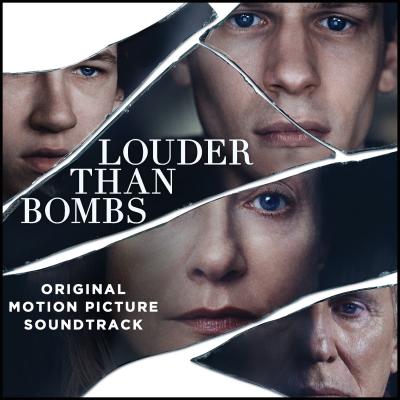
Louder Than Bombs  Album Cover

"Louder Than Bombs " Soundtrack Lyrics

Movie • 2016

Track Listing


"Louder Than Bombs (Original Motion Picture Soundtrack)" – Album Guide to Tracks and Key Scenes

Louder Than Bombs trailer frame of the Reed family in domestic interior
Louder Than Bombs – trailer imagery sets up the film’s quiet, anxious tone that the soundtrack extends.

Overview

How do you score a family that can’t agree on who their mother really was? Louder Than Bombs answers with an unusually hybrid soundtrack. The album "Louder Than Bombs (Original Motion Picture Soundtrack)" gathers Tangerine Dream, Beck, Medium Medium, Sylvester, Supreme Jubilees, Bach, Chopin and Ola Fløttum’s original score into one collage that mirrors the film’s fractured memories.

Instead of a single theme attached to each character, Joachim Trier’s film lets songs, classical pieces and ambient cues overlap like conflicting recollections. Tangerine Dream’s rerecorded "Love on a Real Train" gives the movie its most explicitly “cinematic” wash of arpeggiated synths; Beck’s "Chemtrails" brings in paranoia and environmental unease; Medium Medium’s "Hungry, So Angry" injects post-punk tension. Around them, Fløttum’s cues ("Walking with Melanie", "Following", "Home", "Louder Than Bombs") slide in and out, rarely calling attention to themselves, but binding the domestic drama to the ghosts of war images that hover just off-screen.

The soundtrack album follows that logic. It starts with the iconic Tangerine Dream track, then walks through a run of left-field source songs and classical excerpts before spending its last third in Fløttum’s score. You can hear the structure of the film in miniature: attention-grabbing cues early on, then quieter, more interior music as the family digs into buried secrets.

In terms of style, the mix is deliberately eclectic. Electronic and post-punk cuts (Tangerine Dream, Medium Medium, Com Truise, Solomon Grey, Deaf Center in the film itself) parallel Conrad’s online, nocturnal inner world. Disco and funk (Sylvester’s "Rock the Box", Torae & Wes on "Over You") colour the film’s social or remembered public spaces. Gospel-soul from Supreme Jubilees adds a spiritual, almost accusatory edge. And Chopin’s Nocturne No. 20 and Bach’s Suite No. 2 in B minor bring in old-world refinement that clashes productively with the mess of the Reed family’s life. Genres become a code: synthetic = distance and mediation, classical = legacy and expectation, funk/disco = bodies and social masks.

How It Was Made

Composer Ola Fløttum has been Joachim Trier’s go-to collaborator since Reprise and Oslo, August 31st. He specialises in slow-building textures and understated motifs rather than big melodic hooks. For Louder Than Bombs he wrote an ambient, gently dissonant score that can sit under dialogue for long stretches, then briefly swell when memories and present-day conflicts collide.

Fløttum’s palette here is small but flexible: piano, strings, soft electronics, a little guitar and subtle processing. Pieces like "Walking with Melanie", "Levitation" and "Isabelle Documentary" rarely resolve in obvious cadences. Instead they hover, as if the thought never quite reaches the surface. That fits a film built around people who either cannot speak about the past, or choose to reshape it.

The soundtrack album itself is a compilation rather than a pure score release. The Orchard (also the film’s US distributor) released it digitally in April 2016, sequencing eleven licensed tracks and classical pieces before eleven score cues. That means you get Beck’s "Chemtrails", Supreme Jubilees’ "Do You Believe", Medium Medium’s "Hungry, So Angry", Sylvester’s "Rock the Box", Com Truise’s "Open", Torae & Wes’ "Over You", Per Tjernberg’s "Manhattan Jungle", Kåre Vestrheim’s "This or That", Cristina Ortiz playing Chopin and a period-instrument Bach recording, all before Fløttum’s material takes over.

The film itself uses a few additional pieces that only appear on some cue sheets and databases rather than on the Orchard album — notably Nina Simone’s "Love Me or Leave Me" and ambient works by Deaf Center and Solomon Grey. According to coverage of the release, the re-recorded "Love on a Real Train" was specifically cut for the film, extending the classic Risky Business cue into a longer, more enveloping version that Trier could build a sequence around. He has mentioned his affection for that soundtrack in interviews, and he effectively “imports” some of its dreamy American coming-of-age energy into his own, more analytical family story.

Louder Than Bombs trailer frame with Isabelle Huppert behind a camera
The film’s war photography backdrop shapes how the score and song choices feel: distant, curated, never neutral.

Tracks & Scenes

Public sources list a full set of songs and cues for Louder Than Bombs, but they don’t always give frame-accurate timestamps. Below, I focus on how key pieces function in the film and on the album rather than claiming exact minute marks.

"Love on a Real Train (Rerecorded)" — Tangerine Dream
Where it plays: Used non-diegetically in one of the film’s more extended, drifting passages, pairing the famous synth arpeggios with slow, gliding images and overlapping thoughts. It basically turns the sequence into a suspended memory — neither pure flashback nor simple present-tense action.
Why it matters: The cue ties Trier’s film to a lineage of 80s art-house and coming-of-age cinema. Its looping figure feels like Conrad’s thought patterns: circling, obsessive, never fully landing. On the album, placing it first makes the whole record feel like a memory-piece before you even meet the Reed family.

"Hungry, So Angry" — Medium Medium
Where it plays: As a sharp, rhythmic post-punk track, it appears as source music during sequences that lean into agitation and social friction rather than introspective grief. The spiky bassline and off-kilter sax suggest crowded, restless spaces even when the visuals stay relatively contained.
Why it matters: The track embodies the pent-up rage that Conrad never articulates clearly. Musically it also pulls the film slightly away from indie-drama convention and toward edgier post-punk territory, reminding you that the characters’ emotions are not polite or tidy.

"Chemtrails" — Beck
Where it plays: The song appears as non-diegetic music, its distant drums and hazy vocal sitting over images where the film blurs interior and exterior worlds. It dovetails particularly well with shots of suburban calm undercut by the knowledge of Isabelle’s war-zone photographs.
Why it matters: Lyrically and sonically it’s about invisible toxicity. That matches the Reed household, where the real damage — affairs, lies about Isabelle’s death, Conrad’s self-destructive fantasies — stays largely unspoken. On the album, it’s one of the clearest bridges between “indie rock” and Fløttum’s ambient score.

"Do You Believe" — Supreme Jubilees
Where it plays: A gospel-soul track that lands like a hymn drifting in from another room. When it turns up in the film, it feels less like background filler and more like a moral counterpoint to the characters’ evasions and half-truths.
Why it matters: The slow groove and vocal harmonies bring faith and judgment into a story that otherwise avoids explicit religion. It sounds like a community chorus commenting on a family that has lost any shared language.

"Rock the Box" — Sylvester
Where it plays: As dance-floor disco/funk, this one is tied to more outward-facing, social scenes — memories of crowded rooms, parties, or public events. It functions as source music that characters could realistically hear, even if the film keeps the camera trained on their private reactions rather than on the crowd.
Why it matters: Sylvester’s exuberant vocal and the track’s club energy sharply contrast the film’s otherwise muted textures. Whenever it appears, you feel the gap between external performance (fun, movement, sex) and internal turbulence.

"Open" — Com Truise
Where it plays: A retro-futuristic synth track that could easily underscore Conrad’s late-night computer sessions or his fantasy sequences. Public cue lists confirm it in the film; thematically it sits closest to scenes where screens and images mediate reality for the characters.
Why it matters: The track bridges Tangerine Dream’s analogue synth legacy and Fløttum’s more contemporary ambient language. On the album it forms an electronic spine through the “songs” half before you drop into the pure score.

"Over You" — Torae & Wes
Where it plays: Used as source music that brushes against Jonah’s and Conrad’s different relationships to contemporary culture. It sounds like the outside world — radio, TV, somebody else’s playlist — leaking into the insulated Reed household.
Why it matters: Having a hip-hop cut alongside Tangerine Dream, Beck and Bach keeps the film’s soundscape honest to its US setting and to the mid-2010s release context. It places the family drama in a wider, messier sonic environment.

"Love Me or Leave Me" — Nina Simone
Where it plays: Not included on the Orchard album, but documented in soundtrack credits for the film. It turns up as a recorded performance rather than score, framing one of the quieter, more intimate sequences.
Why it matters: The lyric — a blunt ultimatum — resonates uncannily with Isabelle’s absence and with the half-finished conversations she leaves behind. Simone’s voice gives those subtexts a sharper edge than any dialogue could.

"Nocturne No. 20 in C-sharp minor, op. posth." — Frédéric Chopin (performed by Cristina Ortiz)
Where it plays: As a classical piano piece, used non-diegetically, it sits over reflective or transitional moments. You feel it most strongly when the film wants a sense of inherited culture and expectation weighing on the characters.
Why it matters: The nocturne’s melancholic harmony ties Isabelle’s high-art photography world to a much older European canon. It underlines how Conrad and Jonah have grown up with impossible standards of “seriousness” around them.

"Suite No. 2 in B minor, BWV 1067" — J.S. Bach (performed by Four Centuries of Bach & John Abberger)
Where it plays: Another non-diegetic classical piece, used sparingly. The baroque flute and dance rhythms bring a sense of balance and formality that almost mocks the family’s inability to structure their own lives.
Why it matters: Bach’s ordered counterpoint provides a foil to the film’s nonlinear editing. Where the narrative jumps in time, the music offers rigour and pattern — a reminder of a world where everything, supposedly, has its place.

"Isabelle Documentary" — Ola Fløttum
Where it plays: Over material related to the retrospective exhibition and to footage of Isabelle’s work. The cue knits together war images, museum space and private grief.
Why it matters: It’s the moment where Fløttum’s score most directly touches Isabelle as an artist rather than as a mother or absent figure. The cue blends unease with a certain calm, mirroring how people consume images of conflict from a safe distance.

"Looking for Conrad" — Ola Fløttum
Where it plays: Around scenes that focus on the younger son, and on Gene’s attempts to understand and literally find him. The music is searching, never quite resolving, with a narrow dynamic range that keeps you on edge.
Why it matters: The cue’s restlessness captures Conrad’s habit of vanishing into games, headphones, or fantasy. It also tracks Gene’s fear that he is missing signs he ought to see — musically, phrases keep starting and not quite finishing.

"Louder Than Bombs" — Ola Fløttum
Where it plays: The closing piece on the album, and one of the later cues in the film, used around or after emotional peaks. It feels like a slow exhale rather than a triumphal finale.
Why it matters: As a title cue it has to sum up the film’s approach: restrained on the surface, heavy underneath. The harmonies never explode, but the low-end weight and long notes make the silence around them feel full of unsaid things.

Louder Than Bombs trailer shot of Conrad alone at night
Conrad’s online, nocturnal world leans heavily on electronics and ambient score rather than obvious needle-drops.

Notes & Trivia

  • The soundtrack album is technically credited to “Various Artists,” but the back half plays almost like a standalone Ola Fløttum score EP.
  • The Orchard released the album digitally in 2016, aligned with the film’s US theatrical run; some coverage cites 8 April, others mid-April, depending on territory.
  • A re-recorded, extended version of Tangerine Dream’s “Love on a Real Train” was prepared specifically for this project rather than lifting the original film mix.
  • Some pieces used in the film (Nina Simone, Deaf Center, Solomon Grey) are documented on cue sheets and databases but do not appear on the Orchard album’s 22-track listing.
  • In some markets the film was retitled — for example Back Home in France — but the English-language soundtrack branding stayed with Louder Than Bombs.

Music–Story Links

The soundtrack’s real trick is how it mirrors the film’s split perspective. Isabelle’s presence is often felt through classical and documentary-adjacent cues: Chopin, Bach, and Fløttum’s "Isabelle Documentary" emphasise the museum-ready, curated version of her life. Those tracks are cleanly recorded, almost austere.

Gene and Jonah tend to sit closer to the “songs”: Beck, Sylvester, Supreme Jubilees. They live in a world of records and playlists, trying to pin down emotions by borrowing other people’s lyrics and moods. When the film cuts to them driving, teaching, or socialising, the soundtrack often steps away from the abstract score and into recognisable genres.

Conrad, by contrast, feels intertwined with the electronic and ambient pieces. "Love on a Real Train", Com Truise’s "Open", and the more atmospheric score cues fit his late-night browsing and his stitched-together online collages of disturbing footage. They sound mediated, filtered, like something seen on a screen rather than lived directly.

The result is a kind of musical triangulation. When a scene shifts from a song into score, or vice versa, you can feel the film tilting toward one character’s viewpoint. A gallery sequence scored with Tangerine Dream doesn’t play the same as one carried only by Fløttum’s strings, even if the images are equally composed. The soundtrack keeps telling you whose memory you are moving through.

Reception & Quotes

Louder Than Bombs drew a wide range of reactions on release: some critics admired its structural ambition, others found it too controlled. The music generally sat on the positive side of that ledger. Early festival reviews highlighted Fløttum’s ability to move between “discreet and propulsive” modes depending on the scene, and later reappraisals of the film often single out the use of "Love on a Real Train" as a standout sequence.

Retrospective pieces have also noted how the soundtrack anticipates Trier’s later, bolder song placements in films like The Worst Person in the World. You can feel him testing how far he can push needle-drops without breaking tonal coherence, and relying on a trusted composer to glue the pieces together.

“A score by Ola Fløttum that veers between discreet and propulsive as the mood demands.” — Sight & Sound, Cannes first-look review

“The minimalistic tension of the film is augmented by the ambient musical score… making for a cohesive film.” — The Chimes, 2016 review

“A deeply introspective drama… grief, memory and psychological tension felt as much in the sound design as in the images.” — Broadsheet-style reappraisal summarising recent critical consensus

“That ‘Love on a Real Train’ sequence hit me especially hard… a strange wave of contradicting emotions.” — Viewer response on Letterboxd

The album itself is easy to find on streaming services (Spotify, Apple Music and others) and is usually filed under soundtrack/compilation. There is no widely distributed physical edition; most listeners encounter it digitally, often discovering some of the older tracks (Supreme Jubilees, Medium Medium) for the first time through the film.

Louder Than Bombs trailer shot of Gene and Conrad walking beside a field
Later criticism often notes how Fløttum’s restrained score carries stretches of father–son interaction without leaning on melodrama.

Interesting Facts

  • The Orchard’s release effectively turns the film into a mini-curated mixtape of obscure gems — several listeners came to Supreme Jubilees or Medium Medium through this soundtrack first.
  • Composer Ola Fløttum would go on to score Trier’s Thelma and The Worst Person in the World, further refining the low-key, emotionally precise style heard here.
  • Some soundtrack databases list separate performances of Chopin’s Nocturne by Cristina Ortiz and Claudio Arrau, reflecting how classical pieces can appear in multiple recorded versions across a project’s lifecycle.
  • The soundtrack’s first track, “Love on a Real Train (Rerecorded)”, occasionally shows up in chill/ambient playlists unrelated to the film, bringing Louder Than Bombs to listeners who may never have heard of the movie.
  • Nordic film music documentation notes that Fløttum’s score was released as 22 AAC files, mirroring the Orchard album but credited under a Norwegian film-music register.
  • Because the film’s English title matches a Smiths compilation album and later a BTS song, casual searches for the soundtrack often surface those unrelated releases first, hiding this 2016 compilation a bit.

Technical Info

  • Title: Louder Than Bombs (Original Motion Picture Soundtrack)
  • Film: Louder Than Bombs (2015 drama)
  • Year of soundtrack release: 2016
  • Type: Compilation soundtrack — songs, classical pieces and original score
  • Composer (score): Ola Fløttum
  • Key featured artists: Tangerine Dream, Beck, Medium Medium, Sylvester, Com Truise, Torae & Wes, Supreme Jubilees, Per Tjernberg, Kåre Christoffer Vestrheim, Cristina Ortiz, Four Centuries of Bach & John Abberger
  • Additional artists in film only: Nina Simone, Deaf Center, Solomon Grey, others documented on cue sheets
  • Label: The Orchard (digital release)
  • Length: 22 tracks, about 59 minutes
  • Release format: Digital (streaming and download; no standard CD/vinyl edition widely distributed)
  • Film director: Joachim Trier
  • Starring: Gabriel Byrne, Isabelle Huppert, Jesse Eisenberg, Devin Druid, Amy Ryan, David Strathairn
  • Release context: Premiered in competition at Cannes 2015; US theatrical release April 2016 aligned with soundtrack drop
  • Availability: Streaming on major music services as Louder Than Bombs (Original Motion Picture Soundtrack)

Canonical Entities & Relations

Subject Relation Object
Louder Than Bombs (2015 film) directed by Joachim Trier
Louder Than Bombs (2015 film) music by Ola Fløttum
Louder Than Bombs (2015 film) stars Gabriel Byrne
Louder Than Bombs (2015 film) stars Isabelle Huppert
Louder Than Bombs (2015 film) stars Jesse Eisenberg
Louder Than Bombs (2015 film) stars Devin Druid
Louder Than Bombs (Original Motion Picture Soundtrack) is soundtrack of Louder Than Bombs (2015 film)
Louder Than Bombs (Original Motion Picture Soundtrack) released by The Orchard
Tangerine Dream performs Love on a Real Train (Rerecorded)
Beck performs Chemtrails
Medium Medium performs Hungry, So Angry
Sylvester performs Rock the Box
Supreme Jubilees performs Do You Believe
Johann Sebastian Bach composed Suite No. 2 in B Minor, BWV 1067
Frédéric Chopin composed Nocturne No. 20 in C-sharp minor, op. posth.
Louder Than Bombs (Original Motion Picture Soundtrack) features score by Ola Fløttum
Louder Than Bombs (2015 film) distributed by SF Norge A/S; Memento Films; The Orchard (US)

Questions & Answers

Who composed the original score for Louder Than Bombs?
The original score was composed by Norwegian musician Ola Fløttum, a frequent Joachim Trier collaborator known for restrained, textural writing rather than big themes.
What kind of album is Louder Than Bombs (Original Motion Picture Soundtrack)?
It’s a compilation: roughly half licensed songs and classical pieces (Tangerine Dream, Beck, Medium Medium, Sylvester, Supreme Jubilees, Chopin, Bach) and half original score cues by Fløttum.
Is Tangerine Dream’s “Love on a Real Train” the original 1983 version?
No. The soundtrack uses a rerecorded and extended version prepared for this film, giving Trier more flexibility in editing and a slightly updated sonic profile.
Are all the film’s songs on the official soundtrack album?
Not quite. The Orchard album has 22 tracks, but some pieces heard in the film — such as Nina Simone’s “Love Me or Leave Me” and certain ambient works — are not included.
Where can I listen to the Louder Than Bombs soundtrack today?
The album is available on major streaming platforms like Spotify and Apple Music under the title Louder Than Bombs (Original Motion Picture Soundtrack), credited to Various Artists.

Sources: Filmmusicreporter – ‘Louder Than Bombs’ Soundtrack Announced; Montages.no coverage of the soundtrack release; Apple Music & Spotify album metadata; Discogs release listing; Ringostrack film song credits; IMDb soundtrack page; MUBI, Sight & Sound and The Chimes reviews; Guardian retrospective on the film; Brainvoyager Tangerine Dream feature; Letterboxd viewer responses.

In this film plays a young talent Jesse Eisenberg – the boy who phenomenally depicted the founder of social network Facebook Mark Zuckerberg. In addition, he brilliantly played in one of the films on the very popular now topic of zombie apocalypse, where he talked about the main points that would lead you to survival. This film in front of us is a family drama, in which they want to cover the grief that had fallen so suddenly upon them. How can anyone predict the hardship? It always comes to us very suddenly, in those moments when we expect it less than anything. Forcing us to cry, to sink into the abyss of self-flagellation in mind that we did not spend enough time with the person, who is now not with us. Whom we appreciated and loved, but not always were able to spend enough time with him or her. Such a sad note has this film, which was shot just for the awards, but not for box offices (because the latter do not even overcame USD 1 million). This is emphasized by the numerous compositions in its soundtrack. Chemtrails is slow and casts gloom. Do You Believe echoes it with high drawling voice of the singer, who is almost about to howl. Over You, despite this is rap, has not characteristic for this genre musical instruments, as well as a pretty good lyrics – there is no abusive words, as if paying a tribute to this film. Medium Medium band made ​​a song Hungry, So Angry, where contained not yet completely mature alternative rock that underlines the desire of young people to do something of their own, albeit not as fervent as that of garage rock, but with an understanding of all lyrics that they put in. The premiere of the film was from May to December 2015 (in different countries) and it didn’t receive high popularity – it was created as an art piece but not as broad consumer thing.

November, 13th 2025

Find "Louder Than Bombs" profile on IMDb and Rotten Tomatoes
A-Z Lyrics Universe

Lyrics / song texts are property and copyright of their owners and provided for educational purposes only.