Soundtracks:  A B C D E F G H I J K L M N O P Q R S T U V W X Y Z #


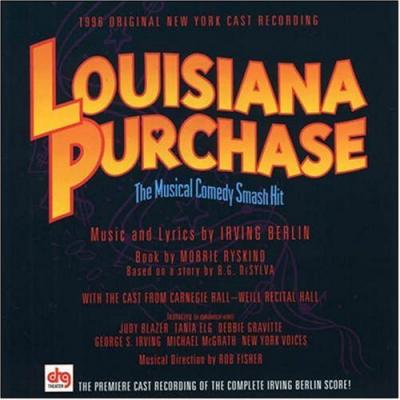
Louisiana Purchase Album Cover

"Louisiana Purchase" Soundtrack Lyrics

Musical • 1996

Track Listing


"Louisiana Purchase (1996 Original New York Cast Recording)" – Album Guide to Tracks and Key Scenes

Louisiana Purchase 1941 film trailer still with Bob Hope in a political scene
The classic 1941 film trailer image often used as visual shorthand for the musical’s satirical world.

Overview

Can a vintage Broadway political satire feel newly sharp in the 1990s? The 1996 concert and cast album of “Louisiana Purchase” answers with a confident yes. The recording restores Irving Berlin’s 1940 score in full, wrapping it in polished Encores!-style orchestration while keeping the wink-and-nudge tone of the original. You hear a corrupt New Orleans political machine, a naïve Republican senator, and several very determined women all vying for the upper hand, mostly in 32-bar sections.

The album documents the New York concert revival that finally gave this musical a complete cast recording. Earlier generations knew individual numbers from standards albums or 1940s 78s, but not the show as a whole. Here, numbers like “Sex Marches On”, “Louisiana Purchase”, “It’s a Lovely Day Tomorrow”, “Fools Fall in Love” and “What Chance Have I (With Love)” sit in narrative order, with dialogue and reprises, so the satire actually builds. For a score built around bribery, seduction and legislative filibuster, it moves quickly and cleanly.

The mood swings between three poles: sly political cynicism, genuine romantic longing, and broad revue-style comedy. The 1996 cast leans into the wordplay and innuendo, but Rob Fisher’s musical direction keeps everything rhythmically tight and unfussy. The sound is bright but not harsh, the orchestra relatively lean, so Berlin’s craft is always audible: inner counter-melodies, clean rhyme schemes, deceptive modulations.

Stylistically, the album is a tour through pre-war popular forms. Foxtrots and two-steps carry the political set pieces and company numbers. Sweet ballads handle the Loganberry–Marina–Jim triangle. Gospel-tinged pastiche (“The Lord Done Fixed Up My Soul”) and Latin-parody dance rhythms (“Latins Know How”) cover the more outrageous satire. The genres map neatly to meaning: jazzy marches signal institutional hypocrisy, Latin numbers mark sexual gamesmanship, and the quasi-hymn underlines how morality can be turned into another performance.

How It Was Made

Irving Berlin wrote music and lyrics for Louisiana Purchase in 1940, working with book writer Morrie Ryskind on a story by producer Buddy G. DeSylva. The original Broadway production ran 444 performances at the Imperial Theatre and was quickly adapted into a 1941 Technicolor film starring Bob Hope. Despite that success, no full original cast album was made, so for decades the show existed mainly in piano–vocal scores, sheet music and scattered recordings.

In June 1996 a complete concert version was staged at Weill Recital Hall at Carnegie Hall, associated with the City Center Encores! ethos of reconstructing “lost” scores. The New York concert cast included Michael McGrath (Jim Taylor), Judy Blazer (Marina van Linden), George S. Irving (Senator Oliver P. Loganberry), Taina Elg (Madame Yvonne Bordelaise) and Debbie Gravitte (Beatrice), among others. Performances ran only a few days, but the run was designed with recording in mind.

Music director and conductor Rob Fisher led the orchestra and chorus, reconstructing the full score from surviving materials, and restoring several songs that had been cut before Broadway. The album, released by DRG Records as “Louisiana Purchase (1996 Original New York Cast Recording)”, runs about 66 minutes and presents overture, entr’acte, reprises and underscored dialogue in a continuous listening experience. As one review put it, Fisher essentially built the cast album the 1940 hit never received, stitching missing orchestration details back in from archival sources and Berlin’s manuscripts.

Louisiana Purchase 1941 trailer shot of Mardi Gras dancers and politicians
Even in the 1941 film trailer, the blend of Mardi Gras spectacle and legislative scheming sets the tone the 1996 album preserves.

Tracks & Scenes

This album follows the stage structure rather than the film’s song choices. Below, I focus on key numbers and how they work in the story, not on giving a complete track listing.

“Apologia” — Company
Where it plays: Early in Act I, just after the orchestral overture. The officials in the Louisiana Purchase Company essentially sing a pre-emptive legal disclaimer, explaining that any resemblance to real politicians is “purely coincidental,” while standing in an office that looks suspiciously like the state house. A chorus of clerks and functionaries backs them up in brisk counterpoint.
Why it matters: The number frames the whole musical as a satire that knows it is playing with live political wire. On the album it sets up the tongue-in-cheek tone immediately, so the later jabs at Huey Long–style machine politics never feel like a blindside.

“Sex Marches On” — Jim Taylor and Ensemble
Where it plays: Still early in Act I, in a government setting where the bosses discuss how sex scandals can be weaponised. Jim and various officials march in strict time while detailing the “progress” of sex as a political tool. Think Sousa march meets gossip column. The 1996 recording emphasises the snare drum and brass, giving it a PR-parade flavour.
Why it matters: This is Berlin at his most openly risqué for Broadway of the era. The song turns moral outrage into a jaunty number, underlining how the machine treats scandal as just another tactic. It also introduces Jim as someone far more comfortable with practical corruption than with moral sermonising, which makes his later romantic sincerity more surprising.

“Louisiana Purchase” — Beatrice and Company
Where it plays: Big, early showpiece set somewhere between a political rally and a Mardi Gras showroom. Beatrice and the ensemble sell the audience on the state as a product: sunshine, jazz, deals and all. In the 1996 version you can hear the full company landing the title phrase in tight harmony, with dance breaks implied by the orchestral interludes.
Why it matters: The title song turns the historical land deal into a metaphor for modern graft. It establishes New Orleans as seductive, charming and absolutely for sale. Whenever the melody returns, it signals that someone is making a deal, whether in business or romance.

“It’s a Lovely Day Tomorrow” — Madame Yvonne Bordelaise
Where it plays: A quieter Act I ballad for Madame Bordelaise, usually staged as she reflects on tough times while trying to keep spirits up. The song predates the show as a 1938 Berlin composition about hope in the middle of European crisis, and here it becomes a Depression-era reassurance in a crooked state capital.
Why it matters: On the album, Taina Elg (in the concert cast) gives it a restrained warmth, with the orchestra staying mostly under her. The number lets Berlin smuggle in genuine, non-satirical emotion. In context, it says: yes, the system is rotten, but people still need something to hold onto.

“Outside of That, I Love You” — Jim Taylor & Marina van Linden
Where it plays: Mid-Act I, after Marina agrees to be part of a scheme to compromise Senator Loganberry but before the consequences hit. Jim and Marina trade verses listing each other’s faults — ambition, cynicism, opportunism — and then undercut the list with the title line. The orchestration alternates between light waltz and bantering patter.
Why it matters: The duet is the first real hint that Jim might be more than a front man for corruption. The 1996 album gives the voices room to phrase freely, so the humour lands without losing the affection underneath. Dramatically, it starts shifting the story from pure political sketch toward character-driven romance.

“You’re Lonely and I’m Lonely” — Marina & Senator Loganberry
Where it plays: Still in Act I, in a more intimate setting — often Loganberry’s hotel room or a private corner during Mardi Gras. Marina and the Senator share a deliberately polite dance of loneliness, each half-aware they’re being used for someone else’s agenda. The accompaniment is smooth, almost dance-band crooner style.
Why it matters: The song complicates the Senator. He isn’t just a buffoon; he is lonely, mid-career, and vulnerable to flattery. On the album the gentle syncopation lets you hear how close the number lies to straight Tin Pan Alley pop of the period.

“(Dance With Me) Tonight at the Mardi Gras” — The Martins & Company
Where it plays: A full-ensemble sequence set in the middle of Mardi Gras chaos, complete with masked dancers and processions. The 1996 recording uses bright brass and rhythmic percussion to suggest the street parade while the chorus swaps invitations and veiled barbs.
Why it matters: This is the musical’s kinetic centre: the moment where private schemes and public festival collide. The track on the album reads like a continuous mini-suite, and you can almost see the Balanchine-era choreography the original production boasted, even though this is a concert recording.

“Latins Know How” — Madame Bordelaise & Ensemble
Where it plays: Act II, staged as a tongue-in-cheek cabaret number. Madame Bordelaise explains, through a Latin-flavoured rhythm, how “Latin” lovers handle romance, with backup dancers or chorus emphasising each innuendo. It feels like a number performed in a club the politicians frequent.
Why it matters: The song is pure stereotype satire, but musically it gives the score a shot of syncopated energy just when the plot risks getting bogged down in legislative manoeuvring. On the album, the faux-Latin percussion and brass stabs underline how performative all the seduction in this show really is.

“What Chance Have I (With Love)” — Senator Loganberry
Where it plays: Late in Act II, after Loganberry has been thoroughly tangled in plots and counter-plots. Alone (or nearly so), he considers whether he has any chance at all of navigating love and politics without being made a fool. The melody is straightforward and wistful, with modest string support.
Why it matters: This turns the Senator into something like a tragicomic figure rather than a simple stooge. The 1996 performance leans into the humour but lets the rueful line “what chance have I” sit honestly. It’s the kind of second-act ballad that makes an older leading man suddenly very human.

“The Lord Done Fixed Up My Soul” — Beatrice, Abner & Ensemble
Where it plays: Act II revival-style number, often staged like a political rally masquerading as a church service. A mock-gospel choir backs Beatrice while she testifies about how “the Lord” has sorted out her problems — which just happen to align with certain business interests being absolved.
Why it matters: Berlin uses gospel tropes to show how religion can be co-opted by power. On record, the number’s call-and-response and rhythmic clapping leap out even without visuals. It punctures any lingering sense that this is just a gentle cartoon; the critique is sharper here.

“Fools Fall in Love” — Jim Taylor & Marina
Where it plays: A late-second-act duet, once the emotional stakes are clear and the schemes have started to collapse. Jim and Marina admit they have, in fact, done the stupid thing and fallen in love in the middle of a political fix. The tune is relaxed, almost conversational.
Why it matters: This is the emotional payoff for their earlier sparring. On the 1996 album the voices are allowed to phrase slightly behind the beat, making the number feel like two people finally dropping their guard.

“You Can’t Brush Me Off” — Emmy-Lou, Lee Davis & The Martins
Where it plays: Comic relief in Act II. Emmy-Lou refuses to be sidelined, insisting on her value and presence while Lee and the Martins try, and fail, to step around her. The song is quick, full of patter and overlapping lines.
Why it matters: The number gives the secondary couple a chance to shine and showcases Berlin’s knack for character comedy. On the album it adds variety to a second half that might otherwise be dominated by plot-tying reprises.

“Entr’acte” & Finale — Orchestra & Company
Where they play: The entr’acte opens Act II with a brisk medley of Act I themes, and the finale wraps up the investigations, marriages and political “solutions” in a full-cast curtain song. You can hear the audience reaction on some pressings, giving a sense of live theatre rather than studio isolation.
Why they matter: These bookend the second half, reminding you that this is first and foremost a piece of stage entertainment. On record, the entr’acte is also a good quick overview of the melodic material if you are listening in fragments.

Louisiana Purchase 1941 trailer frame of showgirls and band on stage
The 1996 cast album imagines how Berlin’s original stage spectacle sounded, even when all you see today is the Technicolor film.

Notes & Trivia

  • The 1996 concert used the complete score, including several songs cut before the 1940 Broadway opening, making this recording more comprehensive than some later “highlights” compilations.
  • The musical’s satire of a Huey Long–like political boss was considered sharp enough in 1940 that producers leaned on “all characters are fictitious” messaging baked into the show itself.
  • The original Broadway staging featured choreography by George Balanchine, a rare and fascinating intersection between high ballet and commercial musical comedy.
  • The 1996 cast album effectively functions as the show’s premiere full cast recording; earlier LPs and CDs tended to be studio compilations of Berlin songs rather than documents of the book musical.
  • The score folds in the previously independent 1938 song “It’s a Lovely Day Tomorrow”, which had already been recorded by major artists and used for wartime morale before anchoring a scene here.

Music–Story Links

In Louisiana Purchase, style equals strategy. The political machine gets its voice through marches and big ensemble numbers. “Apologia” and “Sex Marches On” use tight, almost militaristic rhythms to show how smoothly the graft operation runs; these songs sound like press conferences set to music.

The honest, if bumbling, Senator Loganberry sings in more traditional popular-ballad mode. Numbers like “What Chance Have I (With Love)” keep him rhythmically simple and harmonically conservative, underlining his straight-arrow, slightly out-of-time persona. When he steps into duet territory with Marina in “You’re Lonely and I’m Lonely”, the music invites us to see their vulnerability rather than their political roles.

Jim Taylor straddles both worlds. In “Sex Marches On” and the title song he sounds like part of the machine, barking slogans in time with the band. In “Outside of That, I Love You” and “Fools Fall in Love”, the orchestrations soften and the harmonic motion gets more chromatic, signalling that he is capable of genuine feeling even while he plays fixer.

The women around him manipulate genre as well as men. Madame Bordelaise moves from sincere optimism in “It’s a Lovely Day Tomorrow” to knowingly exaggerated show in “Latins Know How”. Beatrice weaponises mock-revival energy in “The Lord Done Fixed Up My Soul”, turning faith language into cover for political absolution. Emmy-Lou’s “You Can’t Brush Me Off” wraps her insistence on being heard in fizzy comedy, but the subtext is plain: women in this world survive by refusing to stay background.

Reception & Quotes

The 1996 cast recording was welcomed by musical-theatre specialists as a rescue job for a historically important, rarely heard score. A Miami New Times column on cast albums praised the DRG release for reconstructing a show that had “disappeared” despite its 444-performance run, crediting Rob Fisher with piecing the score back together and restoring tryout cuts. The review underlined how the album made clear just how rich Berlin’s writing was for this title.

Later commentary from critics and bloggers has tended to focus on two things: the surprising bite of the political satire, and the sheer variety of Berlin’s melodies at a late stage in his career. The recording is also often cited in discussions of the Encores! project’s influence on the broader revival of Golden Age titles.

“DRG’s great new revival cast recording puts the show back on the map… Fisher has lovingly pieced the score back together.” — contemporary cast-album review

“Uncharacteristically risqué Irving Berlin musical with a witty, unfamiliar score in a sharp, fast-paced revival.” — Off-Broadway review of a later staging

“A reminder that Berlin could write pointed political comedy as easily as sentimental ballads.” — modern musical-theatre blog assessment

“For students of Broadway history, this is the record that lets you finally hear the missing 1940 show.” — collector’s guide note

The album remains in print digitally and often surfaces on curated playlists of “lost” Golden Age musicals. Physical CDs now circulate mostly among collectors, but the recording’s availability on major streaming platforms has made Louisiana Purchase far easier to study and enjoy than for most of the twentieth century.

Louisiana Purchase 1941 trailer frame showing Bob Hope at a legislative podium
The image of a filibustering politician at the podium echoes Jim Taylor’s climactic stand in both stage and film versions.

Interesting Facts

  • The 1996 concert and album were tied to the City Center Encores! movement, which was explicitly created to present full scores of “rarely heard” American musicals rather than just hit medleys.
  • Because no full original-cast recording exists, the 1996 album effectively sets the performance text for many later revivals, influencing tempos, cuts and even some vocal inflections.
  • The recording credits not only the principal cast but also New York Voices-style ensemble work, giving choral passages a clarity and blend you rarely hear on 1940s discs.
  • The score’s song list has been slightly different in various publications; the 1996 edition helped stabilise a “canonical” running order including restored numbers such as “I’d Love to Be Shot from a Cannon With You” and “It’ll Come to You.”
  • The satirical premise — a senator sent to expose corruption and nearly ruined by sex and liquor — has been periodically cited in think-pieces about how little some political tactics have changed.
  • Berlin’s use of “It’s a Lovely Day Tomorrow” here is a rare case of him repurposing a widely known stand-alone song inside a book musical in a way that still serves character and plot.

Technical Info

  • Album title: Louisiana Purchase (1996 Original New York Cast Recording)
  • Work type: Stage musical – political satire, 1940s / WWII era
  • Music & lyrics: Irving Berlin
  • Book: Morrie Ryskind (from a story by Buddy G. DeSylva)
  • Original Broadway production: Imperial Theatre, New York; opened May 28, 1940; 444 performances
  • 1996 concert production: Weill Recital Hall at Carnegie Hall, New York; limited run in June 1996 using the complete score
  • Principal 1996 cast (selected): Michael McGrath (Jim Taylor), Judy Blazer (Marina van Linden), George S. Irving (Sen. Oliver P. Loganberry), Taina Elg (Madame Yvonne Bordelaise), Debbie Gravitte (Beatrice)
  • Music director/conductor: Rob Fisher
  • Label: DRG Records
  • Release date (album): November 19, 1996 (CD and digital)
  • Approximate length: 20 tracks, about 66 minutes
  • Notable musical numbers: “Apologia,” “Sex Marches On,” “Louisiana Purchase,” “It’s a Lovely Day Tomorrow,” “Outside of That, I Love You,” “You’re Lonely and I’m Lonely,” “(Dance With Me) Tonight at the Mardi Gras,” “Latins Know How,” “The Lord Done Fixed Up My Soul,” “Fools Fall in Love,” “You Can’t Brush Me Off.”
  • Associated film adaptation: Louisiana Purchase (1941, Paramount), with a partially overlapping but differently arranged song selection.
  • Availability: Widely available for streaming and digital purchase; CD edition now mainly found via specialty and second-hand sellers.

Canonical Entities & Relations

Subject Relation Object
Louisiana Purchase (musical) music & lyrics by Irving Berlin
Louisiana Purchase (musical) book by Morrie Ryskind
Louisiana Purchase (musical) based on story by Buddy G. DeSylva
Louisiana Purchase (musical) originally produced by Buddy G. DeSylva
Louisiana Purchase (musical) premiered at Imperial Theatre, New York
Louisiana Purchase (musical) adapted as Louisiana Purchase (1941 film)
Louisiana Purchase (1941 film) directed by Irving Cummings
Louisiana Purchase (1941 film) stars Bob Hope
Louisiana Purchase (1996 Original New York Cast Recording) is soundtrack of Louisiana Purchase (musical)
Louisiana Purchase (1996 Original New York Cast Recording) released by DRG Records
Louisiana Purchase (1996 Original New York Cast Recording) music directed by Rob Fisher
Louisiana Purchase (1996 Original New York Cast Recording) features Michael McGrath, Judy Blazer, George S. Irving, Taina Elg, Debbie Gravitte
Louisiana Purchase (1996 concert) performed at Weill Recital Hall, Carnegie Hall
City Center Encores! associated with revival and recording of Louisiana Purchase

Questions & Answers

What exactly is the 1996 Louisiana Purchase album?
It is a complete cast recording of a New York concert revival of Irving Berlin’s 1940 musical, often billed as the “1996 Original New York Cast Recording,” produced by DRG Records.
How is the 1996 recording different from the 1941 film’s music?
The album follows the full stage score, including songs and reprises not used in the film, and restores several numbers cut before Broadway, while the film uses a shorter, re-arranged selection.
Who leads the music on the 1996 cast recording?
Rob Fisher serves as music director and conductor, drawing on his experience with City Center’s Encores! series to reconstruct the orchestrations and pacing of the original score.
Does the album include all major songs from the stage version?
Yes, it presents the complete score as performed in the 1996 concert — overture, entr’acte, principal numbers and key reprises — without being trimmed down to a short “highlights” disc.
Where can I listen to the 1996 Louisiana Purchase cast album today?
It is available on major streaming platforms under titles such as “Louisiana Purchase (1996 Original New York Cast Recording)” or “Louisiana Purchase – Music & Lyrics by Irving Berlin”, and on out-of-print DRG CDs via collectors.

Sources: Wikipedia entry on the musical; Concord/Origin licensing synopses; Apple Music and Spotify album metadata; DRG/Discogs listing for the 1996 Original New York Cast Recording; CastAlbums and library catalog records crediting Rob Fisher and the concert cast; reviews and columns discussing the DRG release and later revivals; song histories for “It’s a Lovely Day Tomorrow”; Recorded Musicals and production databases for 1996 Weill Recital Hall performance details; YouTube trailer listing for the 1941 film.

November, 13th 2025


A-Z Lyrics Universe

Lyrics / song texts are property and copyright of their owners and provided for educational purposes only.