Soundtracks:  A B C D E F G H I J K L M N O P Q R S T U V W X Y Z #


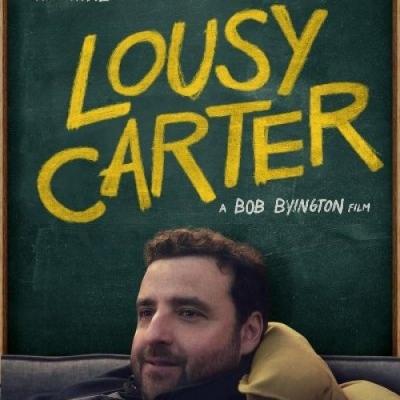
Lousy Carter Album Cover

"Lousy Carter" Soundtrack Lyrics

Movie • 2024

Track Listing


"Lousy Carter – Score & Songs (Unofficial Soundtrack Guide)" – Album Guide to Tracks and Key Scenes

Lousy Carter official trailer still with David Krumholtz in classroom
Lousy Carter movie soundtrack moods framed by the official trailer imagery, 2024

Overview

What does a terminal diagnosis sound like when the main character barely cares? In Lousy Carter, the answer is a mix of lo-fi beats, brittle indie pop, and politely deranged Mozart. The soundtrack never begs for attention; instead, it hums along like the inner monologue of a man who has accepted his own mediocrity.

The original score by Leafcuts leans into chill-hop and lo-fi textures: soft drum loops, hushed keys, and a slightly muffled, bedroom-production character. Critics have described it as the kind of music you might hear under a YouTube video essay, which fits Lousy’s perpetual state of passive commentary on his own life. The cues don’t explode into big themes; they sit in the back of the frame, underscoring how this guy lets life happen to him rather than stepping up.

Set against that score are a handful of sharp needle-drops. Caitlin and Brent’s “Mirage” keeps returning across tennis courts, awkward casting meetings, and funerals, almost like a running joke that gradually becomes a melancholy motif. Bishop Allen’s “Skeleton Key” and Coconut Records’ “Any Fun” bring in indie-rock and indie-pop colors that match the film’s low-budget campus world: breezy on the surface, quietly stunted underneath. Mozart’s “Rondo alla Turca” arrives in various recordings to give Carter’s routines a brittle formality he doesn’t live up to.

Genre-wise, the soundtrack sits where lo-fi hip-hop, indie rock, and light classical meet. The chill-hop score mirrors Lousy’s emotional inertia; the indie tracks bring in flashes of adolescent nostalgia and half-grown adulthood; and Mozart’s sonata represents the intellectual polish of literature seminars and eulogies. That mix turns the music into a running argument between how Carter sees himself (cultured, clever) and what the film shows him to be (stuck, small, and strangely funny).

How It Was Made

Writer–director Bob Byington didn’t go to an established Hollywood composer for Lousy Carter. He found Leafcuts on Instagram and brought them in to shape the film’s original music. In interviews and press notes, Byington has said they listened to hundreds of songs together and only a tiny handful felt right for this particular story. That approach explains why the soundtrack is so lean: every cue and song placement has been chosen to sit inside the film’s very dry, very specific tone.

For Leafcuts, this movie is effectively a first full-length feature score, which may be why the music has such a self-contained, “small room” feel. The cues are mixed like intimate headphone tracks rather than big theatrical swells. When they slip in under a conversation or hallway walk, they keep the vibe casual, even when the script is dropping news about cancer, infidelity, or career failure. Some reviewers have found that understatement distracting or oddly placed; others read it as a deliberate extension of the film’s deadpan style.

Alongside the score, Byington and his team licensed a very compact set of songs. “Mirage” by Caitlin and Brent was developed as the film’s de facto theme, and the duo have talked about how it’s woven through the movie almost as a character of its own. The other key choices — Bishop Allen’s “Skeleton Key,” Coconut Records’ “Any Fun,” and two separate recordings of Mozart’s “Rondo alla Turca” — were picked to punctuate specific emotional beats rather than to build a long playlist. You can feel the curation logic: a few carefully placed needles instead of a wall-to-wall mixtape.

Lousy Carter trailer frame highlighting the film’s dry campus aesthetic
Behind the scenes of Lousy Carter’s sound: lo-fi score over a bare campus world, 2024

Tracks & Scenes

Below is a guide to the major songs and how they line up with specific scenes. Timecodes refer to the feature film, not the trailer.

"Mirage" — Caitlin and Brent
Where it plays: The song first appears over the opening, then returns at several key points: around 00:13, Lousy and Kaminsky play a slightly pathetic game of tennis, their friendship defined as much by sniping as by exercise. Around 00:25, after talking about Lousy’s half-baked movie project, he offers his student Gail $300 for a part, the song softening what is otherwise a very transactional, ethically murky conversation. Around 00:45, “Mirage” plays under his mother’s funeral, turning the scene into a strangely off-kilter music video of unexpressed grief and social awkwardness. Near 01:09, it comes back again at Lousy’s own funeral, closing the loop with a darkly comic sense of inevitability. The track is non-diegetic each time, sitting on top of the action as a commentary layer.

Why it matters: “Mirage” effectively becomes Lousy’s theme. Its dreamy, slightly woozy indie-pop feel mirrors his habit of drifting through life. Each repetition marks a new step in his fall: from self-sabotaging professor to failed son, and eventually to the object of his own funeral. Because the song is consistent while the situations worsen, it underlines how little Lousy actually changes despite the escalating stakes.

"Sonata No. 11 in A Major for Piano, K. 331 – Turkish March (III. Rondo alla Turca)" — Unknown artist
Where it plays: At about 00:05, one version of Mozart’s famous “Rondo alla Turca” plays as Carter walks to class, coffee in hand. The camera follows him through the drab campus corridors while this highly structured, precise piano piece bounces along. It’s non-diegetic: the music isn’t coming from the environment; it’s laid over his routine.

Why it matters: Using such a canonical classical piece for a mundane walk to work is both ironic and revealing. On one level, it flatters Lousy: he sees himself as a serious intellectual teaching great books, and the Mozart track gives him that aura. On another, the mismatch between the lively sonata and his shuffling, low-energy body turns the moment into a joke about the difference between theory and practice — what he thinks he is versus what we actually see.

"Hopes_Dreams" — Leafcuts
Where it plays: Around 00:27, this cue slides in while Carter and Olivia discuss Kaminsky. The scene is basically people talking in modest interiors, but the score adds a gentle pulse that suggests unfinished business. Later, Lousy meets Gail to work on their film project, and the same cue keeps the mood somewhere between creative ambition and procrastination. Around 00:37, it returns while Lousy waits in a lobby before an appointment; the receptionist mishears his name as “Lazy Carter,” and the music underlines the joke.

Why it matters: “Hopes_Dreams” (the title is not subtle) plays under scenes where Lousy is supposed to be confronting his ambitions — as a filmmaker, as a teacher, as a partner. The lo-fi, slightly hazy texture suggests aspirations that never fully sharpen into reality. The cue’s reuse around the “Lazy Carter” gag turns the title into a punchline: hopes and dreams, sure, but mostly naps and avoidance.

"Piano Sonata No. 11 in A Major, K. 331: III. Rondo Alla Turca, Allegretto" — Clasic Factory
Where it plays: Around 00:34, another recording of the same Mozart movement plays in a restaurant scene where Lousy tells Candela that he is dying. The setting is low-key — a fairly ordinary place, two people talking across a table — while this elegant piano piece runs in the background. In context it works like source music from the restaurant sound system, but the film treats it more like a stylized overlay.

Why it matters: Reusing “Rondo alla Turca” in a different performance turns Mozart into a motif for Lousy’s self-presentation. He chooses this piece as the sonic backdrop — or at least the film chooses it for him — for both his day-to-day work life and his most serious confession. That repetition makes the revelation feel oddly performative, as if he is staging his own melodrama with a ready-made classical track instead of earning the emotion.

"Skeleton Key" — Bishop Allen
Where it plays: Around 00:50, “Skeleton Key” comes in during a bowling sequence that follows Lousy’s mother’s funeral. The group moves from grief rituals straight into cheap leisure: neon lanes, rented shoes, small talk, the occasional gutter ball. The song is non-diegetic but fits the environment so well that it almost feels like something the alley would have playing over the PA system.

Why it matters: Bishop Allen’s jangly indie rock gives the scene a nervous, social-energy buzz. Bowling after a funeral is already a tonal tightrope; the song pushes it into bittersweet comedy rather than sincerity. The title “Skeleton Key” also plays nicely with the idea that Lousy is looking for an easy unlock to his life problems — a shortcut that, of course, never arrives.

"Any Fun" — Coconut Records
Where it plays: Near 01:12, “Any Fun” rolls over the end credits. After everything we have seen — the diagnosis, the self-sabotage, the failed relationships, the funerals — the song asks in the background whether any of this was actually enjoyable for anyone involved. It’s a clean, non-diegetic placement: the track is the last thing you hear as images fade out and text takes over.

Why it matters: Using an upbeat yet slightly melancholic Jason Schwartzman track is a small in-joke, given his past collaborations with Byington on other films. The lyrics and title underline the film’s core question: if this is how you live when time is running out, are you having “any fun” at all, or just going through motions with better one-liners?

Trailer music and non-album cues
Public listings so far don’t identify a separate “trailer single” for Lousy Carter. Promotional trailers lean mostly on variations of Leafcuts’ lo-fi score and dialogue snippets rather than introducing a new pop track that never appears in the film. For now, “Mirage,” “Skeleton Key,” “Any Fun,” and the Mozart selections remain the key identifiable songs associated with the movie.

Lousy Carter montage stills suggesting different musical moods
Key song and score moments in Lousy Carter: from tennis courts to funerals, 2024

Notes & Trivia

  • Director Bob Byington explicitly says he found Leafcuts on Instagram, which is unusually modern for a filmmaker whose style often feels stubbornly analog.
  • Leafcuts has described Lousy Carter as their first full-length film soundtrack, making this score a kind of calling card for future work in film music.
  • “Mirage” was promoted as the title song for the movie, and the duo Caitlin and Brent have talked about how it functions as a recurring “character” in the narrative.
  • Despite the strong role music plays in the film, there is no widely released, dedicated Lousy Carter soundtrack album as of now — fans have to piece it together from individual tracks and the score within the film.
  • Two different recordings of the same Mozart movement are used, which is fairly rare in modern film scoring and helps underline how self-conscious Lousy is about his own supposed sophistication.

Music–Story Links

The simplest way to read the soundtrack is as a map of Lousy’s denial. Whenever he might be expected to confront something huge — grief, mortality, responsibility — the music stays oddly light. Leafcuts’ lo-fi beats turn doctor visits, office hallways, and quiet fights into scenes that feel almost casual. That mismatch is the point: the sound tells us he is not ready to own any of this.

“Mirage” ties directly into his relationships. It scores friendship (tennis with Kaminsky), professional compromise (hiring Gail), and family duty (his mother’s funeral) before finally closing in on his own funeral. The song’s repetition across such different situations suggests that Lousy responds to all of them with the same half-ironic distance. The world changes; his soundtrack doesn’t.

The Mozart cues, meanwhile, sketch his academic self-image. When he strides to class with “Rondo alla Turca” playing, we are hearing how he would like to imagine himself: elegant, in motion, clearly structured. When the same musical material shows up in the restaurant confession scene, it exposes how staged his vulnerability is. Even his big “I’m dying” speech is wrapped in the same tidy classical packaging as his everyday walk to work.

Finally, “Skeleton Key” and “Any Fun” bookend how the film treats coping mechanisms. Bowling after a funeral with jangly indie rock blaring in the background looks like a coping strategy; ending the film with a song literally asking about fun implies the strategy never really worked. The music keeps hinting that there was another way to live these last months; Lousy just never took it.

Reception & Quotes

Critical response to Lousy Carter has centered on David Krumholtz’s performance and the film’s exact flavor of deadpan misery. The music is part of that conversation: some writers see Leafcuts’ score as an extension of the film’s understated, low-key style; others feel the cues call attention to themselves or lean too hard into lo-fi quirk.

The score has been described as a “twee, tweedy chill-hop” backdrop that makes everything feel like you are waiting for a video essay to finish.
One reviewer noted that the story of finding Leafcuts on Instagram is fun, but argued that the music’s placement can feel random and might work better if used more sparingly.
Several critics, even those lukewarm on the film as a whole, praised how the sparse soundtrack supports Krumholtz’s performance without trying to redeem the character emotionally.

In terms of numbers, the film has settled into the “well-liked indie” bracket on major aggregators: solid but not unanimous critical scores, a shorter 80-minute runtime, and a small theatrical box office, followed by streaming availability. The soundtrack has not earned separate awards attention, but it is mentioned in reviews often enough to be part of how people remember the movie.

Lousy Carter funeral scene impression from the trailer
Reception to the Lousy Carter soundtrack: divisive lo-fi score, memorable needle drops, 2024

Interesting Facts

  • The film premiered at Locarno in 2023, but the wider U.S. release — and the first big wave of soundtrack discussion — came in March 2024.
  • “Any Fun” by Coconut Records ties the movie back to Jason Schwartzman, who previously starred in Byington’s 7 Chinese Brothers, giving the end credits a quiet meta-joke.
  • Bishop Allen’s “Skeleton Key” continues the band’s long history of indie film placements, from mumblecore dramas to TV comedies; Lousy Carter fits neatly into that lineage.
  • Because there is no packaged soundtrack, many fans build their own “Lousy Carter” playlists using the six main songs plus other Leafcuts tracks to recreate the film’s vibe.
  • Online film-music databases currently list only a handful of identifiable songs for the movie, suggesting that most of the runtime is carried by original score and silence rather than wall-to-wall music.
  • The choice to repeat Mozart instead of using a more typical modern classical library track keeps the score anchored to the canon Lousy teaches in his literature classes.
  • Leafcuts’ broader work outside the film leans into game and lofi music; this soundtrack essentially drops that aesthetic into a campus dramedy rather than a digital or genre setting.

Technical Info

  • Title: Lousy Carter — Score & Songs (unofficial guide)
  • Film year: 2023 festival premiere; U.S. theatrical/streaming release March 29, 2024
  • Type: Feature film soundtrack overview (comedy/drama, 80 minutes)
  • Original score: Leafcuts
  • Key licensed songs: “Mirage” (Caitlin and Brent), “Skeleton Key” (Bishop Allen), “Any Fun” (Coconut Records), two recordings of Mozart’s “Piano Sonata No. 11 in A Major, K. 331: III. Rondo alla Turca”
  • Music supervision / selection: Director Bob Byington worked directly with Leafcuts to choose a very small set of songs after auditioning hundreds of candidates.
  • Production companies: Americano Brutto (production), Magnolia Pictures (distribution)
  • Recording context: Leafcuts worked remotely and digitally; the songs by Caitlin and Brent, Bishop Allen, and Coconut Records were licensed from their existing catalogs.
  • Album status: No official Lousy Carter soundtrack album currently in wide release; individual songs are available on standard music platforms, while score cues are, for now, film-only.
  • Runtime music density: Approx. half a dozen prominent songs and a lean, recurring score — more silence and dry dialogue than continuous underscoring.

Canonical Entities & Relations

Entity Relation Statement (S–V–O)
Lousy Carter (film) has music by The film Lousy Carter features original score composed by Leafcuts.
Leafcuts scores Leafcuts provides the lo-fi, chill-hop score for Lousy Carter.
Caitlin and Brent perform Caitlin and Brent perform “Mirage,” used as the film’s title song and recurring motif.
Caitlin Sherman co-creates Caitlin Sherman co-writes and performs “Mirage” as part of the duo Caitlin and Brent.
Bishop Allen contributes song Bishop Allen’s track “Skeleton Key” plays during the post-funeral bowling sequence.
Coconut Records contributes song Coconut Records contributes “Any Fun,” which scores the end credits of Lousy Carter.
Wolfgang Amadeus Mozart authored work Mozart composed “Piano Sonata No. 11 in A Major, K. 331 – Rondo alla Turca,” used in multiple scenes.
Bob Byington directs Bob Byington writes and directs Lousy Carter and oversees its music choices.
Americano Brutto produces Americano Brutto produces the film Lousy Carter.
Magnolia Pictures distributes Magnolia Pictures distributes Lousy Carter in U.S. theaters and on digital platforms.

Questions & Answers

Who composed the original score for Lousy Carter?
The original score is by Leafcuts, an electronic and lo-fi artist for whom this is a first full-length feature film soundtrack.
What is the main theme song of the film?
“Mirage” by Caitlin and Brent functions as the main theme. It appears repeatedly — from tennis courts to funerals — and was promoted as the film’s title song.
Which songs play over the most memorable scenes?
“Mirage” anchors the openings and funerals, “Skeleton Key” backs the post-funeral bowling scene, Mozart’s “Rondo alla Turca” colors Carter’s walk to class and his “I’m dying” confession, and “Any Fun” closes the end credits.
Is there an official Lousy Carter soundtrack album?
At present there is no widely released, dedicated soundtrack album. The songs can be heard on their respective artists’ releases and within the film itself.
What musical style dominates the movie — songs or score?
The film leans more on Leafcuts’ low-key lo-fi score and silence than on songs. The six main tracks are placed sparingly at key narrative beats rather than playing constantly.

Sources: official Magnolia Pictures press notes and site; Wikipedia and IMDb film entries; Soundtracki scene-by-scene song listings; reviews from RogerEbert.com, NextBestPicture, Rotten Tomatoes and Metacritic summaries; artist and label pages for Leafcuts, Caitlin and Brent, Bishop Allen, and Coconut Records.

November, 13th 2025


A-Z Lyrics Universe

Lyrics / song texts are property and copyright of their owners and provided for educational purposes only.