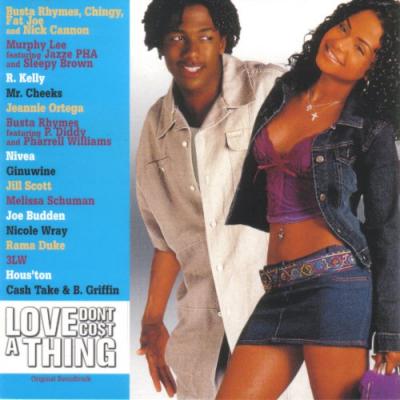
"Love Don't Cost A Thing" Soundtrack Lyrics
Movie • 2003
Track Listing
Busta Rhymes, Chingy, Fat Joe and Nick Cannon
Murphy Lee
R. Kelly
Mr. Cheeks
Jeannie Ortega
Busta Rhymes
Nivea
Ginuwine
Jill Scott
Melissa Schuman
Joe Budden
Nicole Wray
Rama Duke
3LW
Hous'ton
Cash Take & B. Griffin
"Love Don't Cost a Thing: Original Soundtrack (2003)" – Album Guide to Tracks and Key Scenes
Overview
Can a remake about fake popularity be carried by a very real early-2000s hip-hop soundtrack? Love Don’t Cost a Thing: Original Soundtrack answers with a loud yes. Released alongside the 2003 teen comedy starring Nick Cannon and Christina Milian, the album leans hard into rap and R&B to sell Alvin Johnson’s glow-up from invisible gearhead to manufactured “it” boy.
The film itself reworks Can’t Buy Me Love, but the soundtrack is pure 2003: Busta Rhymes, Chingy, Fat Joe, Murphy Lee, Ginuwine, Jill Scott, 3LW and others pile in. Instead of orchestral score cues, the album gives you full tracks that mirror what’s happening on screen — flexing, fronting, getting your heart broken in a driveway, or trying to look unfazed in a crowded hallway. AllMusic files it under Stage & Screen and Rap; MusicBrainz tags it as pop-rap, and that’s accurate: this is a glossy, radio-ready companion to a studio teen movie, not a gritty mixtape.
The mood is split between two poles. On one side you have brash party anthems like “Shorty (Put It on the Floor)” and “Pass the Courvoisier, Part II,” all swagger, brand-name shout-outs and bass designed for car systems. On the other, there are more emotional cuts — Jill Scott’s “Comes to Light (Everything),” Melissa Schuman’s “Always,” Rama Duke’s “We Rise” — that sit under crushes, confessions and that last, redemptive walk out of the gym. The contrast fits Alvin’s story: a kid trying on a loud, performative persona while still being quietly sincere underneath.
Stylistically, the soundtrack is a time capsule for early-2000s mainstream Black and pop-adjacent music. Southern rap textures (“Luv Me Baby”), East Coast and party-rap aggression (“Shorty,” “Pass the Courvoisier”), glossy R&B (“How Far Will You Go,” “I Wanna Kiss You”), girl-group pop-R&B (3LW’s “Hate 2 Luv U”) and neo-soul depth (Jill Scott) all show up. In the film’s logic, hard club tracks equal status and performance; smoother R&B and neo-soul show up when characters drop the act and say what they actually feel.
How It Was Made
The soundtrack came out on 9 December 2003 through Hollywood Records, the Disney-owned label that frequently handled teen-targeted film albums in that era. It’s credited as a Various Artists compilation, with 16 tracks and a running time of just over 63 minutes. AllMusic logs the duration as 1:03:18 and files the album under Stage & Screen / Rap, while MusicBrainz lists it as an “Album + Soundtrack” release group tied directly to the film’s soundtrack section on Wikipedia.
Behind the scenes, the project is built from individually licensed tracks rather than commissioned score. Just Blaze produced the lead single “Shorty (Put It on the Floor)” for Busta Rhymes, Chingy, Fat Joe and Nick Cannon, which also appears in his production discography. Other songs bring in producers and writers like Jazze Pha (“Luv Me Baby”), R. Kelly (“Ignition (Remix)”), Dr. Luke and Jeannie Ortega (“Got What It Takes”). The film’s original score is by Richard Gibbs, but his work is kept separate from this commercial album, which focuses on vocal cuts.
From the studio side, the soundtrack’s job was clear: position the remake as more “urban” and contemporary than Can’t Buy Me Love. Hollywood Records and Alcon/Warner Bros. pushed two main music videos — “Shorty (Put It on the Floor)” and Murphy Lee’s “Luv Me Baby” — both cut with film footage. The DVD release even advertises those videos alongside an alternate ending and trailer. So while the album does function as a listening experience, it is just as much a marketing tool aimed at MTV, BET and teen radio.
Tracks & Scenes
Below, key cuts from the soundtrack and how they connect to specific scenes or types of scenes. Where exact placements are documented, they’re noted directly; for others, the focus is on how the film uses them tonally.
“Luv Me Baby” — Murphy Lee feat. Jazze Pha & Sleepy Brown
Where it plays: This track runs over the film’s opening, during the beginning scene and credits. The YouTube upload of the “Beginning Scene” explicitly tags “Luv Me Baby” as the song, and contemporary fan chatter remembers it in the official intro. The camera introduces Alvin’s world — school, his status as an ignored nerd, the California setting — while the track’s confident hook promises attention and “luv” he doesn’t yet have.
Why it matters: The lyrics about trying to win someone over mirror Alvin’s obsession with Paris Morgan. The mellow, Southern-rap feel also sets the film’s tone: this isn’t 80s guitar pop anymore; it’s a mid-2000s world of jerseys, SUV culture and radio rap.
“Shorty (Put It on the Floor)” — Busta Rhymes, Chingy, Fat Joe & Nick Cannon
Where it plays: The Just Blaze-produced single is the soundtrack’s flagship. Its music video doubles as a trailer, with shots from the movie cut into performance footage, and it’s heavily tied to the film’s party imagery. In the movie, the song underpins high-energy social moments — crowded house parties, scenes of Alvin walking the hall like he owns it — giving his constructed persona an aggressive, club-ready theme.
Why it matters: This is the track that most loudly sells the transformation: a nerd suddenly surrounded by swagger. It also anchors the soundtrack’s identity as a commercial hip-hop product, not just a collection of background cues.
“Got What It Takes” — Jeannie Ortega
Where it plays: The song is strongly associated with the movie; even standalone uploads tag it as “Movie: Love Don’t Cost a Thing.” It fits the makeover and hallway-walk moments, with a beat built for slow-motion struts through school corridors. The lyrics — about someone having the qualities to stand out — make sense over Alvin’s first outings in his new clothes and attitude.
Why it matters: For Ortega, this proved to be an early break. A later profile notes that her inclusion on this soundtrack helped kickstart her career. In story terms, the song becomes the sonic shorthand for Alvin’s “I might actually pull this off” phase.
“Comes to Light (Everything)” — Jill Scott
Where it plays: The film’s poetry-club / spoken-word scene, featuring a “Spoken Word Artist” in the cast list, has become linked with this track; fans often refer to it online simply as the “poetry scene” song. Chord-tab pages and uploads associate Jill Scott’s neo-soul slow burn with that sequence, where characters momentarily drop the high-school performance and speak more honestly.
Why it matters: Scott’s vocal and the meditative groove cut through the surrounding party rap. When this song comes in, the movie pauses its comedy just enough to let the “everything comes to light” theme surface — secrets, deals, what people really want from each other.
“We Rise” — Rama Duke
Where it plays: A fan-labelled “Ending Song” clip identifies “We Rise” as the track over the film’s final stretch and credits. It plays after Alvin rebuilds the engine, repairs his friendships, and heads into that last gym sequence where he stands up for his old crew and finally wins Paris for real.
Why it matters: Lyrically and emotionally, it’s a post-lesson anthem: you fall, you get back up, you rise. Using it in the ending lets the movie send viewers out with a more sincere message than the earlier bragging songs imply.
“Hate 2 Luv U” — 3LW
Where it plays: This girl-group R&B cut turns up around Paris and her friends — the cheerleaders and popular girls who first treat Alvin as a prop and then have to watch him overcorrect. Its hook about resenting how much you still care fits scenes where Paris pretends not to be hurt by Alvin’s new ego or by Dru’s behavior.
Why it matters: The song works like commentary from the sidelines: the emotional view from Paris’s circle as the “deal” with Alvin gets complicated. It adds a female-voiced counterpoint to the male-dominated rap cuts.
“Always” — Melissa Schuman
Where it plays: Schuman plays Zoe Parks in the film, and her ballad appears in the softer, more romantic passages — after-party quiet moments and reflective beats between blow-ups. Because the singer is also in the cast, the track feels semi-diegetic, like something one of the girls could be listening to on her own.
Why it matters: Having a cast member on the soundtrack blurs the line between the movie’s world and the album. “Always” helps give Paris’s side of things a voice that isn’t just dialogue or reaction shots.
“How Far Will You Go” — Ginuwine
Where it plays: A smooth R&B cut that the movie leans on for seduction and almost-sex moments — car scenes, poolside flirtation, glimpses of Paris’s relationship with Dru before things fall apart. The question in the title echoes the film’s basic bargain: how far will Alvin go to be popular?
Why it matters: Ginuwine’s presence immediately codes a scene as sensual but not too explicit, fitting the PG-13 teen date-movie space. It frames love and status as a negotiation rather than a fairy tale.
“I Wanna Kiss You” — Nicole Wray
Where it plays: This track underlines the near-kiss moments between Alvin and Paris — the times when their fake relationship almost becomes real. Soft lighting, awkward pauses at doors, the two of them alone after big events: that’s where the song’s yearning hook slots in.
Why it matters: The lyric spells out what the characters can’t say yet. It pushes the story from “deal” territory toward genuine feelings, which makes the later fallout sting more.
“Baby Girl” — Joe Budden
Where it plays: A mid-tempo rap cut that gives texture to scenes of hallway clout and car rides with the jocks. Its perspective — a guy addressing a girl with a mix of cockiness and real feeling — matches how the popular boys treat Paris and her friends.
Why it matters: The song helps draw a line between Alvin trying to imitate that swagger and the reality that he doesn’t fully fit that mold. It’s background for the identity he’s trying to buy.
“Pass the Courvoisier, Part II” — Busta Rhymes feat. P. Diddy & Pharrell Williams
Where it plays: Deployed in party and club-style sequences, this is the soundtrack at its most obviously product-placement-adjacent: liquor, brands, status. On screen, it turns rooms of teenagers into mini-music-video sets, especially once Alvin starts dressing like the guys in the video.
Why it matters: The film has been described by some viewers as feeling like a commercial for certain clothing lines and lifestyle brands; this track is part of why. It cranks up the consumerist fantasy that the story, in theory, is critiquing.
“Spit da Flow” — Cash Take & B. Griffin
Where it plays: A harder, underground-leaning rap track that the film uses in more male-centric spaces — garages, backyards, moments with Alvin’s crew before he trades them for clout. The beat is rougher than the radio singles, which fits the “real friends vs fake image” theme.
Why it matters: Including this on the same album as the big-name singles gives Alvin’s original world its own sound, not just silence waiting to be filled by popularity.
Trailer and non-album cues
Where they play: The theatrical trailer (whose YouTube upload we’re using for figures here) cuts fast between comedy beats and romantic shots, typically scored with instrumental cues and short bursts of the rap tracks rather than the Jennifer Lopez single that inspired the title. Outside the album, there are bits of score and brief stings that fans still hunt for — for example, a piece of background music under Alvin fixing the engine that one Reddit user notes isn’t on the CD at all.
Why it matters: The missing cues underline that this soundtrack is a curated, commercial snapshot, not a complete document of everything heard in the film. It’s built to sell singles and a vibe more than to archive every bar of music.
Notes & Trivia
- The film takes its title from Jennifer Lopez’s 2000 hit “Love Don’t Cost a Thing,” but that song does not appear on the official 2003 soundtrack album.
- The soundtrack was released on Hollywood Records (a Disney Music Group label) and peaked around the Top 20 of Billboard’s R&B/Hip-Hop Albums and Top 15 of the Top Soundtracks charts.
- AllMusic tags the album with styles like East Coast Rap, Pop-Rap, Southern Rap and Party Rap, which matches the cast of artists on board.
- “Shorty (Put It on the Floor)” served as the lead single, with a music video heavily cross-promoting the movie and featuring Nick Cannon alongside Busta Rhymes, Chingy and Fat Joe.
- Murphy Lee’s “Luv Me Baby” also got a video with high-school imagery and Love Don’t Cost a Thing clips, effectively turning it into an alternate mini-trailer.
- Jill Scott’s “Comes to Light (Everything)” is one of the few neo-soul tracks in a tracklist otherwise dominated by radio rap and R&B.
- Jeannie Ortega later singled out “Got What It Takes” on this soundtrack as an early milestone in her career.
- Some fans consider the movie a “mid” teen comedy but remember the soundtrack — and especially a few deep cuts — with surprising affection.
Music–Story Links
Alvin’s arc is simple on paper: nerd buys popularity, loses himself, then figures out who he is. The soundtrack mirrors each phase. “Luv Me Baby” scores the initial fantasy of being noticed. “Got What It Takes” and “Shorty (Put It on the Floor)” accompany his rise, blasting whenever he leans into the persona he thinks people want.
As the film moves into messier territory — Paris catching real feelings, Alvin ditching his crew, the deal getting exposed — the mood shifts. “Comes to Light (Everything)” is almost too on-the-nose as a title; it plays around the spoken-word scene where people say things they usually keep hidden. “Hate 2 Luv U” and “Always” carry the emotional load for Paris and her friends, who are caught between wanting Alvin to be real and resenting how much he’s changed.
By the time “We Rise” rolls over the ending, the sound has moved away from bragging about clothes and cars and into a more straightforward “learned my lesson” anthem. The soundtrack quietly enforces the film’s supposed message: the consumerist fantasy tracks are fun, but the songs that actually resolve the story are about honesty and resilience, not money.
Reception & Quotes
As a film, Love Don’t Cost a Thing drew mixed-to-negative critical notices. Rotten Tomatoes logs a low approval rating and dismisses it as an unnecessary remake of Can’t Buy Me Love, while Metacritic’s weighted average sits in the high-30s. Roger Ebert, however, gave the movie three stars out of four and argued that it was wiser and less cynical than the original.
The soundtrack received more measured attention. AllMusic gave it a mid-range three-star rating and filed it under Stage & Screen and Rap, highlighting its party-rap and pop-rap focus rather than any deep narrative cohesion. Billboard’s chart data shows it performing respectably in the R&B/Hip-Hop and soundtrack lanes but not breaking out as a major crossover event.
“A stale, unnecessary remake of Can’t Buy Me Love.” — Rotten Tomatoes consensus
“Wiser and less cynical than the original.” — Roger Ebert, Chicago Sun-Times
Among fans, the album has morphed into a niche nostalgia object. Reddit and casual-conversation threads mention the movie as “mid” but weirdly influential, with some users specifically recalling the soundtrack and its videos as a big part of their early-2000s media diet. The physical CD now pops up mostly via used sellers, but the album remains available on major streaming platforms.
Interesting Facts
- The soundtrack’s release date — 9 December 2003 — fell just ahead of the film’s US theatrical opening, standard timing for teen-movie albums of the era.
- Hollywood Records handles other teen-oriented film albums; this one is part of the same ecosystem that pushed Disney and youth-market soundtracks in the early 2000s.
- The album has a distinct split: front-loaded with big-name rap cuts, back-loaded with more melodic R&B and pop songs.
- “Shorty (Put It on the Floor)” appears in Just Blaze’s official production discography under the heading “Love Don’t Cost a Thing Original Soundtrack.”
- Italian and other non-English Wikipedia entries list the full soundtrack with the same 16 tracks, confirming broad international release parity.
- DVD bonus features include “The Making of Love Don’t Cost a Thing” and the “Shorty” and “Luv Me Baby” music videos, underlining how much of the campaign ran through music TV.
- Jill Scott’s “Comes to Light (Everything)” is often catalogued in jazz and soul setlists specifically as the Love Don’t Cost a Thing OST version.
- Fans still ask online about small pieces of background music (especially the cue under Alvin fixing the engine) that never made it onto the commercial album.
- The official tracklists on Wikipedia, MusicBrainz and Discogs all agree on 16 tracks, with a shared barcode of 720616239624 for the US CD.
- The film’s title nods to Jennifer Lopez’s pop-R&B single, but the soundtrack leans far more on male rap voices — an odd but very era-specific marketing decision.
Technical Info
- Title: Love Don’t Cost a Thing: Original Soundtrack
- Film: Love Don’t Co$t a Thing (2003) teen comedy directed by Troy Beyer
- Year of soundtrack release: 2003 (US, 9 December)
- Type: Album + Soundtrack (Various Artists)
- Label: Hollywood Records (a label of Disney Music Group)
- Length: Approx. 63 minutes (AllMusic lists 1:03:18)
- Number of tracks: 16
- Main styles/genres: Stage & Screen; Rap; East Coast Rap; Southern Rap; Pop-Rap; Party Rap
- Notable artists: Busta Rhymes, Chingy, Fat Joe, Nick Cannon, Murphy Lee, Ginuwine, Jill Scott, Joe Budden, Nicole Wray, 3LW, Hous’ton, Jeannie Ortega, Rama Duke, Nivea
- Score composer (film): Richard Gibbs (original score, mostly separate from this album)
- Lead singles / videos: “Shorty (Put It on the Floor)”; “Luv Me Baby” (both with film-integrated videos)
- Key placements: “Luv Me Baby” over opening; Jill Scott’s “Comes to Light (Everything)” in the poetry scene; Rama Duke’s “We Rise” as the ending song.
- Charts: Peaked around #22 on Billboard Top R&B/Hip-Hop Albums and #14 on Top Soundtracks.
- Identifier: Barcode/EAN 720616239624; MusicBrainz release group ID fa57ddfd-3523-3357-9406-69acec8adf66.
- Digital/physical availability (2025): Streaming widely on major services; CD available mainly as catalog/second-hand stock.
Canonical Entities & Relations
| Entity | Relation | Entity |
|---|---|---|
| Love Don’t Cost a Thing: Original Soundtrack | is the official soundtrack album for | Love Don’t Co$t a Thing (2003 film) |
| Love Don’t Cost a Thing: Original Soundtrack | is released by | Hollywood Records (Disney Music Group) |
| Love Don’t Co$t a Thing (film) | is produced by | Alcon Entertainment and distributed by Warner Bros. Pictures |
| Love Don’t Co$t a Thing (film) | is directed by | Troy Beyer |
| Love Don’t Co$t a Thing (film) | stars | Nick Cannon as Alvin Johnson and Christina Milian as Paris Morgan |
| Love Don’t Co$t a Thing (film) | features original score by | Richard Gibbs |
| “Shorty (Put It on the Floor)” | is performed by | Busta Rhymes, Chingy, Fat Joe and Nick Cannon |
| “Luv Me Baby” | is performed by | Murphy Lee featuring Jazze Pha and Sleepy Brown |
| “Comes to Light (Everything)” | is performed by | Jill Scott |
| “We Rise” | is performed by | Rama Duke |
| “Got What It Takes” | is written by | Jeannie Ortega, Dr. Luke and David Katz |
| Love Don’t Co$t a Thing (film) | is loosely based on | Can’t Buy Me Love (1987 film) |
| Love Don’t Co$t a Thing (film) | takes its title from | “Love Don’t Cost a Thing” (Jennifer Lopez song) |
| Love Don’t Cost a Thing: Original Soundtrack | is catalogued as | MusicBrainz release group with barcode 720616239624 |
Questions & Answers
- Is Jennifer Lopez’s “Love Don’t Cost a Thing” actually on the movie soundtrack?
- No. The film borrows the song’s title for branding, but the Jennifer Lopez track is not part of the official 2003 soundtrack album.
- What kind of music dominates the Love Don’t Cost a Thing soundtrack?
- Mainly early-2000s hip-hop and R&B — party rap, pop-rap and smooth R&B cuts, with a few neo-soul and pop ballads rounding things out.
- Which songs are most strongly tied to specific scenes?
- “Luv Me Baby” plays over the opening, Jill Scott’s “Comes to Light (Everything)” underscores the poetry scene, and Rama Duke’s “We Rise” is used as the ending song.
- How did the soundtrack perform commercially?
- It reached the Top 25 on Billboard’s Top R&B/Hip-Hop Albums and the mid-teens on the Top Soundtracks chart — solid but not blockbuster numbers.
- Is the soundtrack available on streaming services today?
- Yes. As of 2025, the full 16-track album is available on major platforms, while the original CD mainly circulates via catalog and second-hand sellers.
Sources: film and soundtrack entries on English and Italian Wikipedia; AllMusic album page; MusicBrainz release-group data; Discogs and Amazon CD listings; SoundtrackINFO tracklist summary; Just Blaze production discography; Music Video Wiki for “Luv Me Baby”; YouTube clips for the beginning, poetry and ending scenes; Rotten Tomatoes and Metacritic aggregates; Roger Ebert review; assorted fan discussions and Reddit threads on the film and soundtrack.
November, 13th 2025
A-Z Lyrics Universe
Cynthia Erivo Popular
Ariana Grande Horsepower
Post Malone Ain't No Love in Oklahoma
Luke Combs Good Riddance (Time of Your Life)
Green Day Bye Bye Bye
*NSYNC You're the One That I Wan
John Travolta & Olivia Newton-John I Always Wanted a Brother
Braelyn Rankins, Theo Somolu, Kelvin Harrison Jr. and Aaron Pierre The Power of Love
Frankie Goes to Hollywood Beyond
Auli’i Cravalho feat. Rachel House MORE ›