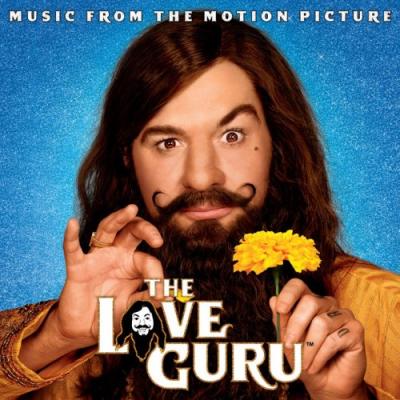
"Love Guru" Soundtrack Lyrics
Movie • 2008
Track Listing
Andrew Mendelson
Mike Myers
Fatboy Slim f/ Cornershop
Mike Myers
Mike Myers and Manu Narayan
Mike Myers
Telma Hopkins and Toronto Children's Concert Choir
B.A.S.K.O.
Robbie Nevil
Celine Dion
Mike Myers
Lata Mangeshkar and Mohd Rafi
George S. Clinton
Danny Saber
Mike Myers
Guru Pitka's Ashram Band
"The Love Guru (Music from the Motion Picture)" – Album Guide to Tracks and Key Scenes
Overview
What happens when a parody guru, an NHL losing streak and a crate of 90s radio staples collide? You get “The Love Guru (Music from the Motion Picture)” – a soundtrack that leans into Mike Myers’ anything-for-a-gag musical instincts and wraps them in bright, faux-spiritual pop.
The album functions as a companion piece to the film’s barrage of wordplay and sight gags. Instead of a traditional orchestral highlight reel, the record foregrounds songs that double as punchlines: sitar-laced covers of “9 to 5”, “More Than Words” and “The Joker”; Bollywood-adjacent cues; gospel throwdowns; and a couple of classic Céline Dion power moments. The core idea is simple: every style the film mocks or celebrates gets its own musical stand-in.
Across the movie, those tracks are tightly bound to image. The opening ashram gag, the first locker-room collapse on the ice, the road trip to Darren’s mother, the Vegas-style club scenes, and the final beach-party resolution all ride on specific songs. The soundtrack album mirrors that structure, putting the Pitka covers and high-energy set-pieces front and center, then sprinkling in Indian-influenced instrumentals and dialogue snippets to preserve the film’s rhythm.
In terms of genre blend, the record is blunt but effective. Indian-flavored instrumentals and Hindi film songs signal Pitka’s ashram backstory and the film’s caricatured spiritual setting. 90s alt-rock (“Song 2”), Brit-Asian remix culture (“Brimful of Asha” Norman Cook Remix) and big gospel choir energy (“Lead Me To Your Rock”) mark transformation, hustle and emotional release. Pop ballads and Dion’s power-vocal tracks underline exaggerated sincerity. The result is a collage: part novelty comedy, part genuine cross-cultural mixtape.
How It Was Made
The film’s original score comes from George S. Clinton, who had already defined the sound of the Austin Powers franchise. Here, his orchestral cues sit largely in the background while the album version foregrounds licensed songs and character performances rather than the full score suite. One Clinton cue, “Guru Vindaloo”, is featured on the commercial release as a concentrated dose of his Indian-inflected comedy scoring.
The commercial album is credited to various artists and issued primarily through Lakeshore Records on CD and digital, with catalog information also tied to New Line’s soundtrack imprint in some territories. Release data show a mid-June 2008 rollout, timed within days of the film’s theatrical opening, with 16–17 tracks depending on edition and a runtime in the mid-30-minute range.
Music supervision leans heavily on contrasts: established catalog cuts (Queen, Blur, Celine Dion, Chris Isaak) alongside South Asian film songs and Mike Myers’ in-character covers. According to one contemporary soundtrack review, the track order was built to segue from Andrew Mendelson’s “Morning Meditation” straight into Myers’ “9 to 5”, framing the album itself like a sight gag – gentle spiritual prelude smashed into showy comic musical.
Studio-side, experienced soundtrack executives and mixers (including names like Brian McNelis and Brian Malouf on related credits around this period) worked to keep tonal consistency between the licensed masters, newly recorded Myers vocals and Clinton’s cues. That’s why the sitar-heavy covers and older catalog tracks sit reasonably comfortably next to each other despite wildly different origins.
Tracks & Scenes
Below are the key cues as they appear on screen, with timestamps and why each one actually matters to the story or tone.
"Morning Meditation" — Andrew Mendelson
Where it plays: Around 0:04. Opening credits. The camera drifts over Los Angeles before gliding into Guru Pitka’s ashram, where he sits playing a stringed instrument and chatting faux-serenely to his followers. Non-diegetic at first, then blurring into Pitka’s diegetic strumming.
Why it matters: It lays down the “spiritual retreat” veneer the film keeps undermining. The Indian-influenced textures set up Pitka’s branding as an enlightened figure, while the calm mood makes his later slapstick entrance on an elephant land harder.
"9 to 5" — Mike Myers
Where it plays: Also at about 0:04, following directly from “Morning Meditation.” Pitka launches into a sitar-backed cover of Dolly Parton’s hit while riding an elephant through the ashram, greeting devotees and grabbing breakfast from a conveyor of servants. Mostly diegetic performance, but mixed like a full music-video moment.
Why it matters: This is the mission statement: Western work-ethic anthem turned into a cheesy spiritual-pop spectacle. It sells Pitka as entertainer first, guru second, and signals that music numbers will double as infomercials for his self-help empire.
"Mere Mitwa Mere Meet Re" — Lata Mangeshkar & Mohammed Rafi
Where it plays: Around 0:17. Pitka imagines Jane Bullard in a full Bollywood fantasy sequence: elaborate costumes, slow-motion choreography and romantic lighting as he plays the flute and sings along in his head. Non-diegetic fantasy, but staged like a classic Hindi film song.
Why it matters: The cue mocks and celebrates vintage Bollywood at the same time. It externalizes Pitka’s instant crush on Jane and shows that underneath the jokes he’s still trapped in adolescent romantic fantasies.
"Calm Before the Thunder" — Jimmy From Detroit
Where it plays: About 0:24. Jacques “Le Coq” Grandé pulls his car up to his house, swagger dialed up to eleven, while Pitka and Rajneesh spy on him from behind a hedge. Non-diegetic hip-hop-rock hybrid, bleeding into car-stereo ambiance.
Why it matters: The track paints Grandé as a parody of over-confident athletes – big beat, ominous cool – before we even see him act. It also underlines how small and ridiculous Pitka and Rajneesh look, crouching in the bushes.
"Because You Loved Me" — Celine Dion
Where it plays: Around 0:25. Inside Grandé’s house, he massages Prudence while singing along melodramatically to this power ballad. Outside, Pitka is being attacked by a rooster in perfect comic counterpoint. Diegetic within the room, non-diegetic contrast for Pitka’s slapstick.
Why it matters: The sentimental love song clashes with Grandé’s sleazy behavior and Prudence’s complicated feelings. It underlines how artificial and overproduced their romance is compared to Darren’s genuine hurt.
"Song 2" — Blur
Where it plays: Approximately 0:35. During a game, Pitka tells Darren Roanoke not to fight; Darren heads onto the ice anyway. “Woo-hoo!” kicks in as he’s smashed into the boards, then he realizes his hands have stopped shaking and suddenly dominates the play until he’s clotheslined. Non-diegetic arena-style pump-up track.
Why it matters: It’s the first glimpse that Pitka’s methods might actually work. The familiar stadium-rock energy matches Darren’s rediscovered confidence but also mocks sports-movie clichés by leaning on one of the most overused sports montages songs ever.
"Big Boi" — B.A.S.K.O.
Where it plays: Around 0:40. Pitka and Darren drive in a luxury Bentley to visit Darren’s mother. The bass-heavy rap track blasts from the car stereo; Pitka switches away, only for Darren to tease him with a “Driving Miss Daisy” crack and turn it back up. Diegetic, with dialogue over the top.
Why it matters: This track captures Darren’s swagger slowly returning. It also marks one of the few moments where Pitka loses control of the vibe, hinting that real emotional progress comes when he relaxes his guru persona.
"Bohemian Rhapsody" — Queen
Where it plays: Also around 0:41. Heard only briefly as Pitka flips through radio stations in the car, the instantly recognizable intro pops up and disappears. Completely diegetic, used as a throwaway gag.
Why it matters: It winks at another 90s comedy legacy (Wayne’s World) without overcommitting. The micro-cameo reminds you of Myers’ earlier music-driven humor and how this soundtrack is trying to extend that lineage.
"Lead Me To Your Rock" — Telma Hopkins & Toronto Children’s Concert Choir (TC3)
Where it plays: Around 0:41. Pitka and Darren arrive at the church where Darren’s mother sings with the choir. The gospel arrangement fills the sanctuary as Hopkins leads the congregation in a call-and-response performance. Fully diegetic within the church setting.
Why it matters: The song gives Darren’s backstory emotional weight. The choir’s power emphasizes his mother’s strength and hints at the expectations he’s carried since childhood. It’s also one of the soundtrack’s genuinely rousing moments, no irony needed.
"More Than Words" — Mike Myers & Manu Narayan
Where it plays: About 0:48. Jane visits Pitka’s ashram. Pitka and Rajneesh sit with acoustic guitars, delivering a sitar-sprinkled version of Extreme’s ballad straight to her, complete with delicate harmonies and exaggerated sincerity. Diegetic performance, intercut with her reactions.
Why it matters: This is the film’s main “almost sincere” love moment. The song choice underlines how Pitka struggles to move beyond slogans and jokes when he actually feels something. The sentimental 90s ballad, filtered through goofy guru aesthetics, is awkwardly sweet.
"C’est La Vie" — Robbie Nevil
Where it plays: Around 0:55. In a nightclub, Grandé struts and dances, basking in the attention, while the track’s bright 80s pop-funk plays across the dance floor. Mostly non-diegetic but synced tightly to his movement and swagger.
Why it matters: The laid-back “that’s life” chorus undercuts Grandé’s macho overconfidence. It hints that his success is superficial and luck-driven, a foil to the real work Darren has to do on himself.
"I Drove All Night" — Celine Dion
Where it plays: Around 0:56. Dion performs live on stage in the same club, essentially dropping in as herself. Grandé rushes to the stage area; at the bar, Pitka and Rajneesh grill Prudence about her relationship. The song is diegetic, delivered as an in-movie concert.
Why it matters: The overblown drama of the performance matches Prudence’s inner conflict and Darren’s emotional distance. It also adds a layer of media spectacle – this isn’t just a private love triangle, it’s a soap-opera playing out in public.
"Brimful Of Asha (Norman Cook Remix)" — Cornershop
Where it plays: Around 0:59. A multi-game montage: Game 4, Darren puts the Maple Leafs up 2–0; Game 5, he’s unstoppable; magazine covers of Pitka everywhere; Game 6, Grandé finally stuffs one of Darren’s shots. Non-diegetic, driving the edit.
Why it matters: The remix’s churning groove and references to Indian film culture mirror the film’s blend of hockey fantasy and Bollywood parody. It’s the main “turnaround” anthem, linking Darren’s restored mojo directly to Pitka’s controversial methods.
"The Star-Spangled Banner" — traditional
Where it plays: About 1:05. On the ice before a crucial game, Darren’s mother sings the national anthem in front of a packed arena. Fully diegetic, accompanied by cutaways to players, coaches and the crowd.
Why it matters: Instead of being just pre-game ritual, the anthem sequence doubles as a reconciliation beat between Darren and his mother. Her voice steadies him in a way Pitka’s slogans never quite manage to.
"Baby Did a Bad Bad Thing" — Chris Isaak
Where it plays: Around 1:14. Two elephants, dosed with Pitka’s “intimacy breakthrough” tricks, start mating right on the rink, in front of the horrified crowd and TV cameras. The sultry rockabilly track blares on top as players scramble out of the way. Non-diegetic needle drop.
Why it matters: It’s pure shock-gag, but thematically on-brand: Pitka’s obsession with sexual repression finally explodes into chaotic physical comedy. The knowingly on-the-nose lyric line underlines how far he’s lost control of his own teachings.
"The Joker" — Mike Myers
Where it plays: Around 1:19. On a beach set-piece, Pitka performs the Steve Miller Band classic with heavy sitar and chiming percussion, backed by friends. Jane joins in, turning the sequence into a goofy group celebration and closing the emotional arc. Diegetic performance that also plays like end-credits music.
Why it matters: This is the victory lap. The easygoing melody underscores that Darren’s crisis is resolved, Pitka has found some self-acceptance, and Jane is finally comfortable stepping into his absurd world rather than standing outside it.
Trailer cue: "Dhadak Dhadak" — from Bunty Aur Babli (2005)
Where it plays: Used in promotional material and at least one theatrical trailer, where fast-cut shots of Pitka’s antics are cut to the track’s propulsive rhythm.
Why it matters: The cue pins the marketing more directly to Bollywood energy than the film itself sometimes does, signalling to audiences that this will be an India-inflected farce rather than a straight sports comedy.
Notes & Trivia
- Despite Justin Timberlake co-starring as Jacques “Le Coq” Grandé, he doesn’t contribute a song to the official soundtrack album – something reviewers called out as a missed opportunity.
- Mike Myers performs three of the album’s key covers – “9 to 5”, “More Than Words” and “The Joker” – all dressed up with sitar and Bollywood-style percussion.
- Several bits of Pitka dialogue (“Stop Hitting Yourself”, “My Name Is Guru Pitka”, “Guru Lineage”) are included as short tracks, so the album preserves some of the film’s catchphrases between songs.
- The rap track playing while Pitka and Darren drive to visit Darren’s mother is “Big Boi” by B.A.S.K.O., which originally puzzled viewers until fan Q&A sites pinned it down.
- The hockey montage anthem “Brimful of Asha (Norman Cook Remix)” predates the film by over a decade, but its lyrics about Indian cinema make it thematically perfect for The Love Guru’s East-meets-West parody.
Music–Story Links
The soundtrack is woven directly into the character arcs. Darren’s slump and recovery are mapped almost song-for-song: the punishing “Song 2” hit during his first game back, the swagger of “Big Boi” on the car ride to his mother, the multi-game surge under “Brimful of Asha”, and the stabilizing comfort of his mother’s anthem. Each cue marks a step away from fear and toward focus.
For Pitka, the covers chart his progress from huckster to something faintly resembling a real guide. “9 to 5” is pure marketing – guru as rock star, turning spiritual practice into content. “More Than Words” exposes his inability to drop the bit when he genuinely cares; he has to hide behind a borrowed love song. By the time he reaches “The Joker”, he’s finally comfortable being a fool in front of Jane without needing to dress it up as wisdom.
Jane’s relationship to the music is quieter but still clear. In the Bollywood fantasy set to “Mere Mitwa Mere Meet Re”, she’s literally turned into someone else by Pitka’s imagination – his idealized, exoticized partner. Later scenes, especially the final “The Joker” beach performance, show her stepping into the music on her own terms, singing alongside him rather than being projected onto.
Even Grandé’s cartoon villainy gets specific musical shading. “Calm Before the Thunder” and “C’est La Vie” both underline how much of his identity is tied to performative swagger and routine. When the film strips his power away, it also strips the cool soundtrack cues from around him, leaving him in silence while the crowd cheers for Darren instead.
Reception & Quotes
The film itself was widely panned, picking up multiple Golden Raspberry Awards and often being cited as a career low for Mike Myers. The soundtrack, however, drew a more mixed response. Some reviewers appreciated the oddball blend of Bollywood-style cues, 80s/90s pop and Myers’ knowingly cheesy covers; others found the novelty thin once separated from the video gags.
As Popwreckoning put it in their 2008 write-up, the soundtrack “seems to have a slight case of dissociative identity disorder” – a polite way of saying the track list swings hard between tones from one cut to the next. That same review praised “Morning Meditation”, the “9 to 5” transition and “Lead Me To Your Rock” as standouts, while criticizing the dialogue excerpts and closing chant.
Another contemporary review from movieXclusive highlighted the absence of any Timberlake contribution and noted that the radio-ready songs by Telma Hopkins, Robbie Nevil and Céline Dion sit alongside more traditional Indian material in a way that’s entertaining but inherently patchwork. According to ReadJunk’s album review, listeners who aren’t already amused by Myers’ in-character vocals might find much of the disc disposable.
“The disc begins with the Indian-influenced instrumental ‘Morning Meditation,’ a relaxing and beautiful song.” — Popwreckoning review
“The rest of the album contains radio friendly hits like ‘Lead Me To Your Rock’ and Celine Dion’s ‘I Drove All Night’.” — movieXclusive soundtrack review
“The Mike Myers songs are okay, but are a little bit cheesy.” — ReadJunk album review
Commercially, the soundtrack never became a major catalog title, but digital availability on services like Apple Music and streaming platforms has kept it easy to find. Fans of late-era Myers comedy and oddball Bollywood-Western mashups sometimes champion it as the best part of an otherwise divisive film.
Interesting Facts
- The CD edition tied to Lakeshore/New Line lists 16 tracks, while at least one digital edition expands to 17 and a slightly longer runtime.
- Clinton’s “Guru Vindaloo” and Danny Saber’s “Mathar” give the album two fully instrumental, groove-driven cues that many reviewers singled out as its coolest deep cuts.
- Several soundtrack tracks, including “Brimful of Asha (Norman Cook Remix)” and “I Drove All Night”, appear prominently in marketing playlists despite relatively short screen time in the film itself.
- Kanye West appears briefly in the movie as himself; his presence emphasizes how much the film leans on pop-culture celebrity texture, even when those artists don’t appear on the album.
- The use of “Dhadak Dhadak” in trailers led some viewers to expect more contemporary Bollywood hits in the feature; in practice, the film leans more on older Hindi film songs and Western covers.
- Because multiple labels and catalog owners are involved, regional releases sometimes shuffle track ordering or dialogue snippets, which explains small discrepancies between published track lists.
- On fan forums, the most frequent musical “ID request” for this film for years was the rap song in the Bentley scene – eventually widely confirmed as B.A.S.K.O.’s “Big Boi”.
- George S. Clinton recorded the underlying score with a full Hollywood Studio Symphony, but only a single cue made it onto the commercial album; the rest remains unreleased as a standalone score.
- Mike Myers workshopped Guru Pitka in live shows before the film; those early performances already included musical bits that evolved into the versions of “More Than Words” and “The Joker” heard here.
- The soundtrack’s blend of dialogue snippets and songs makes it function almost like an audio “highlight reel” of the film’s running jokes, even without the visuals.
Technical Info
- Title: The Love Guru (Music from the Motion Picture)
- Year: 2008
- Type: Compilation film soundtrack (various artists, with character performances and one score cue)
- Associated film: The Love Guru (dir. Marco Schnabel, starring Mike Myers, Jessica Alba, Justin Timberlake)
- Primary composer (film score): George S. Clinton
- Key performing artists: Mike Myers, Manu Narayan, Cornershop, Telma Hopkins & Toronto Children’s Concert Choir, Robbie Nevil, Celine Dion, B.A.S.K.O., Lata Mangeshkar & Mohammed Rafi, George S. Clinton, Danny Saber
- Music supervision / executives: Various; released through Lakeshore Records with soundtrack-specialist executives credited on contemporary score projects.
- Labels / Catalog: Lakeshore Records (CD catalog 34018 and digital); New Line–branded soundtrack references in some markets.
- Runtime: Approximately 35–38 minutes depending on edition (16–17 tracks including dialogue pieces).
- Release context: Album released mid-June 2008, just days before the film’s 20 June 2008 North American theatrical opening.
- Formats: CD, digital download, and current availability on major streaming platforms.
- Notable placements: “Brimful of Asha (Norman Cook Remix)” for the playoff montage, “More Than Words” for the ashram love scene, “Lead Me To Your Rock” for Darren’s reconciliation visit, “Baby Did a Bad Bad Thing” for the infamous elephant gag, “The Joker” for the beach-party finale.
Canonical Entities & Relations
| Subject | Relation | Object |
|---|---|---|
| The Love Guru (film) | is directed by | Marco Schnabel |
| The Love Guru (film) | stars | Mike Myers as Guru Pitka |
| The Love Guru (film) | stars | Jessica Alba as Jane Bullard |
| The Love Guru (film) | stars | Justin Timberlake as Jacques “Le Coq” Grandé |
| The Love Guru (film) | features score by | George S. Clinton |
| The Love Guru (Music from the Motion Picture) | is a soundtrack to | The Love Guru (film) |
| The Love Guru (Music from the Motion Picture) | is released by | Lakeshore Records |
| “More Than Words” (cover) | is performed by | Mike Myers & Manu Narayan |
| “The Joker” (cover) | is performed by | Mike Myers |
| “Brimful of Asha (Norman Cook Remix)” | is performed by | Cornershop |
| “Lead Me To Your Rock” | is performed by | Telma Hopkins & Toronto Children’s Concert Choir |
| “Big Boi” | is performed by | B.A.S.K.O. |
| “Mere Mitwa Mere Meet Re” | is performed by | Lata Mangeshkar & Mohammed Rafi |
| “Guru Vindaloo” | is composed by | George S. Clinton |
| Lakeshore Records | releases | The Love Guru (Music from the Motion Picture) |
| Paramount Pictures | distributes | The Love Guru (film, select territories) |
Questions & Answers
- Are Mike Myers’ cover songs actually used in the movie, or only on the album?
- They are used in the film. “9 to 5”, “More Than Words” and “The Joker” all appear as on-screen performances that match the soundtrack versions closely.
- What song plays during Darren Roanoke’s big playoff comeback montage?
- The montage that jumps through Games 4–6, with Roanoke catching fire on the ice and Pitka becoming a media star, is cut to “Brimful of Asha (Norman Cook Remix)” by Cornershop.
- What is the rap song playing in the car when Pitka and Darren drive to see his mother?
- That track is “Big Boi” by B.A.S.K.O., heard diegetically in the Bentley. It’s not as instantly recognizable as the classic rock cuts, which is why it generated so many “what song is this?” questions.
- Which Bollywood or Hindi film songs appear in The Love Guru?
- The most prominent are “Mere Mitwa Mere Meet Re” by Lata Mangeshkar & Mohammed Rafi in the fantasy sequence, plus “Dhadak Dhadak” from Bunty Aur Babli in at least one trailer. Both help anchor the parody in real Hindi film music traditions.
- Is the soundtrack still available, and where can I hear the full album?
- The album remains available on major streaming services and as a digital download. Physical CD copies circulate mainly on the second-hand market but include essentially the same core tracks and dialogue snippets.
Sources: official soundtrack listings and label data, soundtrackradar scene guide, major album reviews (Popwreckoning, movieXclusive, ReadJunk), film and music credits databases.
November, 13th 2025
A-Z Lyrics Universe
Cynthia Erivo Popular
Ariana Grande Horsepower
Post Malone Ain't No Love in Oklahoma
Luke Combs Good Riddance (Time of Your Life)
Green Day Bye Bye Bye
*NSYNC You're the One That I Wan
John Travolta & Olivia Newton-John I Always Wanted a Brother
Braelyn Rankins, Theo Somolu, Kelvin Harrison Jr. and Aaron Pierre The Power of Love
Frankie Goes to Hollywood Beyond
Auli’i Cravalho feat. Rachel House MORE ›