Soundtracks:  A B C D E F G H I J K L M N O P Q R S T U V W X Y Z #


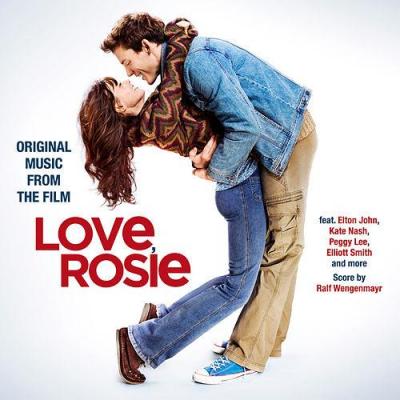
Love, Rosie Album Cover

"Love, Rosie" Soundtrack Lyrics

Movie • 2015

Track Listing


"Love, Rosie (Original Motion Picture Soundtrack)" – Album Guide to Tracks and Key Scenes

Love, Rosie trailer frame of Rosie and Alex in a crowded party scene
Trailer glimpse of Rosie and Alex just before everything gets complicated — the soundtrack leans into exactly that feeling.

Overview

What does it sound like when fate keeps almost getting the timing right and then blowing it at the last second? The Love, Rosie (Original Motion Picture Soundtrack) answers with a collage of 60s heartbreak, 2000s pop, dancefloor bangers and small, wistful score cues that track twenty years of near-misses between Rosie and Alex.

The 2014 film, directed by Christian Ditter from Cecelia Ahern’s novel Where Rainbows End, follows two best friends from childhood through teen pregnancy, long distance, bad marriages and the long walk toward admitting what they actually feel. Composer Ralf Wengenmayr sketches the emotional spine with short instrumental cues, while a compilation album of “Original Music From The Film Love, Rosie” brings together Iba feat. Martin Gallop, Elliott Smith, Gilbert O’Sullivan, Elton John, Las Ketchup, Lily Allen, Kodaline and others. One German label blurb describes the CD as collecting the “songs of the emotional high points” — which is exactly how it plays.

The soundtrack actually exists in two overlapping forms. There is the 2014 German CD and digital release on Königskinder Music, a various-artists compilation that mixes Wengenmayr’s cues with licensed songs. And there is a later 10-track score-only album, Love, Rosie (Original Motion Picture Soundtrack) by Ralf Wengenmayr, issued in 2020 and running just 16 minutes. Streaming playlists under the same title usually reflect the longer compilation: roughly 18 tracks, about 45–47 minutes, with “I’ll Never Fall in Love Again (feat. Martin Gallop)” and “Life With Grace” as pillars at either end.

Genre-wise, the album plays like a life story. Classic pop and soft rock — Gilbert O’Sullivan’s “Alone Again (Naturally),” Elton John’s “Tiny Dancer,” Peggy Lee’s “I’m Confessin’” — paint the parental generation’s melancholy and Alex’s more old-fashioned romantic streak. R&B and hip-hop — Beyoncé’s “Crazy in Love,” Naughty By Nature’s “Hip Hop Hooray,” Salt-N-Pepa’s “Push It” — score adolescence as a blur of hormones and bad decisions. Indie and electro-pop — Super700’s “Life With Grace,” Electric Guest’s “Awake,” Martin Solveig’s “Hey Now (feat. Kyle)” — show up as the characters lurch into adulthood. Over all of it float Wengenmayr’s short score pieces, which quietly tie the tones together.

How It Was Made

Love, Rosie is a UK–German co-production directed by Christian Ditter, with a screenplay by Juliette Towhidi. The film credits Ralf Wengenmayr as composer; he had already scored several German comedies and family films before this, and his work here sticks to intimate instrumentation — piano, acoustic guitar, light strings — designed to sit next to chart songs without clashing. The German and English film entries both list him as the main music credit.

Music supervision was handled by Pia Hoffmann, whose CV includes several European comedies. According to a professional profile that lists her film credits, she supervised the song choices on Love, Rosie, balancing international hits like “Crazy in Love” and Lily Allen’s “F**k You” with more niche selections such as Super700’s “Life With Grace” and Shayna Rose’s “Colorful World”. She also had to thread in multiple versions of the same piece — three different uses of “Tiny Dancer” and at least one repeat of Wengenmayr motifs — while keeping the story’s time jumps clear.

The key commercial release in 2014 was Original Music From The Film Love, Rosie on Königskinder Music, a German label. Discographic summaries and retailer descriptions agree on the core: Iba feat. Martin Gallop’s take on “I’ll Never Fall in Love Again,” Elliott Smith’s “Son of Sam,” Gilbert O’Sullivan’s “Alone Again (Naturally),” Peggy Lee, Elton John, and several Wengenmayr cues (“Love, Rosie,” “A Letter From Boston,” “We Keep in Touch, Okay?” and more). A later digital campaign repackaged the score material on streaming services as Love, Rosie (Original Motion Picture Soundtrack) under Wengenmayr’s name, with 10 short cues and Königskinder Music GmbH listed as the imprint.

Behind the scenes, this made for a split identity: one album functioning as a pop-and-score souvenir of the film, and another as a compact score sampler. The film itself uses far more music — Whatsong, for example, logs over 80 pieces including live variants and trailer songs — so fans often build their own “complete” playlists on Spotify and YouTube, stitching the official album together with the missing cues.

Love, Rosie trailer shot of Rosie and Alex walking in a city at night
Shot in Dublin and other locations standing in for England and Boston, the film’s score has to travel as much as its characters do.

Tracks & Scenes

This is not a full tracklist; it focuses on key songs and how they function in the story. Scene placements are taken from cue logs with time stamps and then expanded into fuller descriptions.

"I’ll Never Fall in Love Again" — Iba feat. Martin Gallop
Where it plays: First song of the film. Over the opening where adult Rosie narrates how long she and Alex have known each other, we see childhood snapshots, school corridors and early party footage. The Bacharach/David classic, reworked into a mellow modern version, plays non-diegetically while the narration lays out their “just friends” dynamic.
Why it matters: Starting with a song that literally insists it will “never fall in love again” is a quiet joke; we are watching two people clearly destined to do exactly that. It sets a bittersweet tone: this isn’t a cool, ironic rom-com, it’s one that wears its heart on a very old-fashioned sleeve.

"Crazy in Love (feat. Jay-Z)" — Beyoncé
Where it plays: At Rosie’s 18th-birthday nightclub party. The camera moves through strobe lights and sweaty teens as Rosie dances with friends and catches Alex’s eye across the floor. Later, as they stumble outside drunk, the song’s horns still echo under the sound design when Alex leans in to kiss her. It’s diegetic in the club, then bleeds into non-diegetic memory.
Why it matters: According to the song-placement notes, multiple versions of “Crazy in Love” are used across the birthday sequence. That repetition turns it into their song — not in a romantic montage way, but as the sound of the exact night where everything could have started and then didn’t.

"Hip Hop Hooray" — Naughty By Nature
Where it plays: First track at the school dance. Rosie is out with Greg while Alex dances with Bethany. The song blasts through the gym, with lights, balloons and shifting groups of students; you can barely hear dialogue over the “hey, ho” chant as Rosie tries to pretend she is having fun with the wrong boy.
Why it matters: The buoyant, call-and-response hook highlights the disconnect between the room’s hype and Rosie’s actual feelings. It’s pure 90s party energy scoring a quiet emotional car crash.

"Played-A-Live (The Bongo Song)" — Safri Duo
Where it plays: Later in the same dance, and again when Rosie frantically calls Alex to tell him the condom has gone missing. The track’s pounding percussion follows her from the gym to the hallway and into the phone booth, backing her panic with relentless bongos.
Why it matters: The song is practically a jump-cut in audio form: big room, then tiny booth, but the beat doesn’t care. That matches how the night’s “fun” has suddenly narrowed into a real-life problem that will change everything.

"Son of Sam" — Elliott Smith
Where it plays: Over a more introspective stretch as Rosie and Alex walk around Boston together, catching up on his new life and her sacrifices. City traffic, campus shots and long lenses frame them in half-empty streets while Smith’s guitar and vocals unfurl above.
Why it matters: Elliott Smith is not a rom-com default choice, and that’s the point. His presence signals that the story is willing to acknowledge darker textures — regret, self-sabotage — instead of staying in glossy pop mode.

"Tiny Dancer" — Elton John
Where it plays: Several times in different versions. One cue underscores Rosie walking her father to work and talking in the locker room; another threads through a conversation about leaving for Boston; a third is used as more straightforward source music. In each case, the melody comes in as Rosie tries to imagine a bigger life and then has her plans derailed.
Why it matters: The song is already famous for scoring messy, communal emotion in Almost Famous. Here it underlines the difference between big dreams (the soaring chorus) and the cramped reality of Rosie's late-night shifts and family obligations.

"Do You Believe" — Beau Black
Where it plays: As Rosie sneaks out to buy a pregnancy test. We watch her on the street, under harsh shop lights, surrounded by ordinary customers and fluorescent aisles while the song plays over the sequence.
Why it matters: Putting a track with that title under a scene about belief in your own future — and fear that it has just changed — is on the nose, but it works. It feels like the soundtrack is quietly asking the same question as Rosie.

"Alone Again (Naturally)" — Gilbert O’Sullivan
Where it plays: After Rosie decides to leave Boston and return home with baby Katie. We see her carrying the child up the stairs, writing a letter to Katie’s father, and closing the door on the future she had imagined. The song plays non-diegetically, its soft piano and voice lining up almost too perfectly with the narrative beat.
Why it matters: According to the song lists, this is one of the major needle-drops. It turns a plot decision into a full emotional chapter, aligning Rosie with a long tradition of pop characters who smile through abandonment and disappointment.

"Life With Grace" — Super700
Where it plays: Twice, both at hinge points. First when Rosie walks away after saying goodbye to Alex at the airport, then later as she opens the seaside hotel and finally starts the career she wanted. The song’s shimmering guitar and steady beat play over wide shots of runways, roads and the hotel’s coastal surroundings.
Why it matters: It is the film’s quiet anthem for starting over. One placement underscores what she is losing (Alex), the other what she is building (her own business). That symmetry is one reason this track has become strongly associated with the film in fan playlists.

"Push It" — En Vogue & Salt-N-Pepa / “Push It” — Salt-N-Pepa
Where it plays: When Rosie goes into labour. Her water breaks, the family explodes into frantic motion, and “Push It” slams in as they try to get her out of the house and to hospital. Later in the delivery room, another listing has the original Salt-N-Pepa version playing while she actually gives birth.
Why it matters: It is a textbook example of the film leaning into a joke and refusing to apologise. The song choice is a pun, yes, but it also keeps the scene energetic rather than grim, matching Rosie's mixture of fear and disbelief.

"Hey Now (feat. Kyle)" — Martin Solveig & The Cataracs
Where it plays: Around the time Rosie learns that her father has died. She is at home preparing food when the phone rings and her mother calls from Nice with the news. The song plays in the background before and during the call, building from a light, dance-pop atmosphere into something that feels suddenly inappropriate as the mood crashes.
Why it matters: The track’s bright, looping hook makes the emotional rug-pull hit harder. One moment it’s kitchen-dance music, the next it is the soundtrack to grieving.

"F**k You" — Lily Allen
Where it plays: When Rosie discovers that Greg has been cheating. She storms into the hotel where he works, punches him, trashes his things, and generally burns down the façade of their marriage. The song blasts over the sequence, its bouncy melody undercut by the very direct lyric in the chorus.
Why it matters: Placement guides describe this as one of the film’s most cathartic musical moments. The track turns what could have been a grim discovery into a burst of justified fury, and it’s also when Rosie finds the letter from Alex that Greg hid — a musical and narrative turning point.

"Serenade" — Emilíana Torrini
Where it plays: In the quiet aftermath of loss. Rosie reads the letter her father wrote before he died, sitting alone and taking in his words about her potential and how proud he is. Torrini’s delicate vocal and sparse arrangement float underneath, keeping the moment intimate.
Why it matters: This is one of the points where the film drops the chart bangers and leans into something small and European. It fits the story’s Irish roots and matches the tone of a daughter finally hearing her father clearly, even though he’s gone.

"Suddenly I See" — KT Tunstall
Where it plays: When Rosie is rushing through the airport on her way to Alex’s wedding, finally admitting to herself how she feels. We see her running, scanning departure boards, struggling with luggage and second-guessing everything. The song plays non-diegetically, its chorus kicking in as she commits to the trip.
Why it matters: It’s a classic empowerment track used here not for career success but for emotional clarity. The title line—sung over shots of runway tarmac and boarding gates—becomes a neat verbalisation of her too-late realisation.

"Get Me Back" — MiMi & The Mad Noise Factory
Where it plays: Over the end credits. After the final scenes at Rosie’s hotel and the long-overdue kiss with Alex, the film rolls into credits with this indie-pop track carrying the mood out of the narrative space and into the theatre exit.
Why it matters: An Amazon description of the album puts this song front and centre as one of the emotional-peak cues, and on the CD it closes the sequence. It is looser than the more famous songs earlier, which makes it feel earned: by the end, the characters have stopped living inside other people’s hits.

Trailer-only cues — “High Hopes”, “Chocolate”, “Right Place Right Time”, “Colorful World”
Where they play: Kodaline’s “High Hopes”, The 1975’s “Chocolate”, Olly Murs’ “Right Place Right Time” and Shayna Rose’s “Colorful World” are all tagged in cue logs as trailer music rather than in-film placements. They underpin the marketing spots: fast montages of almost-kisses, missed flights, weddings, and Lily Collins sprinting through rain and airports.
Why they matter: These songs shape how many viewers first met the story. “High Hopes,” in particular, is strongly associated with the film thanks to its use in trailers and fan edits, even though it doesn’t appear in the feature itself.

Love, Rosie trailer collage of school dance, hospital and airport scenes
From school dance to airport gates — the soundtrack has to keep up with a story that covers two decades in under two hours.

Notes & Trivia

  • The German title of the film is Love, Rosie – Für immer vielleicht, which is echoed in some soundtrack listings and retailer descriptions.
  • One discography entry times the original Königskinder CD at about 46–47 minutes, longer than the later 10-track score-only release.
  • Cue logs count around 80 individual pieces of music, including repeated cues, variations and trailer songs — far more than appear on any single album.
  • Song databases list three separate “Crazy in Love” entries for the birthday sequence alone, reflecting live performance, tour recording and single versions.
  • Lily Allen’s “F**k You” and “Littlest Things” give the mid-film section a distinctly British pop flavour that fits both the source novel and Rosie’s sarcastic edge.

Music–Story Links

Rosie and Alex’s story is essentially an extended near-miss, and the soundtrack leans into that rhythm. Early on, “Crazy in Love,” “Hip Hop Hooray” and “Played-A-Live” score moments where they are physically close but emotionally misaligned — drunk kisses, phone calls cut short, bad dates with other people. The beats are big and extroverted while the truth is happening in the pauses.

When the film shifts to letters, long-distance calls and missed opportunities, the musical palette tilts into softer territory: “Son of Sam,” “Alone Again (Naturally),” “I’m Confessin’,” “Serenade.” These songs track the stretches where Rosie and Alex are geographically separated but mentally stuck on each other. Alex literally writes a love confession while Peggy Lee’s “I’m Confessin’” plays; the music is saying what he can’t say out loud yet.

The parental generation and the kids get their own musical languages. Rosie’s father is bound up with “Tiny Dancer” and the score cues about Boston and letters; his death is marked not by a ballad but by the abrupt cut of “Hey Now” into silence and then into Torrini’s “Serenade” over his letter. Katie and Toby, meanwhile, inherit a mix of party tracks and waltz-like pieces such as André Rieu’s “Strauss y Compañia,” which plays at Alex and Bethany’s wedding when they share their first, confused kiss. The echo is deliberate: the music tells you they are replaying an old pattern with a chance to break it.

By the time “Life With Grace” and the Wengenmayr theme “Love, Rosie” are doing the heavy lifting in the final act, the pop-song fireworks have calmed down. The soundtrack shifts from songs about falling in and out of love to pieces about living with the consequences — exactly where the characters finally end up.

Reception & Quotes

The film itself, released in 2014 (2015 in some territories), drew mixed-to-negative reviews from critics. Review aggregators put it in the low-30s percentage range with comments about clichéd plotting, even as Lily Collins and Sam Claflin were widely praised for their chemistry. Audience scores, however, were more forgiving, and the movie has built a steady afterlife as a streaming and cable staple.

The soundtrack tends to be treated more kindly. Retail blurbs for the Königskinder album emphasise the mix of “classics like Elton John’s ‘Tiny Dancer’” with contemporary tracks and original score pieces. Fan playlists and discussion threads often single out “Life With Grace,” “I’ll Never Fall in Love Again” and the Lily Allen cues as the songs that stick long after the credits.

“Lily Collins and Sam Claflin are appealing, and they give it their all, but they’re undone by Love, Rosie’s silly, clichéd storyline.”

— Critical consensus summary

One German retailer described the CD as collecting “the songs of the emotional high points” of the film — which is exactly how it plays.

— Album description (translated)

A cue-spotter site notes that the movie features 29–80 musical pieces depending on how you count repeats, far beyond the official tracklist.

— Online soundtrack guide
Love, Rosie trailer closing frame with title card against a bright background
By the time the title appears, you have already heard several of the cues that will come back at every turning point.

Interesting Facts

  • The score-only album by Ralf Wengenmayr runs about 16 minutes across 10 tracks — unusually short for a feature, reflecting how heavily the film leans on licensed songs.
  • Königskinder’s 2014 CD release is tagged in some databases as Original Music From The Film Love, Rosie, while streaming platforms more often use Love, Rosie (Original Motion Picture Soundtrack).
  • Online tracklists show that the compilation interleaves score cues with songs like “Tiny Dancer” and “I’m Confessin’,” rather than separating score and songs into different discs.
  • “Crazy in Love” appears on the official soundtrack album as well as in the movie, joining a long list of films that have licensed it for key scenes.
  • “High Hopes” by Kodaline, widely associated with the movie because of its use in trailers and fan edits, is trailer-only and does not appear on the main album.
  • Shazam and Last.fm entries confirm that “Love, Rosie,” “A Letter From Boston,” “We Keep in Touch, Okay?” and “Can I Be Godfather?” are the core recurring score cues.
  • Some databases list more than 80 tracks tied to the film, but many of those are duplicates, alternate releases or trailer-only uses.
  • Because distribution rights differ, the exact configuration of the soundtrack album can vary slightly between Germany and international digital stores.

Technical Info

  • Album title (compilation): Original Music From The Film Love, Rosie / Love, Rosie (Original Motion Picture Soundtrack)
  • Main work: Love, Rosie (romantic comedy-drama film)
  • Film year: 2014 (world premiere October 2014; some markets received it in 2015)
  • Album year (compilation): 2014 (Königskinder CD and digital release, running roughly 46–47 minutes)
  • Album year (score-only): 2020 (10-track digital release credited to Ralf Wengenmayr, about 16 minutes)
  • Type: Feature film soundtrack (various artists + original score)
  • Composer (score): Ralf Wengenmayr
  • Music supervisor: Pia Hoffmann
  • Key artists (songs): Iba feat. Martin Gallop, Elliott Smith, Gilbert O’Sullivan, Peggy Lee, Elton John, Super700, Beyoncé, Las Ketchup, Naughty By Nature, Salt-N-Pepa, KT Tunstall, Lily Allen, Emilíana Torrini, Martin Solveig & The Cataracs, MiMi & The Mad Noise Factory, Kodaline (trailer)
  • Label(s): Königskinder Schallplatten / Königskinder Music GmbH (Germany); later digital score distribution via Königskinder Music GmbH
  • Production companies (film): Constantin Film, Canyon Creek Films, Octagon Films
  • Distributors: Lionsgate (UK), Constantin Film (Germany), with additional distributors in other territories
  • Runtime (film): approx. 102 minutes
  • Box office (film): about $25.5 million worldwide
  • Critical reception (film): Rotten Tomatoes around 32% approval; Metacritic mid-40s (“mixed or average reviews”)
  • Availability (soundtrack): Physical CD can be hard to find; various configurations of the compilation and the 10-track score album are available on major streaming and download platforms.

Canonical Entities & Relations

Subject Relation Object
Love, Rosie (film) is directed by Christian Ditter
Love, Rosie (film) is based on novel Where Rainbows End by Cecelia Ahern
Love, Rosie (film) has music by Ralf Wengenmayr
Love, Rosie (film) has music supervision by Pia Hoffmann
Original Music From The Film Love, Rosie is a soundtrack to Love, Rosie (film)
Original Music From The Film Love, Rosie is released by Königskinder Music / Königskinder Schallplatten GmbH
Ralf Wengenmayr composed score cues such as “Love, Rosie”, “A Letter From Boston”, “We Keep in Touch, Okay?”
Iba feat. Martin Gallop performed “I’ll Never Fall in Love Again” used in the film and on the album
Elliott Smith performed “Son of Sam” featured in the Boston walking sequence
Gilbert O’Sullivan performed “Alone Again (Naturally)” used when Rosie leaves Boston with Katie
Elton John performed “Tiny Dancer” in multiple scenes tied to Rosie and her father
Super700 performed “Life With Grace” used at the airport goodbye and hotel-opening scenes
Beyoncé performed “Crazy in Love” used during Rosie’s 18th-birthday party
Lily Allen performed “F**k You” and “Littlest Things” in key mid-film sequences
Kodaline performed “High Hopes,” used in trailers for the film
Constantin Film produced Love, Rosie (film)
Lionsgate distributed Love, Rosie in the United Kingdom

Questions & Answers

Is the Love, Rosie soundtrack one album or two?
There are two main releases: a 2014 various-artists compilation often titled Original Music From The Film Love, Rosie, mixing songs and score, and a 2020 digital album Love, Rosie (Original Motion Picture Soundtrack) credited to Ralf Wengenmayr that contains only 10 short score cues.
What song plays at Rosie’s 18th-birthday party when she and Alex kiss?
Multiple listings agree that Beyoncé’s “Crazy in Love” (in different release variants) runs through the club sequence and around the kiss, making it the de facto theme of that night.
What is the song when Rosie leaves Boston with baby Katie?
That scene is scored with Gilbert O’Sullivan’s “Alone Again (Naturally),” which plays as she carries Katie upstairs and writes a letter to the baby’s father.
Which track plays over the end credits?
The credits are mainly carried by “Get Me Back” by MiMi & The Mad Noise Factory, which also appears on the compilation album and is frequently tagged as the closing song in cue guides.
Is “High Hopes” by Kodaline actually in the movie?
No. It is strongly associated with the film because of its use in trailers and fan edits, and some cue lists mark it as a “trailer song,” but it does not play in the feature itself.

Sources: film credits and production notes; English and German Wikipedia entries for the film; soundtrack listings and label data from Discogs, SoundtrackCollector and retailer descriptions; streaming metadata for the Ralf Wengenmayr score album; Whatsong song-by-song scene guide for Love, Rosie; Amazon and German retail blurbs for the 2014 Königskinder compilation; song-specific entries for “High Hopes”, “Crazy in Love”, “F**k You” and others.

In fact, strangely enough, that the daughter of Phil Collins, Lilly Collins, does not perform any songs in the film. But the soundtrack contains work of Elton John , and most of the melodies made by the composer Ralf Wengenmeyr. Incidentally, Lilly Collins some time ago also played Snow White in the film from Disney studio. The film had as many as 17 job titles and 50 different release dates in various countries, from 17th of October, 2014 (in USA) until April 17, 2015 (in Mexico), but rather, it is a common thing than some phenomenon out of the ordinary. Interesting enough soundtrack, which is more independent than belongs to the film – indeed, if you look at each song individually, and on the dates of their outcome. Good, solid rock of long period – from the 60s to 2000s. During this period, a lot of good songs have been written and some of the greater songs included in this collection. For example, Super 700 or Take Me To A Higher Plane . Many of beautiful and active female vocals, like in Get Me Back. Some songs are like the young George Michael, when he was still in the “Wham!” band. And also there was a place to easy slow jazz without pipes (rather it seems like the blues), and the emphasis in this collection is given with guitar and piano as the main set of the background to all the songs. Well, it is pretty good, good. The main collection includes 18 songs (9 among them are instrumental), and among those that played in the movie, but are not considered an official soundtracks, 21 songs more. Another 4 songs assigned to different versions of the trailer. Here on the site you will find 24 compositions. Even if you only listen to the official selection, the hour and a half of good mood are guaranteed. On the other hand, additional songs, contain so many cool artists, so they should be found and listened separately. Must hear!

November, 13th 2025

"Love, Rosie" on the Web: IMDb, Wikipedia
A-Z Lyrics Universe

Lyrics / song texts are property and copyright of their owners and provided for educational purposes only.