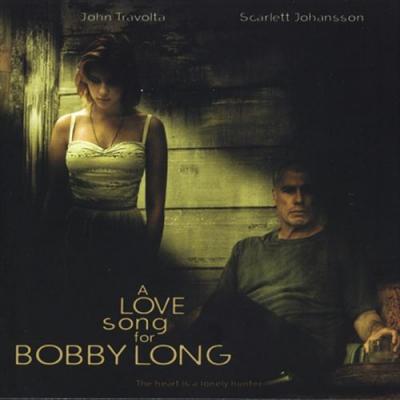
"Love Song for Bobby Long, A" Soundtrack Lyrics
Movie • 2005
Track Listing
Los Lobos
The Capitol Years
Willie King
Thalia Zedek
Lonnie Pitchford
Trespassers William
Helen Humes
John Travolta
Giant Dog
Grayson Capps
Big Bill Morganfield
Grayson Capps
Grayson Capps
John Travolta
Magic Slim & The Teardrops
Grayson Capps
Louis Jordan
Lightnin' Hopkins
Rebirth Brass Band
Little Johnny Taylor
Larry Davis
Trespassers William
Stavin' Chain
Grayson Capps
John Travolta
Grayson Capps
Grayson Capps and Theresa Andersson
"A Love Song for Bobby Long – Original Motion Picture Soundtrack" – Album Guide to Tracks and Key Scenes
Overview
What does New Orleans sound like when it is beautiful, broken and half-asleep on a porch with a cigarette? The soundtrack to A Love Song for Bobby Long answers that with a blend of barroom blues, old folk ballads and hazy indie rock that feels as lived-in as the peeling paint on Bobby’s walls.
The film itself is a slow-burn character piece about a ruined literature professor (John Travolta), the young woman who inherits her late mother’s house (Scarlett Johansson), and the ghost of that missing mother. The album bottles the same mood: weary but tender, drunk on memory more than alcohol. Los Lobos, Trespassers William, Thalia Zedek, Nada Surf, Lightnin’ Hopkins and others sit next to Nathan Larson’s score cues and several songs sung on screen by Travolta. According to the English Wikipedia summary of the film’s music, the soundtrack spans everything from “Someday” by Los Lobos to Travolta’s versions of “Barbara Allen” and “I Really Don’t Want to Know,” tied together by Grayson Capps’ title song.
What makes this soundtrack stand out is how tightly it knits together author Ronald Everett Capps’ material and his son Grayson’s songwriting. The title track “A Love Song for Bobby Long” and “Lorraine’s Song (My Heart Was a Lonely Hunter)” grew out of the same Gulf Coast songwriter scene that birthed the novel Off Magazine Street, so the songs feel like extra chapters rather than needle-drops. The album plays almost like a concept record about regret, literary ghosts and busted porches.
Stylistically, it is an Americana collage. Old-school blues (Lonnie Pitchford, Lightnin’ Hopkins, Big Bill Morganfield) paints the city’s grit and history. Country-folk and traditional balladry surface through Travolta’s takes on “Barbara Allen” and “I Really Don’t Want to Know,” grounding Bobby as a man who lives inside songs older than he is. Indie and shoegaze textures arrive via Trespassers William’s “Different Stars” and “Lie in the Sound,” while Nada Surf’s “Blonde on Blonde” and Giant Drag’s “This Isn’t It” bring a more contemporary alt-rock ache. Blues equals damage, folk equals memory, dream-pop equals the characters’ inner weather. It is not a flashy mix; it is a quietly precise one.
How It Was Made
The film is based on Ronald Everett Capps’ novel Off Magazine Street, and writer-director Shainee Gabel leans hard into the idea that music is how the dead Lorraine lingers in every room. Nathan Larson, known from Shudder to Think and a run of indie scores, composed the original music and contributes cues like “Bobby” and “Daughter Like Mother.” His score pieces thread between licensed songs, often just a few chords and a slide into feedback that match Bobby’s shuffling gait.
Song selection came through music supervisor Jim Black, with other sources listing Jeffrey Haupt in the music department as well. A contemporary Christian review even remarked that Lorraine never appears in flashback, but the supervisor’s choices make her “an incredible presence” purely through the soundtrack. In practice that means a deliberate tilt toward New Orleans and Southern textures: Lightnin’ Hopkins’ “Praying Ground Blues,” Magic Slim & The Teardrops, Lonnie Pitchford, and Grayson Capps’ own Gulf Coast material.
The album side of the project had its own quirks. The Italian Wikipedia entry on the film notes that the CD, titled A Love Song for Bobby Long – Original Motion Picture Soundtrack, came out in 2005 only in the United States, on small Nashville-based label Hyena Records, which shut down around 2010 and never seems to have issued the record elsewhere. AllMusic lists a January 11, 2005 release date and a 16-track running order of just under an hour, making this very much a modest, niche physical release that later found a second life via digital platforms.
Finally, there is John Travolta. Billboard and regional press at the time underlined that he returned to his pop-singer roots for the film, recording “Barbara Allen” and “I Really Don’t Want to Know” for the soundtrack and performing them in character. That choice turns Bobby’s musical moments into diegetic character work instead of lip-sync nostalgia.
Tracks & Scenes
Public, scene-by-scene cue sheets for this film are scarce, so exact timestamps are hard to verify. Below I focus on well-documented songs and place them within broad acts and emotional beats rather than minute-accurate quoting of the timeline.
"Someday" — Los Lobos
Scene: Used early in the film, as we move from Pursy’s Florida dead end back into New Orleans and her late mother’s territory, “Someday” frames her homecoming. The song’s steady groove and lyrics about waiting for a better time sit over travel shots and re-introductions to Lorraine’s shabby house, giving the city an immediate, lived-in musical accent rather than tourist-jazz cliché.
Why it matters: Los Lobos bring a working-class, border-blues sensibility that matches Pursy’s no-romance view of life. The track plants the idea that change is possible “someday,” even if everyone onscreen currently looks allergic to it.
"Lorraine’s Song (My Heart Was a Lonely Hunter)" — Theresa Andersson & Grayson Capps
Scene: The song is tied to Lorraine’s off-screen presence and to the Carson McCullers novel that Bobby pushes on Pursy. It plays around sequences where Pursy reads, revisits the past and sits in transit spaces (a train station, a lakeside moment) trying to decide whether to walk away or stay. A fan-favorite description of the film even singles out the train-station reading scene as a gut punch, and this song is the emotional shorthand for that kind of moment.
Why it matters: The lyric hook “my heart was a lonely hunter” mirrors both the book in Pursy’s hands and Bobby’s entire life story. It is practically the film’s thesis sung aloud: the heart pursues, even when the hunt is hopeless.
"Different Stars" — Trespassers William
Scene: “Different Stars” appears late in the film, over one of its most contemplative, extended passages. The hazy guitars and Ana-Lynne Williams’ distant vocal sit over shots of the three leads dealing with the fallout of secrets revealed — the kind of sequence where characters walk, look out of car windows or sit on porches while the narrative digests what just happened rather than talking it to death.
Why it matters: Members of Trespassers William have said this placement is one of their most prominent and fitting film uses. The band’s shimmering, slightly shoegaze sound turns New Orleans into an interior space: not the loud French Quarter stereotype, but the fog of regret in Bobby’s head. It is the sound of people realising their stories might not be over yet.
"Blonde on Blonde" — Nada Surf
Scene: Nada Surf’s contribution shows up in a mid-film stretch when the story loosens its shoulders a little — scenes of Pursy moving through the city, the house filling up with small routines, Lawson orbiting her and not quite committing to either writing or romance. The track plays non-diegetically, over cuts between streets, kitchens and backyards, giving these ordinary spaces the melancholic cool of an indie-rock video.
Why it matters: The title nods to Dylan’s classic album, but in context it feels more like a joke about layers of reference: literary drunks quoting big books and listening to music that itself quotes rock history. It marks a moment where the film could tip into self-consciousness, yet the song’s warmth keeps it grounded.
"Praying Ground Blues" — Lightnin’ Hopkins
Scene: Hopkins’ rough, intimate blues is used in barroom and neighbourhood material — sequences with locals, beer bottles, and Bobby and Lawson behaving like fixtures on the edge of the frame. You hear it as part of the sonic wallpaper of New Orleans rather than as a “big moment” cue.
Why it matters: Dropping in a classic like Hopkins ties Bobby’s private self-destruction to a much older, communal language of hurt and endurance. It is the musical version of the film’s “noble rot” atmosphere: beauty, but with mold creeping at the edges.
"Lonesome Blues" — Lonnie Pitchford
Scene: Another deep blues cut, “Lonesome Blues” digs into quieter, late-night house scenes: Bobby alone with a drink, Lawson watching him, Pursy listening from another room. It plays either from a stereo inside the diegesis or as a near-source cue, blurred with room tone and creaking floorboards.
Why it matters: The track’s minimal guitar and voice mirror Bobby’s stripped-down life. No more tenure, no more classroom; just songs and stories. It makes his loneliness sound rooted rather than accidental.
"Barbara Allen" — John Travolta
Scene: At one key point, Bobby picks up a guitar and sings the traditional ballad “Barbara Allen” himself. The camera lingers on his worn face and the cluttered room while Pursy and Lawson listen. There is no polish: his voice cracks, the tempo wobbles, and you can hear the character’s age in every line.
Why it matters: The choice of song is not random. “Barbara Allen” is centuries old and obsessed with regret, rejection and death — exactly the themes Bobby spends the film avoiding in conversation and confronting in song. Folk-music writers have even highlighted this performance as an example of a big movie star tackling one of the most collected ballads in the English language, which is not the usual Travolta headline.
"I Really Don’t Want to Know" — John Travolta
Scene: Travolta also sings this country standard in the film, again in character and in a small-room, informal setting. It clings to scenes where Bobby tries to pretend he is above certain revelations, only for his body language to betray how desperately he does want to know — about Pursy, about the past, about what Lorraine really thought of him.
Why it matters: The lyric about preferring not to hear painful details runs directly against the film’s structure, which is built on letters, books and confessions. Having Bobby sing it himself makes the contradiction sting more; he is literally voicing the denial the story will not let him keep.
"Love Song for Bobby Long" — Grayson Capps
Scene: Capps’ title track serves as the film’s coda, playing over the ending and/or credits. After the last narrative turns — including Pursy’s understanding of who Bobby really is to her — the song rolls in with its drawling vocal and simple chord progression, carrying us through final images of the house, the city, and these people who might finally be ready to stop running.
Why it matters: Because the writer is the son of the novelist who created Bobby on the page, the track feels like the author’s blessing over the cinematic version. It is not triumphal; it is resigned, amused and oddly affectionate, which is exactly where the story leaves its characters.
"This Isn’t It" — Giant Drag
Scene: This mid-2000s indie track shows up around scenes that underline Pursy’s frustration with half-measures — Lawson’s half-written book, Bobby’s half-truths, her own half-finished education. You hear it under shots of slammed doors, long walks and unspoken confrontations in cramped rooms.
Why it matters: The blunt title sentences the entire first two acts: everyone’s current version of their life “isn’t it.” Musically it also anchors the soundtrack in its release era, reminding you this is not actually a period piece, no matter how antique Bobby’s record collection feels.
"Blues, Bars & Extras" — film-only and non-album cues
Scene: The film includes several songs that either do not appear on the official CD or circulate separately: The Walkmen’s “Another One Goes By,” “Jet Black” by The Capitol Years, and older sides like Helen Humes’ “All I Ask Is Your Love,” among others. These typically play in bars, on radios, or under street scenes, fleshing out New Orleans beyond the 16 official album tracks.
Why it matters: These pieces help the film avoid feeling like a mere sampler CD. Their absence from the album also explains why fans occasionally go hunting through online discographies and YouTube uploads to reconstruct the full musical picture.
Notes & Trivia
• Scarlett Johansson earned a Golden Globe nomination for her performance here, one of several early-2000s roles that cemented her as a serious dramatic lead, even though the film itself received mixed reviews.
• The movie premiered at the Venice Film Festival in September 2004 and only later opened on a handful of U.S. screens to qualify for awards, which partly explains its low box-office but strong afterlife on DVD and cable.
• Italian DVD releases have been reported as missing a roughly 20-minute scene that appeared in other versions, a quirk noted in Italian coverage of the film.
• In Quebec the film’s French title is “Une ballade pour Bobby Long,” which leans into the idea that the story itself is a kind of sung ballad.
• The soundtrack CD, released by Hyena Records in Nashville, never seems to have had European or Japanese pressings. Import copies became minor collector items once the label folded.
• New Orleans and nearby Gretna, Louisiana, served as primary shooting locations, and the film uses real neighbourhood bars and streets rather than studio backlots, which makes the source music feel earned rather than pasted on.
Music–Story Links
Music in A Love Song for Bobby Long is not wallpaper; it is a stand-in for the characters’ honesty. Bobby will dodge a straight question but sing “Barbara Allen” without flinching. The ballad’s story of too-late regret mirrors his academic flame-out and his strained tie to Pursy. When he sings, he tells the truth by proxy.
For Pursy, songs are gateways to her mother. “Lorraine’s Song” obviously carries her name, but it is also bound up with The Heart Is a Lonely Hunter, the novel Bobby pushes on her. Book, song and letters form a triangle: each reveals a different angle on what it means to feel unseen in your own life. When Pursy listens, reads and finally acts, the film quietly links those actions to the music that has been shadowing her.
Lawson’s arc runs through the indie cues. Tracks like “Different Stars,” “Lie in the Sound” and “This Isn’t It” sit near his moments of half-hearted progress and eventual reckoning. He is the character most likely to own those records, and the film lets his private taste leak into the soundtrack, blurring the line between “movie score” and “Lawson’s mixtape for a life he cannot quite get right.”
On a broader level, the blues cuts tie the trio’s personal failures to New Orleans’ own history. Songs by Lightnin’ Hopkins, Lonnie Pitchford and Big Bill Morganfield suggest a world where people have been drinking, grieving and starting over on these same streets for generations. The characters’ heartbreaks are specific, but the music says they are not special.
Reception & Quotes
Critically, the film sat in the middle of the pack: review aggregators show it hovering in the low-to-mid 40s out of 100, with praise for performances and atmosphere but complaints about pacing and familiar Southern-literary tropes. The soundtrack, however, has often been singled out in articles and fan discussions as one of the film’s enduring strengths, even showing up in decade-end conversations about overlooked 2000s soundtracks.
“It is good to act on a simmer sometimes, instead of at a fast boil… These are modest pleasures, but real enough.” — Roger Ebert, Chicago Sun-Times
“A lovely noble rot pervades the film in much the same way that it does the city… it’s no less pleasant to succumb.” — Carina Chocano, Los Angeles Times
“The character of Lorraine was never seen… but [the] music supervisor has made her an incredible presence through his selection of music.” — ChristianAnswers review
“Travolta was also something of a pop star… on the soundtrack for his latest film, he returns to the mic.” — Billboard feature on the film’s music
Today, the album is easier to find on streaming services and digital storefronts than as a physical CD. That has helped younger viewers discover the songs first and the film second, flipping the original order of impact.
Interesting Facts
- Grayson Capps, who wrote and performs the title song and “Washboard Lisa,” is the son of novelist Ronald Everett Capps, whose book inspired the film.
- John Travolta’s vocal tracks here sit alongside his much earlier pop recordings, creating an odd career bridge from 1970s teen idol to grey-haired character actor.
- The soundtrack’s mix of classic blues and early-2000s indie means it doubles as a time capsule of what savvy music supervisors were using in mid-decade indie dramas.
- Hyena Records, the label that released the CD, specialised in jazz, roots and eclectic projects; shutting down around 2010 turned several of its titles, including this one, into cult collectibles.
- “Different Stars” by Trespassers William also appears prominently in other films and TV, but band interviews often point back to this film as a particularly flattering use.
- The traditional ballad “Barbara Allen” has a documented history going back to the 17th century, so hearing it in a 2004 New Orleans drama links Bobby to a very long chain of doomed lovers.
- Streaming services sometimes list the album simply under “Various Artists – A Love Song for Bobby Long,” which can make it slightly harder to find if you search only for individual bands.
- Some fans build their own “complete” playlist by combining the official album with non-album cues like The Walkmen’s “Another One Goes By” and “Jet Black” by The Capitol Years.
- Because the movie’s box-office was modest, many people’s first exposure to several of these tracks came via DVD rentals and late-night cable, not theatrical sound.
Technical Info
- Title (album): A Love Song for Bobby Long – Original Motion Picture Soundtrack
- Title (film): A Love Song for Bobby Long
- Year (film): 2004 (Venice premiere; U.S. limited release December 29, 2004; wider in January 2005)
- Year (album): 2005 (CD release, U.S.)
- Type: Feature film soundtrack (various artists + original score)
- Composer (score): Nathan Larson
- Key songwriters / artists: Grayson Capps, Los Lobos, Trespassers William, Thalia Zedek, Lonnie Pitchford, Magic Slim & The Teardrops, John Travolta (as vocalist), Lightnin’ Hopkins, Big Bill Morganfield, Nada Surf, Giant Drag
- Music supervision: Jim Black (song supervision, per production and press notes); Jeffrey Haupt also credited in music department on some listings
- Label: Hyena Records (Nashville, U.S. release only)
- Album length: approx. 57 minutes, 16 tracks
- Notable placements: “Someday,” “Lorraine’s Song (My Heart Was a Lonely Hunter),” “Different Stars,” “Barbara Allen,” “I Really Don’t Want to Know,” “Blonde on Blonde,” “Praying Ground Blues,” “Love Song for Bobby Long”
- Film studios: El Camino Pictures, Destination Films, Crossroads Films, Bob Yari Productions
- Distributor: Lions Gate Films (U.S.); other distributors in international territories
- Availability: Original CD out of print; soundtrack widely available via digital retailers and major streaming services as a various-artists album.
Canonical Entities & Relations
| Subject | Relation | Object |
|---|---|---|
| Shainee Gabel | directed | Film A Love Song for Bobby Long |
| Ronald Everett Capps | wrote novel | Off Magazine Street, source for the film |
| Grayson Capps | wrote and performed | Song “A Love Song for Bobby Long” (title track) |
| Grayson Capps | is son of | Author Ronald Everett Capps |
| Nathan Larson | composed score for | Film A Love Song for Bobby Long |
| Hyena Records | released | Album A Love Song for Bobby Long – Original Motion Picture Soundtrack (U.S.) |
| Jim Black | served as | Music supervisor on the film |
| Lions Gate Films | distributed | Film A Love Song for Bobby Long in the United States |
| John Travolta | performed | “Barbara Allen” and “I Really Don’t Want to Know” for the soundtrack |
| New Orleans, Louisiana | served as | Primary setting and shooting location for the film |
| Album A Love Song for Bobby Long – Original Motion Picture Soundtrack | is about | Film A Love Song for Bobby Long and its characters |
Questions & Answers
- Is the A Love Song for Bobby Long soundtrack still available, or is it out of print?
- The original Hyena Records CD is long out of print and was only issued in the U.S., but the album is available digitally on major streaming and download platforms, usually credited to “Various Artists – A Love Song for Bobby Long.”
- Which songs does John Travolta actually sing in the movie?
- Travolta performs at least two songs on the official soundtrack — the traditional ballad “Barbara Allen” and the country standard “I Really Don’t Want to Know” — and is additionally associated with “My Gal” in some soundtrack listings, all sung in character as Bobby.
- What is the connection between Grayson Capps and the story?
- Grayson Capps is the son of novelist Ronald Everett Capps, who wrote Off Magazine Street. Grayson contributes the title song “A Love Song for Bobby Long,” “Lorraine’s Song (My Heart Was a Lonely Hunter),” and other material that helps define Lorraine’s presence in the film.
- Why do fans talk so much about “Different Stars” in this soundtrack?
- “Different Stars” by Trespassers William scores one of the film’s most emotionally loaded sequences, and members of the band have described that placement as especially prominent and fitting. Its dreamy, melancholy sound has become closely linked with the movie for many viewers.
- Why is this soundtrack sometimes called a cult favorite?
- The film had a small theatrical run, but its music — a carefully curated mix of Gulf Coast songwriters, classic blues and early-2000s indie tracks — earned praise in reviews and decade-end articles. Because the CD was region-limited and later went out of print, fans who tracked it down often became evangelists for it.
Sources: English, Italian, French and Portuguese Wikipedia entries on the film and soundtrack; AllMusic album page; Discogs release notes; Billboard and regional press on Travolta’s songs; fan and band interviews mentioning “Different Stars”; ChristianAnswers review; blues and folk song reference material on “Barbara Allen.”
November, 13th 2025
A-Z Lyrics Universe
Cynthia Erivo Popular
Ariana Grande Horsepower
Post Malone Ain't No Love in Oklahoma
Luke Combs Good Riddance (Time of Your Life)
Green Day Bye Bye Bye
*NSYNC You're the One That I Wan
John Travolta & Olivia Newton-John I Always Wanted a Brother
Braelyn Rankins, Theo Somolu, Kelvin Harrison Jr. and Aaron Pierre The Power of Love
Frankie Goes to Hollywood Beyond
Auli’i Cravalho feat. Rachel House MORE ›