Soundtracks:  A B C D E F G H I J K L M N O P Q R S T U V W X Y Z #


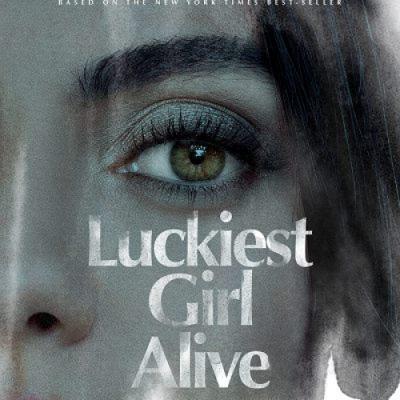
Luckiest Girl Alive Album Cover

"Luckiest Girl Alive" Soundtrack Lyrics

Movie • 2022

Track Listing


"Luckiest Girl Alive (Soundtrack from the Netflix Film)" – Album Guide to Tracks and Key Scenes

Luckiest Girl Alive official Netflix trailer still with Mila Kunis in New York
Luckiest Girl Alive – Netflix trailer artwork, 2022

Overview

What does recovery from trauma sound like when it is buried under a perfect Manhattan life? Luckiest Girl Alive answers with a soundtrack that keeps cutting between glossy surface and raw nerves. The official album, "Luckiest Girl Alive (Soundtrack from the Netflix Film)" by Linda Perry, focuses on taut, compact score cues, while the film itself leans heavily on late-90s and early-2000s needle drops that evoke Ani FaNelli’s teenage years.

The score is short-form and focused: 27 instrumental tracks in about 42 minutes, built around repeating motifs that swell and then stop abruptly, mirroring Ani’s habit of shutting emotions down mid-flow. The music rarely indulges in long melodic themes. Instead, it uses pulses, piano figures and hovering drones that push scenes forward and then vanish, leaving awkward silence for dialogue and performance to land.

Against that, the song choices are almost aggressively familiar: hip-hop radio staples, alt-rock paranoia, bright bossa nova and a new original ballad for the end credits. Together they map Ani’s journey from curated magazine editor back to the girl who survived assault and a school shooting. When the soundtrack jumps from classical Bach to a raunchy club track within minutes, the clash is intentional – it shows how Ani’s world constantly flips between elite respectability and the reality she is trying to bury.

Genre-wise, the film oscillates between electronic suspense scoring, orchestral touches and a crate-digger’s mix of 90s R&B, golden-age hip-hop, indie rock and lounge jazz. Electronic score cues track Ani’s present-tense anxiety; classical pieces underline wealth, weddings and “good taste”; the hip-hop and alt-rock catalogue tracks – Garbage, Mase, Talking Heads – drag us back into 1999. Pop nostalgia in this film usually signals danger, not comfort.

How It Was Made

The film’s original score is composed by Linda Perry, best known as the former frontwoman of 4 Non Blondes and a prolific writer-producer for artists like Pink and Christina Aguilera. Here she strips away big vocal hooks and writes mostly instrumental cues with clear, punchy titles – “Subway Anxiety”, “The Shooting”, “Writing the Story” – that mirror Ani’s inner chapter headings.

Music supervision comes from Susan Jacobs, a veteran whose credits include American Hustle, Silver Linings Playbook and Big Little Lies. Her job here is to balance era-specific teen tracks with Ani’s slick adult world. That means clearing recognizable cuts from Garbage, Mase, Talking Heads and more, while also weaving in library and classical pieces that sell status and money.

The official score album was released digitally by Netflix Music on 7 October 2022, the same day the film hit the platform after a short theatrical run. It contains Perry’s 27 cues but not the full roster of licensed songs; those live on separate digital singles, label playlists and unofficial fan compilations.

Luckiest Girl Alive trailer frame with Ani Fanelli in an upscale office
Work, image, survival – the soundtrack constantly underlines Ani’s double life.

Tracks & Scenes

Below are the key songs and score moments, with how they play against picture. Timestamps are approximate based on the Netflix cut.

"Sunny" — Blake Swann
Where it plays: Opens the film, over Ani’s polished New York morning routine and commute. We see her moving through midtown crowds, perfectly styled, coffee in hand, already narrating her strategy for life. The track is diegetic-adjacent: it feels like something she might have in her earbuds, but the mix plays it over the whole city.
Why it matters: The warm, upbeat groove sells the idea that Ani really is “the luckiest girl alive” for a few minutes. Once you know where the story goes, that brightness reads more like armour than truth.

"Keep It Movin’ (Original Mix)" — Stanton Warriors & Tony Quattro feat. Rell Rock
Where it plays: Around 00:04:00, during an early gym sequence. Ani hits a treadmill hard, breathing heavy, pushing herself while club-ready breakbeats drive the scene. The music is diegetic, blaring from the gym system, and the cut keeps snapping between her body and the perfect people around her.
Why it matters: The title is on-the-nose: Ani’s entire coping strategy is to keep moving, never sit with pain. The aggressive beat underscores how she weaponizes fitness and control over her body, just as the film later reveals how little control she had as a teenager.

"I Think I’m Paranoid" — Garbage
Where it plays: About 00:15:00 in, when Young Ani arrives at the elite Brentley School. Her mom gushes that she’s “already the prettiest girl in school” while the song kicks in over shots of manicured lawns and rich kids. It is non-diegetic, sliding over Ani’s voiceover about cliques and the English teacher Andrew Larson.
Why it matters: The lyrics about paranoia and manipulation silently comment on Ani’s future. The slick alt-rock sound pins the timeline to the late 90s and hints that this supposedly golden memory is actually the start of a long psychological trap.

"Genie in a Bottle" — referenced in dialogue
Where it plays: At roughly 00:16:00, a class discussion sees Andrew quoting a line from Ani’s essay. Class clown Arthur Finneman twists a Christina Aguilera lyric into a dirty joke. The original recording does not blast on the soundtrack; instead the film uses the cultural memory of the song as a punch line.
Why it matters: Turning a teen-pop track into a crude laugh in a classroom foreshadows the way Ani’s boundary-crossing experiences will be dismissed and mocked. The “genie” imagery gets weaponized against her.

"Feel So Good" — Mase
Where it plays: Around 00:20:00 at the Brentley School dance in 1999. The song plays loudly in the gym as Young Ani dances first with a female classmate, then with Liam when he cuts in. The track is fully diegetic; lights flash, kids shout over it, teachers hover at the edge of the frame.
Why it matters: This is the most conventional teen-movie moment in the film, and the soundtrack leans into that fantasy. Knowing what follows, the smooth party anthem becomes bitter; it marks the last time Ani is allowed to just be a kid before everything breaks.

"Put It In Your Mouth" — Akinyele feat. Kia Jeffries
Where it plays: Shortly after, around 00:21–00:22:00 as the dance continues. A far more explicit track takes over the speakers while Arthur sneaks booze from a flask and gets caught. Chaperones shut the fun down and students spill out into the night.
Why it matters: The sudden shift from radio-friendly Mase to a raunchy underground cut pushes the party from “safe rebellion” into genuinely risky territory. The film doesn’t linger on lyrics, but the vibe underlines how quickly boundaries for these kids are collapsing.

"Awake" — Generationals
Where it plays: Around 00:30:00 in Ani’s adult storyline. LoLo, her editor, gives her good career news in the office; the cue continues over a transition into a restaurant where Ani meets fiancé Luke to celebrate. The song plays non-diegetically over the cut, with restaurant ambience mixed underneath.
Why it matters: Indie pop here stands in for the millennial dream: good job, good partner, good wine. The breezy tone sells how convincing Ani’s current persona is, even to herself. It also contrasts sharply with the darker score that creeps in whenever the documentary or Brentley are mentioned.

"The Well-Tempered Clavier, Book 1: Prelude No. 1 in C Major" — J.S. Bach, performed by Angela Hewitt
Where it plays: Around 00:23:00, at Ani’s wedding-dress fitting. The serene piano prelude accompanies her trying on the gown for her mother and friend, who fuss over her appearance in a high-end boutique. The music is non-diegetic but mimics what the shop might play to feel refined.
Why it matters: Classical music here signals wealth, taste and tradition. Underneath, it also hints at how rigidly structured Ani’s life has become; the piece is famously orderly, just like Ani’s carefully planned wedding and persona.

"Piano Concerto No. 23 in A Major — I. Allegro (Xmas Mix)" — Lorne Balfe, Russell Emanuel & Steve Kofsky
Where it plays: Immediately after or intercut with the dress-shop sequence, the “Xmas Mix” of Mozart’s concerto plays over shoppers and sales staff. It still feels like boutique background music, but the Christmas flavour adds a slightly kitschy note to the supposedly perfect scene.
Why it matters: The cue gently undercuts the fantasy. What should be an emotionally meaningful moment – choosing a wedding dress – comes off as a consumer ritual, scored like a holiday commercial.

"This Must Be the Place (Naive Melody)" — Talking Heads
Where it plays: Around 01:04:00 in a quiet domestic scene. Ani examines a cable-knit sweater, reacts with a small gasp, and banters with Luke about married life and expectations. The song is non-diegetic but mixed warmly, almost like their apartment has absorbed it.
Why it matters: The track is a famously offbeat love song, full of ambivalence about home and belonging. Dropping it here, when Ani is trying to talk herself into a future with Luke, is pointed: she wants this house to be “the place,” but the music knows she is unsettled.

"Pump Up the Volume" — M/A/R/R/S
Where it plays: Briefly during one of the teen party sequences, the track cuts in as things get louder and more chaotic. It may not dominate the scene the way Mase does, but its chopped-up samples and repeated vocal stabs add to the sense of noise and loss of control.
Why it matters: As a late-80s dance classic that still turned up at 90s parties, it underlines how the kids grab whatever cultural detritus they can to turn the night into something epic – just as the film will later show how that night scars Ani permanently.

"Bossa Nova U.S.A." — The Dave Brubeck Quartet
Where it plays: Used in light, transitional moments – restaurant chatter, social gatherings – where the camera glides across polished surfaces and expensive tableware. The jazz feel is non-diegetic, more mood than specific source.
Why it matters: Cool, syncopated jazz here signifies background privilege. It makes the spaces Ani moves through feel effortless, even as the story keeps reminding us that her “ease” is the result of relentless self-management.

"I Know Where I’ve Been" — Elle King
Where it plays: At roughly 01:46:00, over Ani’s confrontation with the true-crime journalist outside Rockefeller Center and into the final montage and end credits. The track starts as a non-diegetic swell that gradually dominates the soundscape as Ani walks away from the camera.
Why it matters: Written by Linda Perry and performed by Elle King, this is the only original song created specifically for the film and its emotional thesis. It turns Ani’s story from a lurid case file into a first-person statement: she is not “lucky”; she is someone who knows exactly what she survived and refuses to be framed as anything else.

Trailer music – "Sunny" and "Frontier"
Where it plays: The main Netflix trailers lean on Blake Swann’s “Sunny” to sell Ani’s glittering New York lifestyle, while some promo spots also use the trailer track “Frontier” by Secession Studios / Greg Dombrowski as an extra layer of cinematic tension.
Why it matters: The marketing packages the story as a glossy thriller, with surging trailer music and upbeat pop. Once you see the full film, that contrast – bright promo vs. harrowing content – mirrors the gap between Ani’s public persona and private history.

Score cues – "The Edge", "Subway Anxiety", "The Shooting", "Culmination"
Where they play: Across the film, Perry’s score anchors sequences the songs can’t carry: subway commutes, documentary interviews, and extended flashbacks to the Brentley shooting and its aftermath. The album group these into short, tightly named cues like “The Edge”, “Subway Anxiety”, “The Shooting” and “Culmination”.
Why they matter: These instrumentals are the spine of the soundtrack. Where the needle drops comment on how Ani presents herself, the score tracks how she feels when no one is watching – jittery, hyper-vigilant, constantly bracing for another impact.

Luckiest Girl Alive trailer scene cutting between Ani’s present and teenage flashbacks
Flashbacks and present-day anxiety are stitched together by score and needle drops.

Notes & Trivia

  • The score album is purely instrumental; the only vocal piece tied directly to the soundtrack campaign is Elle King’s “I Know Where I’ve Been”.
  • Several classical selections (Bach and Mozart) are tracked as separate licensed recordings, not part of Linda Perry’s score album.
  • Some digital playlists titled “Luckiest Girl Alive – The Playlist” include extra songs not heard in the final cut, functioning more as mood companions than strict soundtracks.
  • Because of licensing, there is no single release that contains all 40+ music cues used in the film; fans often rely on site-by-site scene lists to reconstruct it.
  • The cue titles on the score album (“Survivor or Victim”, “Sexual Deviant”, “15 Minutes”) echo the film’s preoccupation with media framing and labels.

Music–Story Links

The soundtrack is tightly wired into Ani’s character arc. Early on, club tracks and pop-rap bangers like “Keep It Movin’” and “Feel So Good” sell the fantasy that she can outrun what happened at Brentley simply by curating the right body, job and fiancé. The mix is loud, public and social.

As the documentary storyline pushes its way into her life, the score takes over. Cues such as “Survivor or Victim” and “No Obfuscation” underline scenes where Ani is forced to choose how she names herself – in print, on camera, to her fiancé. The music often falls back to lonely piano or a thin, stressed synth line, leaving her voice exposed.

Classical pieces mark scenes where other people project expectations onto Ani: the dress fitting, the engagement parties, the wealthy in-laws. In those moments, she becomes part of a tableau. The Bach and Mozart selections make the spaces feel timeless and tasteful, while also highlighting how out of place Ani feels inside them.

Finally, “I Know Where I’ve Been” functions almost as Ani’s manifesto. After an entire film where other people frame her narrative – classmates, journalists, fiancés, producers – the song hands emotional authorship back to her. The choice to end on a new original ballad rather than another 90s needle drop signals that Ani is no longer living inside someone else’s nostalgia.

Reception & Quotes

Critical reaction to the film was mixed, and the soundtrack got pulled into that debate. Some reviewers felt that the music leaned too hard on true-crime stylings – ominous cues, abrupt drops, pulsing trailer sounds – while others argued that the pop selections did a sharp job of contrasting teenage fantasy with adult fallout.

On aggregate sites the film sits in the “mixed or average” band, with critics divided over whether its stylish packaging helps or trivializes its themes. Audience scores, however, have been noticeably more positive, with many viewers calling out the soundtrack and Mila Kunis’s performance as highlights.

“Pieces of the film seem genuinely interested in a life splintered by trauma – but the story it finally tells feels oddly hollow.” — The Guardian

“Kunis delivers an undeniably powerful performance, even when the material around her slips into glossy true-crime packaging.” — Decider

“The soundtrack zings in place of suspense, pushing some scenes toward melodrama instead of letting the horror sit quietly.” — Alliance of Women Film Journalists

“Raw, relatable, hauntingly real – especially in how it shows women masking pain with polished surfaces.” — Audience review, Rotten Tomatoes

From a pure music-industry perspective, the project is also notable: a Grammy-nominated songwriter best known for big pop hits turning in a compact, largely instrumental film score, released on Netflix’s in-house label and supported by a separate single on RCA.

Luckiest Girl Alive trailer shot of Ani walking away in New York as credits music swells
The closing walk, carried by Elle King’s “I Know Where I’ve Been”, is the soundtrack’s emotional peak.

Interesting Facts

  • Linda Perry’s score album and Elle King’s single were released on different labels: Netflix Music handled the instrumentals, RCA released the end-credits song.
  • The instrumental album runs about 42 minutes; the film itself runs roughly 113 minutes, so score cues are used selectively rather than wall-to-wall.
  • “I Know Where I’ve Been” was written specifically for the movie and marketed as being “from the Netflix film” in its single artwork and metadata.
  • Trailer-music specialists quickly identified Secession Studios’ “Frontier” under some promotional spots, a common example of production houses supplying bespoke trailer cues.
  • The opening song “Sunny” essentially became a branding tool: sync agencies highlighted its use in both the film and marketing to showcase Blake Swann.
  • Academic work on accessible subtitles and audio description has already used Luckiest Girl Alive as a case study when discussing dense modern soundtracks.
  • Many of Perry’s cue titles (“Sexual Deviant”, “Ashamed of Ani”) read like headlines, mirroring Ani’s career in women’s magazines.
  • Because so many songs are era-specific, the film doubles as an unofficial late-90s/early-2000s teen party playlist – just with much darker context.

Technical Info

  • Title (album): Luckiest Girl Alive (Soundtrack from the Netflix Film)
  • Film: Luckiest Girl Alive (2022)
  • Year of soundtrack release: 2022
  • Type: Film score / soundtrack album (digital)
  • Composer: Linda Perry
  • Music supervisor: Susan Jacobs
  • Key songs (non-score): “Sunny”, “Keep It Movin’”, “I Think I’m Paranoid”, “Feel So Good”, “This Must Be the Place (Naive Melody)”, “I Know Where I’ve Been”
  • Notable classical cues: Bach’s Prelude in C Major (BWV 846), Mozart’s Piano Concerto No. 23 (Christmas-flavoured mix)
  • Release context: Limited theatrical release from 30 September 2022; worldwide Netflix streaming from 7 October 2022
  • Album label: Netflix Music, LLC (digital release)
  • Original song label: RCA Records (Elle King single)
  • Digital availability (album): Major platforms including Apple Music, Spotify and others
  • Digital availability (songs): Licensed tracks appear across various label releases and curated “Luckiest Girl Alive” playlists

Canonical Entities & Relations

Subject Relation Object
Luckiest Girl Alive (film) is directed by Mike Barker
Luckiest Girl Alive (film) is written by Jessica Knoll
Luckiest Girl Alive (film) is based on Luckiest Girl Alive (2015 novel)
Luckiest Girl Alive (film) stars Mila Kunis as Ani FaNelli
Luckiest Girl Alive (film) features music by Linda Perry
Luckiest Girl Alive (Soundtrack from the Netflix Film) is a soundtrack to Luckiest Girl Alive (film)
Luckiest Girl Alive (Soundtrack from the Netflix Film) is released by Netflix Music, LLC
Elle King performs “I Know Where I’ve Been (from the Netflix Film ‘Luckiest Girl Alive’)”
Linda Perry composes original score for Luckiest Girl Alive (film)
Susan Jacobs serves as music supervisor on Luckiest Girl Alive (film)
Netflix distributes Luckiest Girl Alive (film)
Picturestart / Made Up Stories / Orchard Farm Productions produce Luckiest Girl Alive (film)

Questions & Answers

Who composed the score for Luckiest Girl Alive and what is the album called?
The score is by Linda Perry. The official album is titled Luckiest Girl Alive (Soundtrack from the Netflix Film) and collects her 27 instrumental cues.
What song plays over the end credits of Luckiest Girl Alive?
The end-credits song is “I Know Where I’ve Been”, written by Linda Perry and performed by Elle King specifically for the film.
How many tracks are on the official soundtrack album, and what kind of music is it?
The album has 27 tracks and runs about 42 minutes. It is almost entirely instrumental score: short, tense cues rather than standalone pop songs.
Does the official album include all the songs heard in the movie?
No. The album covers Linda Perry’s score only. Licensed songs like “I Think I’m Paranoid” or “Feel So Good” are available separately on artist releases and playlists.
Where can I stream the Luckiest Girl Alive soundtrack?
The score album is on major digital platforms such as Spotify and Apple Music, and the Elle King single and other songs appear on their respective label releases.

Sources: Vague Visages – Soundtracks of Cinema; Radio Times; Film Music Reporter; Soundtracki / Whatsong; Netflix official film page; Rotten Tomatoes; Metacritic; Wikipedia (EN/DE/IT); Apple Music; Spotify; RCA / Elle King press; various trailer-music and sync listings.

November, 14th 2025


A-Z Lyrics Universe

Lyrics / song texts are property and copyright of their owners and provided for educational purposes only.