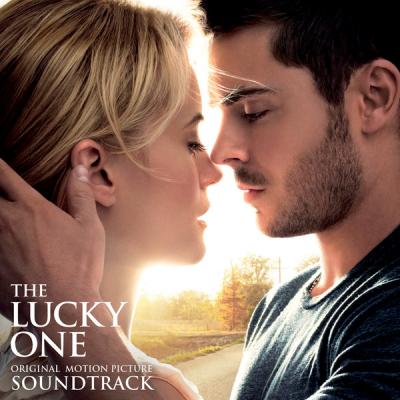
"Lucky One" Soundtrack Lyrics
Movie • 2012
Track Listing
Jules Larson
Correatown
Joshua Radin
Early Winters
Voxhaul Broadcast
A Fine Frenzy
Mayfield
Ponderosa
Mayfield
Terrance Simien
Hilmar
Brandi Carlile
"The Lucky One (Original Motion Picture Soundtrack)" – Album Guide to Tracks and Key Scenes
Overview
What does a Nicholas Sparks–style romance sound like when you add Iraq war trauma and a Louisiana bayou? The Lucky One (Original Motion Picture Soundtrack) answers with a mix of gentle singer-songwriter cuts, roots rock and a thin thread of score by Mark Isham that ties the whole thing to Logan’s PTSD and survivor’s guilt.
The 2012 film follows Marine sergeant Logan Thibault (Zac Efron) as he walks from Colorado to Louisiana to find the woman in a photograph he believes kept him alive. The soundtrack has to do two things at once: keep the genre promise of a Sparks romance (warm, melodic, comforting) and acknowledge the fact that the lead has seen combat. The album leans on intimate vocals, brushed drums, fingerpicked guitars and soft keys; the score adds slow, repeating piano figures and strings that swell only when the story lets itself be openly sentimental.
The official WaterTower compilation focuses on songs: modern alt-folk and indie pop (Jules Larson, Correatown, Joshua Radin, Early Winters, A Fine Frenzy), bar-band rock (Mayfield, Ponderosa), Louisiana flavor (Terrance Simien) and a closing Americana ballad from Brandi Carlile. Mark Isham’s orchestral and piano score lives mostly outside this album, but its main theme bleeds into the film’s big emotional turns. In practice, you get one “album world” — mid-tempo tracks that would sit fine on a coffee-shop playlist — and one “score world” that quietly underlines Logan’s war memories and storm scenes.
Stylistically, every sub-genre carries a job: indie folk and acoustic pop signal vulnerability and new beginnings; swampy, rootsy cues and zydeco place Beth’s kennel and town firmly in Louisiana; slightly more anthemic tracks in the trailers sell the film as a bigger melodrama than it actually is. Compared to many Sparks adaptations, the tone here is less glossy pop-country and more “iPod-era adult drama” — still polished, but closer to Grey’s Anatomy–style needle-drops than to Nashville radio.
How It Was Made
Scott Hicks directs, Mark Isham scores, and music supervisor John Bissell is in charge of weaving existing songs into the film’s structure. The main credits name Isham as composer of the original score, while the compilation album is marketed under “Various Artists.” The split is simple: Isham handles Logan’s inner life and the bigger dramatic peaks; Bissell’s song choices pin down bar scenes, family rituals, fairs and river walks in a recognizable, contemporary sound.
WaterTower Music (Warner’s in-house soundtrack label) released the song album in April 2012 as a 12-track compilation. The set pulls from a wide range of sources: Jules Larson and Correatown from the indie-pop world, A Fine Frenzy’s alt-pop, Joshua Radin’s whispery folk, Early Winters and Voxhaul Broadcast on the indie-band side, Mayfield and Ponderosa for bar-band grit, Terrance Simien for local color, Hilmar for an atmospheric cut, and Brandi Carlile to land the story with a clear, folky full-stop. The album runs roughly 46 minutes and is structured to work as a stand-alone listen, not just a scene scrapbook.
Isham’s score recording, issued separately in some territories, builds around a main theme that exists in piano-solo form as published sheet music. The theme shows up in the film over Logan’s walks, his flashbacks to Iraq and the river storm sequence, with strings layered on top as the stakes rise. It is not a showy score — no giant war percussion, no action ostinatos — but it threads through the more song-driven placements so the movie never feels like a wall of needle-drops.
On the marketing side, the trailers pull in extra material beyond the album: The Fray, Embrace, Florence + The Machine and even Snow Patrol’s “This Isn’t Everything You Are” in one TV spot. This is typical studio practice: the promotional campaign uses bigger, instantly recognisable anthems to sell feelings in 90 seconds, while the film and its album lean on more low-key, character-driven songs.
Tracks & Scenes
Below are key songs and where they land in the movie, based on scene-by-scene listings from soundtrack databases and fan cue breakdowns. I expand the descriptions, but the placements follow those sources closely.
"This Wasted Life" — Mayfield
Where it plays: About ten minutes in, at the bar near the start. Logan and fellow Marines shoot pool under harsh neon while the song hums in the background.
Why it matters: The ragged rock track signals a limbo state — the guys are technically “off duty” but still in war mode. It’s noise, beer, and bravado, covering how close to the edge they are.
"When I Feel" — Mayfield
Where it plays: Early stateside, kids play a war video game while Logan visits; the gunfire on the TV jolts him. The song’s riff runs under the chatter and digital explosions.
Why it matters: It’s a small but smart PTSD beat. The track is casual — something kids would actually have on in a living room — but for Logan, the combination of music and gunfire is a sensory landmine.
"Wasted Generation" — Mayfield
Where it plays: In a crowded club as Logan searches for the soldier who lost the photograph. Bodies, lights, and the band crash around him while he scans faces.
Why it matters: The lyric hook and title hit a little on-the-nose for a Marine home from Iraq, but it works: the scene makes him look like the still point in chaos, moving through a generation that’s partying its way around its own trauma.
"You Know It’s True" — Jules Larson
Where it plays: On Logan’s first full day at Beth’s kennel, intercut with Beth jogging with the dogs and Logan quietly checking out the abandoned house on the property.
Why it matters: Soft drums, guitar and Larson’s clear vocal make this one of the film’s “thawing out” cues. It marks the shift from Logan as a wandering ghost to Logan as part of this small ecosystem — house, yard, dogs, family.
"Summer Breeze" — Tim Myers
Where it plays: Around the 20-minute mark, Beth plays with the dogs in the water, laughing as they splash in the river.
Why it matters: The song’s laid-back groove plus the literal water imagery do exactly what you expect: they make the scene feel like a commercial for a version of life Logan hasn’t believed in for years. It’s simple, but it’s the right kind of simple.
"Top of the World" — Tim Myers
Where it plays: Later, in the kitchen: Beth dances around while cooking, Ben joins in, and Logan hovers at the edge until Ben asks if he’ll stay.
Why it matters: This is the “found family” pivot. The upbeat, lightly funky pop gives the scene bounce; without it, the moment could feel too serious. Instead, the cue sells the idea that joy is slowly sneaking back into this house.
"All the World (I Tell Myself)" — Correatown
Where it plays: A cozy indoors scene where Logan plays piano with Ben practicing violin. It’s quiet, mostly shot in medium close-ups.
Why it matters: The song’s gentle, slightly wistful tone mirrors Logan’s effort to build something with Ben that isn’t just “replacement for the father you lost.” It’s about small, repeated acts — practice, patience — more than big declarations.
"What I Wouldn’t Do" — A Fine Frenzy
Where it plays: Around 40 minutes in, while Logan and Ben wash the dogs together, getting progressively wetter as Beth watches them from a distance.
Why it matters: The track is pure warm indie-pop, and it lines up cleanly with what we’re seeing: a man treating her kid with kindness and patience. The song does some of the romantic heavy lifting without making anyone say the quiet part out loud.
"Dance Everyday" — Terrance Simien & The Zydeco Experience
Where it plays: At the town fair around the midway point. Beth’s mother sells flowers, kids weave through the crowd, and Logan starts to look less like an outsider.
Why it matters: This is the most explicit blast of local color. Zydeco accordion and washboard anchor the story to Louisiana instead of generic “Southern.” It’s also one of the few outright party moments in the film.
"If I Run" — Voxhaul Broadcast
Where it plays: About 46 minutes in, on Beth and Logan’s low-key date as they head out for beers. Neon, parking lot, lingering looks.
Why it matters: The song has more propulsion than most of the soundtrack. It’s less “wistful reflection,” more “we might do something impulsive tonight,” which tracks their shift from guarded politeness to actual attraction.
"You Got What I Need" — Joshua Radin
Where it plays: During the river walk: Logan, Beth and Ben head to the water; Logan and Ben wade in, splashing, then Logan carries Beth into the shallows toward a small boat.
Why it matters: This is textbook Sparks territory. Radin’s breathy vocal and gentle acoustic guitar basically wrap the scene in a soft-focus filter. In another context it might feel too on-the-nose; here it’s the emotional language the film lives in.
"Count Me In" — Early Winters
Where it plays: In the shower/wash-house make-out scene between Beth and Logan, water running over them as they finally give in to the tension that’s been building.
Why it matters: The song leans more band-driven and atmospheric, adding a slightly darker, more urgent texture to what could have been purely sweet. It tells you this isn’t just fantasy; there’s real risk for Beth in choosing him.
"Hold On You" — Ponderosa
Where it plays: Late in the film, when Keith is drunk at the bar, stewing over Beth and Logan. The camera tracks his simmering resentment across the room.
Why it matters: Swampy, slightly menacing Southern rock wraps around Keith’s self-pity. The title phrase matches his mindset: he wants to keep a grip on Beth and Ben even as his behavior pushes them away.
"The Story" — Brandi Carlile
Where it plays: Over the ending: Logan, Beth and Ben together, the birthday party, the sense that the family has been rebuilt in a new shape.
Why it matters: Carlile’s vocal sells the idea of lives marked by scars but still chosen. It’s a bigger, more anthemic song than most of the album, which is why it makes sense for the credits: it feels like standing back and looking at the whole arc.
Trailer & non-album music
"You Found Me" — The Fray
Where it plays: In at least one theatrical trailer, over cuts of Logan and Beth meeting, arguing, and kissing.
Why it matters: It positions the film squarely in the mid-2000s “emotional piano-rock” space. If you only saw the trailer, you’d expect something closer to a Shonda-verse tearjerker than the relatively quiet movie we got.
"Shake It Out" — Florence + The Machine
Where it plays: Tagged on WhatSong as a trailer cue. Used over quick cuts of small-town life, Logan’s walk and rainy confrontations.
Why it matters: Big drums, big chorus, big catharsis. It sells the story as a grand reckoning with the past, even though the film itself plays that reckoning in smaller, more domestic keys.
"Celebrate" — Embrace
Where it plays: Another trailer cue, linked with upbeat moments of Beth’s family and fairground shots.
Why it matters: This is pure “date-night movie” marketing. It reassures viewers that, despite the war backstory, they’ll leave the cinema on a high.
"This Isn’t Everything You Are" — Snow Patrol
Where it plays: Featured in a Warner Bros. TV spot that stitches together romantic highlights and Logan’s arrival in town, as noted in coverage of the campaign.
Why it matters: Snow Patrol’s slow-build style matches Sparks-adaptation expectations almost too perfectly. It underlines the idea that Logan and Beth’s story is part of something bigger — fate, destiny, call it what you like.
Notes & Trivia
- The WhatSong listing for the film runs to more than two dozen entries, including minor cues like “Down By the Riverside”, “Bound At Sea” and “Uncle Bud Zydeco” that never made the main album.
- WaterTower’s official track list focuses on 12 key songs; several bar and church cues, plus parts of Isham’s score, remain off-album and only accessible via the film itself.
- Some databases credit the opening bar song as “This Wasted Life” while others fold it into Mayfield’s broader catalogue: same band, slightly different labeling.
- Brandi Carlile’s “The Story” was already well known from earlier TV and film placements; its use here continues that “end-credits emotional summary” tradition.
- Isham’s main theme exists as a published piano solo, which tells you how central that cue was expected to be for sheet-music buyers and hobby players.
Music–Story Links
Logan’s arc is simple on paper — lost, searching, then slowly rooted again — but the soundtrack traces each phase closely. War-adjacent tracks (“This Wasted Life”, “Wasted Generation”, “When I Feel”) cluster around his Iraq memories and early stateside flashbacks. Once he reaches Louisiana, the palette lightens: “You Know It’s True”, “Summer Breeze” and “Top of the World” all play as he folds into Beth’s routine of dogs, chores and family dinners.
Ben’s relationship with Logan gets its own musical thread. “All the World (I Tell Myself)” and “What I Wouldn’t Do” both score moments where Logan and Ben are physically side by side — at the piano, in the yard with the dogs — while Beth watches from a distance. The tracks emphasize patience and gentle rhythm rather than big emotional spikes, which matches how trust actually builds with a kid.
Keith’s descent is framed almost entirely through barroom cues and tense score. “Hold On You” catches him near rock bottom, drunk and brooding; the song’s swampy mood dovetails with the storm that will later threaten Ben. Isham’s score then takes over in the river sequence, pushing aside the pop songs entirely so the climax feels like a different register.
Finally, the closing use of “The Story” functions as an epilogue. After the storm, after the legal threats, after the truth about the photo, the song steps back and treats the three central characters as people who have to live with what they’ve survived rather than as pieces in a plot. That’s exactly the emotional landing the film is going for.
Reception & Quotes
The film itself received mostly negative reviews from critics, who pointed to Sparks clichés and a heavily engineered plot, even as they praised Zac Efron’s commitment and the Louisiana locations. It performed solidly at the box office, crossing $99 million worldwide off a modest budget.
The soundtrack flew more under the radar but has had a quiet afterlife: the WaterTower album remains available on major platforms, and individual songs — especially “You Got What I Need”, “What I Wouldn’t Do” and “The Story” — continue to show up on fan playlists and wedding-adjacent mixes. Film-music coverage framed the album as a classic “songs from and inspired by” set, with Isham’s score discussed separately.
“Efron plays it straight and earnest, and the film wraps him in warm, unobtrusive pop and a tender score.” — summary of early trade reviews
“If you like the Sparks formula, this is exactly the soundtrack you think it is — mellow, melodic, a bit on the nose, but very listenable.” — online listener review
“Mark Isham’s main theme does most of the heavy lifting whenever the story leans back into Logan’s war memories.” — film-music blogger’s take
In short: critics weren’t kind to the movie, but the album has done its job as a comfort listen for fans of the story and of “Sparks-core” romance cinema in general.
Interesting Facts
- The WaterTower compilation is credited as a Various Artists release, but some physical CDs in retail list Sony Music as distributor, which has confused discographers about label ownership.
- On streaming platforms, the album is filed under “Soundtrack · 2012” and clocks in at just over 46 minutes, which matches typical single-disc OST lengths.
- Mark Isham’s discography lists The Lucky One directly before his acclaimed baseball score for 42, both released by WaterTower, making this film a stepping stone in that studio relationship.
- Because the score album is less visible than the songs compilation, many casual viewers assume the film has “no real score,” despite Isham’s credit and the published main theme.
- Fan forums often single out “You Got What I Need” and “The Story” as the tracks most associated with the film, even though neither was written specifically for it.
- At least four different pop-rock acts — The Fray, Embrace, Florence + The Machine and Snow Patrol — appear in trailers or TV spots but nowhere on the main album.
- “Dance Everyday” is one of the few film placements that introduced mainstream viewers to Terrance Simien’s zydeco work, which otherwise sits in more niche catalogs.
- Because several bar and church cues (“Down By the Riverside”, “Jesus On the Mainline”, “Bound At Sea”) lack detailed scene descriptions in official notes, fans have had to reconstruct their placements via repeat viewing.
Technical Info
- Title: The Lucky One (Original Motion Picture Soundtrack)
- Year: 2012
- Associated work: The Lucky One (2012 film, dir. Scott Hicks; based on Nicholas Sparks’ 2008 novel)
- Type: Song-driven film soundtrack (compilation); separate original score by Mark Isham
- Primary composer (score): Mark Isham
- Key artists on album (selection): Jules Larson, Correatown, Joshua Radin, Early Winters, Voxhaul Broadcast, A Fine Frenzy, Mayfield, Ponderosa, Terrance Simien & The Zydeco Experience, Hilmar, Brandi Carlile
- Label / release context: Released digitally and on CD in April 2012 by WaterTower Music (as compilation licensee for Warner Bros. Entertainment); some territories list Sony as distributor for physical product.
- Representative placements: “You Know It’s True” (Logan’s early days at the kennel), “Summer Breeze” (Beth with the dogs in the water), “Top of the World” (kitchen dance), “You Got What I Need” (river/boat scene), “The Story” (ending montage).
- Music supervision: John Bissell (music supervisor credit on the film); additional music department roles include music editor, consultant and orchestrators supporting Isham’s score.
- Release date (album): mid-April 2012, timed to the film’s theatrical rollout.
- Availability: Widely available on major streaming services and digital stores; physical CD remains in print via online retailers and secondary markets.
- Chart/awards: No major soundtrack-specific awards; the film won several Teen Choice and People’s Choice–type awards on the back of Zac Efron’s star power rather than its music alone.
Canonical Entities & Relations
| Subject | Relation | Object |
|---|---|---|
| Scott Hicks | directed | The Lucky One (2012 film) |
| Nicholas Sparks | wrote | The Lucky One (2008 novel) |
| Mark Isham | composed score for | The Lucky One (2012 film) |
| WaterTower Music | released | The Lucky One (Original Motion Picture Soundtrack) (Various Artists) |
| Jules Larson | performed | “You Know It’s True” (from the soundtrack album) |
| Correatown | performed | “All the World (I Tell Myself)” (from the soundtrack album) |
| Joshua Radin | performed | “You Got What I Need” (used in the river scene) |
| A Fine Frenzy | performed | “What I Wouldn’t Do” (used in the dog-washing scene) |
| Brandi Carlile | performed | “The Story” (used over the ending) |
| Mayfield | performed | “This Wasted Life”, “Wasted Generation”, “When I Feel” (bar, club and video-game scenes) |
| Terrance Simien & The Zydeco Experience | performed | “Dance Everyday” (fairground scene) |
| John Bissell | served as | music supervisor on The Lucky One (film) |
| Zac Efron | portrayed | Logan Thibault in The Lucky One |
| Taylor Schilling | portrayed | Beth Green in The Lucky One |
| Warner Bros. Pictures | distributed | The Lucky One (2012 theatrical release) |
Questions & Answers
- Is there more than one soundtrack release for The Lucky One?
- Yes. There’s a Various Artists song compilation released by WaterTower Music and a separate Mark Isham score album in some markets, plus digital single releases of the main theme.
- Which songs from the album are most closely tied to iconic scenes?
- “You Know It’s True” (first days at the kennel), “Top of the World” (kitchen dance), “You Got What I Need” (river/boat), “The Story” (ending) are the big ones.
- Who was the music supervisor on the film?
- John Bissell is credited as music supervisor, working alongside Mark Isham and the music department to place both songs and score.
- Are the trailer songs all on the official album?
- No. Trailer cues by The Fray, Florence + The Machine, Embrace and Snow Patrol are used in marketing but do not appear on the main soundtrack album.
- What kind of music dominates the soundtrack?
- Modern singer-songwriter and indie-pop tracks dominate the album, with touches of Southern rock and zydeco. The film itself also features Isham’s orchestral and piano score underneath many dramatic scenes.
Sources: WaterTower Music release notes; Apple Music and Spotify album entries; WhatSong and Soundtrakd scene listings; IMDb and Wikipedia film credits; Variety and The Numbers production data; Diffuser trailer-song coverage; discography listings for physical CD editions.
November, 13th 2025
Read about 'The Lucky One, the 2012 romantic drama film directed by Scott Hicks: Wikipedia, Internet Movie DatabaseA-Z Lyrics Universe
Cynthia Erivo Popular
Ariana Grande Horsepower
Post Malone Ain't No Love in Oklahoma
Luke Combs Good Riddance (Time of Your Life)
Green Day Bye Bye Bye
*NSYNC You're the One That I Wan
John Travolta & Olivia Newton-John I Always Wanted a Brother
Braelyn Rankins, Theo Somolu, Kelvin Harrison Jr. and Aaron Pierre The Power of Love
Frankie Goes to Hollywood Beyond
Auli’i Cravalho feat. Rachel House MORE ›