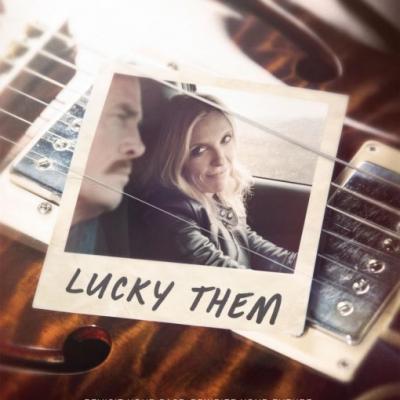
"Lucky Them" Soundtrack Lyrics
Movie • 2014
Track Listing
Martin Sexton
The Maldives
Sharon Jones & The Dap-Kings
Conrad Ford
The Head and the Heart
Clairy Browne and the Bangin’ Rackettes
M Ward
Aza
Saint Kilda
Jess Tardy
Ombre
Paolo Nutini
Pickwick
The Moondoggies
Phil DeGreg Trio
Prolific Arts
Father John Misty
Kid Congo & The Pink Monkeybirds
Aza
Martin Sexton
Damien Jurado
Bryan Adams
Rachael Yamagata
"Lucky Them – Songs & Score from the Motion Picture" – Album Guide to Tracks and Key Scenes
Overview
What does midlife burnout sound like when you live inside the Seattle music scene? In Lucky Them, the answer is a crate-digger’s mix of indie folk, soul revival, barroom rock and melancholy singer-songwriter cuts, stitched around Craig Wedren’s understated score. The film never got a single, unified soundtrack album; instead, its musical identity lives across playlists, cue sheets and the memories of people who saw Toni Collette’s Ellie Klug drift from club to club with a drink in hand.
The licensed songs mostly come from contemporary or near-contemporary artists rather than nostalgia bait. Father John Misty, The Head and the Heart, Damien Jurado, Sharon Jones & The Dap-Kings, M. Ward, Paolo Nutini, The Moondoggies and others orbit Ellie’s world: local bands on stage, tracks blasting over club speakers, older records spinning in the background while she files late copy. Against those needle drops, Wedren’s score sits in the background like emotional glue, more textural than thematic, filling in the silences between jukebox selections.
There is no official “Original Motion Picture Soundtrack” disc in shops; what exists is closer to a curated mixtape that fans have reconstructed, using song-credit listings and services like Whatsong and RingoStrack. As one reviewer put it, the film “has one of the best music tracks of the year,” but it’s a track you assemble yourself from individual releases rather than buy as a single product. That suits the story: a critic who lives on scattered tracks and half-finished promises probably shouldn’t get a neat, deluxe soundtrack box.
Genre-wise, the film leans into three main strands. Indie folk and Americana (The Head and the Heart, The Maldives, The Moondoggies, M. Ward) map the Pacific Northwest bar circuit Ellie haunts. Neo-soul and retro R&B (Sharon Jones & The Dap-Kings, Clairy Browne & The Bangin’ Rackettes) underline the physical, messy side of her life – hookups, boozy nights, bad decisions. Sadcore and introspective singer-songwriter material (Damien Jurado, Rachael Yamagata, Martin Sexton) step in whenever the film lets her admit she misses Matthew Smith or fears becoming irrelevant. Put simply: indie grit for professional identity, soul for appetite, acoustic bruises for regret.
How It Was Made
The film itself is a 2013 American comedy-drama directed by Megan Griffiths, set around an alt-rock journalist in Seattle sent to investigate the disappearance of her ex, legendary local musician Matthew Smith. Official credits list Craig Wedren as composer, with the songs supervised into a coherent whole rather than pressed into a stand-alone album. Variety’s Toronto review even calls out how his score “supplements” a strong soundtrack, pointing to the deliberate balance between original cues and licensed tracks.
Wedren has described in interviews and essays how he approached the job: write a score light enough not to fight the songs, then collaborate with the filmmakers on at least one diegetic original – a “lost Matthew Smith” track a present-day band can cover on screen. That logic is why the film can jump from an 80s arena-rock cut like Bryan Adams’s “Run to You” into contemporary indie without feeling like a jukebox free-for-all. The score behaves like connective tissue between different eras of rock memory.
On the supervision side, the brief was clear: this had to sound like a working critic’s record shelves, not like a generic “indie movie” template. According to coverage around the film’s festival run, Griffiths and her team pulled heavily from Seattle-linked acts and adjacent scenes – you can hear that in the inclusion of The Head and the Heart’s “Shake” and the cameos by local-leaning bands on stage. The result is a soundtrack that feels plausibly sourced from Ellie’s promo pile: half things she loves, half things she’s sick of hearing, all of it part of her job.
Tracks & Scenes
No official liner notes spell out every placement, and several databases leave scene fields blank. The moments below follow the film’s on-screen action and widely reported song list; exact timings vary slightly between releases.
"Shake" — The Head and the Heart
Where it plays: Club sequence in Seattle early in the film. Ellie loiters near the bar while a packed crowd faces the stage. The Head and the Heart appear in the movie performing the song live; the camera cuts between the band, the swaying audience and Ellie half-listening as she scans the room for talent and distractions.
Why it matters: This is the clearest collision between Ellie’s professional and emotional worlds. The band are part of the real Seattle scene, and the track’s upbeat, communal feel contrasts with how isolated she looks while covering it. The cameos make the film’s world feel plugged into an actual local circuit, not a generic “rock movie” soundstage.
"There Go I" — Martin Sexton
Where it plays: Over an early montage of Ellie stumbling between gigs and half-hearted dates, notebooks and empty glasses piled up in her apartment. The song bleeds from one location to another – first as background music at a bar, later continuing non-diegetically over shots of Ellie slumped on her couch, laptop open but untouched.
Why it matters: Sexton’s rough-edged, soulful delivery fits a character who can see the train wreck coming and walks toward it anyway. The refrain “there go I” lands like Ellie watching other people’s disasters and refusing to admit she’s on the same trajectory.
"Blackout" — Pickwick
Where it plays: In a small rock club when Ellie is already a few drinks in. The lighting is harsh, the crowd loose. The song is diegetic – loud, bass-forward – and the dialogue has to shout over it as Ellie flirts with a much younger musician and pretends to be more enthusiastic than she is.
Why it matters: The title is a little on the nose, but the fuzzed-out groove underlines how she keeps choosing short-term buzz over long-term stability. You can feel the hangover coming while the track still sounds inviting.
"Muscle for the Wing" — The Maldives
Where it plays: During a barroom performance scene on the road, when Ellie and Charlie stop in a smaller town to chase a weak lead. A country-leaning band plays to half-interested drinkers while Charlie films everything and Ellie pretends this is still journalism, not a midlife detour.
Why it matters: The song’s mix of swagger and resignation fits the road-movie stretch: these are working musicians grinding it out in front of whoever shows up, a future Ellie fears for herself if the magazine finally dies.
"Make It Good to Me" — Sharon Jones & The Dap-Kings
Where it plays: Over a late-night sequence where Ellie leans into bad habits – shots, a hookup, ignoring deadlines. The horns punch through the murky bar lighting, and the track briefly turns the film into a dance floor before cutting hard to the morning-after mess.
Why it matters: Sharon Jones’s voice brings a different energy from the indie guitars elsewhere: this is pure appetite, no distance. Scoring Ellie’s self-sabotage with such a joyful, tight groove makes her choices feel seductive even when we know they’re terrible.
"Run to You" — Bryan Adams
Where it plays: On car radio during a nighttime drive, when Ellie and Lucas are temporarily in sync. They both know it’s a cheesy 80s hit; they still sing along, laughing, windows cracked as highway lights streak past. The song starts diegetically and then swells into the mix as the scene opens up to wide exterior shots of the car on the road.
Why it matters: Dropping a classic rock single into a mostly indie soundtrack says a lot about the characters’ ages and reference points. Ellie associates this sound with teenage longing; Lucas hears it as retro cool. That small gap between their experiences is part of what later breaks them.
"Hollywood Forever Cemetery Sings" — Father John Misty
Where it plays: Under a brooding montage in the middle of the film, as Ellie replays old footage of Matthew, scrolls through online rumours and half-heartedly interviews people who never really knew him. The track’s reverb-heavy drums and dark humour give the images a slightly unreal, haunted quality.
Why it matters: The song’s obsession with memory and performance mirrors the way Ellie mythologises Matthew. It also breaks the “local band” pattern with a more widely known indie figure, suggesting how far Matthew’s legend might have spread if he had stayed alive and present.
"Everything Trying" — Damien Jurado
Where it plays: Quiet scene alone in Ellie’s apartment after a blow-up with Lucas. She sits on the floor with headphones, the city outside her window, as the song plays almost at full volume on the soundtrack but is visually contained to her private listening bubble.
Why it matters: Jurado’s fragile vocal and minimal arrangement underline how stripped down Ellie feels once the noise dies down. She has built a life around other people’s music; here she finally lets one song speak directly to her own exhaustion.
"The Way It Seems to Go" — Rachael Yamagata
Where it plays: During a long, reflective drive very late in the story as Ellie and Charlie edge closer to the truth about Matthew. The camera mostly stays inside the car: Ellie at the wheel, Charlie dozing, the landscape a blur. The song plays non-diegetically, bleeding over into their arrival in the small town where Matthew might be hiding.
Why it matters: Yamagata’s smoky tone and resigned lyrics give the road trip a sense of inevitability. By this point, Ellie knows she may not like what she finds; the title sums up her grudging acceptance that stories don’t always end with a big, perfect article.
"Love Letter" — Clairy Browne & The Bangin’ Rackettes
Where it plays: In a flirtatious bar scene where Ellie toys with the idea of texting Lucas, then doesn’t. The retro-soul production blares from the jukebox as couples make out at neighbouring tables, underlining the gap between the room’s mood and Ellie’s hesitation.
Why it matters: It’s an ironic counterpoint: a song about direct, bold romantic communication playing while Ellie dodges every opportunity to be honest. The contrast adds a dry layer of comedy to an otherwise small, sad beat.
"Hi-Fi" — M. Ward
Where it plays: As Ellie wanders through a record store and then the magazine office, half-working, half-avoiding serious responsibility. Stacks of promo CDs and old magazines slide past in a short montage; the track glues the locations together.
Why it matters: The warm, analog feel of M. Ward’s track suits a character who still carries tapes and old flyers in her bag. It also quietly emphasises the film’s concern with changing formats and dying institutions: hi-fi sound in a low-fi job market.
"Safe and Sound" — Jess Tardy
Where it plays: Near the end, after Ellie has finally seen Matthew in his new life and chosen not to expose him. The song plays softly under her writing the final article and cutting together Charlie’s footage, then continues into the early stages of the credits.
Why it matters: The gentle reassurance in the title and melody mirrors Ellie’s tiny but important shift: she may not be “fixed,” but she is less stuck in old narratives. Using a lesser-known track here instead of a bombastic power ballad keeps the ending scaled to the film’s modest, human size.
"Truth Be Told" — Saint Kilda
Where it plays: Over the last stretch of credits, after the main cast names roll. We see glimpses of Ellie moving forward – maybe another gig, another interview, another night in a club – while the song lays out the idea that the story she told about Matthew is only one version of the truth.
Why it matters: The placement turns the whole film into a sort of confession: Ellie’s piece in print, Charlie’s documentary footage, Matthew’s choice to disappear. Ending on a track with that title underlines how subjective all of it is.
Notes & Trivia
- The Head and the Heart appear on screen performing “Shake” in a club, giving the film one of its few fully diegetic performance set-pieces rather than just background music.
- RingoStrack and Whatsong both list around two dozen licensed tracks, but there is still no official Craig Wedren “Original Score” album or unified song compilation.
- The soundtrack ranges from 1980s radio rock (“Run to You”) to contemporary indie and soul revival, mirroring the age gap between Ellie and younger musicians she dates.
- Seattle-focused articles on the film often single out the soundtrack as a major asset, aligning it with the city’s long tradition of music-driven storytelling on screen.
- Several songs, including “There Go I” and “Everything Trying,” picked up new streaming attention years after release because fans reverse-engineered the soundtrack from the film.
Music–Story Links
The music in Lucky Them is not just decoration; it maps Ellie’s relationship to the past. Songs like “There Go I” and “Everything Trying” sit right on her worst habits: staying out, numbing herself, replaying old footage instead of moving on. Their lyrics about squandered chances and quiet effort echo the way she keeps almost changing, then doesn’t.
The club scene with “Shake” is a good example of how the film uses real bands to comment on Ellie’s emotional state. The Head and the Heart embody the hope and communal joy of a younger generation; Ellie watches from the sidelines, half jaded, half wanting in. The fact that she is supposed to be professionally evaluating them makes it worse – she can’t decide if she is part of this world or just documenting it.
Road-trip cues such as “Muscle for the Wing,” “Hollywood Forever Cemetery Sings” and “The Way It Seems to Go” all sit in the liminal spaces where the plot catches its breath: long drives, quiet motels, dead-end leads. They underline that the search for Matthew is as much about Ellie reassessing her own myth as about tracking a missing man. In those sequences, the songs often carry more emotional information than the dialogue.
Finally, the late-film pairing of “Safe and Sound” and “Truth Be Told” ties music to the idea of ethical storytelling. Ellie chooses not to exploit what she finds; the gentle, un-showy tracks over the ending suggest that this restraint is its own kind of integrity. The soundtrack, which could easily have gone for a big cathartic closer, instead opts for a small, complicated exhale.
Reception & Quotes
Critically, Lucky Them landed in the “generally favourable” zone. Review aggregators put it in the mid-60s out of 100, with praise for Toni Collette’s performance and the believable Seattle-music backdrop. The film played Toronto and Tribeca before a modest theatrical and VOD rollout, and several festival write-ups highlighted its soundtrack as one of its main pleasures.
Music-focused commentary often framed the film as a kind of low-key cousin to Almost Famous or other rock-journalist stories, with an emphasis on how convincingly it captures the grind of covering local scenes. A KEXP SIFF preview, for example, stressed that Griffiths “knows how to toggle” between humour and melancholy in her portrait of people who write and make music for a living. More than one critic noted that even when the plot thins out, the songs and score keep the mood engaging.
“Lucky Them sticks in the head like a good song long after it’s over.”
— trade press reaction from the film’s festival run
“Collette radiates smarts, humor and a world-weary cool.”
— review praising the lead performance and tone
“Set in the Seattle music scene… an indie that sadly flew under the radar.”
— festival profile noting the film’s music-world setting
“Also worth mentioning is the great soundtrack… put together by Craig Wedren.”
— blog review highlighting the music’s role
Interesting Facts
- The film’s official credits give a specific “music by Craig Wedren” slot, but the soundtracks on fan sites list no fewer than two dozen licensed songs in addition to his cues.
- The Head and the Heart’s cameo with “Shake” is one of the few times a band is seen and heard in full – most other artists appear only via recordings.
- Father John Misty’s “Hollywood Forever Cemetery Sings” connects the Seattle-set film to Los Angeles mythology, even though all we see on screen is the Pacific Northwest.
- Bryan Adams’s “Run to You” has a long filmography elsewhere; here it functions as an ironic throwback within a much more contemporary-sounding playlist.
- Several region-specific streaming playlists titled “Lucky Them soundtrack” are fan-assembled, mixing official song credits from sites like Soundtrakd with personal guesses.
- Craig Wedren later mentioned writing an original “Matthew Smith” song for a band to cover in one scene, effectively scoring a fictional cult musician within his own score.
- In German release, the film carries the subtitle “Auf der Suche nach Matthew Smith,” making the soundtrack’s focus on absence and memory even more explicit.
- Because there is no single album, rights for individual songs live with multiple labels – from Sub Pop–adjacent artists to Daptone soul – which likely complicated any OST release.
- Some reviewers argued that the soundtrack slightly over-delivers for such a small movie; it feels like the record collection of a much more famous rock star.
Technical Info
- Film title: Lucky Them
- Year: 2013 (festival premiere), 2014 (U.S. theatrical release)
- Type: Independent comedy-drama feature film
- Director: Megan Griffiths
- Writers: Emily Wachtel, Huck Botko
- Principal cast: Toni Collette (Ellie Klug), Thomas Haden Church (Charlie), Ryan Eggold (Lucas), Ahna O’Reilly, Nina Arianda, Oliver Platt (Giles), Johnny Depp (Matthew Smith, unbilled cameo)
- Original score: Craig Wedren
- Music supervision: Not consistently credited in press summaries; multiple sources refer broadly to Wedren “putting together” the soundtrack.
- Key licensed songs (selection): “Shake” (The Head and the Heart), “Hollywood Forever Cemetery Sings” (Father John Misty), “Run to You” (Bryan Adams), “Everything Trying” (Damien Jurado), “The Way It Seems to Go” (Rachael Yamagata), “Make It Good to Me” (Sharon Jones & The Dap-Kings), “Love Letter” (Clairy Browne & The Bangin’ Rackettes), “Black Shoe” (The Moondoggies), “Muscle for the Wing” (The Maldives), “There Go I” and “Where Did I Go Wrong” (Martin Sexton), “Safe and Sound” (Jess Tardy), “Truth Be Told” (Saint Kilda), “Hi-Fi” (M. Ward), plus others.
- Soundtrack release status: No single official soundtrack album; songs are available on their original albums and via fan-curated playlists. Wedren’s full score has not been released as a standalone commercial album as of 2025.
- Distributor: IFC Films
- Runtime: approx. 97 minutes
- Setting: Seattle and surrounding Pacific Northwest locations, with emphasis on clubs, bars and small venues.
Canonical Entities & Relations
| Subject | Relation | Object |
|---|---|---|
| Lucky Them (2013 film) | directed by | Megan Griffiths |
| Lucky Them (2013 film) | written by | Emily Wachtel & Huck Botko |
| Lucky Them (2013 film) | music by (score) | Craig Wedren |
| Lucky Them (2013 film) | stars | Toni Collette as Ellie Klug |
| Lucky Them (2013 film) | stars | Thomas Haden Church as Charlie |
| Lucky Them (2013 film) | features | The Head and the Heart performing “Shake” in a club scene |
| Lucky Them (2013 film) | includes song | “Hollywood Forever Cemetery Sings” performed by Father John Misty |
| Lucky Them (2013 film) | includes song | “Run to You” performed by Bryan Adams |
| Lucky Them (2013 film) | distributed by | IFC Films |
| Craig Wedren | composed score for | Lucky Them (2013 film) |
| The Head and the Heart | appear in | Lucky Them (club performance of “Shake”) |
| Father John Misty | performs song in | Lucky Them (track “Hollywood Forever Cemetery Sings”) |
| Bryan Adams | song used in | Lucky Them (track “Run to You”) |
Questions & Answers
- Is there an official Lucky Them soundtrack album?
- No. As of 2025 there is no single commercial album that collects either the licensed songs or Craig Wedren’s score. Fans rely on cue sheets, databases and playlists.
- Who wrote the original score for Lucky Them?
- The film’s score is by composer Craig Wedren, who has also talked about writing an in-world “Matthew Smith” song for a band to cover on screen.
- Which band performs live on camera in the club scene?
- That is The Head and the Heart, performing their song “Shake” in a Seattle club, with Ellie watching from the bar.
- What kind of music dominates the film overall?
- The soundtrack leans on indie folk and Americana, plus doses of neo-soul, retro R&B and a few classic rock cuts, reflecting both the Seattle setting and Ellie’s age.
- How can I recreate the soundtrack for listening?
- Use online song-credit lists (Whatsong, Soundtrakd, RingoStrack) as a base, then build a playlist with those tracks on your preferred streaming service. Individual songs live on their original albums.
Sources: Wikipedia film entry; Filmmusicreporter notes on Craig Wedren scoring the film; RingoStrack and Whatsong song-credit listings; Soundtrakd soundtrack overview; KEXP SIFF preview; Unseen Films Tribeca review; RogerEbert.com and Variety reviews; additional film reviews and interviews referencing the Seattle music setting and soundtrack.
After a disastrous start at the box office (the film grossed USD 7 kilo during the premiere week), it was decided to release it on DVD. The plot is completely gray. So inexpressive, that even the trailer cannot tell anything interesting. Man breaking up with woman, and 10 years later her boss forced her to interview him (he became some kind of singer, and she is some kind of journalist). And, in case of failure of such a simple task, he would fire her. And she falls in love with a man again, and they are willing to give a second chance to each other. Blah blah. Boring boredom! Music. Perhaps this is something on what a significant part of the budget was spent. Here we have about 2 dozen melodies and almost all of them are great! The mood created – super, unforgettable! Country, rock, pop. At first glance, quite diverse company. But they have a thing in common – desire to give the listener a sound that will melt and win him or her. So after they would go (or run) to purchase a DVD with this film, to listen to them all there. Or simply download them all from iTunes. Make It Good To Me is blues and Muscle For The Wing is country music. The only big star in the collection is Bryan Adams. Others are not widely famous. But singing mostly remarkable – it does not need to be labeled as "superstar" for it. For example, The Maldives done so gorgeous voice song (Muscle For The Wing), that it just cures our hearts when listening to it. Oh, how lovely! If previous days the disks (or VCRs) with your favorite songs were put on the shelf where they gathered dust in anticipation of new companions, now especially loved music requires a little bit of space on your hard drive after they are downloaded. Free this space and you'll love it, no doubts on that!November, 14th 2025
'Lucky Them' - More info on Wikipedia and IMDbA-Z Lyrics Universe
Cynthia Erivo Popular
Ariana Grande Horsepower
Post Malone Ain't No Love in Oklahoma
Luke Combs Good Riddance (Time of Your Life)
Green Day Bye Bye Bye
*NSYNC You're the One That I Wan
John Travolta & Olivia Newton-John I Always Wanted a Brother
Braelyn Rankins, Theo Somolu, Kelvin Harrison Jr. and Aaron Pierre The Power of Love
Frankie Goes to Hollywood Beyond
Auli’i Cravalho feat. Rachel House MORE ›