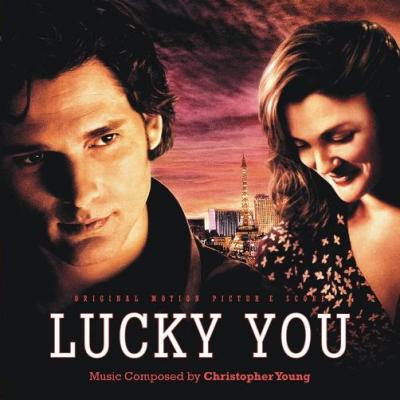
"Lucky You" Soundtrack Lyrics
Movie • 2007
Track Listing
George Jones
Bruce Springsteen
Madeleine Peyroux
Jackie Edwards
George Jones
Kris Kristofferson
Drew Barrymore
Liza Minelli
Bob Dylan
Ryan Adams
Bruce Springsteen
Bob Dylan
"Lucky You (Music from the Motion Picture)" – Album Guide to Tracks and Key Scenes
Overview
Can a poker movie built on bad beats and broken families lean on country, classic rock and jazz torch songs to find a heart? Lucky You quietly tries exactly that. The soundtrack sits between jukebox Americana and grown-up Vegas melancholy: Springsteen, Dylan, Ryan Adams, Bonnie Raitt, Liza Minnelli, Kris Kristofferson, even a song performed by Drew Barrymore herself.
The commercial album, "Lucky You (Music from the Motion Picture)", collects a tight set of twelve tracks curated around Huck Cheever’s emotional arc rather than around obvious casino clichés. Where the film’s visuals show neon, felt, and chip stacks, the songs underline something smaller: people who keep chasing one more chance, one more hand, one more person. That “one more” feeling runs through the compilation.
The mood is unglamorous by design: lots of mid-tempo grooves, country ballads about bad decisions, and weary voices that sound like they have actually seen 4am in a card room. When big classics show up — Bruce Springsteen’s “Lucky Town”, Bob Dylan’s “Like a Rolling Stone” — they feel more like lived-in radio memories than glossy needle-drops. The album plays almost like a mixtape Huck might have in his car on the drive between Vegas poker rooms.
Genre-wise, the soundtrack leans hard into country and Americana (George Jones, Kristofferson, Marty Robbins), folds in rootsy rock songwriters (Springsteen, Ryan Adams, Dylan), and then punctures that grit with cabaret and jazz: Liza Minnelli’s “Maybe This Time” and Madeleine Peyroux’s version of “Dance Me to the End of Love”. Country and heartland rock track Huck’s self-sabotage and stubbornness; the jazz and cabaret cuts belong more to Billie’s world — vulnerable, hopeful, a little out of place among the grinders.
How It Was Made
Lucky You was directed by Curtis Hanson and scored by composer Christopher Young, who wrote a full orchestral score while the studio also pursued a songs-first marketing approach built around big catalog names. The final film uses a mixture of Young’s cues and licensed tracks, with a separate promo score album later circulating among collectors and a Sony/Columbia song compilation issued to retail.
The songs album was released in April 2007 on Columbia/Sony BMG, just ahead of the film’s May 4 US theatrical opening. It pulls from country, folk and rock catalogs owned or controlled by Sony affiliates, which helps explain the density of Dylan, Springsteen and traditional country royalty on one disc. According to a Billboard track-list preview, “Huck’s Tune” was written specifically for the film, giving the album a genuine original from Dylan rather than just a catalog pull.
Behind the scenes, Hanson was already used to music-driven storytelling from projects like Wonder Boys, which also involved Dylan and Christopher Young. Here, he stages many poker sequences with little dialogue, letting Young’s score and the songs do the emotional talking while the table talk stays technical. The separate Young score CD (a limited promo) includes cues like “Everybody Has a Blind Spot” and “The Blaster”, built on rhythmic ostinatos that mirror Huck’s mathematical but impulsive way of playing.
Tracks & Scenes
Below are the key songs as they function in the film and album. Exact timestamps vary between cuts of the movie; placements here follow how the songs are used in widely available versions.
"Lucky Town" — Bruce Springsteen
Where it plays: Used over the opening titles, the track immediately drops us into Huck’s Las Vegas world: late-night streets, card rooms, a city that always looks halfway between hope and hangover. Promotional materials also cut the trailer against this song, so most viewers first meet the film through Springsteen’s brisk backbeat rather than through dialogue.
Why it matters: As a tone-setter it is perfect: a song about trying to outrun your past in a “lucky” place that is anything but. It defines Huck as a guy who believes in streaks more than in stability.
"The Cold Hard Truth" — Drew Barrymore
Where it plays: Performed diegetically by Drew Barrymore’s character Billie during one of her early club gigs on the Strip. She sings on a small stage to a distracted Vegas crowd, while Huck listens and half-smiles, still hiding what he has already done with her money. The song’s lyric about finally facing reality lands harder once you know he has stolen from her.
Why it matters: This is the one track that is literally Billie’s voice in the story, not just a mood layer. It underlines that she is not just “the girl”; she is a working musician whose life is also on the line in Vegas, even if her stakes are emotional rather than financial.
"Let It Ride" — Ryan Adams
Where it plays: Used non-diegetically over extended poker sequences, the song rolls underneath table action and montage-style cuts between rooms. The relaxed shuffle and pedal-steel textures mirror Huck’s attempts to appear calm while constantly re-buying, borrowing and pushing edges in games he should probably walk away from.
Why it matters: Adams’ lyric about movement and surrender matches Huck’s compulsion: he cannot stop “letting it ride” no matter how much damage he does to himself and everyone around him. It is one of the clearest musical metaphors for the film’s gambling theme.
"Huck's Tune" — Bob Dylan
Where it plays: Written specifically for Lucky You, the song appears in the film’s later stretch and in full on the album, with its studio version later re-used on Dylan’s Tell Tale Signs compilation. The recording plays non-diegetically, framing Huck’s emotional low points and the reconciliation threads with Billie and with his father L.C.
Why it matters: Dylan’s lyrics refer directly to Huck’s name and situation, but the melancholy waltz feel also works as a standalone piece about trading love for obsession. It gives the film something like a folk ballad “theme song” that is more wounded than triumphant.
"I Always Get Lucky with You" — George Jones
Where it plays: Heard in the film as a classic country counterpoint to the Vegas visuals — a song about a man who screws up everything except his luck in love, floating over scenes of Huck doing the exact opposite. On the album it sits late in the running order, a kind of weary coda before “Huck’s Tune.”
Why it matters: Jones’ voice brings old-school, hard-country gravitas. The title’s irony is obvious: Huck is not “lucky” with Billie because he cannot stop treating poker as his only serious relationship.
"Dance Me to the End of Love" — Madeleine Peyroux
Where it plays: Used around quieter, more intimate moments between Huck and Billie, away from the tables — dinners, drives, small conversations where they test whether this is more than a Vegas fling. Peyroux’s smoky, slow-swing rendition softens the film’s edges, giving it a slightly European jazz-club flavor for a few minutes.
Why it matters: This is one of the few cues that really feels like it belongs to Billie’s sensibility. The Leonard Cohen lyric about dancing through danger fits a relationship in which Huck always seems one bad river card away from disappearing again.
"Maybe This Time" — Liza Minnelli
Where it plays: The song appears as source music tied to Billie’s singer persona and to the theme of second (and third) chances. Even if you only catch fragments of it in the film, the cabaret arrangement carries strong associations with longing for a break that finally sticks.
Why it matters: Minnelli’s performance, originally from Cabaret, brings in the whole history of show-business strivers. In context, it makes Billie feel like another performer chasing a small miracle in a town that eats optimists for breakfast.
"The Fever" — Bruce Springsteen
Where it plays: Used in the film as one of the deeper Springsteen cuts, it slides under more introspective stretches of Huck’s journey — shots of him alone after losing, or brooding over his strained relationship with L.C. The slow, sultry tempo cools the film down after its more frenetic card-room passages.
Why it matters: On the album, “The Fever” broadens the Springsteen presence beyond the punchy opener “Lucky Town,” showing a more languid, late-night mood. In story terms, it is the sound of Huck stewing in his own bad patterns.
"Like a Rolling Stone" — Bob Dylan
Where it plays: Filtered in as familiar classic-rock source music, the song comments almost too neatly on Huck’s status: “no direction home” suits a man who lives from table to table and couch to couch. We hear enough of it to feel the echo without the film turning into a Dylan showcase.
Why it matters: Paired with “Huck’s Tune” on the album, it frames Dylan’s contribution as both historic and bespoke: one stone-cold classic, one custom-written lament for a modern gambler.
"All Shook Up" — Jackie Edwards
Where it plays: Used in bar and club spaces as lively background, this version of the Presley-associated standard adds a touch of rock and roll looseness to nights that otherwise blur together for Huck. It usually sits behind dialogue and card shuffling rather than taking center stage.
Why it matters: The lyric about being “all shook up” is an on-the-nose but effective nod to how unstable Huck’s emotional life is, even when he thinks he is playing everything cool at the table.
"El Paso" — Marty Robbins
Where it plays: Robbins’ Western narrative ballad appears as another bit of diegetic or quasi-diegetic source music — an old song floating through a modern casino space. The cowboy tragedy in the lyrics contrasts with the sterile, neon look of contemporary Vegas.
Why it matters: Including “El Paso” quietly links poker in 2003 Las Vegas to earlier American gambling and outlaw myths. It is the sound of a different kind of high-stakes legend bleeding into Huck’s far less glamorous story.
Notes & Trivia
- There are effectively two soundtrack releases: the Sony/Columbia songs compilation and a separate Christopher Young score album circulated as a promo among collectors.
- “Huck’s Tune” was not available on a Bob Dylan studio album until it appeared later on The Bootleg Series Vol. 8: Tell Tale Signs.
- Drew Barrymore’s “The Cold Hard Truth” is credited as a duet with Colbie Caillat on some album listings, though only Barrymore is visible in the film performance.
- The song disc runs roughly 50 minutes, significantly longer than the film’s officially released portion of Young’s orchestral score.
- Bruce Springsteen’s catalogue is represented twice on the album, while George Jones appears both via “Choices” on some listings and with “I Always Get Lucky with You.”
Music–Story Links
The soundtrack’s main tension is between Huck’s addiction to risk and Billie’s fragile hope that people can change. Country laments like “I Always Get Lucky with You” and Jones-style material play in scenes where Huck doubles down on self-destructive choices. They remind us that he comes from a world of barrooms and bad bets, not from sleek Vegas cool.
Billie’s side of the story is drawn in jazz and cabaret tones. “The Cold Hard Truth” is not just a plot device — it is her telling the audience, and Huck, that she sees through charm and excuses. When you hear “Dance Me to the End of Love” or fragments of “Maybe This Time” around her, the music is asking whether she will keep giving Huck more chances or whether she will walk.
At the same time, Christopher Young’s score stitches together the poker sequences so that the songs can drop in as emotional punctuation rather than constant wallpaper. Instrumental cues with titles like “Everybody Has a Blind Spot” and “The Blaster” echo Huck’s table image as a fearless but undisciplined player; the vocal tracks then step in when the film focuses on how that image wrecks his personal life.
Reception & Quotes
The film itself opened opposite Spider-Man 3 in May 2007 and struggled badly at the box office, taking in only a small fraction of its reported budget and earning a low approval rating from major aggregators. Critics often complained about its pacing and its inability to decide whether it was a poker procedural or a romance.
However, the music side drew a warmer response, especially from fans of Dylan and Springsteen. Country and roots-rock listeners treated the album as a compact sampler of heavyweight names with one new Dylan track. Specialty soundtrack sites later highlighted the existence of the full Christopher Young score as a minor grail for collectors of his work.
“Lucky You tries to combine a romantic story with the high-stakes world of poker, but comes up with an empty hand.” — Rotten Tomatoes critics’ consensus
“Even though it is sometimes dull and generally thin, there is something winning about the movie’s genial lack of ambition.” — A.O. Scott, The New York Times
“One needs to know nothing about the 2007 box-office bomb Lucky You to become enchanted by the aching beauty of ‘Huck’s Tune.’” — Rolling Stone on Bob Dylan’s later work
Interesting Facts
- The songs album was released by Columbia/Sony BMG in late April 2007, about a week before the movie reached US theaters.
- “Huck’s Tune” is one of the few Dylan songs written directly to mirror a specific film character’s name and inner life.
- Christopher Young’s score for Lucky You runs to dozens of cues on promo CD, most of which are barely heard or heavily edited in the final cut.
- The soundtrack’s genre mix means Springsteen, Dylan, Jones, Minnelli and Adams share a single disc — a line-up that feels more like a festival bill than a typical tie-in.
- Several songs, including “Lucky Town”, were prominent in marketing materials and trailers but are relatively sparingly used in the film itself.
- The film’s poker scenes were shot using replicas of real Las Vegas card rooms, which helped diegetic source songs feel like they were playing in actual casinos.
- The album art leans on Eric Bana’s poker-face profile rather than on any of the iconic musicians whose songs anchor the tracklist.
Technical Info
- Title (album): Lucky You (Music from the Motion Picture)
- Film: Lucky You (2007, US drama/romance set in the 2003 World Series of Poker)
- Type: Various-artists soundtrack album plus separate promotional score release
- Primary composers (score): Christopher Young (original score)
- Key featured artists (songs): Bruce Springsteen, Bob Dylan, George Jones, Madeleine Peyroux, Liza Minnelli, Bonnie Raitt, Kris Kristofferson, Ryan Adams, Drew Barrymore
- Label: Columbia Records / Sony BMG Music Entertainment (songs album)
- Release context: Songs album issued April 24, 2007; film released in US cinemas May 4, 2007
- Album format: Single CD/digital collection of 12 tracks (approx. 50 minutes)
- Notable placements: “Lucky Town” over opening titles; “The Cold Hard Truth” sung on screen by Drew Barrymore; “Huck’s Tune” as the film’s bespoke Dylan theme
- Availability: Songs album available on major streaming platforms and as physical CD; Young score available only via limited promotional CDs and secondary markets.
Canonical Entities & Relations
| Subject | Relation | Object |
|---|---|---|
| Lucky You (film) | is directed by | Curtis Hanson |
| Lucky You (film) | is scored by | Christopher Young |
| Lucky You (Music from the Motion Picture) | is soundtrack to | Lucky You (film) |
| Lucky You (Music from the Motion Picture) | is released by | Columbia Records / Sony BMG |
| “Huck’s Tune” (song) | is written and performed by | Bob Dylan |
| “Lucky Town” (song) | is written and performed by | Bruce Springsteen |
| “The Cold Hard Truth” (song) | is performed in film by | Drew Barrymore as Billie Offer |
| Ryan Adams | performs | “Let It Ride” on Lucky You soundtrack |
| World Series of Poker (Las Vegas) | is setting for | poker tournament scenes in Lucky You |
| Warner Bros. Pictures | distributes | Lucky You (film) |
Questions & Answers
- Is every song on the album actually heard in the film?
- Yes, but some tracks only appear briefly or as low-level source music. The album sequences them for musical flow rather than strict screen order.
- What is the difference between the songs album and the Christopher Young score?
- The retail album is a various-artists compilation of licensed tracks; Young’s score is an orchestral, mostly instrumental set released only as a promo CD.
- Where can I legally listen to “Huck’s Tune” today?
- It is on the Lucky You soundtrack on major streaming services and on Bob Dylan’s The Bootleg Series Vol. 8: Tell Tale Signs.
- Does Drew Barrymore really sing her song in the movie?
- Yes. She performs “The Cold Hard Truth” on screen as Billie, matching her character’s job as a club singer in Las Vegas.
- Is the soundtrack worth hearing if I did not like the movie?
- If you enjoy country, roots rock and Dylan/Springsteen, the album stands on its own as a compact sampler, even if the film left you cold.
Sources: Billboard coverage; IMDb and Wikipedia entries for the film; SoundtrackCollector and Discogs listings; Apple Music and Spotify album pages; critical pieces from The New York Times, Rolling Stone and assorted soundtrack review sites.
November, 14th 2025
A-Z Lyrics Universe
Cynthia Erivo Popular
Ariana Grande Horsepower
Post Malone Ain't No Love in Oklahoma
Luke Combs Good Riddance (Time of Your Life)
Green Day Bye Bye Bye
*NSYNC You're the One That I Wan
John Travolta & Olivia Newton-John I Always Wanted a Brother
Braelyn Rankins, Theo Somolu, Kelvin Harrison Jr. and Aaron Pierre The Power of Love
Frankie Goes to Hollywood Beyond
Auli’i Cravalho feat. Rachel House MORE ›