Soundtracks:  A B C D E F G H I J K L M N O P Q R S T U V W X Y Z #


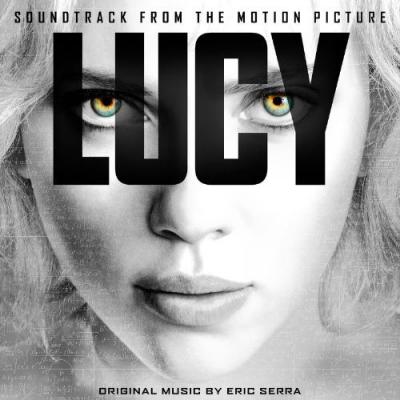
Lucy  Album Cover

"Lucy " Soundtrack Lyrics

Movie • 2014

Track Listing


"Lucy (Soundtrack From the Motion Picture)" – Album Guide to Tracks and Key Scenes

Lucy 2014 movie trailer frame with Scarlett Johansson walking through neon-lit Taipei street
Lucy (2014) – trailer imagery that sets up the film’s blend of neon, science and violence

Overview

What does it sound like when a human brain races from 10% to 100%? In Lucy, the answer is a hybrid of harsh electronics, solemn choir, club beats and a surprisingly tender Damon Albarn ballad. "Lucy (Soundtrack From the Motion Picture)" is built around Éric Serra’s original score, then stitched together with a few precise needle-drops and end-credits songs that nudge the film from cold sci-fi into something more human.

The album opens and closes in a way the film never quite can: “First Cells” and “I Am Everywhere” turn the movie’s big ideas into textures — pulses, drones, fragmented motifs that feel more like brainwaves than themes. In between, Serra swings from glitchy electronics (“Tingjhou Hospital”, “Sixty Percent Mess”) to almost liturgical grandeur (the Mozart Requiem excerpt) and stark action writing. “Sister Rust” by Damon Albarn steps in at the end credits as a melodic epilogue, followed by Raury’s “God’s Whisper,” which drags the film back toward earth with handclaps and shouted choral hooks.

The score functions as connective tissue. Dialogue drops out often; what keeps the film from collapsing into disconnected set-pieces is the way Serra’s cues link Lucy’s percentage milestones — 20%, 40%, 60% and so on — with distinct sound worlds. Low capacity means heartbeat pulses and nervous bass; higher levels bring more abstract pads, reversed sounds and those choral swells that suggest she is slipping out of the human category altogether.

Genre-wise, the soundtrack sits at the intersection of electronic score, modern classical and trailer-ready hybrid action. Serra’s electronics do the heavy lifting for tension and “data stream” imagery. Mozart’s Requiem and Mass cues give Lucy’s transformation a quasi-religious frame. Club-leaning tracks like “Single Barrel (Sling the Decks)” by The Crystal Method and the instrumental “Back to You” by Beck inject straight adrenaline into the Paris chase and arrest montages. Meanwhile, Albarn’s Brit-pop-adjacent ballad and Raury’s indie-rap anthem map directly onto Lucy’s last, faintly human moments. The styles are varied, but they all orbit the same theme: evolution at gunpoint.

How It Was Made

Luc Besson again turned to long-time collaborator Éric Serra, who has scored most of his films from Subway and Léon to The Fifth Element. The brief this time: make a score that could sit comfortably next to cutting-edge electronic music but still carry a 90-minute sci-fi action plot. Serra responded with a 30-plus-track score that mixes analog-sounding synths, processed percussion, choir and orchestra. The official album, released by Back Lot Music on 22 July 2014, collects 32 cues including one marquee song, “Sister Rust”.

British musician Damon Albarn wrote and performed “Sister Rust” specifically for Lucy. It plays first over the end credits and later appeared in his live sets and interviews as one of his more cinematic one-offs. The track itself folds in a sample from Serra’s score, so the divide between “song” and “score” blurs; you can hear the same harmonic material that underscored Lucy’s final transformation resurfacing behind Albarn’s vocal.

Back Lot’s digital release and the French edition Lucy (Bande originale du film) both present the Serra material in essentially film order, opening with “First Cells” and running through “Where Is Lucy?” and “I Am Everywhere.” Alongside those, licensing pulled in a small set of outside tracks: Mozart’s Requiem, Beck’s “Back to You” (instrumental), The Crystal Method’s “Single Barrel (Sling the Decks)”, Raury’s “God’s Whisper” and club cuts like “Dancing in Nowhere.” International trailer campaigns then layered on additional music such as Groove Armada’s “Look Me In The Eye Sister,” while an earlier teaser used Kings & Creatures’ “Angry Rip – Pulse.”

Lucy trailer image of Scarlett Johansson wired to medical equipment as blue CPH4 effects pulse around her
Behind the scenes of Lucy’s evolution: the score has to track her transformation as closely as the visuals

Tracks & Scenes

Below are key placements, including score cues, licensed songs and trailer-only uses. Scene descriptions refer to the theatrical cut.

"First Cells" — Éric Serra
Where it plays: Over the opening, as we cut between microscopic cell division, the primordial ape “Lucy” and the present-day Lucy killing time outside a Taipei hotel. The cue starts as a low pulse and gradually adds layered textures as images of early life and modern urban chaos collide.
Why it matters: It states the film’s thesis in musical form: biology and city noise are treated as the same data stream. From the first frames, we hear that this is more about process and evolution than about individual feelings.

"Mass No. 19 in D Minor, K.626: Requiem – Introitus: Requiem Aeternam" — Mozart; Berlin Philharmonic & chorus
Where it plays: In Mr. Jang’s tattoo scene, as Lucy is escorted through the gangster’s headquarters. The solemn choir and strings float above ink, blood and concrete while we glimpse Jang’s ritualistic brutality and Lucy’s growing terror.
Why it matters: The film uses one of Western classical music’s most iconic funeral pieces not for a death, but for the moment Lucy’s old life effectively ends. The contrast between sacred ceremony and criminal violence is sharp and intentional.

"Lucy Is Going Out, Pt. 1" — Éric Serra
Where it plays: Early in the Taipei hotel sequence as Lucy is dragged through corridors toward Mr. Jang, the synth pattern ticking like a countdown underneath her panicked negotiations and Richard’s betrayal. The cue continues into the meeting room, where the briefcase’s contents are revealed.
Why it matters: This is the first time the score openly pushes toward thriller territory. The rhythmic electronics underline how little control Lucy has; she is literally being “taken out” as freight.

"Lucy Is Going Out, Pt. 2" — Éric Serra
Where it plays: Over the surgical preparation, with Lucy on a table, goons in scrubs, and blue CPH4 packets ready to be sewn into bodies. The tension builds in waves as her fate is decided by people who barely speak to her.
Why it matters: It bridges the gangster movie and the sci-fi experiment. By the time the cue ends, Lucy is no longer just a victim; the conditions for her transformation are in place.

"Tingjhou Hospital" — Éric Serra
Where it plays: In the Taiwanese hospital sequence after the bag splits and CPH4 floods Lucy’s system. She marches into the operating theatre, calmly takes over the room and orders the frightened surgeon to remove the package. The cue pulses coldly under the procedure and the first demonstrations of her telekinetic control.
Why it matters: This is where the score flips Lucy from prey to predator. The track’s jagged rhythm and filtered percussion reinforce how detached she has become; medicine turns into precision violence.

"I Feel Everything" — Éric Serra
Where it plays: Around the 40–60% mark, during scenes of sensory overload and data-vision: voices in multiple languages, traffic flows, radio waves and networks lighting up around her. The cue surges and fragments as Lucy realises that “feeling everything” also means losing normal human boundaries.
Why it matters: It’s one of the few cues titled from Lucy’s own perception. The music makes the idea literal, with overlapping layers that almost blur into noise.

"Back to You (Instrumental Version)" — Beck
Where it plays: In a mid-film montage as police and security services across Europe move in on the drug mules at airports in Berlin, Paris and Rome. The melody rides over shots of arrival boards, security lines and arrests, while Lucy’s phone calls coordinate the whole net closing.
Why it matters: The instrumental lets the scene lean on a steady groove instead of exposition. It turns what could have been flat procedural business into a kinetic, almost heist-like sequence.

"Single Barrel (Sling the Decks)" — The Crystal Method
Where it plays: During the Paris car chase with Pierre Del Rio, as Lucy drives his Peugeot against traffic, weaving through oncoming cars and narrow streets while police and gangsters scramble behind her. Sirens, horns and near-misses cut in and out over the track’s relentless beat.
Why it matters: This is the movie’s most straightforward action set-piece, and the song pushes it into near-surreal energy. The electronic drum line and distorted bass give the sense that Lucy is literally surfing on chaos.

"Pleasant Drive in Paris" / "GPS Control" — Éric Serra
Where it plays: Serra’s score cues for the same chase and its aftermath, taking over as the licensed track fades. We hear long, sustained synth chords and nervous pulses as Lucy calmly instructs Del Rio to keep driving, then uses screens and GPS feeds to track the other mules’ locations.
Why it matters: These cues bring us back from trailer-music bombast to Lucy’s point of view. The contrast shows that for her, a multi-car pile-up is just another logistics problem to solve.

"Sister Rust" — Damon Albarn
Where it plays: First song over the end credits, directly after Lucy reaches 100%, disappears into data and leaves behind the black super-computer and USB drive. Albarn’s vocal floats over a slow, melancholic arrangement as Del Rio and Professor Norman stand in the lab, trying to process what just happened.
Why it matters: After 90 minutes of increasingly abstract visuals, this is the emotional landing strip. The lyrics read like a goodbye from someone who has gone far beyond human, and the tone is more resigned than triumphant.

"God's Whisper" — Raury
Where it plays: Second end-credits track. The handclaps, group chants and layered vocals kick in after “Sister Rust,” shifting the mood from introspective sci-fi to something closer to a protest anthem, while names roll and the story is over.
Why it matters: It is a sharp tonal pivot. Instead of more cold futurism, the film closes on a youthful, spiritual-leaning track that suggests revolution and awakening rather than apocalypse.

"Sister Rust" (Score version) — Éric Serra & orchestra
Where it plays: Fragments of the theme’s harmony appear earlier in the score, particularly around Lucy’s late-film conversation with Professor Norman, when she sits in the lecture hall and describes time as the only true measure. Orchestral swells foreshadow the full song we’ll hear in the credits.
Why it matters: This integration makes the end-credits song feel earned. It is not tacked on; it has been quietly seeded through the score.

"Flicking Through Time" / "Time Is Unity" / "I Am Everywhere" — Éric Serra
Where it plays: In the final act, as Lucy’s body dissolves into black matter, fuses with computers and sends her consciousness back through prehistory — from modern Paris to ancient earth, dinosaurs, early hominids and finally the Big Bang. The music shifts from tense electronic pulses into slow, cathedral-like chords and then to a pure, high electronic sustain.
Why it matters: These cues carry the film through its most abstract sequence. They give emotional shape to images that might otherwise feel like a VFX showreel.

"Angry Rip – Pulse" — Kings & Creatures
Where it plays: Used in promotional materials and the teaser trailer as a stuttered, rising sound effect before the title card slams in. You hear it under the last barrage of quick cuts and gunfire, right before “LUCY” appears on screen.
Why it matters: It never shows up in the film proper, but it helped define how viewers first “heard” Lucy in marketing — harsh, aggressive, more thriller than metaphysics.

"Look Me In The Eye Sister" — Groove Armada
Where it plays: Featured in at least one international trailer cut, lining up with shots of Lucy’s powers escalating — cars flipping, bodies hitting ceilings, and Johansson staring directly into camera.
Why it matters: The title alone acts like a playful echo of “Sister Rust,” and the groove leans into the cool, swaggering side of the character more than the finished film does.

Lucy trailer frame of Paris car chase as vehicles collide around a calm driver
The Paris chase is where Serra’s score, club tracks and sound design collide hardest

Notes & Trivia

  • The official album appears under slightly different titles — Lucy (Soundtrack From the Motion Picture) and Lucy (Original Motion Picture Soundtrack) — but the tracklist stays at 32 cues.
  • Damon Albarn’s “Sister Rust” was released through the soundtrack before it appeared anywhere else in his discography.
  • Mozart’s Requiem Introitus is credited with full forces: Berlin Philharmonic, Swedish Radio Choir, Stockholm Chamber Choir and soloists.
  • Several Serra cue titles (“Sixty Percent Mess”, “Time Is Unity”, “Where Is Lucy?”, “I Am Everywhere”) quote the on-screen brain percentage cards and Lucy’s final text message.
  • The soundtrack credits also list non-album tracks like “Dancing in Nowhere” and “Streets of Canton,” used as brief diegetic club and city ambience.

Music–Story Links

The most obvious structural trick is that the score subtly changes language as Lucy’s brain percentage climbs. Early cues like “First Cells” and “Lucy Is Going Out” use more conventional thriller electronics — pulses, minor-key arpeggios. By 60%, we are hearing tracks like “Sixty Percent Mess” and “Blue Injection” where the beat is broken and textures smear, mirroring how Lucy starts to experience time and space as malleable.

Classical and sacred music mark turning points rather than background flavour. The Mozart Requiem cue over Jang’s tattoo session equates his violence with a kind of ritual sacrifice. Later, Serra’s choral-like pads in “Time Is Unity” frame the lab sequence as a quasi-religious transcendence instead of just a mad-science experiment.

Songs bookend Lucy’s humanity. The Beck instrumental and Crystal Method track sit firmly in the human world — cars, airports, mistakes. Albarn’s “Sister Rust” and Raury’s “God’s Whisper” belong to the moment she is already gone, when the people left behind have to decide what to do with the knowledge she has handed over in that black USB drive. The album lets you hear that arc without seeing a single frame.

Reception & Quotes

The film itself drew mixed but strong reactions, yet the score attracted fairly consistent praise from soundtrack reviewers and hi-fi publications for its bold electronic/orchestral blend. Reviewers highlighted how the music helped tie together a story that jumps from gangster thriller to philosophic montage to cosmic time-travel.

Specialist soundtrack sites pointed out that Serra avoids the usual Hollywood “hybrid” clichés, and that the album works as a stand-alone listen despite being built from many short cues. Dolby Atmos and Blu-ray reviews also singled out the soundtrack mix for its aggressive use of surrounds and low-end during action scenes.

“For Lucy he has done that electronic/orchestral combination again – but this is absolutely nothing like the standard template.” — Movie-Wave review of Éric Serra’s score
“Julien Rey’s editing and Eric Serra’s score are on point, juicing the film headlong into its next sequence.” — ScreenDaily on how the film flows
“Serra composes a memorable musical score featuring the song ‘Sister Rust’ by Damon Albarn, which includes a sample from Serra’s score.” — TallWriter review
Lucy trailer frame of Scarlett Johansson staring directly into the camera with black background
The marketing leaned heavily on Johansson’s stare — the soundtrack had to feel equally confrontational

Interesting Facts

  • The album was released three days before the film’s US premiere, timed so streaming and download services could promote it alongside opening-weekend hype.
  • Back Lot Music issued multiple digital variations (US, European, French), but all centred on the same Serra program with “Sister Rust” up front.
  • “God’s Whisper” later appeared in other projects, including American Honey, but Lucy was one of its earliest high-profile syncs.
  • The international trailer song “Look Me In The Eye Sister” never appears in the film, but many viewers still associate it with Lucy’s bullet-time shots.
  • Some soundtrack listings split “Sixty Percent Mess” into three short cues; others combine them, reflecting different mastering choices between territories.
  • “Single Barrel (Sling the Decks)” was chosen for the car chase after editors tried more traditional score and found it lacked the needed raw propulsion.
  • The Lucy score shows up often in lists of “best electronic film scores” despite being much less famous than Serra’s Fifth Element work.

Technical Info

  • Title (album): Lucy (Soundtrack From the Motion Picture) / Lucy (Original Motion Picture Soundtrack)
  • Film: Lucy (2014, French-produced sci-fi action film)
  • Type: Original score album with additional songs and classical excerpts
  • Primary composer: Éric Serra
  • Key additional artists: Damon Albarn, Raury, The Crystal Method, Beck (instrumental), Mozart (Requiem), Groove Armada (trailer), Kings & Creatures (teaser)
  • Music supervision (credits): EuropaCorp / Universal music departments coordinating Serra’s score and licensed tracks
  • Label: Back Lot Music (digital and CD releases); French physical issues also under Because Music / EuropaCorp partners
  • Release date: 22 July 2014 (soundtrack); 25 July 2014 (US theatrical release)
  • Album length: ~59–62 minutes, 29–32 tracks depending on regional edition
  • Notable placements: “First Cells” over opening montage; Mozart Requiem in Jang tattoo scene; “Single Barrel” in Paris chase; “Sister Rust” and “God’s Whisper” over end credits
  • Availability: Widely available on major streaming services (Spotify, Apple Music, TIDAL) and digital stores; CD editions mainly in European markets.

Canonical Entities & Relations

Subject Relation Object
Lucy (2014 film) is directed by Luc Besson
Lucy (2014 film) is scored by Éric Serra
Lucy (Soundtrack From the Motion Picture) is soundtrack to Lucy (2014 film)
Lucy (Soundtrack From the Motion Picture) is released by Back Lot Music
“Sister Rust” is written and performed by Damon Albarn
“God's Whisper” is written and performed by Raury
“Single Barrel (Sling the Decks)” is performed by The Crystal Method
“Back to You (Instrumental Version)” is performed by Beck
Lucy (2014 film) is distributed by Universal Pictures (international)
Lucy (2014 film) is produced by EuropaCorp and partners

Questions & Answers

Is the Lucy soundtrack mostly songs or mostly score?
It is predominantly Éric Serra’s original score; only a handful of songs (Damon Albarn, Raury, The Crystal Method, Beck, Mozart) sit on top of that foundation.
Are there different versions of the Lucy soundtrack album?
Yes. Back Lot Music issued digital and CD releases under slightly different titles, but they all contain roughly 30–32 tracks and the same core program.
What songs play over the end credits of Lucy?
Damon Albarn’s “Sister Rust” plays first, followed by “God’s Whisper” by Raury. Both are on the official soundtrack, though only Albarn’s track is front-loaded.
Which track is used in the big Paris car chase?
The chase mixes Serra’s score with “Single Barrel (Sling the Decks)” by The Crystal Method, which gives that sequence its club-like momentum.
Is the trailer music included on the album?
The teaser cue “Angry Rip – Pulse” and the Groove Armada song “Look Me In The Eye Sister” from the international trailer are not on the main album; they live in trailer-music territory only.

Sources: official soundtrack listings and credits on Spotify, Apple Music, TIDAL and Discogs; film and music sections of Wikipedia and related wikis; WhatSong and Soundtrakd scene listings; colonnesonore.it track breakdown and trailer-song note; production notes and interviews; specialist score reviews from Movie-Wave and MovieMusicUK; general film reviews and Blu-ray audio notes from ScreenDaily, Sound & Vision and other outlets.

The film "Lucy" is very amusing spectacle for those who have the ability to admire the achievements of the human mind and is able to watch movies, not just for some picture where everything blows up (such as The Transformers), but also for the intellectual component. Of course, usage of 10% of our brain is rather exaggerated understanding. A man uses his mind, of course, at 100%. At the same time, about 10% are allocated to us for thought processes, including memorizing, abstract thinking, dreams, planning, self-consciousness, speaking, analytic… That is what we call "mind" and "character". The remaining 90% are used for maintenance of our body, for all the processes of life – metabolism, functioning of organs, hair growth, and hundreds of other cellular processes that every second keeps our bodies undead. So, the film once again speculate what would have happened if a person used instead of 10%, for example, 90% for the "mind" and "consciousness". The main character receives a help of a drug that speeds up the metabolic processes in the body and makes her "smarter", comparable with the pace of development of artificial intelligence (which, as you know, a hundred times exponentially growing faster than we do). Luxurious storyline, intricate ending and phenomenal acting of Scarlett Johansson made a movie’s box office of USD 459 million vs. 40 mil for production. All on-screen action is accompanied by a good music. In Dancing In Nowhere only clip is interesting, and in Streets Of Canton, on the contrary, only the melody. Single Barrel (Sling the Decks) is perfect for dancing. Éric Serra wrote music – dude who did it for the Fifth Element. Only The Crystal Method more or less famous in the collection.

November, 14th 2025

Read more on Wikipedia, IMDb
A-Z Lyrics Universe

Lyrics / song texts are property and copyright of their owners and provided for educational purposes only.