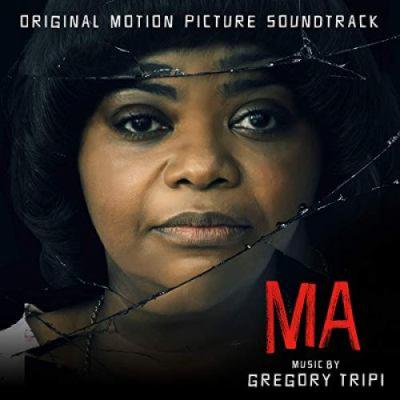
"Ma" Soundtrack Lyrics
Movie • 2019
Track Listing
Bobgoblin
Lipps Inc.
Debbie Deb
M.C. Mado
Carl Douglas
Men Without Hats
Bobgoblin
Earth, Wind & Fire
"Ma (Original Motion Picture Soundtrack)" – Album Guide to Tracks and Key Scenes
Overview
What happens when a slasher movie leans on pastel synths, disco deep-cuts and a lonely woman’s teenage playlist instead of the usual orchestral stabs? Ma’s soundtrack answers that with a strangely intimate mix of score and needle drops. The film itself is a mid-budget psychological horror; its music feels more like a character study, tracing Sue Ann’s obsession, humiliation and revenge beat by beat.
Gregory Tripi’s score is short-cued and restless — 27 tracks, many under two minutes — built around analog synths, glassy textures and a small ensemble. Instead of big “jump” hits, he keeps a low electric hum going under the parties in Ma’s basement, letting unease creep in while the teens think they’re at the best house in town. The music keeps circling Sue Ann’s point of view: fragile, then needy, then outright predatory.
The licensed songs pull in another direction: 70s and 80s bangers, bargain-bin party rap, mall-pop. These are the sounds of both Sue Ann’s youth and her guests’ fantasy of “fun adulthood.” When those tracks clash with Tripi’s colder textures, you feel the tonal snap the film is aiming for — goofy beer-can karate one moment, very real danger the next.
Genre-wise, the score sits between synth-driven horror and moody thriller: arpeggiated patterns, tense drones, processed percussion and small haunted motifs instead of a big theme. The needle drops cover disco and funk (“Funkytown”), boogie and freestyle (“Lookout Weekend”), classic 70s R&B (“September”), plus TV-ready library cuts and indie-adjacent rock (“Horizons”). Bright, nostalgic styles mark moments when the teens think they’re in a simple hangout movie; Tripi’s electronic cues speak to trauma, obsession and the feeling that the adults in this town never really left high school.
How It Was Made
Composer Gregory Tripi came to Ma after years working alongside Cliff Martinez on synth-heavy scores like Drive and The Neon Demon, then stepping out on his own for projects including Rememory and TV’s The Fix. That background shows: Ma’s score is lean, texture-driven and designed to sit right against the sound design rather than on top of it.
In interviews, Tripi has described building the soundtrack from a palette of analog synths, “glassy” instruments and unusual acoustic sources: a metal Halo drum, wine glasses bowed for long tones, live cello and a human voice that is later torn apart with processing. The aim was an organic sound that still feels slightly unreal, like memories you can’t fully trust.
Recording-wise, this is a small ensemble score. Tripi himself handles most electronics and specialty instruments, with cello and vocals brought in for color. The short track lengths reflect how the music was spotted: cues pop in and out around jump cuts, flashbacks and Ma’s perspective shifts, rather than playing wall-to-wall. It’s very much a modern horror approach — maximal control over when tension rises or drops.
On the supervision side, John Bissell handled the film’s song clearances and placements. He and the filmmakers lean hard into jukebox-like needle drops that can swing from novelty (“Kung Fu Fighting”) to iconic party staples (“September”) in seconds. The contrast between those familiar songs and Tripi’s more experimental cues is deliberate; it mirrors how Sue Ann presents a friendly, nostalgic front while carrying something much darker underneath.
Tracks & Scenes
Below are key songs and cues, with where they play and why they matter. Time marks are approximate and refer to the theatrical cut.
"Horizons" — Zach Rogue & Tim Myers
Where it plays: Over the opening stretch (around 0:06), as Maggie and her mother Erica drive into the small Ohio town to start their new life. The camera glides past snowy roads and sleepy storefronts while Maggie scrolls her phone, half-present in the car, half somewhere else entirely. The song is non-diegetic but mixed fairly loud, giving the drive a dreamy, almost indie-road-movie feel.
Why it matters: This is the one moment where Maggie’s future still feels open; the music is wistful but hopeful. Knowing how the story turns, the title “Horizons” hits ironically — those horizons narrow fast once Ma enters the picture. The track itself never made it to a commercial release, which has helped it become a small cult object among fans hunting for the “lost” opening song.
"Get It Kickin'" — Raphael Lake, Aaron Levy & Royal Baggs
Where it plays: Roughly 0:07 in, as Maggie is in her new bedroom texting with her soon-to-be friends. Boxes are still unopened, the house feels temporary, and the camera floats between her phone screen and her anxious expression. The song plays non-diegetically but mimics the kind of upbeat, anonymous pop she might have on a playlist.
Why it matters: This is the first needle drop that says, “This is a teen movie.” It frames Maggie as a fairly typical high-school protagonist, before the plot swerves into horror. The light bounce of the track makes the later basement scenes feel like a corrupted extension of this moment.
"Fighting Machines" — Bobgoblin
Where it plays: Around 0:13, when Haley introduces Maggie to the rest of the friend group and they rope her into their plan to get someone to buy them alcohol. They hang around near Ben’s office and the liquor store, half-joking, half-desperate for a grown-up to say yes. The song plays non-diegetically over their scheming and early attempts.
Why it matters: The jagged alt-rock energy mirrors the kids’ slightly aggressive boredom. It positions their drinking stunt as a dumb, impulsive move rather than some glamorous rebellion — a choice that Ma will later weaponise.
"Flying Tiger" — William Riddims, Nicholas Michael Hill & Von Hemingway
Where it plays: Close to the 0:28 mark, at a bonfire hangout. Haley invites Maggie to drink with the group by the fire, with trucks, red Solo cups and that generic “field party” vibe. The track plays diegetically over a portable speaker, its swaggering beat mixing with the crackle of the fire and the kids shouting.
Why it matters: This scene is the baseline of normal teen partying that Ma later replaces. The track sells the idea that these kids are just looking for volume and vibes; a basement with better speakers and no parents feels like a natural upgrade.
"Love (Gotta Hold On Me)" — Neeva
Where it plays: Around 0:29, when Maggie and Andy first arrive at Sue Ann’s basement party. The camera drifts around a cramped but packed space: kids leaning on the washer-dryer, someone pouring shots into plastic cups, Ma herself hovering with snacks. The song is diegetic, pumped through Ma’s sound system, and the lyrics about love grabbing hold sit under Sue Ann’s weirdly clingy smiles.
Why it matters: This is the moment Ma’s house becomes “Ma’s” — a branded hangout spot with its own soundtrack. The track bridges teen crush energy (Maggie and Andy) with Ma’s emotional fixation on the group, hinting that she’s reading a different kind of “hold” into the party.
"Funkytown" — Lipps Inc.
Where it plays: Shortly after, around 0:31. Sue Ann cranks the stereo and jumps into the center of the dance floor with the teens, lit by cheap party lights. The iconic synth riff is diegetic; kids are singing along, filming on their phones, and at first the editing plays it for goofy fun.
Why it matters: A 70s disco hit at a rural Ohio teen party is already a bit off, which is the point. The song is pure kitsch, but Ma’s total commitment to the bit — dancing like this is her prom redo — turns the cue bittersweet. It’s also one of the soundtrack’s clearest examples of nostalgia used as a mask for something much darker.
"Let There Be Hype" — M.C. Madd
Where it plays: Around 0:33, during a later party scene when Maggie smokes weed and the crowd is looser. Sue Ann compliments Maggie’s earrings, pours another round of shots and there’s a sudden thump from upstairs that everyone laughs off. The track is diegetic, loud enough that lines of dialogue punch through it in short bursts.
Why it matters: The title is almost sarcastic: hype is exactly what Ma is manufacturing to keep the teens coming back. Underneath, Tripi’s score starts to creep in between beats, making the song feel slightly dislocated, as if the party is starting to peel away from reality.
"Rulin' The World" — Sheridan
Where it plays: Around 0:41, as Haley drags Maggie upstairs to find a bathroom, breaking the “never go upstairs” rule. The track continues faintly from the basement as a kind of muffled diegetic bed while sound design takes over: creaking floorboards, closed doors, strange hints of Sue Ann’s life outside the parties.
Why it matters: The song’s cocky title sits in the background while the teens wander through the house of someone who very much doesn’t rule anything. It’s one of the first hints that Ma’s domain only exists in that basement; upstairs is a different story entirely.
"Kung Fu Fighting" — Carl Douglas
Where it plays: About 0:43 in, during a later get-together where Sue Ann slices open beer cans with karate chops for the kids’ amusement. The song is diegetic, played at full blast while the crowd chants and films. The scene is staged as a goofy viral moment; Ma is explicitly performing for phones now.
Why it matters: This is Sue Ann leaning into clownishness to keep the parties going. The cartoonish martial-arts disco track sugarcoats the danger — she’s literally wielding sharp metal in a room full of drunk teenagers — and the movie uses that tonal clash as a warning sign the characters ignore.
"The Safety Dance" — Men Without Hats
Where it plays: Just after, around 0:44, when Maggie takes a shot and dances more closely with Andy. The synth-pop hook drives the scene while the camera spins with them, isolating the couple from the rest of the crowd. Ma’s gaze cuts in from the edge of frame, watching from behind her phone or from the stairs.
Why it matters: The irony is obvious: there is nothing “safe” about this dance. The cue signals how comfortable the teens feel in Ma’s basement, even as the film has already shown her boundary issues. It’s a classic case of an upbeat hit used as misdirection while the story tightens the noose.
"Hide from Tomorrow" — Bobgoblin
Where it plays: Around 1:08, in a mall scene where Maggie confronts Andy about still going to Ma’s house and tries to pull him away from the basement parties. The track plays non-diegetically over their argument and the wider bustle of shoppers and food-court noise.
Why it matters: The title is on-the-nose but apt: everyone in town has been hiding from the consequences of what happened to Sue Ann in high school, and the teens are now hiding from the obvious danger she poses. The edgy alt-rock sound drags some of the earlier party energy into a more anxious space.
"September" — Earth, Wind & Fire
Where it plays: Around 1:16, in one of the most chilling juxtapositions in the film. After a hit-and-run incident, Sue Ann calmly turns on the car stereo and this joyous, brass-heavy classic fills the space. The song is diegetic; we hear it from the car speakers while the camera holds on her disturbingly blank expression.
Why it matters: The cue weaponises nostalgia. “September” is usually a wedding or family-party staple; here it scores an act of complete moral breakdown. That disconnect between upbeat horns and Sue Ann’s dissociated calm is exactly the kind of tonal whiplash that makes Ma’s soundtrack memorable.
"Bouncy House" — MC Rump
Where it plays: Near 1:36, during the climactic party when Ma lures the teens back for one last blowout. Maggie arrives and searches for Andy in a basement already throbbing with music and drunk bodies. As the track pounds, Sue Ann quietly locks the basement door and the film shifts from hangout to hostage thriller in seconds.
Why it matters: The noisy, cheap party-rap energy is the perfect camouflage for what’s about to happen. This is the final time the movie uses a goofy party track as cover; once the guests start passing out and Ma turns fully sadistic, the licensed music drops away and Tripi’s score takes over.
"Lookout Weekend" — Debbie Deb
Where it plays: In a flashback-driven end-credit sequence, cutting between younger Sue Ann at a bonfire with Ben and fragments of the present-day aftermath. The freestyle classic plays diegetically in the flashback, then bleeds into the credits as non-diegetic commentary on the entire story.
Why it matters: It’s the most explicit musical bridge between past and present. The song belongs to Sue Ann’s teenage years, but the adult characters have kept emotionally living in that world. Ending on this track underlines how little the town ever processed what happened to her — they just kept partying.
Score cues — Gregory Tripi
Where they play: Tripi’s standout cues are woven around these song moments. Tracks like "I Was Just a Kid", "Sue Ann Flashback" and "Maybe I Should Cut It Off" cluster around the mid-film flashbacks to Sue Ann’s high-school humiliation and her escalating self-harm logic. Short, jagged cues such as "You Can Beat It Ma" and "This Is Your One Warning" tend to sit under confrontations where the teens realise the basement is no longer a safe space.
Why they matter: The score is the glue that makes the needle drops feel dangerous instead of random. Where the songs show the world as the teens imagine it, Tripi’s music shows the world as Sue Ann feels it — fractured, anxious and stuck on a loop.
Notes & Trivia
- The official soundtrack album focuses entirely on Tripi’s score — none of the party songs like “September” or “Funkytown” appear on the Back Lot Music release.
- Several fan threads sprung up around “Horizons,” the unreleased opening song; it’s credited in the film but not commercially available, which has turned it into a small obsession for soundtrack collectors.
- The score album clocks in at about 39 minutes across 27 tracks, which tells you how aggressively short and scene-specific the cues are.
- A limited vinyl edition from Death Waltz Recording Co. and Mondo came on “blood and beer”–themed colored pressings, visually echoing the film’s party-gone-wrong premise.
- Tripi had previously worked on synth-heavy projects with Cliff Martinez; Ma is one of the first times his own horror sensibility is front and center with this kind of wide release.
Music–Story Links
Ma’s soundtrack is basically a map of Sue Ann’s double life. Any time we hear a beloved party song at full blast, we’re in the world she wants the kids to see: welcoming host, “cool mom,” retro playlists that flatter her age and make her seem fun. The more the film slips into her trauma, the more those tracks are replaced by Tripi’s nervous electronic writing.
Take the progression from “Love (Gotta Hold On Me)” to “Let There Be Hype” to “Bouncy House.” On paper they’re just party cues, but in context they trace Ma’s escalations: first she plays at being the fun aunt, then she’s running her own chaotic nightclub, then she’s locking the door. The songs stay relentlessly upbeat even as the camera starts to linger on passed-out bodies and Ma’s increasingly unhinged eyes.
Meanwhile, the score’s cue naming makes the emotional arc very literal. Cues like “You’re Making Your Business My Business” and “This Is Your One Warning” are essentially Ma’s inner monologue set to synths, underscoring confrontations where people try — and fail — to set boundaries with her. When we drop into flashbacks underscored by “I Was Just a Kid” or “Sue Ann Flashback,” the music softens and becomes more melancholic, nudging viewers to see her as a damaged human being rather than a stock slasher.
Even small placements do character work. The use of “September” after a hit-and-run isn’t just shock value; it tells us that Sue Ann’s coping mechanism is to drown horror in familiar, comforting noise. That’s the same instinct that drives her to fill her basement with other people’s kids and old songs — she’s trying to rewrite the soundtrack of her own adolescence, and the movie never lets the music entirely succeed.
Reception & Quotes
While the film itself received mixed reviews, the music has quietly built a positive reputation among horror and soundtrack fans. Tripi’s score is often singled out as one of the more distinctive elements of Ma, especially in genre sites and specialty vinyl shops that champion synth-heavy horror music.
Some reviews of the movie called out the combination of score and songs as one of its strengths, noting that the electronic writing adds real tension under what might otherwise feel like standard teen-slasher material, and that the disco and funk needle drops give the film a campy energy that suits Octavia Spencer’s performance. Retail descriptions of the vinyl edition emphasize how the score balances “ambient beauty, ominous energy, and berserk passages,” which lines up with how it plays in the film.
“Tripi uses synths to create the perfect balance between creeping and crazy.” — a specialist retailer’s capsule review of the LP
“A good score from Gregory Tripi as well as some fun tunes from artists like Earth, Wind & Fire and Lipps Inc.” — online film review
“Gregory Tripi’s score aids the surprisingly effective creeper lurking under the film’s teen-slasher surface.” — newspaper review of Ma
“Composer Gregory Tripi’s fantastic, mostly electronic score is laced with ambient beauty and ominous energy.” — label copy for the soundtrack release
The album has seen multiple physical editions — digital, CD and
November, 13th 2025
A-Z Lyrics Universe
Cynthia Erivo Popular
Ariana Grande Horsepower
Post Malone Ain't No Love in Oklahoma
Luke Combs Good Riddance (Time of Your Life)
Green Day Bye Bye Bye
*NSYNC You're the One That I Wan
John Travolta & Olivia Newton-John I Always Wanted a Brother
Braelyn Rankins, Theo Somolu, Kelvin Harrison Jr. and Aaron Pierre The Power of Love
Frankie Goes to Hollywood Beyond
Auli’i Cravalho feat. Rachel House MORE ›