Soundtracks:  A B C D E F G H I J K L M N O P Q R S T U V W X Y Z #


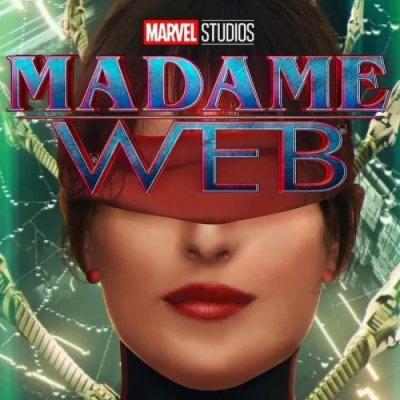
Madame Web Album Cover

"Madame Web" Soundtrack Lyrics

Movie • 2024

Track Listing


"Madame Web (Original Motion Picture Soundtrack)" – Album Guide to Tracks and Key Scenes

Madame Web 2024 official trailer frame with Cassandra Webb in the ambulance
The first trailer for Madame Web leans hard on ominous images and an even more ominous soundscape.

Overview

What happens when a gloomy clairvoyant thriller is glued to a jukebox of early-2000s pop and 90s alt-rock? Madame Web (Original Motion Picture Soundtrack) essentially answers that question. The film’s score by Johan Söderqvist does the heavy lifting for Cassandra Webb’s visions, time-scrambled action and spider-adjacent mythology, while a run of throwback songs nails the film’s 2003 setting more directly than the script ever does.

The core album is a 32-track digital release of Söderqvist’s score, running just under an hour depending on the service. It moves between murky synth textures, stuttering rhythmic ideas for Ezekiel, and more traditional orchestral surges for Cassie’s rescues and last-act confrontations. Track titles like “Peru-73”, “Cassie Walks Home”, “The Fight”, “The Ambulance”, “Fireworks” and “Madame Web” function like a map of the plot: prologue in the Peruvian jungle, New York ambulance life, diner showdowns and the final platform battle.

In the film, this score is threaded through a fairly aggressive set of needle drops: “Miles Away” by Yeah Yeah Yeahs, Deep Blue Something’s “Breakfast at Tiffany’s”, 4 Non Blondes’ “What’s Up?”, Mis-Teeq’s “Scandalous (StarGate Radio Mix)”, Meredith Brooks’ “Bitch”, Britney Spears’ “Toxic”, Tiffany’s “I Think We’re Alone Now”, Ballsy’s “Be Your Baby”, Richard Addinsell’s “Scrooge”, John Debney’s “Final Confrontation” from I Know What You Did Last Summer, and The Cranberries’ “Dreams”. They are not subtle, but they are deliberate: each one plants the film firmly in late-90s/early-00s cultural memory.

Genre-wise, the score sits in modern superhero-thriller territory: heavy low-end, synthetic pulses, processed strings and brass for Ezekiel’s menace, and more lyrical, almost tragic writing for Cassie’s moments of empathy. The songs lean on alt-rock and indie (“Miles Away”, “What’s Up?”, “Dreams”) to underline Cassie’s outsider status; glossy Y2K pop (“Scandalous”, “Toxic”, “Bitch”, “I Think We’re Alone Now”) to frame the three would-be Spider-Women as very early-2000s teens; and anachronistic baroque and film-music cues (“Tu Eres Venus?”, “Scrooge”, “Final Confrontation”) to give Ezekiel’s world a slightly off, curated feel. Rock equals motion and work; pop equals identity and performance; Söderqvist’s darker textures sit in between as the reminder that fate is closing in.

How It Was Made

Composer Johan Söderqvist was announced for Madame Web in November 2023, carrying over his collaboration with director S. J. Clarkson from the series Anatomy of a Scandal. He arrived with a long track record in tense, slightly off-centre drama and genre projects, from Let the Right One In to Battlefield 1, which fits this film’s attempt at a thriller tone better than a typical bombastic superhero score would.

The official soundtrack, Madame Web (Original Motion Picture Soundtrack), was released digitally on 14 February 2024 via Madison Gate Records under exclusive license from Columbia Pictures. Streaming services list 32 score tracks with a combined runtime in the mid-50-minute range, while franchise overviews round it to 60:00 for catalog purposes. The album is score-only; all the pop and catalogue songs live outside on their own releases, though some “Madame Web Trailer Music (Bury a Friend) – Epic Version” singles tie into the marketing.

Söderqvist’s team includes orchestrator Mark Baechle, conductor Lucas Richman, and additional music by Simon Petersson Holm, Fredrik Möller and members of the Kiner family. According to Filmtracks’ production notes, the score was built around full orchestra layered with dense electronics rather than a purely synth approach, with specific rapid-fire brass figures reserved for Ezekiel. On his own site, Söderqvist highlights reviews that call the music a “fun, spectral web” that mixes ethnic percussion with time-bending textures, which matches what you hear in tracks like “Peru-73”, “Las Arañas” and “The Cave”.

Madame Web trailer still showing Cassandra Webb in a dark New York street at night
The score leans into thriller language: pulsing low synths, unstable strings and sudden brass flares whenever visions and danger collide.

Tracks & Scenes

Below are key songs and cues, with where they appear and why they matter in the film’s structure.

"Miles Away" — Yeah Yeah Yeahs
Where it plays: Early in the film, around the 6-minute mark, as Cassie races an ambulance through 2003 New York. She and her colleague Ben banter over the noise, the track blasting from the cab stereo while sirens wail outside.
Why it matters: It instantly timestamps the movie as early-2000s, and the restless, slightly scruffy indie-rock energy matches Cassie’s “always moving, never settled” routine as a paramedic.

"Breakfast at Tiffany’s" — Deep Blue Something
Where it plays: Later that night, over a quiet scene of Cassie and Ben eating takeout Chinese food after a shift. The song hums in the background while they talk about work, relationships and the sense that Cassie is avoiding deeper questions about her past.
Why it matters: The laid-back 90s nostalgia contrasts with the heavy plot about to drop on Cassie. It makes the brief calm feel like a life she might lose.

"Tu Eres Venus?" from La púrpura de la rosa — Ensemble Elyma / Graciela Oddone
Where it plays: After an early conversation with Ben, the music continues over a transition into an opera-style event that Ezekiel attends, the baroque voices and period instruments echoing in the hall while he moves through the crowd.
Why it matters: It gives Ezekiel a cultured, almost aristocratic aura and underlines how far his world is from Cassie’s ambulance grind, even though their fates are tied together.

"What’s Up?" — 4 Non Blondes
Where it plays: Around the early-20-minute mark, as Cassie walks past street speakers and jokes with fellow paramedic O’Neil. The song leaks out diegetically from the environment; it is not “for” Cassie, but it frames the moment anyway.
Why it matters: The track is a classic “what is going on with my life?” anthem. Dropping it here, just before Cassie’s powers really become a problem, is on-the-nose but effective.

"Scandalous (StarGate Radio Mix)" — Mis-Teeq
Where it plays: Just before the big diner sequence, the three younger women — Julia, Anya and Mattie — walk through the woods towards the 4 Star Diner while “Scandalous” plays, then carry the vibe with them as they enter. The song feels like it is following them rather than just coming from a jukebox.
Why it matters: It sets the trio up as fully owning the Y2K teen-movie space: low-rise jeans, confident strut, slightly dangerous pop-R&B pulsing under every step.

"Bitch" — Meredith Brooks
Where it plays: Over a dinner stretch in the diner, as a group of women notice men staring at them. The lyrics’ list of contradictions (“I’m a bitch, I’m a lover…”) sit right on top of the awkward, hostile male gaze in the room.
Why it matters: It is arguably the most on-the-nose needle drop in the film, doubling as both empowerment and commentary on how these characters are being perceived.

"Toxic" — Britney Spears
Where it plays: Around 1:02:00, as Cassie arrives at the 4 Star Diner. “Toxic” blares from the speakers while Julia, Anya and Mattie dance on the table in a kind of spontaneous, chaotic performance, just before Ezekiel’s attack and Cassie’s fully engaged vision of the future.
Why it matters: This is the film’s most talked-about music moment. The song’s mix of seduction and danger mirrors the way the scene flips from carefree fun to lethal threat in seconds.

"I Think We’re Alone Now" — Tiffany
Where it plays: Roughly 1:14:00 in, after the diner sequence, when Cassie and the three girls wake up together in a motel or safe-house room. A tinny version of the track plays from a speaker system as the characters regroup and realise they are on the run together.
Why it matters: The lyrics about being “alone” but watched are a neat, slightly creepy fit for a group who are only safe because they have dropped off the grid.

"Be Your Baby" — Ballsy
Where it plays: Used diegetically in one of the 2003-set interiors, the song slides in as background music when the film leans into teen-drama texture rather than superhero plotting, sitting in the mix alongside the more famous pop choices.
Why it matters: It is one of the few less recognisable cuts on the needle-drop list, anchoring the soundtrack in something other than pure “greatest hits” nostalgia.

"Scrooge" — Richard Addinsell (Rumon Gamba / BBC Philharmonic et al.)
Where it plays: Briefly quoted in a scene that leans on older British film music, functioning as a tongue-in-cheek classical insert to contrast the modern setting and Cassie’s very non-Victorian problems.
Why it matters: It continues the film’s habit of raiding other soundtracks and period pieces, quietly acknowledging that this is a collage rather than a single musical world.

"Final Confrontation" — John Debney (from I Know What You Did Last Summer)
Where it plays: Late in the third act, the cue surfaces around the showdown with Ezekiel, woven into Söderqvist’s own action writing. It is a sly callback to another 90s teen-thriller climax, dropped into a very different kind of comic-book movie.
Why it matters: It is a meta-needle-drop — a piece of someone else’s film score used as a reference point. For listeners who recognise it, it underlines how close Madame Web is to slasher-adjacent territory.

"Dreams" — The Cranberries
Where it plays: In the closing minutes and over the end credits, as Cassie narrates about the future and the movie finally lets go. The jangling guitars and Dolores O’Riordan’s vocal drift over images and credits after a very grey, industrial final act.
Why it matters: Many reviewers singled this out as the best part of the film — and, in a way, it is. The song’s lightness and emotional clarity cut through the previous noise and leave the story on something like a hopeful note.

"Peru-73" — Johan Söderqvist
Where it plays: Score cue for the prologue set in Peru, following Cassie’s mother on a mission that will eventually tie into Cassie’s powers. The track leans on earthy percussion, vocal textures and tense string figures.
Why it matters: It establishes that this is not a standard New York-only superhero film; the roots of Cassie’s abilities are somewhere older, stranger and far from the diner neon.

"The Fight" — Johan Söderqvist
Where it plays: Covers one of the major confrontations between Cassie’s group and Ezekiel, full of driving ostinati, brass stabs and processed percussion hits. The music pushes the action more than it comments on it, staying fairly low in the mix under sound effects.
Why it matters: As Filmtracks points out, it is competent more than iconic — but it is a good snapshot of the score’s general approach to action: thick textures, simple motifs, no big hummable theme.

"The Ambulance" — Johan Söderqvist
Where it plays: Tied to Cassie’s day job and the larger motif of time running out. Siren-like figures and pulsing synths mimic emergency-vehicle rhythms while the orchestra hints at Cassie’s growing anxiety about what she cannot yet see clearly.
Why it matters: It is one of the cues that welds her “normal” life as a paramedic to her eventual role as Madame Web: same crisis energy, different scale.

"Madame Web" — Johan Söderqvist
Where it plays: Towards the end of the film and over some of the closing material, the title track gathers fragments of Cassie’s motifs into a more resolved, almost tragic-hero statement. It is not bombastic, but it feels like a curtain call for the character’s first outing.
Why it matters: This is the closest the score gets to a definitive Madame Web theme — the musical identity that future appearances in the Sony Spider-Man Universe could, in theory, pick up again.

"bury a friend" — Billie Eilish (trailer)
Where it plays: Not in the movie itself but in the marketing. The first major trailer cuts Cassie’s diner attack and vision sequences to the chorus of “bury a friend”, with later “epic” cover versions released as separate singles.
Why it matters: For a lot of viewers, this is the sound they associate with Madame Web more than the actual score. The song’s whispered menace and percussive hits sell the film as horror-adjacent in a way the final cut only partly delivers.

Dakota Johnson as Cassandra Webb in a vision-heavy action sequence from the Madame Web trailer
Score cues like “Peru-73”, “The Fight” and “Madame Web” do the structural work, while the needle drops handle time, mood and character shorthand.

Notes & Trivia

  • The score album is pure Söderqvist: 32 instrumental tracks, no pop songs, even though the film itself leans heavily on licensed material.
  • The Cranberries’ “Dreams” in the end credits quickly became a talking point; some critics joked that the best part of the film was “when the song starts.”
  • John Debney’s “Final Confrontation” is a reuse from another Columbia-distributed 90s teen thriller, underlining how much Madame Web borrows from that era’s tone.
  • The song list is a bit temporally messy: several tracks were already a decade old by 2003, but the film uses them anyway as shorthand for “pre-social-media pop culture.”
  • The score picked up an ASCAP Top Box Office Films recognition in 2025 as part of the film’s overall music credit package, despite the movie’s poor theatrical performance.

Music–Story Links

Cassie’s arc from burned-out paramedic to reluctant clairvoyant is scored with a mix of motion and unease. “Peru-73” and “Las Arañas” tie her powers back to her mother’s past; “Cassie Walks Home” and “The Ambulance” belong to the New York life she understands. Whenever the score shifts into the rapid brass figures and grinding synth beds of tracks like “Ezekiel Hunts Them Down” or “Encountering Evil”, we are clearly in the villain’s space instead.

The songs ride on top of that structure. “Miles Away” is simple but smart: it makes Cassie’s introduction feel like a music-video snapshot of 2003 and invites us to treat her like an ordinary alt-rock protagonist rather than a cosmic oracle. “What’s Up?” and “Breakfast at Tiffany’s” then reinforce the idea that she is stuck in a life that does not quite fit — comfort songs masking discomfort.

For the three younger women, the pop cues do arguably more character work than some scenes. “Scandalous” and “Toxic” turn their diner arrival into a mini-coming-of-age party, then brutally undercut it with Ezekiel’s attack. “I Think We’re Alone Now” and “Be Your Baby” mark out the liminal space between being hunted and becoming future Spider-Women — a stretch of time where they are just confused kids in motel rooms and borrowed clothes.

Finally, “Dreams” is a kind of meta-commentary: the song is about idealised future love, but here it sits under a voice-over about fate, trauma and spider-powers. The dissonance between the light, hopeful track and the messy film before it is part of why people remember the credits more than specific mid-film cues.

Reception & Quotes

The soundtrack and score did not escape the film’s wider critical backlash, but reactions were mixed rather than uniformly hostile. Some reviewers dismissed the score as “pleasantly anonymous superhero music” that never finds a truly memorable theme, and a small soundtrack blog capsule rated it around one-and-a-half stars out of five. Others, especially more film-music-centric outlets, praised Söderqvist’s attempt to blend ethnic percussion, spectral textures and more traditional action writing into something slightly off the usual Marvel-adjacent template.

On the song side, coverage of the film’s early-2000s needle drops has generally been kinder. One Netflix-oriented piece framed the tracklist as the best part of the movie, noting how it jumps from Yeah Yeah Yeahs to Deep Blue Something to Britney Spears to The Cranberries in a way that sells the 2003 setting better than some of the dialogue. Several articles and social-media threads singled out “Dreams” in the end credits and the “Toxic” diner sequence as genuine crowd-pleasers inside an otherwise uneven film.

“Pleasantly anonymous superhero music that takes no chances… minimally adequate at all times.”

— Filmtracks on Söderqvist’s score

“Söderqvist spins a fun, spectral web that blends ethnic rhythm, ethereal abilities and the requisite big action climax.”

— On the Score, quoted on the composer’s site

“The best part of Madame Web is when the credits roll and you get to hear The Cranberries’ debut single ‘Dreams’.”

— /Film on the end-credits song

As an album, the score lives mostly on digital platforms: no physical CD has been widely issued. User ratings on music sites hover in the middle range, mirroring the wider split between listeners who enjoy its moody consistency and those who wish it took bigger risks.

Ezekiel looming over the three young women in a darkened setting from the Madame Web trailer
The film may be divisive, but the combination of gloomy score and shamelessly on-the-nose pop drops has already earned a kind of cult soundtrack status.

Interesting Facts

  • Different official sources disagree slightly on the album’s length: franchise tables list a clean 60:00, while digital stores clock the 32-track release at about 55 minutes.
  • The soundtrack is part of Madison Gate Records’ broader push on Sony’s Spider-Man Universe titles, sitting next to Morbius and later Kraven the Hunter in their catalogue.
  • Billie Eilish’s “bury a friend” never appears in the film itself, but multiple “Madame Web Trailer Music” singles and edits use it as their key hook.
  • “Scrooge” is not a new composition for the film but a lift from older British film music, credited via a modern recording with BBC ensembles.
  • John Debney’s “Final Confrontation” credit is officially tied to Madame Web, meaning he now has a sideways connection to Sony’s Spider-verse despite never scoring one of the core films.
  • The pop song choices are heavily weighted towards female-fronted acts, echoing the film’s focus on Cassie and the three Spider-Women-to-be, even if the narrative around them is chaotic.
  • Despite the Razzie sweep for the movie, the music department comes out relatively clean in awards coverage — if anything, the score’s ASCAP nod stands in quiet contrast to the critical pile-on.
  • Streaming-era playlists quickly spun up “Madame Web throwback mixes” built almost entirely from the licensed songs, effectively turning the film’s needle drops into a standalone nostalgia product.

Technical Info

  • Title (album): Madame Web (Original Motion Picture Soundtrack)
  • Film: Madame Web (2024)
  • Year of soundtrack release: 2024 (digital, 14 February)
  • Type: Film score album (instrumental) with separate licensed songs used in the movie
  • Composer / primary artist: Johan Söderqvist
  • Label: Madison Gate Records (under exclusive license from Columbia Pictures)
  • Album length: approximately 55–60 minutes (32 tracks, depending on platform metadata)
  • Key score tracks: “Peru-73”, “Las Arañas”, “Forgiveness / The Weaver, No. 1”, “Cassie Walks Home”, “Poisoned”, “The Fight”, “Drowning”, “Ezekiel”, “The Cave”, “The Ambulance”, “Fireworks”, “The Weaver, No. 2”, “Madame Web”
  • Key licensed songs in film: “Miles Away”, “Breakfast at Tiffany’s”, “What’s Up?”, “Tu Eres Venus?”, “Be Your Baby”, “Scrooge”, “Scandalous (StarGate Radio Mix)”, “Bitch”, “Toxic”, “I Think We’re Alone Now”, “Final Confrontation”, “Dreams”
  • Trailer music: “bury a friend” — Billie Eilish, plus dedicated “Madame Web Trailer Music (Bury a Friend) – Epic Version” singles
  • Film studio / universe: Columbia Pictures / Di Bonaventura Pictures / Marvel Entertainment – Sony’s Spider-Man Universe
  • Film runtime: 116 minutes (approx.)
  • Awards (music-related): ASCAP Screen Music Awards 2025 – Top Box Office Film credit including Johan Söderqvist and collaborators
  • Availability: Commercial digital release only (major streaming platforms); no widely released physical CD at time of writing.

Canonical Entities & Relations

Subject Relation Object
Madame Web (film) directed by S. J. Clarkson
Madame Web (film) features music by Johan Söderqvist
Madame Web (Original Motion Picture Soundtrack) is soundtrack to Madame Web (2024 film)
Johan Söderqvist composed Madame Web (Original Motion Picture Soundtrack)
Madison Gate Records released Madame Web (Original Motion Picture Soundtrack) (digital)
Columbia Pictures produced Madame Web (film)
Sony Pictures Releasing distributed Madame Web theatrically
Yeah Yeah Yeahs performed “Miles Away” (used in the film’s 2003 ambulance sequence)
The Cranberries performed “Dreams” (used over end credits)
Britney Spears performed “Toxic” (used in the 4 Star Diner dance scene)
John Debney wrote “Final Confrontation” (needle-drop from I Know What You Did Last Summer)
Billie Eilish performed “bury a friend” (used in trailers for Madame Web)

Questions & Answers

Who composed the main score for Madame Web?
Swedish composer Johan Söderqvist wrote and produced the score, later released as the digital album Madame Web (Original Motion Picture Soundtrack) with 32 tracks.
Does the official album include the pop songs from the movie?
No. The album is strictly Söderqvist’s instrumental score. The throwback songs — like “Miles Away”, “Toxic” and “Dreams” — are licensed tracks available on their own releases or playlists.
What song plays over the end credits of Madame Web?
The end credits are scored by “Dreams” by The Cranberries, which many viewers and critics highlighted as a standout moment after the film’s final act.
Which tracks underscore the big diner and final fight sequences?
The Jersey diner set-piece mixes “Scandalous” and “Toxic” with score cues like “The Fight”, while the climactic confrontations lean on cues such as “The Fight”, “The Cave”, “Fireworks” and “Madame Web”, plus a brief drop of John Debney’s “Final Confrontation”.
Is the trailer music the same as the film’s score?
Not really. The main trailers lean heavily on Billie Eilish’s “bury a friend” and epic cover versions of it, whereas the film itself uses Söderqvist’s original score and the early-2000s pop needle drops listed above.

Sources: soundtrack and film entries on Wikipedia; MusicBrainz and Wikidata album data; Madison Gate Records and major digital stores for tracklist and release info; Soundtrakd, Soundtracki and Netflix-focused coverage for song placements; ScreenRant, Vague Visages and NetflixLife breakdowns of when each song plays; Filmtracks, Movie Music International, On the Score and other soundtrack reviews; /Film and other outlets on the “Dreams” end-credits usage; ASCAP Screen Music Awards listings; general box-office and Razzie reporting for context.

November, 14th 2025


A-Z Lyrics Universe

Lyrics / song texts are property and copyright of their owners and provided for educational purposes only.