Soundtracks:  A B C D E F G H I J K L M N O P Q R S T U V W X Y Z #


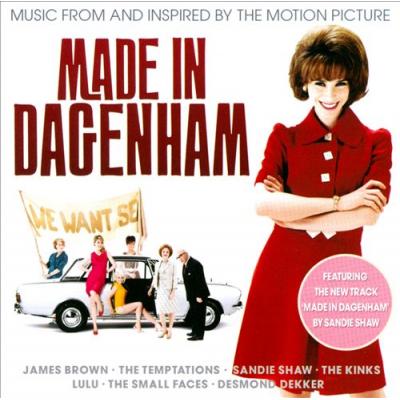
Made in Dagenham Album Cover

"Made in Dagenham" Soundtrack Lyrics

Movie • 2010

Track Listing


"Made In Dagenham (Music From and Inspired by the Motion Picture)" – Album Guide to Tracks and Key Scenes

Made in Dagenham official trailer frame with the Dagenham factory women outside the Ford plant
The main Made in Dagenham trailer sets up sewing floors, picket lines and 60s pop in one sweep.

Overview

What does a 1968 factory strike sound like when your ears are glued to distant pop radio rather than to marching bands and union anthems? Made in Dagenham answers with a soundtrack that’s all Motown, reggae and British beat-pop on the surface, and all labour politics underneath. The 2010 film about the Ford sewing machinists’ equal-pay strike uses David Arnold’s compact score as scaffolding and then hangs a curated wall of 60s singles over it.

The main compilation, Made In Dagenham (Music From and Inspired by the Motion Picture), gathers chart-era recordings like Sandie Shaw’s “(There’s) Always Something There to Remind Me”, The Temptations’ “Get Ready”, Desmond Dekker & The Aces’ “Israelites”, James Brown’s “It’s a Man’s Man’s Man’s World”, The Kinks’ “Days”, Dusty Springfield’s “Can I Get a Witness”, Small Faces’ “All or Nothing”, Mama Cass’ “It’s Getting Better”, The Mindbenders’ “A Groovy Kind of Love”, Sam the Sham & The Pharaohs’ “Wooly Bully”, Spanky and Our Gang’s “Sunday Will Never Be the Same”, Lemon Pipers’ “Green Tambourine”, Traffic’s “Paper Sun”, The Easybeats’ “Friday on My Mind”, and The Troggs’ “With a Girl Like You”, plus Desmond Dekker’s “You Can Get It If You Really Want” and a new title song “Made in Dagenham” performed by Sandie Shaw.

Alongside it, an “Original Score From the Motion Picture” release presents Arnold’s cues in album form: roughly 17 tracks and 35–45 minutes depending on edition, with cues like “Factory Gates”, “Woman vs. Machine”, “Everybody Out”, “We Want Sex” and “We Want Equal Pay” mapping directly onto the strike’s escalation. The score sits halfway between light British comedy-drama and more earnest social realism: small ensemble, recurring motifs, and short, functional cues that glue the pop songs together rather than competing with them.

Genre and theme are tightly matched. Motown and soul pieces (“Get Ready”, “Can I Get a Witness”, “It’s a Man’s Man’s Man’s World”) bring brass, groove and male-fronted authority to scenes dominated by men — union bosses, Ford management, ministers. British beat and mod-pop (“Days”, “All or Nothing”, “With a Girl Like You”, “Paper Sun”, “Friday on My Mind”) cast the women as part of “swinging” 60s Britain while reminding us that freedom hasn’t reached the factory yet. Dekker’s reggae (“Israelites”, “You Can Get It If You Really Want”) injects working-class struggle and perseverance; it is music about scraping by, not about glamour. Arnold then weaves in between those worlds, giving marches, speeches and negotiations their own musical spine.

How It Was Made

The soundtrack was built with a very clear brief: 1960s Britain as heard from a working-class estate and a noisy factory, not just a Carnaby Street cliché reel. Official album credits and label notes show that Universal licensed a focused set of 1964–1970 singles from Motown, Decca, Trojan and others, then sequenced them into Made In Dagenham OST (around 18 tracks and 48 minutes). A separate “Original Score From the Motion Picture” compilation gathers 17 tracks and about 35 minutes, branded as a various-artist set because it folds in both Arnold cues and a handful of key songs.

David Arnold’s score work is compact by design. He doesn’t try to compete with James Brown and The Temptations in sheer presence; instead he scores connective tissue: workers heading into the plant (“Factory Gates”), the rhythmic clatter of machinery (“Woman vs. Machine”), collective action (“Everybody Out”), domestic strain, and the final equal-pay campaign. The cue titles follow the plot beat for beat, which makes the score album almost a shorthand plot outline.

The title song “Made in Dagenham” bridges soundtrack and story. Arnold co-wrote it with Billy Bragg; Sandie Shaw sings it. Shaw is from Dagenham and really worked at the Ford plant as a teenager before her 60s pop career; the film’s Wikipedia entry and interviews underline that connection. The same sources note that she also contributes her classic “(There’s) Always Something There to Remind Me” in original 1964 form, tying the fictionalised story back to an actual Dagenham woman who became a national pop symbol.

On the film side, producers Stephen Woolley and Elizabeth Karlsen and director Nigel Cole pitch the music as part of the film’s “girl-power” texture. A Sony Classics presskit describes the women having “ears glued to the pop coming over the radio and telly” from London; the soundtrack basically turns that line into literal sound design. The stage musical that followed in 2014 keeps Arnold on board as composer but replaces the 60s jukebox with new numbers (“Everybody Out”, “Stand Up”), proving how central the musical identity is to the property.

Made in Dagenham trailer shot of women machinists working at sewing machines in the Ford plant
Arnold’s cues cover the walk to the factory, the roar of the machines and the slow build to “everybody out”, while the pop songs handle nostalgia and bite.

Tracks & Scenes

Here are some of the most important songs and how they’re used on screen. Timing is approximate, but the placement logic is solid.

"Israelites" — Desmond Dekker & The Aces
Where it plays: Right at the start, over the first sequence in the sewing room. As the camera tracks along rows of women at their machines — leaks in the roof, cloth everywhere — “Israelites” plays like a radio in the background. Festival coverage and later analysis single this out as the opening cue.
Why it matters: A reggae song about economic struggle and not giving up sits under a room of underpaid women holding up Ford’s production line. The groove is easy-going, but the lyrics are all about hardship. It quietly frames the machinists as the story’s moral centre before anyone speaks.

"Wooly Bully" — Sam the Sham & The Pharaohs
Where it plays: Early in the film, at a works’ social or pub night. The room is smoky, crowded; men and women dance, shout and drink while “Wooly Bully” blares from a jukebox or band system.
Why it matters: At first glance it’s the most obvious 60s jukebox pick imaginable. But because it’s diegetic, it works: this is what would be playing at a loud Essex night out. It shows the machinists as people who party and flirt, not just symbols of struggle, and it hints at the fragile peace between shop floor and management before pay grades are challenged.

"Green Tambourine" — The Lemon Pipers
Where it plays: Not long after, over colourful exterior shots of Dagenham and London — bright dresses, shop windows, kids playing, a sense that the decade is loosening up. The track tends to accompany bridging material between factory and home life.
Why it matters: Psychedelic pop about performing on the street for loose change neatly fits a story about people trying to be heard. The shimmering production suggests possibility and turbulence, signalling that this isn’t going to be a grey social-issue drama even though the subject is serious.

"(There’s) Always Something There to Remind Me" — Sandie Shaw
Where it plays: Over scenes of Rita walking through the estate and juggling school, housework and union contact — essentially “ordinary life” moments before the strike consumes everything. The song also anchors trailers and marketing spots as the film’s signature 60s pop moment.
Why it matters: It’s about memories clinging to everyday spaces, which suits a story where the cost of activism shows up in tiny domestic details. It also brings Shaw’s real biography into play: a woman who actually left the Ford plant for pop stardom now sings over a fictionalised account of women who stayed and fought.

"It’s a Man’s Man’s Man’s World" — James Brown
Where it plays: Around the middle of the film, as we spend more time in union offices and government buildings — rooms full of men in suits debating what the women should be allowed to earn. The track plays non-diegetically over shots of backroom meetings and slow corridor walks.
Why it matters: It’s blunt almost to the point of parody, which gives it power. Brown’s vocal, over lush strings, underlines exactly what Rita is up against. The world literally is being run by men who think they created everything. Watching her push back against that while this song plays is satisfyingly on the nose.

"All or Nothing" — Small Faces
Where it plays: Over a sequence that cross-cuts between the collapsing negotiations and strained relationships at home — arguments with husbands, tense chats with union reps, looks across the factory floor as lines are drawn.
Why it matters: The raspy vocal and build from quiet hurt to full-throated plea mirror the way the strike stops being an abstract principle and starts hurting people Rita knows. It’s a relationship song repurposed as a labour-movement anthem; either everything changes or everything breaks.

"Friday on My Mind" — The Easybeats
Where it plays: As workers talk about wages, weekends and what disruption actually means for their families; there are calendar shots, pay packets, the sense of trudging through the week for forty-eight hours of relief.
Why it matters: The song is about living for Friday after a dead week. In context it plays like commentary on the machinists’ situation: why should they accept a life that only has value from Friday night to Sunday if they’re doing skilled work that keeps Ford profitable?

"Sunday Will Never Be the Same" — Spanky and Our Gang
Where it plays: Later in the film, after the strike has gone national and the prospect of plant closure becomes real. We see families under pressure, quiet Sundays that no longer feel restful, and a sense that the town has been permanently altered.

Why it matters: The lyric about Sundays changing forever lands squarely on the idea that you can’t “go back” after a collective action like this. The women’s decision to walk out has rewritten what normal looks like, win or lose.

"You Can Get It If You Really Want" — Desmond Dekker
Where it plays: Near the end, over epilogue material and/or the closing credits, once the path toward the Equal Pay Act has been sketched out with text cards and we see the women back at work with their new status acknowledged.

Why it matters: It’s reggae about persistence and determination. After “Israelites” framed the opening as hardship, this track frames the ending as grind-pays-off. It keeps things honest: success wasn’t inevitable; it arrived because people kept pushing.

"Made in Dagenham" — Sandie Shaw
Where it plays: Over the end credits, directly after the film summarises in text what happened to the real strike and how it fed into the Equal Pay Act 1970. The arrangement nods to 60s pop but feels slightly more modern and polished, marking it as commentary rather than “found” period music.
Why it matters: It’s a full-circle moment: a former Ford Dagenham clerk sings a new song about Ford Dagenham machinists changing British law. The tone is proud and warm, but the lyric carries a clear message about dignity and identity. It’s the last word the film gives to the women themselves.

Made in Dagenham montage of picket lines and union halls cut to 1960s pop songs
The soundtrack behaves like the radio in the machinists’ heads — sometimes cheering them on, sometimes reminding them how stacked the world is.

Notes & Trivia

  • The soundtrack album uses original mono or single mixes for several songs (“Get Ready”, “It’s a Man’s Man’s Man’s World”, “All or Nothing”), preserving the period sound rather than modern remasters.
  • Universal’s main OST edition runs about 48–49 minutes with 18 tracks; streaming variants sometimes list the same program under slightly different “OST” or “Original Soundtrack” titles.
  • The “Original Score From the Motion Picture” digital release packages 17 tracks and roughly 35 minutes, crediting it as a various-artists compilation even though the score is by David Arnold.
  • “Israelites” opens the film; several critics call this out as clever but “almost too obvious” given the lyric’s focus on hardship and resilience.
  • Sandie Shaw’s status as an ex-Ford Dagenham worker became a key talking point in marketing; interviews emphasise that she’d once done clerical work at the plant featured in the story.
  • The title song’s writing duo — David Arnold and Billy Bragg — is itself a neat fusion of film-score craft and labour-movement protest song tradition.

Music–Story Links

The soundtrack essentially tracks three spheres: the factory floor, home life, and the institutional world of unions and government.

On the floor, “Israelites” is the key: the first thing we hear in the sewing room, it makes the machinists’ daily grind feel rhythmic but never glamorous. It’s music about struggle, not escape. Later in the film, as the strike bites, the absence of cheery radio tracks in those same spaces is noticeable — silence becomes its own commentary.

At home and in social spaces, songs like “Wooly Bully”, “Green Tambourine”, “With a Girl Like You” and “Sunday Will Never Be the Same” sketch the private side of these women’s lives: dancing at socials, flirting, sorting laundry, worrying about bills. They’re framed as full people with crushes, kids and hangovers, not just banner-carriers. When domestic scenes sour — arguments with husbands, tension at the kitchen table — the same breezy tunes suddenly feel out of step with what’s happening on screen.

In the political arena, the soundtrack gets more pointed. “It’s a Man’s Man’s Man’s World” turns the all-male rooms of power into a kind of ironic music video: velvet James Brown vocals over shot after shot of men who don’t see the women as equals. “All or Nothing” and “Friday on My Mind” handle the hinge moments where a wage dispute becomes something larger — when Rita realises that what’s at stake isn’t just a few pounds per week but the value of women’s labour in law.

Finally, the closing pair of “You Can Get It If You Really Want” and “Made in Dagenham” acts almost like a call-and-response: first, a global message about persistence; then, a specific, local anthem for Dagenham. Together, they move the story from a one-time historical event to an ongoing conversation about pay and respect.

Reception & Quotes

The film itself received broadly positive reviews. The main Wikipedia summary of critical reception reports an 80% Rotten Tomatoes score and notes that several critics praised its warmth and political intent while acknowledging a fondness for 60s clichés. Maclean’s described it as a blend of Milk and Mad Men, stressing that despite its light tone, it shows the cost of fighting for civil rights.

In the UK, The Guardian’s Xan Brooks called it “uncomplicated fare, overly spiced with 60s clichés”, but also “robust, amiable and so warm-hearted you’d be a churl to take against it.” That verdict pretty much covers the soundtrack: yes, a few song choices (“Wooly Bully”, for one) are aggressively on-the-nose, but they’re deployed with enough charm and narrative sense that it’s hard to object.

Music-focused pieces and DVD reviews generally treat the soundtrack as one of the film’s selling points. They highlight the Dekker cuts, the soul selections and the Kinks/Small Faces axis as comfort listening, while noting that the lyrics often engage directly with class and gender themes. Viewers who discovered the movie later on disc or streaming often mention spinning the OST as a standalone 60s playlist afterwards.

“Uncomplicated fare, overly spiced with 60s clichés… but robust, amiable and so warm-hearted you’d be a churl to take against it.”

— Xan Brooks, The Guardian

“A combination of Milk and Mad Men… It blatantly condemns sexism and shows the real cost of fighting for civil rights.”

— Maclean’s, Toronto festival write-up

“Dekker’s ‘Israelites’ opens the film, neatly underscoring the machinists’ economic struggle before a word is spoken.”

— festival commentary on the soundtrack
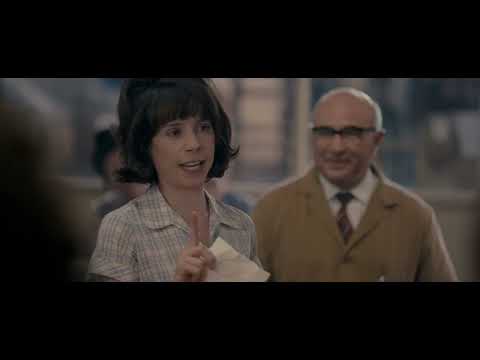
Made in Dagenham trailer shot of Sally Hawkins addressing a crowd with music swelling underneath
Arnold’s score steps forward for speeches and marches; the hits return to make sure you leave with a tune in your head.

Interesting Facts

  • The main OST runs about 48½ minutes with 18 tracks; the score-centred digital compilation clocks in at roughly 35 minutes across 17 cues and songs.
  • On streaming services, the “Original Score” album is filed under Various Artists even though David Arnold wrote the dramatic cues, because it also includes Sandie Shaw and Motown cuts.
  • “All or Nothing” later became the theme for BBC drama The Syndicate, cementing its link with British working-class stories beyond this film.
  • Several tracks are explicitly labelled as original single versions in the metadata (for example, “Get Ready (Mono Single)” and “It’s a Man’s Man’s Man’s World (Mono Single Version)”).
  • The soundtrack contains no deep crate-digging obscurities; it’s essentially a “starter kit” for 60s soul and pop, which is partly why it plays so well as an album.
  • When the West End musical opened in 2014, press coverage often used the film’s soundtrack as shorthand, even though the stage score is all new.
  • Desmond Dekker’s “Israelites” and “You Can Get It If You Really Want” both have long film and TV placement histories; Made in Dagenham adds a specifically British labour-history context to that list.
  • Some regional CD pressings and library catalogues list the OST simply as Made in Dagenham: Music From and Inspired by the Motion Picture without the “OST” tag, which can cause minor confusion when searching.

Technical Info

  • Film title: Made in Dagenham
  • Year: 2010
  • Type: British comedy-drama based on the 1968 Ford sewing machinists’ strike
  • Director: Nigel Cole
  • Producers: Elizabeth Karlsen, Stephen Woolley
  • Writer: William Ivory
  • Score composer: David Arnold
  • Theme / title song: “Made in Dagenham” – written by David Arnold & Billy Bragg, performed by Sandie Shaw
  • Main OST album: Made In Dagenham (Music From and Inspired by the Motion Picture) – Various Artists, approx. 18 tracks, ~48:35
  • Score/expanded album: Made In Dagenham (Original Score From the Motion Picture) – Various Artists (incl. David Arnold), 17 tracks, ~35 minutes
  • Selected OST tracks: “(There’s) Always Something There to Remind Me”, “Get Ready”, “Israelites”, “It’s a Man’s Man’s Man’s World”, “Days”, “Can I Get a Witness”, “All or Nothing”, “It’s Getting Better”, “A Groovy Kind of Love”, “Wooly Bully”, “Sunday Will Never Be the Same”, “Green Tambourine”, “Paper Sun”, “Friday on My Mind”, “With a Girl Like You”, “You Can Get It If You Really Want”, “Made in Dagenham”
  • Labels: Universal Music TV / Universal Music Enterprises for the OST and score compilation
  • Runtime (film): 113 minutes
  • Country / language: United Kingdom / English
  • Stage adaptation: Made in Dagenham musical (Adelphi Theatre, London, 2014) with music by David Arnold and book by Richard Bean

Canonical Entities & Relations

Subject Relation Object
Made in Dagenham (2010 film) directed by Nigel Cole
Made in Dagenham (2010 film) music by David Arnold
Made in Dagenham (2010 film) produced by Elizabeth Karlsen; Stephen Woolley
Made In Dagenham (Music From and Inspired by the Motion Picture) is soundtrack to Made in Dagenham (film)
Made In Dagenham (Original Score From the Motion Picture) is score compilation for Made in Dagenham (film)
Sandie Shaw performs “(There’s) Always Something There to Remind Me” and “Made in Dagenham” on the soundtrack
Sandie Shaw formerly employed at Ford Dagenham plant (clerical work)
Billy Bragg co-writes title song “Made in Dagenham” with David Arnold
Desmond Dekker & The Aces perform “Israelites” on the soundtrack
Desmond Dekker performs “You Can Get It If You Really Want” on the soundtrack
James Brown performs “It’s a Man’s Man’s Man’s World” on the soundtrack
Dusty Springfield performs “Can I Get a Witness” on the soundtrack
The Kinks perform “Days” on the soundtrack
Small Faces perform “All or Nothing” on the soundtrack
Universal Music Enterprises releases Made In Dagenham soundtrack compilations
Made in Dagenham (stage musical, 2014) adapted from Made in Dagenham (2010 film)
Made in Dagenham (stage musical) music by David Arnold

Questions & Answers

What kind of music is on the Made in Dagenham soundtrack?
Mostly 1960s pop, soul, Motown and reggae — Sandie Shaw, Desmond Dekker, James Brown, Dusty Springfield, The Kinks, Small Faces, Mama Cass, Traffic and others — plus David Arnold’s original score cues and the new title song “Made in Dagenham”.
Is there an official soundtrack album for the film?
Yes. The main release is Made In Dagenham (Music From and Inspired by the Motion Picture), with around 18 period tracks, and a companion digital album Made In Dagenham (Original Score From the Motion Picture) that emphasises David Arnold’s cues.
Which song plays over the opening sewing-room sequence?
The film opens in the Ford sewing room with Desmond Dekker & The Aces’ “Israelites” playing, effectively turning the machinists’ daily grind into a reggae-scored introduction.
Who wrote and performs the title song “Made in Dagenham”?
David Arnold and Billy Bragg wrote the song. Sandie Shaw — a Dagenham native and former Ford employee — performs it over the end credits.
Does the stage musical use the same songs as the film?
No. The West End musical keeps David Arnold as composer but replaces the 60s jukebox with an all-new song score; the film soundtrack remains the go-to source for the classic singles.

Sources: Wikipedia entry for Made in Dagenham and its soundtrack section; Universal/UMG, Amazon and Discogs listings for Made In Dagenham (Music From and Inspired by the Motion Picture) and Made In Dagenham (Original Score From the Motion Picture); Apple Music and Spotify album pages; Sony Pictures Classics presskit; DVDizzy song-order notes; AllMusic review and duration data; LA Times and other festival coverage referencing “Israelites” in the opening; Desmond Dekker song histories; Maclean’s and Guardian reviews quoted in the film’s reception summary; documentation and publicity for the 2014 Made in Dagenham stage musical.

November, 14th 2025


A-Z Lyrics Universe

Lyrics / song texts are property and copyright of their owners and provided for educational purposes only.