"Mad Max: Fury Road" Soundtrack Lyrics
Movie • 2015
Track Listing
"Mad Max: Fury Road (Original Motion Picture Soundtrack)" – Album Guide to Tracks and Key Scenes
Overview
How do you score a two-hour chase without letting the music turn into one long, anonymous roar? Mad Max: Fury Road answers that with a soundtrack that is as aggressive as its engines but far more structured. Tom Holkenborg, better known as Junkie XL, builds the score out of pounding percussion, screaming guitars and massed brass, but always in clear arcs: sprint, plateau, collapse, reset.
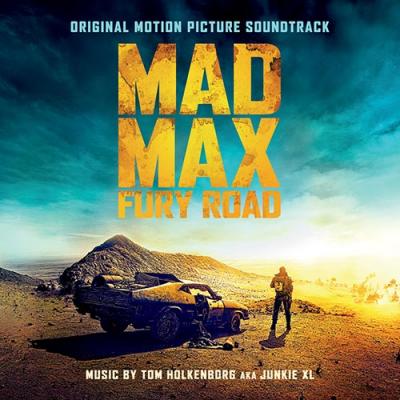
The official album, Mad Max: Fury Road (Original Motion Picture Soundtrack), arrived in May 2015 on WaterTower Music in standard and extended “deluxe” editions. It runs from short, brutal cues like “Survive” and “We Are Not Things” to long set pieces such as “Immortan’s Citadel” and “The Bog”. Classical inserts and licensed pieces — Verdi’s “Dies Irae”, Eleni Karaindrou’s “Elegy for Rosa” and “Refugee’s Theme” — puncture the electronic wall of sound with older, haunted voices. The music is not subtle, but the film is not either; what matters is how precisely every cue is cut to picture.
Taken on its own, the score is almost a rock opera about movement. Holkenborg leans on massive drum batteries, electric guitars that blur into sound design, string ostinatos and blunt, rising horns. He also threads recognisable motifs through the chaos: a low “survive” figure for Max, a soaring vocal line for Furiosa, a smug four-note idea for Immortan Joe, and an almost comically heroic line for the Doof Warrior’s guitar. Underneath, you can hear the influence of 1940s–60s film music he has cited — Bernard Herrmann, early Morricone — but blown up to blockbuster scale.
In genre terms this is industrial action scoring welded to old-school orchestral writing. The drums and distorted guitars speak to the wasteland’s machinery and violence. String and choir writing carry ideas of belief, sacrifice and memory, especially in cues tied to Furiosa and the Vuvalini. Rock-opera excess belongs to the Citadel’s war cult: war drums on rigs, a guitarist on bungees. When those components collide, the film gets its distinctive feel: not just “loud”, but ritual, almost religious intensity strapped to a convoy of scrap-metal trucks.
How It Was Made
Fury Road spent years in development with different names attached to the score, including John Powell and Marco Beltrami. Holkenborg finally joined in 2013 after Warner Bros. music executive Darren Higman flew him to Sydney to see an early three-hour workprint. He and George Miller then spent roughly a year experimenting: writing themes, testing how far they could push percussion and electronics before the sound collapsed into mud.
The score was recorded at the Simon Leadley Scoring Stage in Trackdown Studios, Sydney. Holkenborg played most of the parts himself — drums, guitars, basses, synths and much of the sound design — with strings and brass recorded as sections in Australia and some extra guitar textures supplied by Nick Zinner from Yeah Yeah Yeahs. The idea was to keep the musical “band” as tight as the film’s production: a small core that could hit very hard.
Holkenborg built the palette around hundreds of drums, processed electric guitar and a large but flexible orchestra. He has described the approach as a mix of rock opera and classic Hollywood scoring: tightly voiced brass for fanfares and doom, strings for propulsion and emotion, choral or vocal lines as marks of belief and myth, all riding on relentless rhythm. The drum and guitar writing for the Doof Warrior and the Citadel’s mounted drummers was cut so that what you see on screen can plausibly be what you hear, even as the score also functions non-diegetically.
Because music and sound design are so fused in Fury Road, the team treated the score almost like another effects stem. Miller reportedly played finished cues back to actors during ADR so they could feel the energy of action scenes and adjust their performances and line reads. The album then pulled over two hours of that material — standard plus deluxe cues — into a narrative of its own, from “Survive” through to “Let Them Up” and the coda material on expanded releases.
Tracks & Scenes
Below are key cues and pieces, with where they sit in the film and why they matter. Exact timings vary by cut, so think in terms of story beats rather than minute marks.
"Survive" — Junkie XL
Where it plays: Over the opening sequence that introduces Max in the wasteland. His narration (“My world is fire. And blood.”), flashes of past trauma and the capture by War Boys all sit on top of short, stabbing brass and low, grinding textures. The cue also returns in variants whenever Max’s survival instinct snaps the story forward — shackles breaking, escape attempts, the first scramble on the War Rig.
Why it matters: “Survive” is Max’s signature: low, bowed notes that feel like someone forcing themselves upright. The music says that even before the plot begins in earnest, Max is already in emergency mode, stuck between guilt and reflex.
"Escape" — Junkie XL
Where it plays: Early in the chase, when Furiosa turns the War Rig off the approved route and Immortan Joe’s forces begin to realise she is running. Max, still a blood bag strapped to Nux’s car, is dragged along as the convoy tears into the desert. The cue is all galloping patterns and falling-string figures, matching the editing rhythm of vehicles weaving between rocks and each other.
Why it matters: The track sets the template for Fury Road’s action writing: harmonic shifts are simple, but the layers of percussion and strings keep evolving. It is also the sound of Furiosa’s decision: once “Escape” kicks in, the film stays in motion almost without pause.
"Immortan’s Citadel" — Junkie XL
Where it plays: Over the introduction of the Citadel itself — the water release, the starving crowd, Immortan Joe’s reveal and the underground vault where the Five Wives are kept. The music starts with ominous, ceremonial textures and then ramps up into an eight-minute block that covers Furiosa’s departure, Joe’s panic and the assembly of the pursuit.
Why it matters: This is the score announcing the scale of the world. War drums, male chorus and heavy brass sell Joe’s self-made religion; the sudden switches to tense strings under the wives’ “We are not things” scrawl mark the quiet rebellion that will drive everything that follows.
"We Are Not Things" — Junkie XL
Where it plays: Around the early turning point when Joe bursts into the vault and finds it empty. On the walls: slogans from the Wives declaring their refusal to be property. The cue is short but pointed: tense strings and a rising figure that never quite resolves as we cut between the graffiti, Joe’s rage and the fleeing tanker.
Why it matters: The title quotes the wives’ most famous line, and the music gives that moment a distinct sonic stamp. It is a rare pause between chases that lets the score underline theme over spectacle — the idea that the story is really about bodies, ownership and escape.
"The Rig" — Junkie XL
Where it plays: Over shots that fetishise the War Rig itself: gears engaging, wheels biting into the sand, chains and levers moving as Furiosa fights the steering. You hear it as the camera crawls over the truck’s architecture and then pulls back to show its full, lumbering momentum as a moving fortress.
Why it matters: This cue is almost a character intro for the vehicle. The rhythm suggests weight and forward drag, while rising brass makes the Rig feel like a stubborn animal that just will not die, no matter what hits it.
"Brothers in Arms" — Junkie XL
Where it plays: During the canyon ambush with the biker gang, when the War Rig is trapped between exploding bikes and collapsing rock ledges. It also runs into the section where a flaming Molotov nearly takes the truck out, only for Furiosa to use the plough on the front end to smother the flames and punch through.
Why it matters: This is one of the score’s most famous tracks, often singled out by fans as the moment where image and music lock perfectly. The cue combines hammering rhythm with a noble, ascending line, making the fight feel both desperate and weirdly exultant — it is the War Rig coming into its own.
"The Bog" — Junkie XL
Where it plays: During the slow, night-time crawl through the swampy bog, with the Rig winched forward on boards while distant engines circle in the fog. The music is lower, more drawn out: drones, distant brass, a sense of heavy machinery trudging through mud.
Why it matters: After so much speed, “The Bog” gives you friction. It sounds like the world itself dragging at the convoy, and it lets the movie breathe while still feeling oppressive.
"Many Mothers" — Junkie XL
Where it plays: At the night-time meeting with the Vuvalini, Furiosa’s former clan from the Green Place. The action drops away; characters talk around motorbikes under the stars, share histories and realise the Green Place is gone. The score shrinks to warm strings and gentle piano figures.
Why it matters: This is the emotional core of the album. Critics and the composer himself have pointed to “Many Mothers” as the moment where the music finally lets go of the relentless pressure and allows simple, human warmth back in. It is where fury becomes grief and then resolve.
"Walhalla Awaits" — Junkie XL
Where it plays: Over Nux’s final sacrifice near the climax, when he flips the Rig to block the canyon and save the others. Engines scream, metal bends, and as he whispers “Witness me” to Capable the music swells into a tragic, almost choral piece that continues through the impact.
Why it matters: The cue takes the film’s earlier war-cult rhetoric about Valhalla and plays it straight as a moment of genuine redemption. For once the mythic language is not just propaganda; the music treats Nux’s choice as truly heroic.
"Chapter Doof" — Junkie XL
Where it plays: Across several sequences featuring Coma-Doof Warrior and the Doof Wagon, the mobile stage full of drummers and giant amps that leads Joe’s convoy. The cue stitches together pounding drum patterns with chugging, detuned guitar riffs that feel half-diegetic: sometimes we see Coma playing them, sometimes they bleed into non-diegetic score as the camera leaves the wagon.
Why it matters: “Chapter Doof” is the film’s thesis about sound made literal. The army drags its own soundtrack into battle; Holkenborg’s writing blurs that in-world noise with the actual score until you are not sure where one ends and the other starts.
"My Name Is Max" — Junkie XL
Where it plays: Near the end, when Max finally gives his name to Furiosa and then disappears into the crowd as she is lifted up into the Citadel. The cue reprises earlier material but in a calmer, more resolved form; strings and brass that once screamed now hold long, satisfying chords.
Why it matters: After two hours of obsession with survival, this is the one moment where the music acknowledges identity and connection. Max is still a drifter, but the score lets his theme resolve instead of cutting off in panic.
"Elegy for Rosa" — Eleni Karaindrou
Where it plays: Immediately after the death of the Splendid Angharad, when her body falls and the camera lingers on Furiosa and the remaining wives processing the loss. Karaindrou’s mournful strings and woodwinds replace Holkenborg’s usual arsenal, giving the moment an older, almost sacred sadness.
Why it matters: It is one of the rare non-Holkenborg pieces in the film and stands apart tonally. The choice to bring in Karaindrou’s concert work underlines that Angharad’s death is not just another stunt; it is a wound.
"Refugee’s Theme Symphonic Variation No. 1" — Eleni Karaindrou
Where it plays: When the War Rig reaches the place where the Green Place should be and instead finds poisoned mud and a band of worn but proud Vuvalini. The piece plays as they exchange stories and accept that there is no going “home” in the old sense.
Why it matters: Paired with “Many Mothers”, this cue marks the shift from escape story to return story. The classical writing ties the Vuvalini’s struggle to a broader, almost timeless pattern of exile and adaptation.
"Messa da Requiem – Dies Irae" — Giuseppe Verdi
Where it plays: A fragment of Verdi’s “Dies Irae” is used both in an early theatrical teaser trailer and in the film itself during the Bullet Farmer’s night-time attack, where tracer fire and flares rip across the black flooded plain.
Why it matters: The piece is not on Holkenborg’s album, but its presence in marketing and that single set piece shaped how many viewers remember the film’s sound. It dresses one of the noisiest scenes in liturgical fury, pushing the apocalyptic imagery into outright operatic territory.
Notes & Trivia
- The standard album runs about 71 minutes across 17 tracks; the deluxe edition expands that to over two hours with extended and bonus cues.
- WaterTower Music issued the original digital and CD releases; later physical editions in Europe and Japan carried Sony Classical branding while using the same core program.
- Mondo first pressed a limited 2×LP in 2015 with artwork by Boneface and themed vinyl colors (“Fire & Blood”, “Sand & Water”); subsequent pressings and a newer deluxe vinyl have kept it in circulation for collectors.
- The soundtrack’s development overlapped with Holkenborg’s work on 300: Rise of an Empire and Divergent, which helped convince George Miller that he could handle dense, percussion-heavy world-building.
- Before Holkenborg was hired, other composers – including John Powell and Marco Beltrami – were at various times associated with the project during its long pre-production.
- Three pre-existing classical cues (Verdi and Karaindrou) appear in the film but not on the main commercial soundtrack, which has frustrated some completists hunting for a truly “complete” release.
Music–Story Links
Fury Road’s score is built on two big ideas: survival and belief. Max’s low, grinding motif in “Survive” and its relatives belongs to the first; Immortan Joe’s pompous material, the Doof Warrior’s guitar and the choral swells around “Walhalla Awaits” belong to the second. Whenever the story foregrounds raw survival — running out of water, fixing the Rig under fire, getting unstuck from the bog — Holkenborg leans on rhythm and texture. When it turns to ideology, cult and redemption, harmony and melody push forward.
Furiosa sits in the middle of those forces. Cues like “Escape” and “The Rig” cast her as a tactical mind in motion, always thinking one turn ahead. Later, “Many Mothers” reframes her through the Vuvalini as someone who once belonged to a community and now carries that loss as fuel. The same woman who drives a war truck through a sandstorm at impossible speed also stands quietly in the dark, surrounded by elders and stories; the music makes both sides feel coherent.
The wives get their own sound-space in the shorter emotional cues. “We Are Not Things” underlines their first act of collective defiance. “Redemption” and “My Name Is Max” connect their survival to Max’s gradual re-engagement with the world; he moves from anonymous “blood bag” to someone willing to crawl back onto the Rig and risk himself for others. The redemption motif that blossoms fully in “Many Mothers” is seeded in those shorter cues.
Even the Doof Warrior and his drummers have story function. Their diegetic music is literally tied to Immortan Joe’s army; when we hear “Chapter Doof” fading in the distance, we know the Citadel’s warband is close, even before the camera shows it. Later, as the convoy breaks apart and Joe’s grip fails, that wall of sound thins and then disappears. The cult loses not just its vehicles, but its thunder.
Reception & Quotes
Critical response to the soundtrack has been largely positive, though not unanimous. Reviewers often describe it as loud, exhausting and “too much” — and then follow that with some version of “but it fits the film perfectly”. The standard complaint on album is repetition; the standard praise is that, in context, the same relentless quality becomes a feature rather than a flaw.
AllMusic highlighted the tension and physicality of the score, pointing to the combination of battering drums, aggressive guitars and tightly orchestrated strings and horns. Other reviewers singled out “Brothers in Arms”, “Chapter Doof” and “Many Mothers” as standouts: the first two for sheer adrenaline, the last for proof that Holkenborg can also write fragile, lyrical material when he takes his foot off the gas.
Some traditional film music critics have been harsher on the album, calling the action writing noisy and monotonous when removed from the picture. At the same time, specialty soundtrack sites, vinyl retailers and fan essays often frame Fury Road as a high point of 2010s action scoring. Hans Zimmer, who has worked with Holkenborg on other projects, famously described the score as “absolutely phenomenal and mind-blowingly brilliant.”
“Pounding, rhythmic, cacophonic, melodic… the first score of the year I absolutely had to own.” — genre critic reacting to the album
“Thunderous drums and screaming guitar, yet carefully orchestrated to match every gear shift on screen.” — summary of the score’s appeal in a mainstream review
“If you doubt Junkie XL can do beauty, skip straight to ‘Many Mothers’.” — film-music blogger on the score’s softer side
“Mind-blowingly brilliant” is how one fellow composer summed it up — and he was not alone. — industry reaction to Holkenborg’s work
Interesting Facts
- The deluxe digital edition expands cues into “extended versions” rather than adding many totally new themes, mirroring how the film itself revisits and stretches certain action patterns.
- The commercial soundtrack is purely Holkenborg’s music; the Verdi and Karaindrou cues, plus other licensed pieces, must be sourced separately by listeners.
- Mondo’s first vinyl pressing used an elaborate die-cut slipcover with interchangeable Max and Immortan Joe portraits, turning the package into a sort of Wasteland trophy.
- Collectors trade unofficial “complete score” promos that bundle the album with additional film cues and alternates, including longer builds into the sandstorm and more subtle underscore.
- Some fans still complain that the specific on-screen guitar riffs Coma-Doof Warrior plays are not isolated on album; “Chapter Doof” comes close, but it is cut to support the film, not the guitar solo.
- Holkenborg has said he played a large portion of the drums, guitars and synths himself in his studio, with only the big orchestral sections and some guest guitars recorded separately.
- The Fury Road score later fed back into Furiosa: A Mad Max Saga, where motifs related to the Green Place, the Wives and the Vuvalini are reworked in a more anxious, slow-burn style.
- Because of the soundtrack’s reputation, it is frequently used (probably unwisely) as driving music; more than one reviewer has joked about the risk of speeding tickets.
Technical Info
- Title: Mad Max: Fury Road (Original Motion Picture Soundtrack)
- Year: 2015 (film and original album); later reissues and expanded vinyl pressings in subsequent years
- Type: Film score / soundtrack album
- Film: Mad Max: Fury Road (2015), directed by George Miller
- Composer / Producer: Tom Holkenborg a.k.a. Junkie XL
- Additional music / programming: Christian Vorländer, Stephen Perone (among others credited)
- Recording location: The Simon Leadley Scoring Stage, Trackdown Studios, Sydney
- Label: WaterTower Music (core release); Sony Classical handled some international CD editions
- Editions: Standard 17-track album (~71 minutes); 26-track deluxe version (~125 minutes); multiple CD, digital and vinyl issues including Mondo 2×LPs
- Notable cues: “Survive”, “Escape”, “Immortan’s Citadel”, “Brothers in Arms”, “The Bog”, “Many Mothers”, “Chapter Doof”, “My Name Is Max”, “Walhalla Awaits”
- Non-album pieces in film: Verdi’s “Messa da Requiem – Dies Irae”, Eleni Karaindrou’s “Elegy for Rosa” and “Refugee’s Theme Symphonic Variation No. 1”
- Runtime (film): Approx. 120 minutes; music covers the vast majority of the running time with only short stretches of true silence
- Catalogue / database references: Dedicated entries on MusicBrainz, Discogs, and major digital platforms under Tom Holkenborg / Junkie XL
Canonical Entities & Relations
| Subject | Relation | Object |
|---|---|---|
| Mad Max: Fury Road (film) | music by | Tom Holkenborg (Junkie XL) |
| Mad Max: Fury Road (Original Motion Picture Soundtrack) | is soundtrack of | Mad Max: Fury Road (film) |
| Mad Max: Fury Road (Original Motion Picture Soundtrack) | record label | WaterTower Music |
| WaterTower Music | in-house label of | Warner Bros. |
| Tom Holkenborg (Junkie XL) | occupation | film composer, producer, musician |
| Mad Max: Fury Road (film) | part of series | Mad Max franchise |
| Mad Max: Fury Road (Original Motion Picture Soundtrack) | release format | digital, CD, vinyl (multiple editions) |
| Track “Brothers in Arms” | is part of | Mad Max: Fury Road (Original Motion Picture Soundtrack) |
| Track “Many Mothers” | is part of | Mad Max: Fury Road (Original Motion Picture Soundtrack) |
| Track “Chapter Doof” | associated with | Coma-Doof Warrior and Doof Wagon scenes |
Questions & Answers
- Who composed the Mad Max: Fury Road soundtrack, and what does it sound like?
- The score was composed and produced by Tom Holkenborg, a.k.a. Junkie XL. It mixes massive drums, distorted guitar, orchestra and occasional choir into an almost rock-opera wall of sound tailored to the film’s non-stop chase.
- Are there different versions of the Fury Road soundtrack album?
- Yes. There is a standard 17-track edition and an expanded deluxe version with 26 tracks and over two hours of music. Various CD, digital and vinyl releases draw from those programs.
- What is the main “theme” of the score?
- Instead of one hummable tune, the score uses several motifs: a low “survive” idea for Max, soaring string and vocal writing around Furiosa and the Vuvalini, a pompous figure for Immortan Joe, and distinct material for the War Rig and the Doof Warrior.
- Is the famous “Dies Irae” chorus actually in the movie or only in the trailers?
- A fragment of Verdi’s “Messa da Requiem – Dies Irae” appears both in at least one theatrical teaser and in the Bullet Farmer’s night-time attack, but it is not included on Holkenborg’s commercial soundtrack album.
- Which tracks should I hear first if I am new to this soundtrack?
- Good entry points are “Immortan’s Citadel” for the world-building, “Brothers in Arms” and “Chapter Doof” for full-throttle action, and “Many Mothers” and “My Name Is Max” for the score’s emotional side.