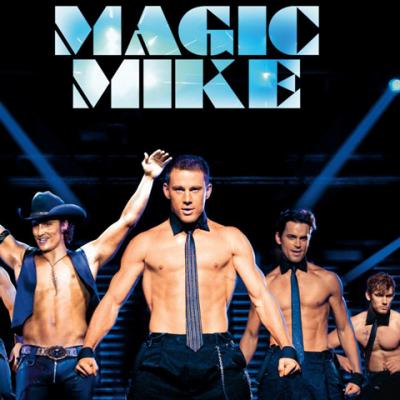
"Magic Mike" Soundtrack Lyrics
Movie • 2012
Track Listing
Alice Russell
Countre Black
The Unknown
Black Daniel
Cloud Control
Ringside
Joe Tex
Vegas Audio Ninjas
Beth Thornley
Win Win feat. Blaqstarr
Matthew McConaughey
Foreigner
"Magic Mike (Original Motion Picture Soundtrack)" – Album Guide to Tracks and Key Scenes
Overview
How do you soundtrack a film that is both a stripping fantasy and a working-class recession story? Magic Mike (Original Motion Picture Soundtrack) answers by leaning almost entirely on songs – funk, rock, R&B, EDM, classic rock radio – instead of lush score. You hear what the dancers hear on stage, what Mike blasts in his truck, what the crowd screams along to at Xquisite in Tampa.
The album, released by WaterTower Music in late June 2012, pulls together a dozen of the film’s most prominent cues: Alice Russell’s gritty soul opener “Breakdown,” Countre Black’s cover of “It’s Raining Men,” The Unknown’s “Bang Bang Boom,” Black Daniel’s “Gimme What You Got,” Cloud Control’s “Just For Now,” plus a handful of character-defining tracks like “Ladies of Tampa” sung by Matthew McConaughey. Not every fan-favourite cue makes it onto the disc – “Pony” by Ginuwine is in the film but not on the core album – but what is there gives a clean snapshot of the club floor, the parking lot and the after-parties.
In the movie itself, music works like a second camera. Stage routines are built around instantly recognisable hooks; backstage conversations keep playing out while hits rumble through walls; even the beach and boat scenes are pinned to specific tracks. You don’t get a guiding orchestral theme – you get a jukebox of choices that tell you who these people are: Dallas the showman, Adam the kid who falls in love with his own reflection, Mike the hustler who moves between construction site, strip club, furniture workshop and dawn hangovers.
Stylistically, the soundtrack jumps between several lanes. Contemporary R&B and club pop (T-Pain’s “Booty Wurk,” Sean Paul’s “Got 2 Luv U”) underline the hedonism of the strip routines. 2000s and 2010s indie and electro (Toro y Moi’s “New Beat,” Excision & Datsik’s “Calypso,” Ringside’s “Money”) frame Mike’s hustle and the film’s late-night Florida energy. Classic rock and heritage names (Foreigner’s “Feels Like the First Time,” KISS’s “Calling Dr. Love”) wrap Adam’s fantasies in arena-sized swagger. That mix is deliberate: slick radio pop equals fantasy; dirtier, more underground cuts track the reality bleeding through.
How It Was Made
Unlike many Soderbergh projects, Magic Mike doesn’t really have a traditional score album hiding underneath. The main music brain here is music supervisor Frankie Pine, working under Warner Bros.’ music department. Credits and trade coverage make it clear that the film leans on licensed songs and bespoke source cues rather than a full orchestral underscore – the “music by” space is filled by performers and clearances, not a single composer.
The official soundtrack album, Magic Mike: Original Motion Picture Soundtrack, came out through WaterTower Music in late June 2012, just before the film’s wide release. It is presented as a compilation by various artists, twelve tracks and roughly thirty-six minutes long, with WaterTower acting as licensee for Warner Bros. Entertainment. Retailer and label listings group it alongside similar song-driven Warner titles from the same era.
Music choices were tightly integrated into production. According to Billboard and playlist-style coverage, the team locked in a mixture of catalog tracks (Foreigner, KISS, Ginuwine) and newer club records (T-Pain, Win Win feat. Blaqstarr) early enough that choreography could be built on specific grooves. The film’s music section on Wikipedia also records some very precise decisions: when Kid Rock’s “Cowboy” couldn’t be licensed, Pine swapped in Big & Rich’s “Save a Horse (Ride a Cowboy)” for Adam’s cowboy routine; choreographer Alison Faulk encouraged Channing Tatum to freestyle to Excision & Datsik’s dubstep banger “Calypso” for Mike’s last big solo; “Like a Virgin” is performed by Nashville artist Chris Mitchell with Pettyfer deliberately kept in the dark about the song choice until cameras rolled.
One original song becomes the movie’s internal anthem: “Ladies of Tampa,” written in a quick session by Frankie Pine, Matthew McConaughey and guitarist Martin Blasick. Soderbergh’s team let McConaughey perform it live on set as Dallas, guitar in hand, before he strips for the crowd. The same production notes point out that McConaughey pushed for that strip sequence himself – it wasn’t in the first draft – which partly explains why the song sounds like an actor having the time of his life rather than a polished studio track.
Tracks & Scenes
Below is a curated run through some of the most important music moments in Magic Mike. Timestamps are approximate, based on a 110-minute cut; placements come from cross-checked song guides and credits.
"Breakdown" — Alice Russell (with Darondo elements)
Where it plays: Around the 3-minute mark, this is the first song we hear as Mike drives his dusty pickup through Tampa on the way to a roofing job. The sun is harsh, the colour palette is bleached, and the track’s raw soul groove cuts against the usual glossy strip-club stereotypes. The cue is non-diegetic but mixed as if it were coming off his truck stereo – you feel the bass in the cab as he jokes with co-workers and sizes up Adam for the first time later in the day.
Why it matters: It frames Mike as a working musician of bodies and money, not just a glittery performer. Soul, not EDM, is our way into his world, signalling that the film will be about labour and hustle as much as fantasy.
"Learn My Lesson" — The Sheepdogs
Where it plays: About six minutes in, Mike drops Adam home after their first day on the construction site. Classic-rock guitars roll under their awkward small talk – Adam still pretending he doesn’t need help, Mike already half-amused, half-concerned. The track is again quasi-diegetic, treated as car stereo music that continues over exterior shots of the shabby apartment complex.
Why it matters: The title’s irony is obvious in hindsight. Adam learns exactly the wrong lessons from Mike, and the rootsy sound hints at the older, blue-collar masculinity Mike grew up with, which the strip club will twist into something else.
"Feels Like the First Time" (Acoustic) — Foreigner
Where it plays: Roughly ten minutes in, Brooke and Adam are at a local bar when the acoustic cover version of Foreigner’s hit drifts through the speakers. Neon beer signs glow, the camera circles the siblings, and Adam is already looking for excuses to dodge responsibility. The song is diegetic background, low enough that the dialogue dominates but clear enough that you recognise the hook.
Why it matters: Per one soundtrack write-up, using a stripped-down version of a bombastic rock classic matches where Adam is: on the edge of his “first time” in a new world, but not yet at full volume. On album, it also helps bridge the gap between the indie-leaning openers and the club bangers to come.
"#1Nite" — Cobra Starship
Where it plays: Around 11 minutes, when Mike first brings Adam into Xquisite. The track hammers in as the doors open: bar lines, screaming women, glimpses of dancers on stage. We track the two men weaving through the crowd; every cut hits a beat in the song, which is playing diegetically in the club sound system.
Why it matters: It’s the moment the movie fully switches from sun-blasted Florida to neon-drenched fantasy. Electro-pop and chant-along hooks sell Xquisite as a place where everyone is having the best night of their lives, even if we’re about to see the grind behind the curtain.
"Love Right Now" — Ricky Blaze
Where it plays: Still early that first night at the club (around 14 minutes), this track kicks in as Adam nervously tries to talk to women in the crowd, emboldened by alcohol and Mike’s coaching. The camera bounces between the bar, the cash desk and the edge of the stage; the song is source music blasting from the main room, mixed hot enough to make dialogue feel shouted.
Why it matters: The track’s easy, digital sheen contrasts with Adam’s clumsy attempts at seduction. It underscores the gap between the fantasy product Xquisite sells and the terrified rookie actually selling it.
"It's Raining Men" — Countre Black
Where it plays: Around the 21-minute mark, the first full live show we see at Xquisite kicks off with this gender-flipped classic. The dancers arrive with umbrellas, slick choreography and absurd confidence; Dallas emcees from the mic while dollar bills rain down. The track is fully diegetic, played to the crowd as the women scream the chorus back at the stage.
Why it matters: According to Billboard’s track-list reveal, this Weather Girls cover was always intended as a centrepiece. In context it works as pure camp and as commentary – the film lets women have the kind of objectifying anthem usually reserved for male voices, but the camera keeps cutting backstage to the cost in sweat and prep.
"Booty Wurk (One Cheek at a Time)" — T-Pain
Where it plays: Also in the first big revue sequence (about 23 minutes), following on from “It’s Raining Men” as the umbrella routine escalates. The beat flips into a modern club bounce, lights go more strobe-heavy, and the dancers push the choreography harder. Again, it’s pure diegetic club sound.
Why it matters: This is a reminder that the movie is set in 2012, not 1980s Chippendales land. The track anchors the show in contemporary black club music and makes it feel like a real Florida ladies’ night, not just a nostalgic fantasy.
"Bang Bang Boom" — The Unknown
Where it plays: At roughly 23–24 minutes, as the main revue transitions into solo acts. Individual dancers start their signature routines while the crowd’s focus narrows to one body at a time. The song is diegetic, thudding underneath Dallas’s patter and the whoops from the floor.
Why it matters: Sonically it’s more aggressive – the title tells you everything. The track signals that we’ve moved from ensemble “show” into competitive peacocking, where brand-new kid Adam will soon have to sink or swim.
"Like a Virgin" — Chris Mitchell
Where it plays: Around 26 minutes, Adam is shoved on stage for his first solo performance. He clearly does not know what song is about to play; when a brassy cover of “Like a Virgin” explodes from the speakers, there is half a beat of panic before he leans into it and starts miming along in a hastily improvised “nerd loses his innocence” routine. The whole thing is diegetic, with Dallas yelling encouragement from the wings.
Why it matters: Production accounts note that Pettyfer truly didn’t know the cue in advance, so the shock you see is partly real. The track choice – a Madonna standard associated with female sexuality – being repurposed for a boy-toy initiation is very on brand for the film’s gender games.
"Gimme What You Got" — Black Daniel
Where it plays: Around 31 minutes, after the show, Mike and Adam leave a bar with a pair of women, high on cash and attention. The song rides over their swaggering exit, cutting between them and the more banal details of the parking lot and Tampa night streets. It is non-diegetic but feels like music in Mike’s head as he surveys what he’s built.
Why it matters: It’s a tiny sequence that crystallises the seduction of this world for Adam: money in his pocket, girls on his arms, soundtrack telling him he deserves more. On the album the track sits comfortably next to the club cuts, giving listeners a taste of that walking-home buzz.
"New Beat" — Toro y Moi
Where it plays: Around 35 minutes, in a rehearsal scene where Dallas coaches Adam on stage presence and routine. The space is half-lit, empty seats stretching out in front of them. “New Beat” plays over the sound system while Adam experiments with moves and Dallas corrects posture, timing, salesmanship.
Why it matters: The hazy chillwave sound is a sharp contrast to the hard, obvious stripper anthems. It underlines that this is work – a process of refinement in an empty room – not just spontaneous grinding. On album it also broadens the palette beyond straight pop and R&B.
"Save a Horse (Ride a Cowboy)" — Big & Rich
Where it plays: Around 40 minutes, Adam debuts his cowboy routine. Chaps, hat, lasso, the whole exaggerated fantasy. The track booms through the club PA as he struts and line-dances his way across the stage, women literally pulling at his clothes. According to interviews, this cue replaced Kid Rock’s “Cowboy” when licensing fell through, and it plays as full diegetic performance music.
Why it matters: This is the moment Adam stops looking terrified and starts believing his own hype. The song’s big, dumb confidence fits perfectly, and it became one of the most remembered numbers in the film.
"Pony" — Ginuwine
Where it plays: Around 42 minutes, in what is probably the franchise’s single most famous scene. Mike takes the stage in a cut-off hoodie and cap while Brooke watches uneasily from the crowd. As “Pony” slides in with its slow grind and stuttering synth, he launches into an acrobatic chair routine – flips, floor work, razor-precise body rolls – all timed perfectly to the track’s stop-start rhythm. The cue is fully diegetic, blasting from the club PA, with crowd noise woven in.
Why it matters: This is the movie’s signature. For a lot of viewers, “Pony” is now “the Magic Mike song.” It shows why Mike is a star, but the camera keeps returning to Brooke’s conflicted reaction, reminding us that behind the fantasy there is a man she’s still not sure she trusts.
"Sound Off (Duckworth Chant)" — Matt Bomer, Joe Manganiello, Matthew McConaughey, Kevin Nash, Alex Pettyfer, Adam Rodriguez, Channing Tatum
Where it plays: Around 45 minutes, during the military-themed group routine. The guys march on stage in fatigues, barking a rewritten version of the classic Duckworth marching chant. They stomp, salute, grind; Dallas leads them like a drill sergeant before everything tips back into strip-show theatrics. All vocals and chants are performed on screen, making this a fully diegetic number.
Why it matters: It is one of the rare cues recorded by the cast themselves and credited accordingly. It also captures the film’s knack for turning something as rigid as a marching cadence into a playful, ridiculous, oddly sincere celebration of male bodies and camaraderie.
"Just For Now" — Cloud Control
Where it plays: Around the 50-minute mark, as the gang heads out on a Fourth of July boat ride to a sandbar party. The track plays over wide shots of the bay, girls on shoulders, beers in hand, fireworks hinted in the distance. It’s non-diegetic but cut to the rhythm of jump cuts and lens flares.
Why it matters: The indie-rock shimmer gives the scene a bittersweet tone – fun, but fleeting. It suggests that even at their loosest, these characters know this moment won’t last.
"Money" — Ringside
Where it plays: Around an hour in, backing a montage of different shows and side hustles. We see the men working various theme nights, Mike counting stacks, Dallas negotiating, Adam falling deeper in love with the cash flow. The song works as a non-diegetic glue across several locations.
Why it matters: It is the film’s thesis track in plain language. Money makes everything possible and ruins everything at the same time. On the soundtrack album it helps anchor the back half around that theme.
"Mo Cash!" — Vegas Audio Ninjas
Where it plays: Around 1h15, at the sorority house show where Mike and Adam arrive dressed as fake cops. The track thumps while they strip, grind on couches and play to phone cameras. It’s a cramped, low-ceilinged space compared to Xquisite; the music feels almost too big for the room, which is the point.
Why it matters: This is where everything tips. The title is literal – “more cash” – but the scene leads directly into Adam giving a girl ecstasy, a fight breaking out and a spiral of consequences that will blow up Mike’s plans. The song is the high before the comedown.
"Wash U Clean" — Beth Thornley
Where it plays: Immediately after, still at the sorority show, this song underscores the second half of the party. While the lyrics plead for emotional cleansing, what we see is Adam losing control of the room, drugs changing hands, Mike’s worry growing. It is diegetic house-party music coming from speakers or a laptop dock.
Why it matters: The ironic contrast between the word “clean” and the increasingly messy situation is pure Soderbergh. On album, it also gives listeners a slightly more melodic breather between heavier beats.
"Calypso" — Excision & Datsik
Where it plays: Around 1h18, as the sorority fight explodes and chaos takes over. Dubstep drops hit as people shove through hallways, strobe lights smash across faces and recovery feels very far away. Production reports also tie this track to Mike’s final freestyle solo in the club, where Tatum was encouraged to improvise movement to its lurching bass.
Why it matters: It’s the harshest piece of music in the film – all serrated edges and violent drops. Letting Mike dance freely to it later turns his last big performance into something both technically dazzling and slightly desperate.
"Love Shot" — The Blue Van
Where it plays: Around 1h19, in a quieter restaurant scene where Mike meets Joanna and her fiancé. The song hums along under their pointed conversation, adding a little swing to the otherwise tense dinner.
Why it matters: It’s one of the few cues tied to Mike’s romantic life outside Xquisite. The playful rock groove contrasts with the awkwardness of the meeting, highlighting how out of place he is in straight-world couple culture.
"Calling Dr. Love" — KISS
Where it plays: Around 1h23, when Mike retreats to the club to blow off steam after fighting with Dallas. He messes around on stage, alone, trying new moves and testing how far he can push his persona without an audience. The track booms from the empty house speakers, his silhouette moving against rows of vacant chairs.
Why it matters: The song is pure cartoon swagger, which makes the emptiness around him more poignant. It is an arena-rock fantasy played to nobody, neatly encapsulating Mike’s growing sense that this life can’t last.
"Victim" — Win Win feat. Blaqstarr
Where it plays: Around 1h25, when Mike and Adam hit an after-hours party, downing pills and shots. The song’s jagged beat and Blaqstarr’s vocal run under shots of bodies piling on couches, money changing hands, Adam slipping into full-time excess. According to coverage from The Playlist, this track also features in the film’s marketing and is part of the official soundtrack line-up.
Why it matters: The title is blunt foreshadowing. In this scene, Adam still thinks he’s the winner; the music knows he’s being swallowed.
"Got 2 Luv U" — Sean Paul
Where it plays: Around 1h35, on the beach when Adam first meets Mike in a more relaxed, daytime context. It plays as a source track over beach bodies, volleyball, the sense that Tampa can be a holiday town as well as a hustle town.
Why it matters: It is one of the few songs that feel like they belong to Adam’s generation more than Mike’s. The summery dancehall vibe underlines the age gap and the “big brother / little brother” dynamic.
"Ladies of Tampa" — Matthew McConaughey
Where it plays: Around 1h38, during Dallas’s climactic performance. He struts on stage with a guitar, singing an ode to the women of Tampa – cheesy rhymes, drawled charm – before smashing the guitar and launching into a full strip. The number is performed live on screen, with McConaughey’s vocals front and centre, then segues into a more conventional dance track as clothes come off.
Why it matters: This is Dallas’s manifesto and farewell in one. As reported by several outlets, McConaughey co-wrote the song with Pine and Blasick and lobbied for the strip scene himself. On album it’s a standout, because you can hear how much fun he’s having.
"Nothing" — Young Man
Where it plays: Around 1h41, when Dallas realises Mike has walked away from the act. The song plays as he stalks through the empty backstage area, putting the pieces together, while Mike is elsewhere trying to reset his life. The cue is non-diegetic, but feels emotionally aligned with Dallas’s bruised ego.
Why it matters: It’s a small indie track with a big symbolic job: mark the moment the “empire” loses its star and Dallas understands, on some level, that he misjudged him.
"Divine" — Paul Allen and The Natural Born Swimmers
Where it plays: Around 1h46, as the first end-credits song. We cut away from Mike and Brooke’s quiet, dawn-lit breakfast to titles over Tampa skies while “Divine” rolls in with its laid-back groove. Tech press had fun pointing out that this Paul Allen is the Microsoft co-founder moonlighting as a musician on the soundtrack.
Why it matters: It’s a left-field credit that sums up the movie’s odd cultural footprint: an indie-minded, low-budget stripper drama that ropes in tech billionaires, classic-rock bands and R&B staples on the same CD.
Trailer music — "Victim" by Win Win feat. Blaqstarr and others
Where it plays: Outside the film itself, “Victim” underscores at least one of the high-energy trailers, cut around slow-motion shots of routines, cash and cheering crowds. Other promo spots lean harder on “Pony” and “Moves Like Jagger,” but this particular cut gave the marketing a darker, clubbier edge.
Why it matters: Trailer cues like this extend the soundtrack’s life beyond the movie. For many viewers, the first association with Magic Mike is not the film’s cold open but those trailers looping on YouTube and TV, with “Victim” selling the vibe.
Notes & Trivia
- The official album includes only twelve tracks, even though fan song lists count more than thirty cues used in the film; several club and party songs remain digital-only or uncollected.
- The soundtrack was released through WaterTower Music, Warner’s in-house label, which also handled other 2012 song-driven albums like Rock of Ages and Entourage.
- Music supervision is credited to Frankie Pine, with Warner Bros. music executive Darren Higman listed above her in the studio’s music department hierarchy.
- “Pony” is arguably the most famous song in the movie but did not appear on the original twelve-track CD configuration; it shows up in later compilations and themed playlists instead.
- Paul Allen’s contribution “Divine” sparked amused coverage in tech media, which treated his soundtrack credit as one more item on his list of improbable hobbies.
- “Sound Off (Duckworth Chant)” is credited directly to the main cast, underlining that the military number is effectively a mini cast recording living inside a film soundtrack.
Music–Story Links
The soundtrack doesn’t just decorate routines; it mirrors the characters’ trajectories. Early car cues like “Breakdown” and “Learn My Lesson” belong to Mike’s hustling, two-job existence – they sound like a guy who flips between contractors and club owners. Once Adam gets on stage, his identity is built from borrowed bravado: Foreigner’s “Feels Like the First Time,” Big & Rich’s “Save a Horse (Ride a Cowboy),” even his surprise “Like a Virgin” initiation all position him as a mash-up of someone else’s fantasies.
Mike’s relationship with Brooke is scored in sideways fashion. “Pony” shows Brooke the most exaggerated, commodified version of him, and her ambivalence in that scene is the emotional centre. Later, quieter songs leading into the dawn-breakfast ending – “Nothing,” “Divine” – play over a Mike who has chosen a smaller, more honest life. The music narrows from club spectacle to indie intimacy right alongside him.
Dallas gets his own musical arc too. He spends most of the film introducing other men’s routines, hyping up the crowd over licensed tracks, but his big moment comes when he finally sings his own song, “Ladies of Tampa.” That shift – from borrowing other people’s hits to performing an original – maps onto his ever-growing ego and his dream of franchising the act in Miami.
Adam’s downward spiral is practically colour-coded by tracks. “Mo Cash!” and “Victim” form a one-two punch: first the thrill of endless money and attention, then a darker, more paranoid edge as substances and bad decisions pile up. By the time “Nothing” rolls over Dallas’s realisation that Mike has walked, Adam is already lost in Miami fantasies that the film wisely doesn’t resolve for us.
Reception & Quotes
Critically, Magic Mike landed far above what many expected from “the stripper movie.” Review aggregators put it in the low-to-mid 70s out of 100 range, with Rotten Tomatoes listing an approval rating around 78% and Metacritic pegging it in the low 70s. Reviewers repeatedly mention the music – both as fuel for the routines and as part of the film’s commentary on labour, sex and performance.
“A crafty mixture of comedy, romance, melodrama and some remarkably well-staged strip routines involving hunky, good-looking guys.”
— Roger Ebert, Chicago Sun-Times
“A subtle social commentary on blue-collar struggle and the pitfalls of the American Dream.”
— Kofi Outlaw, Screen Rant
“Foreigner, KISS, T-Pain, Ginuwine and a house-band of indie acts pack the soundtrack, giving the dances a lived-in, regional-club feel.”
— trade coverage of the album
“McConaughey is a star reborn… his Dallas prowls the stage like a Southern rock frontman, right down to his own strip-club anthem.”
— Owen Gleiberman, Entertainment Weekly-era commentary
The soundtrack itself didn’t dominate mainstream charts but has remained a steady catalogue title. According to label and retailer information, it sits in streaming services as a twelve-track compilation, often cross-recommended to fans of What to Expect When You’re Expecting and other 2010s Warner soundtracks. In practice, its legacy is more cultural than numerical: “Pony,” “It’s Raining Men,” “Ladies of Tampa” and “Save a Horse (Ride a Cowboy)” are now shorthand for Magic Mike’s brand in memes, playlists and live shows.
Interesting Facts
- The soundtrack’s official release date is late June 2012, just days before the film opened wide in US cinemas, making it part of the marketing push rather than a later souvenir.
- Label metadata tags the compilation under genres like “Dance & Electronica” and “R&B & Soul,” reflecting the club-leaning selection more than the film’s indie-drama framing.
- Producers Reid Carolin, Gregory Jacobs, Nick Wechsler, Channing Tatum, Frankie Pine and Steven Soderbergh are all credited on various physical releases, underlining how hands-on the core team was with the music.
- WaterTower’s own site lists Magic Mike alongside Mad Max: Fury Road, The Dark Knight Rises and Argo in its 2012–2015 film-soundtrack roster – an odd but telling juxtaposition.
- “It’s Raining Men” is officially credited to Countre Black on the album – a variant spelling of the artist name that sometimes appears as “Countré Black” in digital stores.
- Because the film uses so much existing music, fan sites like Soundtrakd and soundtrack-net descendants have become the de facto “complete” tracklist keepers, documenting more cues than any official release.
- The success of the movies and the image of the routines later fed into Magic Mike Live and a planned Magic Mike stage musical, which have their own, separate scores and setlists.
- Cover versions like “Pony (From ‘Magic Mike’)” by various studio bands now exist purely because the association between song and film is so strong.
Technical Info
- Title: Magic Mike (Original Motion Picture Soundtrack)
- Year: 2012 (album released late June; film released June 29, 2012 in the US)
- Type: Film soundtrack compilation (songs; no separate full score album)
- Primary format: Various-artists song album; 12 tracks on standard CD/digital configuration
- Label: WaterTower Music (as licensee for Warner Bros. Entertainment Inc.)
- Runtime: Approximately 36 minutes on the standard 12-track release
- Key included songs (selection): “Breakdown” (Alice Russell), “It’s Raining Men” (Countre Black), “Bang Bang Boom” (The Unknown), “Gimme What You Got” (Black Daniel), “Just For Now” (Cloud Control), “Money” (Ringside), “Victim” (Win Win feat. Blaqstarr), “Ladies of Tampa” (Matthew McConaughey)
- Notable film-only or off-album cues: “Pony” (Ginuwine), “Save a Horse (Ride a Cowboy)” (Big & Rich), “Mo Cash!” (Vegas Audio Ninjas), “Calypso” (Excision & Datsik), “Got 2 Luv U” (Sean Paul), “Divine” (Paul Allen and The Natural Born Swimmers)
- Music supervision: Frankie Pine (Warner Bros. music executive Darren Higman credited above as EVP Music)
- Original song: “Ladies of Tampa” – written by Matthew McConaughey, Frankie Pine and Martin Blasick; performed by McConaughey as Dallas
- Release context: Part of Warner’s 2012 soundtrack slate; connected to the film’s surprise box-office success and subsequent sequels and live spin-offs
- Availability: Widely available on major streaming platforms and digital stores; physical CD editions circulate via WaterTower’s distribution partners
Canonical Entities & Relations
| Entity | Type | Relation statement |
|---|---|---|
| Magic Mike | Film | Magic Mike is a 2012 American comedy-drama film directed by Steven Soderbergh and written by Reid Carolin. |
| Magic Mike (Original Motion Picture Soundtrack) | Music album | The album compiles selected songs from the film Magic Mike and is released by WaterTower Music. |
| Steven Soderbergh | Person | Steven Soderbergh directs Magic Mike and co-produces the film and its soundtrack. |
| Reid Carolin | Person | Reid Carolin writes the screenplay for Magic Mike and serves as one of its producers. |
| Channing Tatum | Person | Channing Tatum stars as Mike Lane in Magic Mike and is credited as a producer on the film and soundtrack. |
| Matthew McConaughey | Person | Matthew McConaughey plays Dallas in Magic Mike and performs the song “Ladies of Tampa.” |
| Frankie Pine | Person | Frankie Pine is the music supervisor for Magic Mike and co-writes “Ladies of Tampa.” |
| Martin Blasick | Person | Martin Blasick, McConaughey’s guitar coach, co-writes “Ladies of Tampa” and works on its performance. |
| WaterTower Music | Organization | WaterTower Music releases Magic Mike (Original Motion Picture Soundtrack) as a compilation of various artists. |
| Ginuwine | Person | Ginuwine performs the song “Pony,” which underscores Mike’s signature dance in the film. |
| Big & Rich | Music group | Big & Rich perform “Save a Horse (Ride a Cowboy),” used for Adam’s cowboy routine. |
| Foreigner | Music group | Foreigner’s “Feels Like the First Time” appears in acoustic form in the bar scene and is highlighted in soundtrack coverage. |
| T-Pain | Person | T-Pain performs “Booty Wurk (One Cheek at a Time),” used in the first major club revue sequence. |
| Sean Paul | Person | Sean Paul performs “Got 2 Luv U,” heard on the beach when Adam meets Mike. |
| Win Win | Music group | Win Win, featuring Blaqstarr, performs “Victim,” heard in the party sequence and used in trailer music. |
| Paul Allen and The Natural Born Swimmers | Music group | Paul Allen and The Natural Born Swimmers perform “Divine,” which plays over the film’s end credits. |
| Warner Bros. Pictures | Organization | Warner Bros. Pictures distributes Magic Mike in the United States and Canada. |
Questions & Answers
- Is there a separate orchestral score album for Magic Mike?
- No. The film relies mostly on licensed songs and a few custom source cues; the official album is a various-artists compilation, not a traditional score release.
- Why isn’t “Pony” by Ginuwine on the main Magic Mike soundtrack album?
- The song is central in the film but the original twelve-track CD focuses on a specific selection cleared for that release. “Pony” appears instead on later compilations and playlists.
- Who actually sings “Ladies of Tampa” in the movie?
- Matthew McConaughey performs “Ladies of Tampa” live on screen as Dallas. The song was co-written by McConaughey, music supervisor Frankie Pine and guitarist Martin Blasick.
- What song plays during Adam’s first time on stage?
- Adam’s debut performance is set to a cover of “Like a Virgin” sung by Chris Mitchell, which he reportedly had not heard in rehearsal so the surprise on his face is real.
- Where can I listen to the Magic Mike soundtrack now?
- The official twelve-track album is on major streaming platforms under the title Magic Mike (Original Motion Picture Soundtrack), released by WaterTower Music, and can also be found on CD via standard retailers.
Sources: film and music sections from the Magic Mike Wikipedia entry; label pages and retailer listings for the official soundtrack; Soundtrakd/Soundtrack.net-derived song placement guides; Billboard and Playlist coverage of the track list; tech and entertainment press noting Paul Allen’s credit; major critic reviews including Roger Ebert and Screen Rant.
November, 15th 2025
'Magic Mike' is a 2012 American comedy-drama film directed by Steven Soderbergh: Learn more on IMDb and WikipediaA-Z Lyrics Universe
Cynthia Erivo Popular
Ariana Grande Horsepower
Post Malone Ain't No Love in Oklahoma
Luke Combs Good Riddance (Time of Your Life)
Green Day Bye Bye Bye
*NSYNC You're the One That I Wan
John Travolta & Olivia Newton-John I Always Wanted a Brother
Braelyn Rankins, Theo Somolu, Kelvin Harrison Jr. and Aaron Pierre The Power of Love
Frankie Goes to Hollywood Beyond
Auli’i Cravalho feat. Rachel House MORE ›