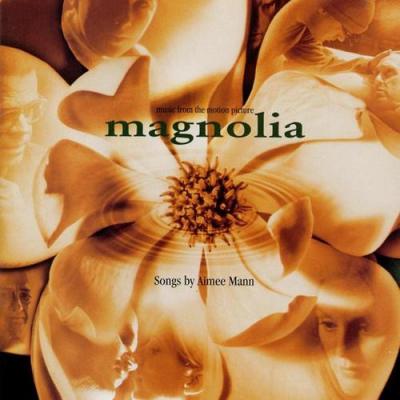
"Magnolia" Soundtrack Lyrics
Movie • 1999
Track Listing
Aimee Mann
Aimee Mann
Aimee Mann
Aimee Mann
Aimee Mann
Aimee Mann
Aimee Mann
Aimee Mann
Aimee Mann
Supertramp
Supertramp
Gabrielle
Jon Brion
"Magnolia (Music from the Motion Picture)" – Album Guide to Tracks and Key Scenes
Overview
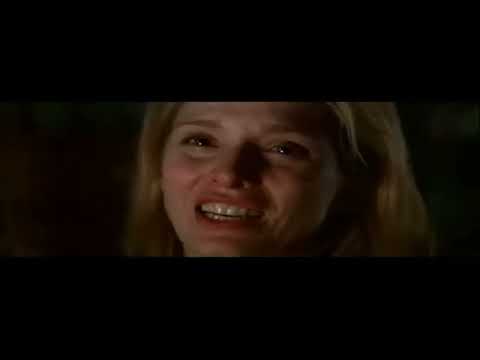
How often does a soundtrack feel like the film was made for it, not the other way around? Magnolia is that rare case. The movie plays like a three-hour concept album visualized, and the album sounds like a full-blown character study put to tape.
On paper, Magnolia: Music from the Motion Picture is an ensemble soundtrack: nine Aimee Mann songs, plus tracks by Supertramp, Gabrielle and a closing cue by composer Jon Brion. In practice, it behaves like a core Aimee Mann record that the film borrows its emotional language from. Paul Thomas Anderson has openly said he “sat down to write an adaptation of Aimee Mann songs,” and you can hear that in how every lyric seems to fit a character’s wound or lie.
The mood sits in a narrow but potent band: mid-tempo, weary, melodic songs about self-sabotage, denial and tiny stabs of hope. The album rarely explodes; instead it leans on sighing melodies, dry humor and a sense of people who are already tired before the story even starts. That restraint is exactly why the big musical moment — the “Wise Up” sing-along — lands like a shock.
Genre-wise, the soundtrack threads late-’90s adult pop and singer-songwriter rock (Mann) with 1970s prog-pop (Supertramp), UK R&B/dance-pop (Gabrielle) and Brion’s chamber-pop score cues. The styles track the film’s themes: Mann’s literate indie pop matches the characters’ self-awareness; Supertramp’s glossy prog represents the gaudy TV game-show world and the lies of success; Gabrielle’s slick optimism underlines the delusions of “quiz kid” Donnie Smith; Brion’s score glues it all into something near-operatic.
How It Was Made
Magnolia’s music didn’t come in at the end as decoration; it was there at the script’s birth. Anderson met Aimee Mann through her husband, composer Michael Penn, and started writing while playing her first two solo albums and demos for what would become Bachelor No. 2. According to interviews collected in the film’s production notes and later retrospectives, that’s where his line about “adapting Aimee Mann songs” comes from — he literally built characters and scenes around her lyrics and demos.
Two songs were written expressly for the film — "You Do" and the closing plea "Save Me". Other tracks such as "Deathly", "Driving Sideways" and "You Do" would later reappear on Bachelor No. 2, blurring the line between film soundtrack and studio album. The label situation was tense: Mann was in a dispute over releasing her own record, so the Magnolia soundtrack became, in effect, the first place many of these songs could live on a major label.
Jon Brion, who had already worked with Mann, produced much of the soundtrack and composed the original score. His cues — “Jimmy’s Breakdown,” “Stanley / Frank / Linda’s Breakdown,” “Chance of Rain,” “Magnolia” and others — were finally collected on a separate score album when Reprise issued the full Brion soundtrack a few months after the song-driven disc. Together, the Mann songs and Brion score create an almost continuous musical bed across the film’s 188 minutes.
Music supervision leans heavily on repetition as character motif: Donnie’s constant replaying of Gabrielle’s "Dreams", Claudia’s habit of blasting Aimee Mann at unsafe volumes, the way Supertramp keeps sneaking into Donnie’s orbit. The team also drops in a few classical and operatic cues — Richard Strauss and Bizet — as ironic color around the film’s showy “Seduce and Destroy” masculinity and nervous date-night scenes.
Tracks & Scenes
This is not a full tracklist, but a tour through the most important song placements and how they work with the picture.
"One" — Aimee Mann
Where it plays: After the narrated prologue of bizarre coincidences, the film smashes into the title sequence and a kinetic montage of the main characters. As Mann’s cover of Harry Nilsson’s “One” starts, the camera jumps between Frank T.J. Mackey selling his toxic seminar, Claudia getting high, Jimmy Gator preparing for his game show, Earl Partridge dying in bed and more. It’s early in the film, just after the nine-minute opening stretch.
Why it matters: The lyric “one is the loneliest number” turns into theme music for a dozen lonely people who don’t yet know how connected they are. The song’s steady rhythm helps Anderson stage a long, fluid visual introduction that feels almost like a music video, setting up Magnolia’s blend of pop song structure and ensemble drama.
"Momentum" — Aimee Mann
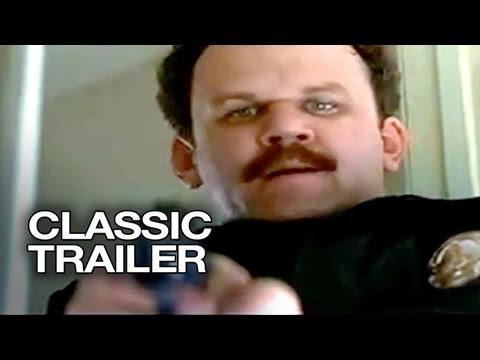
Where it plays: Jim Kurring arrives at Claudia’s apartment on a noise complaint. Inside, Claudia is on a cocaine bender with “Momentum” blasting at punishing volume. The song continues as Jim knocks, she scrambles to hide evidence, and the tension of “will she even open the door” plays against the song’s jittery energy.
Why it matters: The lyrics about being unable to outrun past trauma mirror Claudia’s state perfectly. Critics writing on the soundtrack have noted how this moment makes Mann’s song feel like Claudia’s own internal monologue leaking into the room. The choice to have the song diegetic — it’s literally the thing Jim complains about — lets Anderson show how Claudia uses music as both shield and self-sabotage.
"Deathly" — Aimee Mann
Where it plays: Later, when Claudia and Jim attempt a fragile first date, the film weaves in “Deathly.” Even when the track is not fully foregrounded, its presence hangs over the scene because Claudia uses its opening line as dialogue: “Now that I’ve met you, would you object to never seeing me again?” She’s essentially quoting the song back into her own life.
Why it matters: That borrowed lyric was, by Anderson’s own account, the spark for Claudia’s character. The song’s mixture of tenderness and panic underlines how she both longs for connection and expects it to implode. The scene shows how Magnolia sometimes behaves like an adaptation of an album: lines migrate from song to mouth unchanged.
"Driving Sideways" — Aimee Mann
Where it plays: In the offices of Solomon & Solomon, as ex-quiz-kid Donnie Smith gets fired from his dead-end sales job, “Driving Sideways” plays in the background. The song continues as his boss humiliates him and Donnie stumbles out, already forming his delusional plan to win back glory and buy braces.
Why it matters: The song’s waltzing feel and warning-shot lyrics (“you’ve been driving sideways”) sit in ironic counterpoint to Donnie’s belief that he just needs one more big win. Scholars of film music have pointed out how Anderson uses the shared presence of Mann’s songs around both Claudia and Donnie to link their self-destructive romantic fantasies.
"Wise Up" — Aimee Mann
Where it plays: Roughly two-thirds into the film, after each character has hit a personal bottom, Claudia puts on “Wise Up” in her apartment. As the song swells, the film jumps to every major character — Earl in bed, Linda in her car, Jim alone, Stanley on the quiz-show set, Donnie on his doomed stakeout — each of them singing a line straight to camera. The music is non-diegetic everywhere except Claudia’s room, but the lip-sync is precise, turning the whole film into a one-off musical number.
Why it matters: This is Magnolia’s most talked-about sequence. Some reviewers at the time thought the sing-along broke the film; others (including later essays in places like Collider and Bright Wall/Dark Room) argue it’s the emotional crown jewel. The lyrics (“it’s not going to stop ’til you wise up”) act like a cosmic note slipped under every character’s door, and the fact that they can all “hear” it for once suggests a kind of shared, painful clarity.
"Save Me" — Aimee Mann
Where it plays: After the biblical rain of frogs and the tentative resolutions of each storyline, the film glides into its epilogue. “Save Me” begins over images of the characters picking up the pieces: Frank sitting beside his dying father, Linda in the hospital after her overdose, Jim trying to reconnect with Claudia. The song then carries into and over the closing credits.
Why it matters: Written specifically for Magnolia, “Save Me” became the album’s calling card and earned an Academy Award nomination for Best Original Song. Critics have described it as Mann’s signature piece, a gentle plea that turns the film’s bruised cynicism into a direct request for mercy. The fact that the music video inserts Mann into the film’s visual world only tightens that bond.
"Dreams" — Gabrielle
Where it plays: Donnie Smith’s unofficial theme. We first hear Gabrielle’s 1993 hit pumping from Donnie’s car stereo as he drives through the San Fernando Valley, lost in memories of quiz-show fame, right before he plows his car through a shop window. The song returns later as he sits on a curb in the rain, humiliated and bleeding, while his (stolen) car nearby still pipes “Dreams can come true…” into the night.
Why it matters: The upbeat UK soul groove clashes beautifully with Donnie’s reality. Commentators have noted how the track, with its lyrics about perseverance and romantic wish-fulfillment, becomes a cruel joke: Donnie’s “dreams” of love and renewed glory are built on delusion. Yet the song’s warmth also keeps the scene from feeling purely cruel; it’s as if the soundtrack is refusing to give up on him even when he has.
"Goodbye Stranger" — Supertramp
Where it plays: In a key bar scene, Donnie watches handsome bartender Brad — the man whose braces he covets and whose affection he fantasizes about — while Supertramp’s “Goodbye Stranger” plays over the speakers. The camera lingers on Donnie’s yearning stare, his cheap suit, and the way he tries and fails to connect as the song rolls on.
Why it matters: Several critics and essays on film music have singled this as one of Magnolia’s best needle-drops. The slick, late-’70s production and peppy chorus about moving on without regret sit against Donnie’s inability to move on from his child-star identity. The song feels like the bar is laughing at him, and at the same time, it gives the scene a sad, nostalgic glow.
"The Logical Song" — Supertramp
Where it plays: Heard around the orbit of the quiz show “What Do Kids Know?” and in bar/jukebox contexts, “The Logical Song” acts as a kind of thematic cousin to “Goodbye Stranger.” Its lyrics about losing your sense of self as you grow up quietly echo Stanley Spector’s pressure and Donnie’s collapse.
Why it matters: Writers revisiting the soundtrack have noted how the Supertramp cuts sit slightly at odds with Mann’s more intimate writing — almost like intrusions from the era that turned kids like Donnie into TV commodities. That friction is the point: the smooth commercial sheen underlines the cheapness of the game-show world compared to the raw hurt in Mann’s songs.
"Nothing Is Good Enough" (instrumental) — Aimee Mann
Where it plays: An instrumental arrangement of Mann’s song plays over parts of the film’s mid-section, smoothing transitions between plotlines and giving the editor a lyrical glue to move from TV studio to hospital room to lonely apartments.
Why it matters: On Mann’s own album, the song appears with full lyrics, but Magnolia uses this version as connective tissue. Academics writing on the film have pointed out how it almost behaves like a tiny overture to the full Brion score that follows on the separate album release.
"Magnolia" — Jon Brion
Where it plays: One of the closing score cues, “Magnolia” appears near the end of the film and on the expanded score album as a kind of epilogue, after the songs have done their work. It accompanies quiet shots of the Valley and lingering character beats once the narrative fireworks have finished.
Why it matters: Brion’s piece pulls together the film’s harmonic language — woodwinds, piano figures and small string gestures that echo Mann’s chord choices — and distills it into a purely orchestral goodbye. It reminds you that, under all those songs, Magnolia also has a fully thought-through score architecture.
Other notable cues
Richard Strauss’ "Also Sprach Zarathustra" crashes into the film as intro music for Frank T.J. Mackey’s “Seduce and Destroy” seminar, parodying bombastic self-help theatrics. Bizet’s "Habanera" from Carmen plays more quietly during Claudia and Jim’s early kitchen conversation, an ironic operatic curtain behind a painfully awkward attempt at small talk.
Notes & Trivia
- “Wise Up” wasn’t originally written for Magnolia; it first appeared (unused in the film itself) on the Jerry Maguire soundtrack before finding its true home here.
- Anderson reportedly used rough mixes and demos from Aimee Mann — not finished masters — as he wrote, which is why some Magnolia versions differ subtly from later album cuts.
- Claudia’s famous line on her date — “Would you object to never seeing me again?” — is lifted verbatim from the opening of “Deathly.”
- Because Mann’s label was reluctant to release her own record at the time, the Magnolia soundtrack effectively functioned as a stealth release for much of Bachelor No. 2.
- Jon Brion’s full score remained partially in the shadows until Reprise and later specialty labels (like Mondo on vinyl) gave it a dedicated release, separate from the song album.
Music–Story Links
Magnolia uses songs less as “cool background” and more as externalized thought. The clearest example is Claudia. Her entire arc — from self-annihilation to the faint possibility of trust — is bracketed by Aimee Mann. “Momentum” blares when she’s most chaotic; “Deathly” supplies her guarded, self-sabotaging dialogue; “Wise Up” begins in her apartment and then spreads outward to everyone else. It’s as if her inner soundtrack infects the whole film for a few minutes.
Donnie Smith gets a different musical grammar. Supertramp and Gabrielle trace his fall from former prodigy to drunk, lovesick ex-celebrity. “Dreams” is the fantasy version of his life, while “Goodbye Stranger” is the reality: everyone else has moved on; only Donnie hasn’t. You can almost track his self-image by which of those songs is playing.
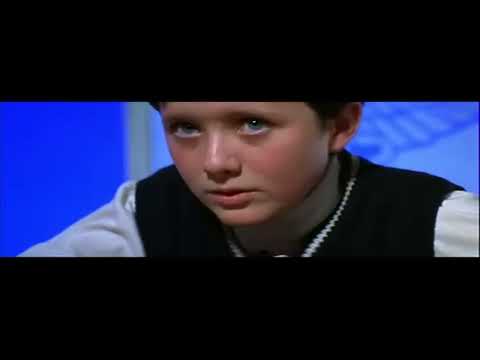
Stanley Spector’s quiet breakdown on “What Do Kids Know?” happens against the broader climate created by Supertramp and Brion’s tense score cues. The songs about being molded and judged (“The Logical Song”) mirror a kid whose entire value, in his father’s eyes, is measured in correct answers. When Stanley finally refuses to play along, the music turns from show-biz gloss to something much more fragile.
At the macro level, the move from “One” to “Wise Up” to “Save Me” traces the film’s emotional arc: loneliness → painful recognition → plea for grace. That’s not an accident; it’s the structure of a concept album borrowed wholesale for a movie. When critics compare Mann’s role here to Simon & Garfunkel on The Graduate, that’s the kind of narrative-through-songs architecture they mean.
Reception & Quotes
On release, Magnolia’s soundtrack drew strong praise from music writers as well as film critics. The album went gold in the United States and helped push Aimee Mann from cult favorite to widely recognized songwriter. “Save Me” earned an Oscar nomination, and later pieces in outlets like the Los Angeles Times and AV Club have treated the album as a turning point in her career.
The album also pops up regularly in “best soundtrack” lists; one long-running music site even slotted Magnolia into a “100 Greatest Soundtracks of All Time” feature, calling out “One,” “Wise Up,” “Save Me” and “Driving Sideways” as standouts.
“As a three-hour-plus advertisement for the music of Aimee Mann, Magnolia is a masterpiece.”
— retrospective review in a major pop-culture site
“Save Me solidified Mann’s stature as an esteemed songwriter, a low-key plea that somehow feels like the film’s entire soul in four minutes.”
— newspaper profile of Aimee Mann
“When that group sing-along arrives, Magnolia seems to crack in half. It’s either the moment you lose the film, or the moment it finally bares its throat.”
— essay in an online film journal
“You don’t need to have seen the movie to feel the hurt in these songs, but once you have, they’re impossible to hear without faces attached.”
— music-criticism blog on the album
The film itself got a mix of awe and exasperation, but there’s broad agreement now that the songs and score are inseparable from its lasting impact.
Interesting Facts
- Dual albums: There are effectively two Magnolia music releases: the song-driven album dominated by Mann, and a separate Brion score album with cues like “Jimmy’s Breakdown” and “Stanley / Frank / Linda’s Breakdown.”
- Oscar night crossover: Mann performed “Save Me” at the 72nd Academy Awards in front of tens of millions of viewers, a sharp contrast to her earlier, more underground status.
- Label workaround: Because of label conflicts, several tracks meant for her studio album reached listeners first via the Magnolia soundtrack — fans sometimes joke it’s the “accidental” Aimee Mann LP.
- Vinyl resurrection: Specialty label Mondo later issued an expanded 3×LP set combining songs and Brion score, turning the soundtrack into a collectible object with full cue lists.
- Trailer reuse: “Momentum” didn’t just score Claudia’s apartment; it also appeared in Magnolia’s marketing trailers, cementing its identity as the film’s sonic shorthand.
- Classical trolling: Using “Also Sprach Zarathustra” — forever linked to 2001: A Space Odyssey — over a sleazy pickup seminar is one of the film’s sharpest musical jokes.
- Dreams on loop: Donnie replaying “Dreams” in both his car and a neighbor’s car is a tiny running gag that many viewers only clock on a rewatch.
- Fate and frogs: Some critics hear an echo between the fatalism in songs like “Wise Up” and the later biblical rain of frogs; the soundtrack is already warning that “it’s not going to stop.”
Technical Info
- Title: Magnolia: Music from the Motion Picture
- Film: Magnolia (1999, dir. Paul Thomas Anderson)
- Year of album release: 1999 (December 7, US)
- Type: Soundtrack album (songs + partial score)
- Primary artist: Aimee Mann (nine tracks), plus Gabrielle, Supertramp and Jon Brion
- Composers / writers (selected): Aimee Mann; Harry Nilsson (“One”); Tim Laws & Gabrielle (“Dreams”); Rick Davies & Roger Hodgson (“Goodbye Stranger,” “The Logical Song”); Jon Brion (score cues)
- Producers: Jon Brion, Buddy Judge, Aimee Mann, Brendan O’Brien, Michael Penn
- Label: Reprise Records
- Key songs for the film’s narrative: “One,” “Momentum,” “Deathly,” “Wise Up,” “Save Me,” “Dreams,” “Goodbye Stranger,” “The Logical Song”
- Running time (album): approx. 50–51 minutes (standard CD release)
- Score album: separate Jon Brion score released in 2000, later expanded on vinyl editions
- Commercial performance: Certified gold in the US; peak around the mid-range of the Billboard 200 with solid international chart showings.
- Awards: “Save Me” — nominated for Academy Award and Golden Globe for Best Original Song.
Canonical Entities & Relations
| Entity | Type | Relation |
|---|---|---|
| Paul Thomas Anderson | Person | Wrote and directed the film Magnolia; conceived it as an adaptation of Aimee Mann’s songs. |
| Aimee Mann | Person | Primary songwriter and performer on Magnolia: Music from the Motion Picture; wrote “Save Me,” “You Do” and others. |
| Jon Brion | Person | Composed the original score for Magnolia and co-produced the soundtrack album. |
| Gabrielle | Person | Performs “Dreams,” used as Donnie Smith’s recurring theme song in the film. |
| Supertramp | MusicGroup | Perform “Goodbye Stranger” and “The Logical Song,” featured prominently in Donnie Smith’s bar and jukebox scenes. |
| Reprise Records | Organization | Released the Magnolia soundtrack album and later the Jon Brion score album. |
| New Line Cinema | Organization | Produced and distributed the film Magnolia. |
| Magnolia | Movie | 1999 ensemble drama set in the San Fernando Valley; the film that the soundtrack accompanies. |
| Magnolia: Music from the Motion Picture | MusicAlbum | Song-centered soundtrack for Magnolia, dominated by Aimee Mann’s material. |
| San Fernando Valley, Los Angeles | Location | Primary setting of the film; the songs and score are tied to one long, rain-soaked day there. |
Questions & Answers
- Is Magnolia: Music from the Motion Picture basically an Aimee Mann album?
- Pretty much. It’s officially a soundtrack, but most tracks are Mann songs (two written specifically for the film), with a few carefully chosen cuts by Supertramp, Gabrielle and Jon Brion.
- Which song do the characters sing together in the famous Magnolia scene?
- They all sing along to Aimee Mann’s “Wise Up” in a mid-film montage, each character taking a line while stuck in their own private crisis.
- Did Aimee Mann write “Save Me” specifically for Magnolia?
- Yes. “Save Me” was written for the film’s ending and later appeared on her album Bachelor No. 2. It became the soundtrack’s signature song and earned an Oscar nomination.
- Why are Supertramp and Gabrielle on such a Mann-heavy soundtrack?
- Those songs serve character-specific functions: Supertramp tracks underline Donnie’s ties to late-’70s pop culture and the quiz-show world, while Gabrielle’s “Dreams” is his ironic personal anthem.
- Is there a separate Magnolia score album beyond the song collection?
- Yes. Jon Brion’s orchestral score — cues like “Jimmy’s Breakdown” and “Chance of Rain” — was released on its own, and later expanded on deluxe vinyl editions.
Sources: Magnolia (film) and Magnolia (soundtrack) reference articles; production notes and interviews; AV Club and Spectrum Culture retrospectives on the soundtrack; essays in The Edge, Bright Wall/Dark Room, Perisphere and other film-music criticism; soundtrack and score release data from label and discography resources; scene-specific descriptions cross-checked against fan and academic analyses.
November, 15th 2025
A-Z Lyrics Universe
Cynthia Erivo Popular
Ariana Grande Horsepower
Post Malone Ain't No Love in Oklahoma
Luke Combs Good Riddance (Time of Your Life)
Green Day Bye Bye Bye
*NSYNC You're the One That I Wan
John Travolta & Olivia Newton-John I Always Wanted a Brother
Braelyn Rankins, Theo Somolu, Kelvin Harrison Jr. and Aaron Pierre The Power of Love
Frankie Goes to Hollywood Beyond
Auli’i Cravalho feat. Rachel House MORE ›