Soundtracks:  A B C D E F G H I J K L M N O P Q R S T U V W X Y Z #


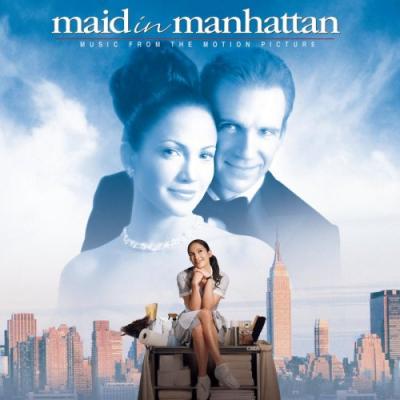
Maid in Manhattan Album Cover

"Maid in Manhattan" Soundtrack Lyrics

Movie • 2002

Track Listing


"Maid in Manhattan (Music from the Motion Picture)" – Album Guide to Tracks and Key Scenes

Maid in Manhattan trailer still with Jennifer Lopez and Ralph Fiennes in a Manhattan hotel
Maid in Manhattan film trailer imagery, 2002 romantic-comedy soundtrack context.

Overview

What does a Cinderella story sound like when it swaps a palace for a midtown Manhattan hotel and a ballgown for a Dolce & Gabbana coat? The Maid in Manhattan (Music from the Motion Picture) album answers with a polished mix of 1970s soft rock, classic R&B, early-2000s neo-soul and coffee-house jazz that wraps a working-class fairy tale in radio-friendly gloss. It is less a traditional score album and more a curated playlist of comfort songs that sit alongside Alan Silvestri’s light, romantic cues.

The film’s story about Marisa Ventura, a Bronx maid mistaken for a socialite, leans heavily on familiar pop textures. Paul Simon’s “Me and Julio Down by the Schoolyard” paints the Bronx morning in nimble acoustic strokes, while Glenn Lewis’s “Fall Again” turns a political fundraiser into a swooning fantasy. Norah Jones, Daniel Bedingfield, Eva Cassidy and Kelly Rowland all appear on the album, giving the soundtrack the feel of an early-2000s adult-contemporary sampler rather than a single-composer score set.

There is also a subtle marketing logic behind it. The compilation arrived in December 2002, just weeks after Jennifer Lopez released This Is Me… Then, and it sits neatly alongside that album’s R&B-leaning ballads. According to AllMusic and label credits, the soundtrack runs just under 52 minutes and was issued through Epic/Sony with 14 tracks, pulling in catalog masters from multiple labels and slotting them next to Silvestri’s short cues and new recordings.

In genre terms, the record is a blend of pop/rock, singer-songwriter, classic soul and film music. 1970s soft rock like Bread’s “The Guitar Man” stands in for nostalgia and the quiet, practical side of Marisa’s life. Old-school R&B and disco – Teena Marie’s “Lovergirl”, Amerie’s cover of “I’m Coming Out” – underline makeover moments, celebrity glamour and the film’s media whirlwind. Norah Jones’s jazz-country ballads and Eva Cassidy’s folk-tinged “Kathy’s Song” cover the more vulnerable beats, while Silvestri’s score cues tie everything back to a light orchestral romance language.

How It Was Made

The film’s score is by Alan Silvestri, better known for large-scale orchestral work (Back to the Future, Forrest Gump). Here he writes compact, melodic cues such as “Maid in Manhattan” and “At Last”, using strings, woodwinds and gentle rhythm section to smooth the cuts between pop tracks. The official soundtrack album pairs those cues with pre-existing songs; AllMusic lists the release as a 2002 Epic CD (catalogue 86921) with a 51:47 running time and recording sessions split between New York and Los Angeles studios.

Music supervision involved stitching together material from multiple eras and rights-holders. The album pulls in Paul Simon’s “Me and Julio Down by the Schoolyard” and “Kathy’s Song”, Teena Marie’s 1980 hit “Lovergirl”, Bread’s “The Guitar Man”, Amerie’s newly recorded cover of “I’m Coming Out”, Kelly Rowland’s “Train on a Track”, Norah Jones’s “Come Away with Me”, Glenn Lewis’s “Fall Again”, Daniel Bedingfield’s “If You’re Not the One”, Eva Cassidy’s rendition of “Kathy’s Song”, and Silvestri’s score cues. According to the film’s and Silvestri’s discography credits, the soundtrack was packaged under the “Music from the Motion Picture” banner rather than as a separate full score release.

One of the most interesting licensing stories sits behind “Kathy’s Song”. The film uses Eva Cassidy’s intimate cover rather than Paul Simon’s own vocal, and material from the Eva Cassidy estate notes that Simon himself suggested her version when producers asked to use the song. That choice lines up with the film’s tone: Cassidy’s reading is hushed and slightly melancholy, ideal for Marisa’s more introspective moments.

“Fall Again” has its own backstory. The song was originally written for Michael Jackson by Walter Afanasieff and Robin Thicke during the Invincible sessions and later surfaced as a Jackson demo; Canadian singer Glenn Lewis then recorded a finished version specifically for Maid in Manhattan and even appears in the film performing it at the fundraiser gala. The result is one of those early-2000s R&B moments that feels more like a music-video cameo than background score but is central to the way the film sells its big, fairy-tale dance.

Norah Jones’s presence is doubled: the film uses both “Come Away with Me” and “Don’t Know Why”, but only the former appears on the commercial album. Fan Q&A pages point out that “Don’t Know Why” – which scores a key emotional beat – is missing from every retail configuration. Explanations vary from licensing cost to label politics; there is no official on-the-record answer, but it is a classic example of a rom-com where the most memorable needle-drop isn’t on the CD.

Maid in Manhattan trailer frame highlighting the hotel setting and New York skyline
Promotional trailer imagery that the soundtrack album echoes with its mix of old and new pop.

Tracks & Scenes

The film uses its songs very specifically. Below are the key placements and how they work on screen.

"Me and Julio Down by the Schoolyard" – Paul Simon
Where it plays: At the very beginning of the film, over the opening credits and early Bronx morning routine. We watch Marisa’s son Ty running through the neighbourhood, kids playing, and the camera cutting between stoops, ball courts and subway entrances as Marisa gets ready for work and walks toward the train. The track is non-diegetic; it sits on top of the montage rather than coming from a radio on screen.
Why it matters: The brisk acoustic guitar and playful percussion do two jobs at once. They give the Bronx a full, lived-in energy while the lyrics (“Me and Julio…” etc.) underline Ty’s point of view and the sense of a tight-knit community. It keeps the mood light even as we see that Marisa’s day will be long and physically demanding.

"Maid in Manhattan" – Alan Silvestri
Where it plays: Silvestri’s main theme first comes in as Marisa rides the subway to work, watching wealthier New Yorkers drift in and out of the carriage. Fragments of the cue recur throughout the film as she moves through hotel corridors with cleaning carts, and then again at the end of the film over the second half of the closing credits, after the pop tracks have done their work. The music is strictly non-diegetic, tied to transitions rather than onscreen sources.
Why it matters: The cue wraps the story in classic studio-era romantic sheen. Soft strings and a lilting main melody bridge the tonal gap between gritty Bronx exteriors and polished hotel interiors, making the whole story feel like it belongs to a single, gently idealised New York.

"Fall Again" – Glenn Lewis
Where it plays: At the political fundraiser gala, when Marisa arrives in the peach evening gown and Harry Winston necklace. Glenn Lewis appears on stage with a small band, singing “Fall Again” live as the room moves into slow-dance mode. Chris spots Marisa properly dressed for the first time; the two meet on the dance floor surrounded by donors and staff. The song is diegetic – the band is part of the scene – but the mix emphasises it enough that it almost functions like a classic Hollywood dance number.
Why it matters: This is the pure fairy-tale beat. The camera circles the couple; the lyrics about falling again mirror their hesitant attraction after a day of misunderstandings. Knowing that the song was originally written for Michael Jackson but finished for this film gives the moment an extra layer: it feels like a luxe, R&B version of the ballroom waltz that you would traditionally hear in a Cinderella story.

"Don't Know Why" – Norah Jones
Where it plays: In the late-film low point, when Marisa sits alone at a playground, on a swing, crying after her deception has been exposed and her job is gone. The world around her is quieter, kids’ shouts are distant, and the piano intro to “Don’t Know Why” comes in under the ambient sound as a non-diegetic layer. The camera cuts between close-ups of her face, her hands gripping the swing chains, and wide shots that make her look very small inside the frame.
Why it matters: Jones’s restrained vocal and the famous opening line (“I waited ’til I saw the sun…”) underline how long Marisa has put her own hopes on hold. The gentle jazz harmony refuses melodrama; instead it makes the scene ache in a low, private key. It is one of the film’s most remembered uses of music, despite the track not appearing on the official soundtrack album.

"I'm Coming Out" – Amerie
Where it plays: After the film’s narrative wraps up, we see a quick montage of magazine covers and TV clips announcing Chris’s election win and his relationship with Marisa. As the first batch of end credits roll, Amerie’s cover of “I’m Coming Out” kicks in, essentially acting as a curtain-call track. In the film, only Amerie’s version plays over this section; Diana Ross’s original is on the album as a separate cut.
Why it matters: The original Ross song is a queer and self-liberation anthem; Amerie’s early-2000s R&B version keeps that DNA and adds crisp drums and bright backing vocals. Over the credits, it reframes the story as one of self-assertion: Marisa has not only found romance but also stepped into public visibility and professional advancement on her own terms.

"Come Away with Me" – Norah Jones
Where it plays: Used in the middle section of the film, during one of the quieter transitional passages where Marisa and Chris share the first truly relaxed, intimate moments away from staff corridors and campaign staff. The song runs non-diegetically over footage of them walking and talking together, and into interior scenes that show their connection solidifying beyond the initial mistaken-identity gimmick.
Why it matters: The track’s slow tempo, brushed drums and soft piano give the relationship a sense of stillness. After the visual noise of paparazzi and hotel chaos, the music signals that this is a pocket of real intimacy. It also stamps the film with the sound of 2002: Jones’s album was everywhere that year, and her presence here anchors the movie firmly in that early-millennial adult-contemporary mood.

"Kathy's Song" – Eva Cassidy
Where it plays: The film uses Cassidy’s version as reflective underscore in the later part of the story, around scenes that emphasise Marisa’s inner life – moments at home, conversations with her mother, or quiet travel shots on the subway. The track is non-diegetic, edited to fit the mood rather than performed on screen.
Why it matters: Cassidy’s vocal is close-miked and intimate, with just guitar and voice. Paired with shots of laundry rooms, small apartments and train platforms, it pushes against the film’s glossy surfaces and hints at the cost of striving. It also deepens the Paul Simon thread: the soundtrack opens with his own “Me and Julio” and circles back to his songwriting through another artist’s voice.

"Train on a Track" – Kelly Rowland
Where it plays: Used under a light montage in which Marisa moves through the hotel with new purpose and confidence, after she has been marked as a potential management candidate and her feelings for Chris are starting to look like more than a fluke. We see her gliding through corridors, interacting with colleagues, and balancing work with parenting duties; the music is non-diegetic, mixed like a radio hit laid over day-in-the-life footage.
Why it matters: Rowland’s song is about trusting a relationship that feels steady, “like a train on a track”. That metaphor fits Marisa’s sense that her life might finally be aligning – career prospects, motherhood, and romance all moving in the same direction instead of pulling her apart.

"The Guitar Man" – Bread
Where it plays: The film makes explicit reference to Bread’s greatest-hits compilation, and “The Guitar Man” appears in a low-key scene that shows characters listening and talking rather than rushing. The soft rock texture – warm electric piano, gentle guitars – plays low in the mix while conversation carries the dramatic weight.
Why it matters: As an artifact from the 1970s, it signals the older generation’s tastes and brings in a different era of romantic melancholia. In a story full of glossy new ballads, this one reminds us that Marisa’s mother has her own history and soundtrack; love stories like this have played in New York apartments for decades.

"A Thousand Miles" – Vanessa Carlton (trailer only)
Where it plays: Not in the film itself but in marketing: “A Thousand Miles” is used prominently in at least one theatrical trailer, over shots of Marisa juggling work, motherhood and awkward elevator encounters with Chris. The piano riff is edited to match quick comedy cuts and sun-lit Manhattan establishing shots.
Why it matters: Carlton’s song had heavy radio rotation in 2002, so using it in the trailer instantly placed the film in the centre of Top 40 pop culture. It also leans into the idea of emotional distance being closed – “If I could fall into the sky…” – which fits a story about a Bronx maid crossing invisible class lines to be seen.

Maid in Manhattan trailer moment hinting at the ballroom fundraiser scene
Trailer frames set up the fundraiser sequence where Glenn Lewis performs “Fall Again”.

Notes & Trivia

  • “Don’t Know Why” is used in a pivotal emotional scene but never appears on any official soundtrack edition, something fans have raised repeatedly in soundtrack Q&A archives.
  • Eva Cassidy’s “Kathy’s Song” arrived on the album years after her death; documentation from her estate credits Paul Simon with steering producers toward her recording when they asked to licence the song.
  • Glenn Lewis’s “Fall Again” began life as a Michael Jackson demo; the Maid in Manhattan version is the first completed studio release of the song and includes Lewis’s cameo in the film’s gala scene.
  • Amerie’s cover of “I’m Coming Out” was released as a single in some territories with the movie’s branding, effectively turning a Diana Ross classic into a promotional vehicle for the film.
  • Bread’s The Best of Bread compilation is name-checked in dialogue, a small nod to the way catalog albums and hotel room stereos shape characters’ musical lives.

Music–Story Links

At a story level, the soundtrack tracks Marisa’s journey from invisibility to agency. “Me and Julio Down by the Schoolyard” puts us first in Ty’s and Marisa’s neighbourhood world, emphasising that their life is busy, crowded and full of energy before the love story even starts. When Silvestri’s “Maid in Manhattan” theme replaces it on the subway, the film shifts into aspirational mode: the same city, but now scored like a studio romance.

The gala sequence with “Fall Again” functions as the Cinderella ball. Chris finally sees Marisa not as hotel staff but as an equal dance partner; the diegetic performance turns the whole fundraiser into a staged fantasy. Later, “Don’t Know Why” marks the midnight-strikes moment: the spell has broken, the job is gone, and the colour drains from the frame as Marisa sits alone on the swing.

Norah Jones’s “Come Away with Me” supports the middle act’s emotional pivot. It drifts under images of Chris and Marisa in quieter spaces – hotel hallways, back rooms, city streets without crowds – and signals that their connection is no longer just a misunderstanding or tabloid story. By the time Amerie’s “I’m Coming Out” hits over the closing credits, the music has shifted from introspective jazz and folk to full-blown R&B celebration, matching Marisa’s move into public success.

Even the catalogue cuts carry character weight. “Kathy’s Song” colours scenes involving Marisa’s mother with older, more resigned romanticism, hinting at lives that did not get tidy fairy-tale endings. “The Guitar Man” and “Lovergirl” both underline how music is used inside the hotel – from background ambience to spontaneous room-cleaning dances – to keep staff going through repetitive labour. The result is a story where musical choices quietly reinforce class, age and emotional perspective without ever turning the film into a full-on musical.

Reception & Quotes

Critically, Maid in Manhattan the film received mixed reviews, with Rotten Tomatoes and Metacritic both situating it in the “average” range. Reviewers often described the movie as formulaic but singled out the soundtrack as polished, radio-ready and in step with early-2000s pop trends, even when they did not discuss individual cues in depth.

The album itself sits comfortably in the “pleasant but not adventurous” corner of soundtrack culture: a compilation that offers several already-big hits (Paul Simon, Norah Jones) and a few smart deep cuts (Eva Cassidy) rather than a radically new musical statement. AllMusic positions it under the Stage & Screen / Pop-Rock umbrella with singer-songwriter and contemporary pop tags, reflecting that crossover nature.

Over time, though, the film’s music has benefited from nostalgia. Norah Jones’s early tracks now read as era-defining, Daniel Bedingfield’s “If You’re Not the One” carries early-2000s power-ballad baggage, and Amerie’s “I’m Coming Out” marks a specific R&B moment. Recent coverage of a 2025 reunion between Jennifer Lopez and Ralph Fiennes at the Palm Springs International Film Festival has framed Maid in Manhattan as one of Lopez’s signature titles, and by extension its soundtrack as part of her early-2000s media peak.

“Too blandly generic, Maid in Manhattan coasts on charm more than surprise, but its soundtrack is consistently listenable.” — Paraphrased from contemporary critic summaries
“She’s already been flying with determination from an early age.” — Ralph Fiennes on Lopez, at a festival tribute reflecting on Maid in Manhattan
Maid in Manhattan trailer shot highlighting Jennifer Lopez in maid uniform against Manhattan backdrop
Trailer imagery that has become tied to the film’s soft-focus pop soundtrack in hindsight.

Interesting Facts

  • There are effectively three “layers” of music: Silvestri’s orchestral cues, the pop/rock/R&B compilation album, and an outer ring of trailer/marketing songs like “A Thousand Miles”.
  • Amerie’s “I’m Coming Out” single artwork in some markets leans heavily on film stills, blurring the line between soundtrack cut and her own discography.
  • Daniel Bedingfield’s “If You’re Not the One” is closely associated with the film in compilation credits, even though its placement in the movie is fleeting compared with heavier-featured tracks.
  • A separate, limited Silvestri album pairs Maid in Manhattan cues with music from Outrageous Fortune, aimed at collectors of his orchestral work rather than pop listeners.
  • Eva Cassidy’s involvement brought a posthumous, cult-favourite singer into a mainstream studio rom-com, introducing her to audiences who might otherwise never have heard her.
  • “Yes We Can Can” by The Pointer Sisters, which appears on the album, ties the soundtrack to a longer tradition of politically tinged soul, quietly echoing Chris Marshall’s senatorial campaign.
  • The Apple Music and Spotify versions of the soundtrack keep the same 14-track configuration, though regional digital releases sometimes list slightly different running times.
  • Because “Don’t Know Why” is missing from the album, later cover compilations advertise themselves as “from Maid in Manhattan” to fill that perceived gap for listeners.

Technical Info

  • Title: Maid in Manhattan (Music from the Motion Picture)
  • Film year: 2002 (feature film released by Columbia Pictures)
  • Album year: 2002 (CD release dated 10 December 2002)
  • Type: Various-artists soundtrack + score excerpts
  • Primary composer (score): Alan Silvestri
  • Key featured artists: Paul Simon, Norah Jones, Glenn Lewis, Amerie, Kelly Rowland, Daniel Bedingfield, Eva Cassidy, Teena Marie, Bread, Res, The Pointer Sisters
  • Label: Epic / Sony Music Soundtrax (CD, digital)
  • Duration: Approx. 51–52 minutes, 14 tracks on standard edition
  • Recording locations (selection): 20th Century Fox (Los Angeles), Hit Factory and Sony Studios (New York), Pie Studios (Long Island), Westlake (California)
  • Notable placements: “Me and Julio Down by the Schoolyard” (opening credits), “Fall Again” (gala dance), “Don’t Know Why” (swing-set breakdown), “I’m Coming Out” (closing credits), “Come Away with Me” (intimate mid-film sequence)
  • Release context: Arrived in cinemas and stores during Jennifer Lopez’s This Is Me… Then era, with soundtrack singles and existing hits cross-promoted on radio and music TV.
  • Availability: Widely available on streaming platforms (Spotify, Apple Music, Amazon), with the CD still in print or easily found second-hand.
  • Chart / legacy notes: None of the tracks were exclusive hits for the album, but several songs (Norah Jones, Amerie, Glenn Lewis) are now regularly tagged as “from Maid in Manhattan” on compilation releases.

Canonical Entities & Relations

Subject Relation Object
Jennifer Lopez plays Marisa Ventura (lead character in Maid in Manhattan)
Ralph Fiennes plays Christopher “Chris” Marshall (senatorial candidate)
Wayne Wang directs Film Maid in Manhattan
Alan Silvestri composes score for Film Maid in Manhattan and its soundtrack cues
Epic Records releases Maid in Manhattan (Music from the Motion Picture) CD
Paul Simon writes and performs “Me and Julio Down by the Schoolyard” (used in opening credits)
Paul Simon writes “Kathy’s Song”, interpreted by Eva Cassidy on the soundtrack
Eva Cassidy performs “Kathy’s Song” (featured in the film and on the album)
Norah Jones performs “Come Away with Me” and “Don’t Know Why” (featured in the film)
Glenn Lewis performs “Fall Again” for the film and appears in the gala scene
Walter Afanasieff & Robin Thicke write “Fall Again” (originally for Michael Jackson)
Amerie performs Cover of “I’m Coming Out” used over the closing credits
Kelly Rowland performs “Train on a Track” (used in a mid-film montage)
Daniel Bedingfield performs “If You’re Not the One” (included on the soundtrack album)
Teena Marie performs “Lovergirl” (featured on the album and in hotel-set scenes)
The Pointer Sisters perform “Yes We Can Can” (appears on the soundtrack album)
Res performs “Miracles” (included on the soundtrack album)
Bread performs “The Guitar Man” (used in the film and referenced in dialogue)
Columbia Pictures distributes Film Maid in Manhattan
Una Maid en Manhattan is based on Film Maid in Manhattan

Questions & Answers

What song plays when Marisa and Chris dance together at the big fundraiser?
That scene features Glenn Lewis performing “Fall Again” live with a band. It is both a key romantic moment and a showcase for the song, which was recorded specifically for the film.
Which Norah Jones songs are in the movie, and why is one missing from the album?
The film uses both “Come Away with Me” and “Don’t Know Why”. Only “Come Away with Me” appears on the official soundtrack; “Don’t Know Why” is heard in the swing-set breakdown but has never been included on any official album edition, likely due to licensing or label-coordination issues that have not been publicly detailed.
What is the upbeat track over the closing credits after the magazine-cover montage?
That is Amerie’s version of “I’m Coming Out”. It starts just as we see tabloid and magazine covers summarising Chris and Marisa’s happy-ending status and continues into the first stretch of the closing titles.
Is Vanessa Carlton’s “A Thousand Miles” actually in the film?
No. “A Thousand Miles” is used in at least one official trailer, with its piano riff edited over clips from the movie, but it does not appear in the feature itself. Some soundtrack information sites list it explicitly as a trailer-only cue.
Is there a separate album of Alan Silvestri’s full score for Maid in Manhattan?
The commercial soundtrack mixes a handful of Silvestri cues with songs by other artists. A more specialised score release pairs his Maid in Manhattan cues with music from Outrageous Fortune, but this has circulated mainly as a niche collector’s item rather than a widely promoted standalone album.

Sources: Wikipedia (film & soundtrack entries); IMDb soundtrack and credits; AllMusic album and release data; Alan Silvestri official discography; Apple Music / Spotify album listings; SoundtrackINFO Q&A archive; Eva Cassidy official site materials; articles on Norah Jones’s and Glenn Lewis’s discographies; recent festival coverage of the film’s cast reunion.

November, 15th 2025


A-Z Lyrics Universe

Lyrics / song texts are property and copyright of their owners and provided for educational purposes only.